avg —
Italian Focaccia

Instructions
Cream the fresh live yeast with the sugar in warm water at 30–37 °C until you have a thin paste. The water temperature is critical: at 40 °C and above the yeast dies, while at 25 °C and below it will not activate. Add a tablespoon of flour, stir, and leave the starter to rise for 15 minutes in a warm place until a foamy «cap» appears. This confirms the yeast is alive and active.
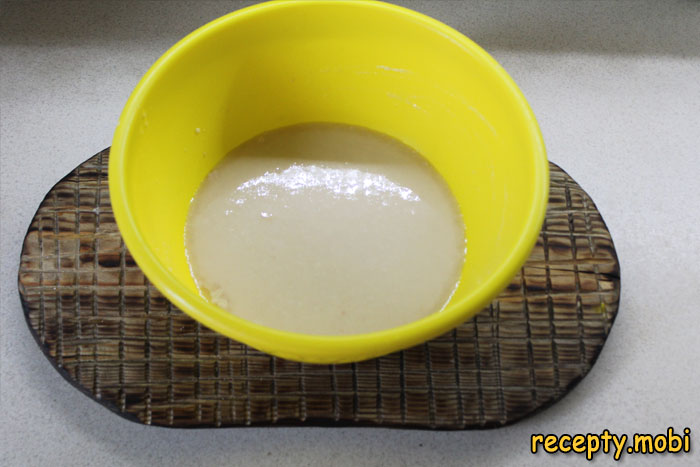
Add the salt to the active starter and stir with a whisk. Add the salt now rather than together with the yeast – salt kills yeast on direct contact, so it is always added after the starter has activated.
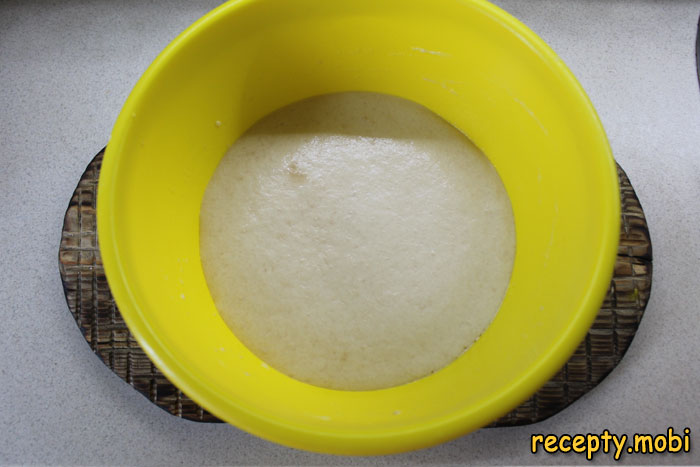
Pour two tablespoons of extra virgin olive oil into the starter. First-pressing olive oil is an essential ingredient in Italian focaccia: it makes the gluten elastic, the crumb tender and the flavour distinctly Italian. Sunflower oil would give a flat, tasteless result.
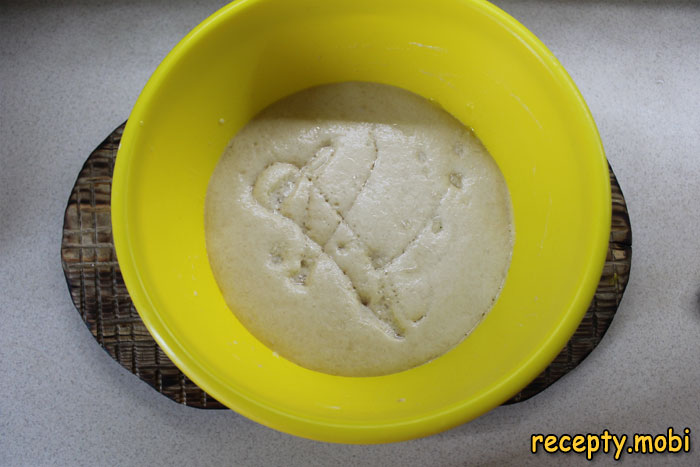
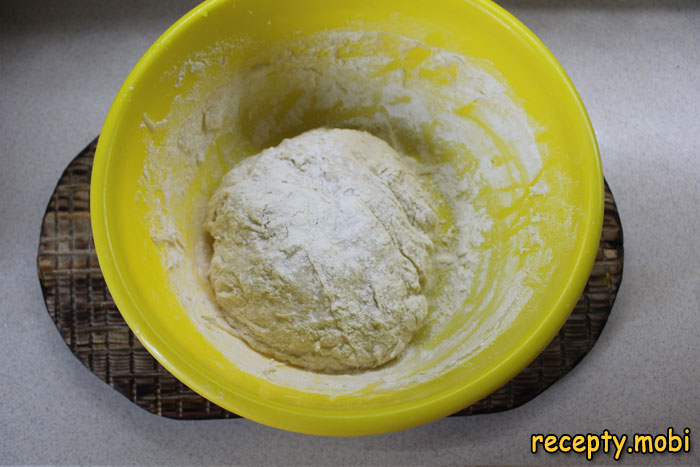
Gradually add the sifted flour and knead a soft, elastic dough for 7–10 minutes by hand or with a mixer fitted with a dough hook. The dough should stop sticking to your hands but remain soft. Cover with cling film and leave in a warm place (26–28 °C) for 30 minutes to rise.
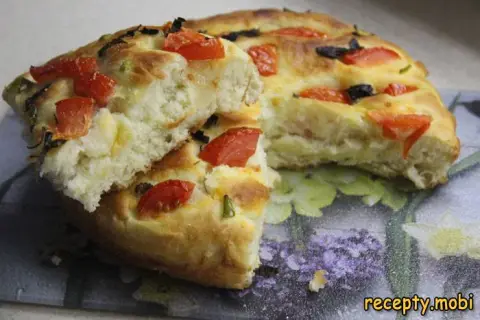
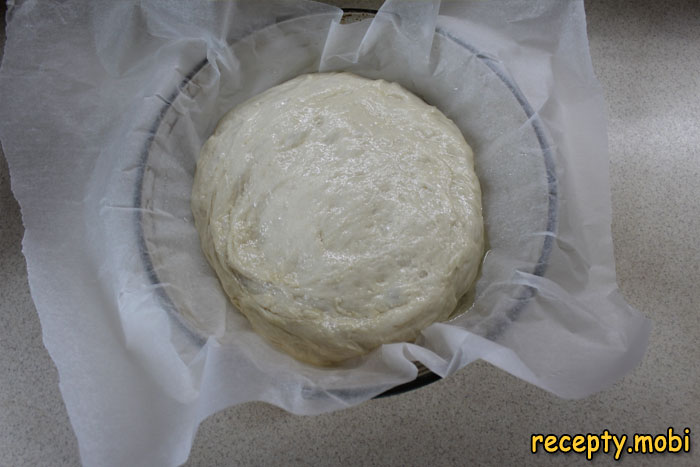
Knock back the risen dough and transfer it to a tin lined with parchment and greased with olive oil. Spread it evenly across the base by hand to a thickness of 2–3 cm. Make the characteristic dimples all over the surface with your fingers – this is focaccia’s signature mark and helps hold the oil and toppings.
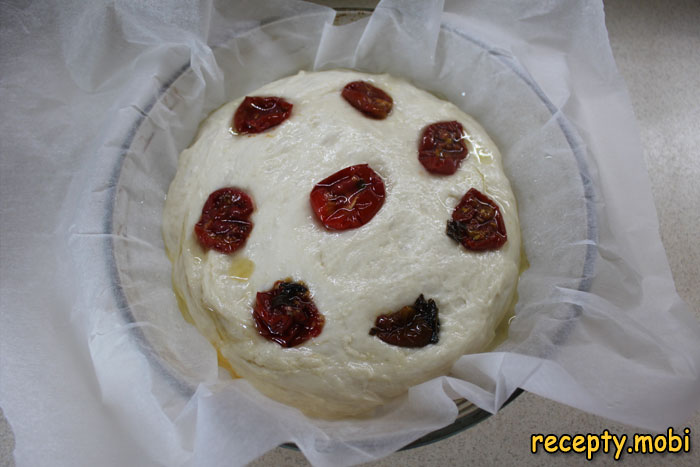
Arrange the oil-packed sun-dried tomatoes over the surface of the focaccia, pressing them gently into the dough. Sun-dried tomatoes give that characteristic «sun-ripened» Italian flavour that nothing else can replace. If you have no sun-dried tomatoes, you can use cherry tomatoes cut in half.
Add capers or olives between the tomatoes – they give a piquant, salty accent. Distribute them evenly so every piece has a variety of flavours. Do not over-salt – capers are very salty themselves.
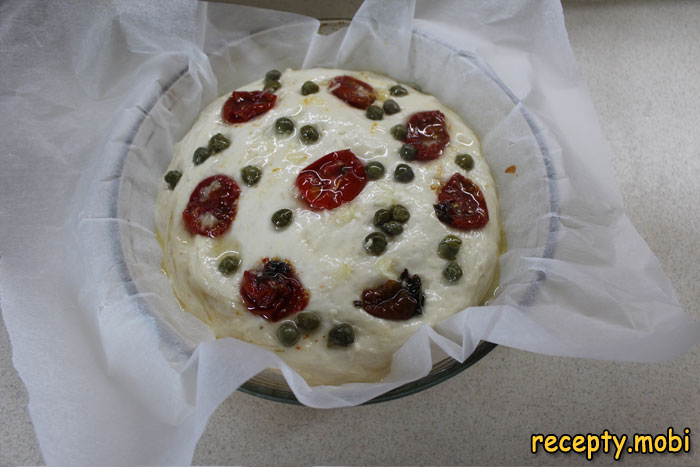
Sprinkle with dried basil and drizzle with a teaspoon of olive oil for shine. Bake in a preheated oven for 20 minutes at 200 °C until golden. The aromas of the herbs and olive oil develop during baking – do not add them earlier.
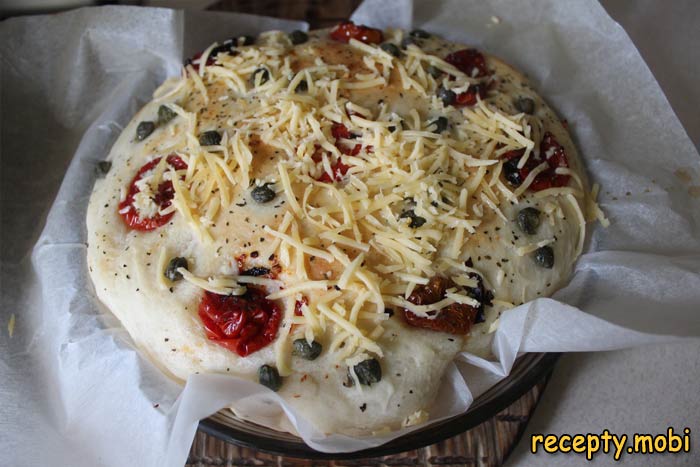
Five minutes before it is done, take the focaccia out and generously sprinkle it with grated hard cheese (Parmesan, Gruyère or a Russian-style hard cheese). Return it to the oven – the cheese will melt into a golden crust and give a characteristic Italian accent. Do not leave the cheese too long – it will start to burn and turn bitter.
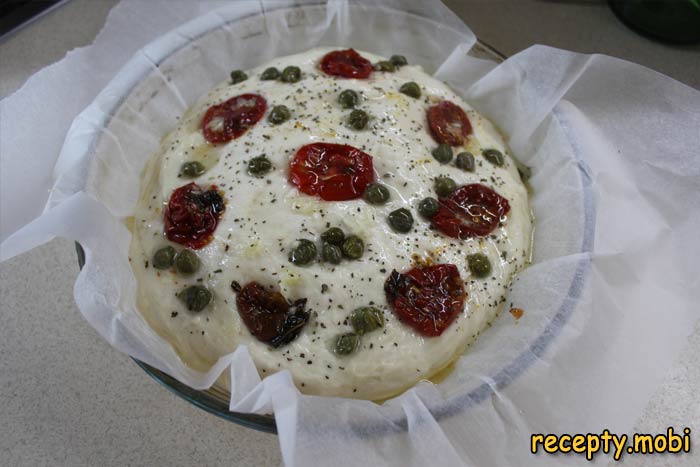
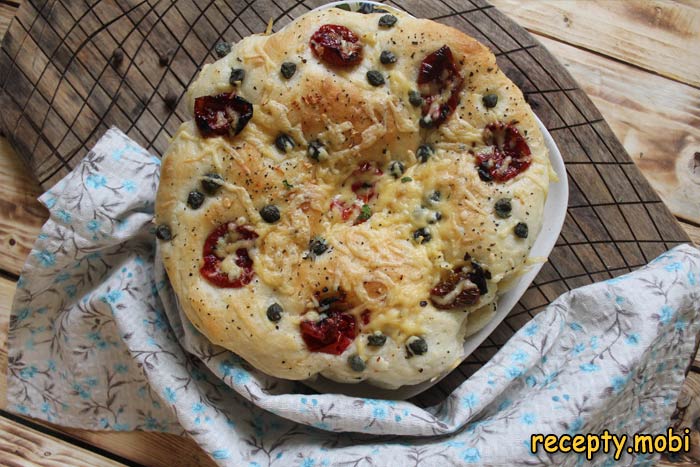
Take the finished focaccia out and let it cool for 10–15 minutes in the tin. Serve it warm – that is when its full Italian character comes through. Cut it into large squares or triangles, like a pizza. The Italian focaccia is ready to serve.


Tips
- 1
Using ready-made frozen dough, focaccia can be made in 25 minutes – a handy option for busy weekdays or unexpected guests.
- 2
The topping can be any Mediterranean one: olives, rosemary, thyme, shallots, bacon, blue cheese – experiment to taste.
- 3
Always serve it warm – focaccia is at its most fragrant and crisp on the outside when hot. I bake sourdough bread on a similar principle.
- 4
Store it in a tightly sealed bag at room temperature so it does not dry out – focaccia loses moisture quickly and goes stale.
FAQ
Can I use dry yeast instead of fresh? +
Yes, the ratio is simple: 7 g of fast-acting dry yeast or 10 g of ordinary dry yeast instead of 25 g of fresh. Mix fast-acting dry yeast straight into the flour – unlike live yeast, it does not need to be «activated» in water. Dough made with dry yeast rises a little longer – 40–50 minutes instead of 30. There is almost no difference in taste, but live yeast gives a more pronounced «yeasty» aroma of genuine Italian bread that connoisseurs appreciate.
What can I use instead of capers in the focaccia topping? +
Black or green olives (pitted and halved), thinly sliced pickled cornichons, or pickled mushrooms all work. Each gives its own character: olives a classic Mediterranean accent, cornichons an unexpected sour-and-salty note, mushrooms an earthy one. Without any salty components the focaccia will taste bland – be sure to add something salty and pickled for balance.
How long does the finished focaccia keep? +
In a tightly sealed plastic bag or cling film at room temperature it keeps for up to 2 days without loss of quality. On the second day, reheat it in the oven at 180 °C for 5 minutes and the focaccia will be almost like fresh. You can freeze it whole or in portions for up to 1 month – thaw and warm it through before serving. After 2 days at room temperature focaccia goes stale, especially if it was stored without airtight packaging.
What should I serve focaccia with? +
It is the perfect companion to soups (tomato, minestrone, creamy mushroom soup), pasta (carbonara, bolognese), salads (Caesar, Greek, caprese) and meat starters (prosciutto, salami, antipasti). You can also use it as a base for sandwiches with mozzarella, tomatoes and basil – a simple Italian breakfast. With focaccia, serve a glass of dry red wine (Chianti, Barolo) or Prosecco – a classic Italian pairing.
- Comment
or post as a guest
Be the first to comment.