avg —
Healthy Khachapuri with Cottage Cheese

Instructions
I prepare the ingredients. The cottage cheese can be any fat content except fat-free. It is worth turning the oven on straight away to preheat to 180 degrees, since in about 5–7 minutes the boats will be ready for baking.
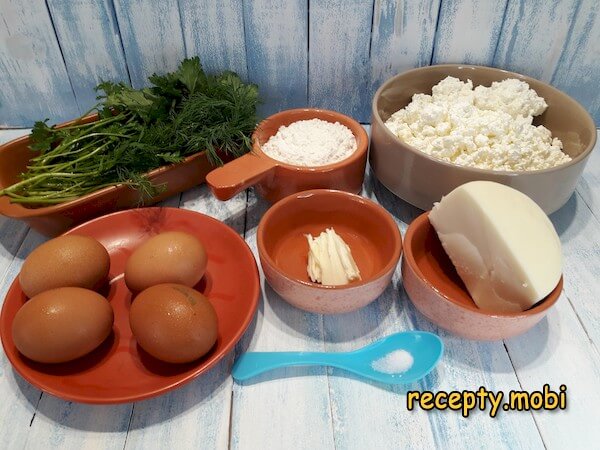
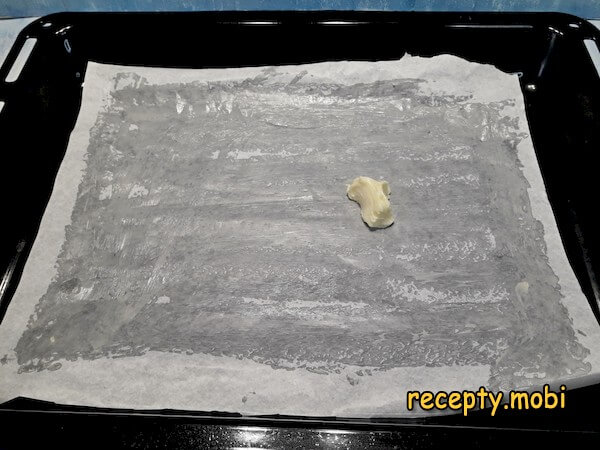
I line the baking sheet with parchment and, if it is not silicone-coated, grease it generously with butter, then set it aside for now – without butter the parchment can stick to the finished khachapuri.
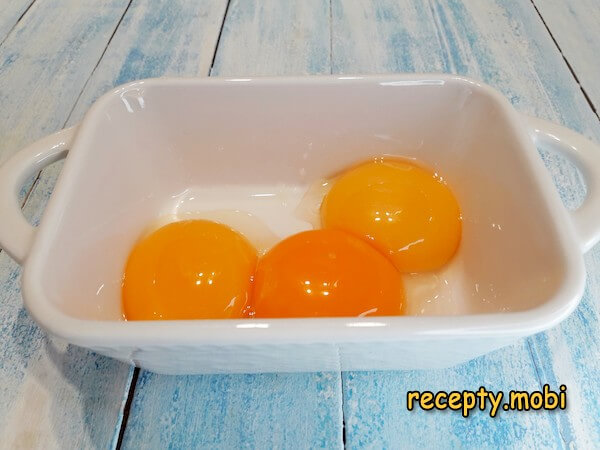
In a separate container I separate 3 yolks from the whites – the yolks go "into the boat", the whites go into the dough.
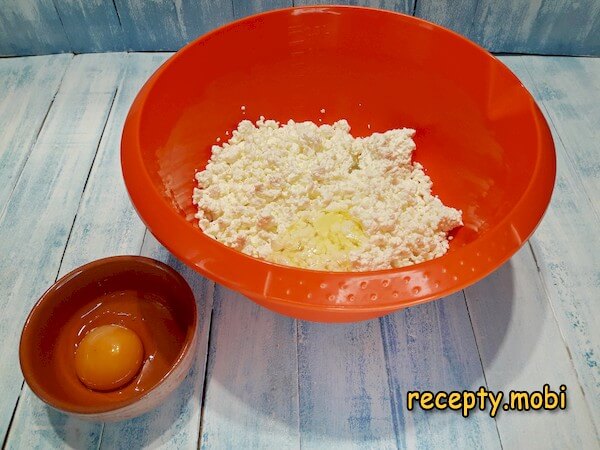
I transfer the cottage cheese into a large bowl and add 2 of the egg whites, setting the yolk from the fourth egg aside for brushing the boats – this gives a "gloss" to the boat edges.
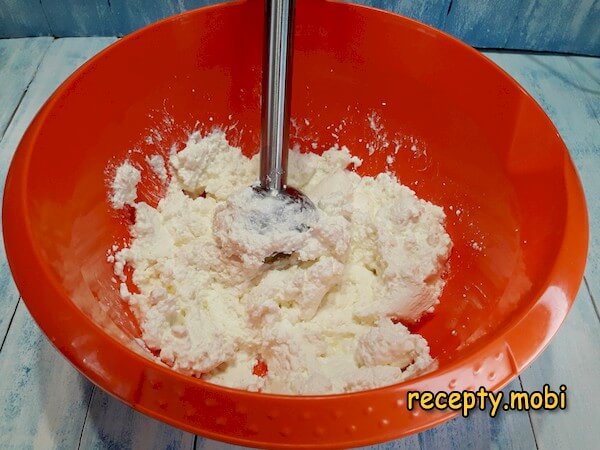
If the cottage cheese is paste-like, you can simply mash it with a fork together with the egg whites and salt. Granular cottage cheese, however, will need to be pressed through a sieve or blended until smooth and creamy – this is the secret to a smooth clean-eating dough.
I add the rice flour to the bowl – the "gluten-free" base of the dough for strict clean eating.
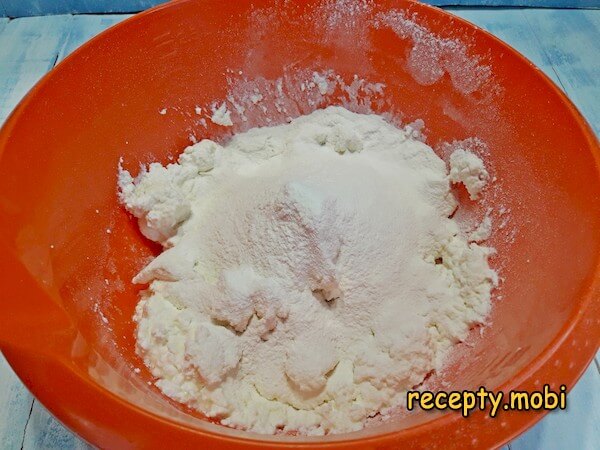
Right here I knead the dough by hand – it will turn out quite sticky, but it is best not to add more flour, so the khachapuri don't come out tough. The "stickiness" is normal for clean-eating dough.
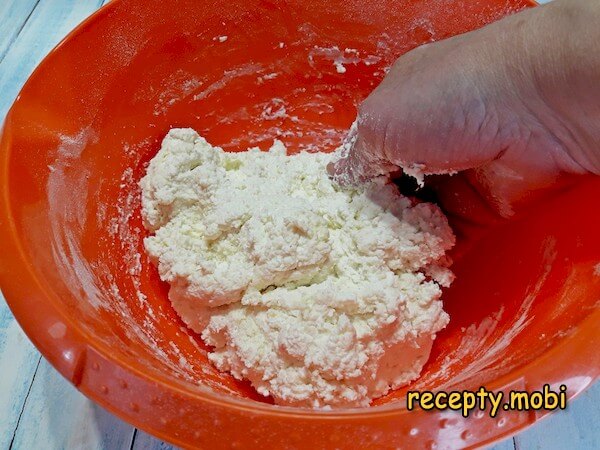
For the filling I grate the suluguni – a stretchy cheese is the "heart" of a classic khachapuri.
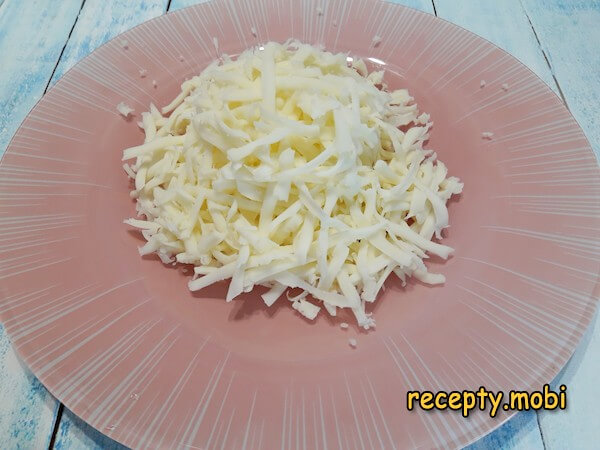
I finely chop the herbs – dill and parsley add a "fresh Georgian" accent.
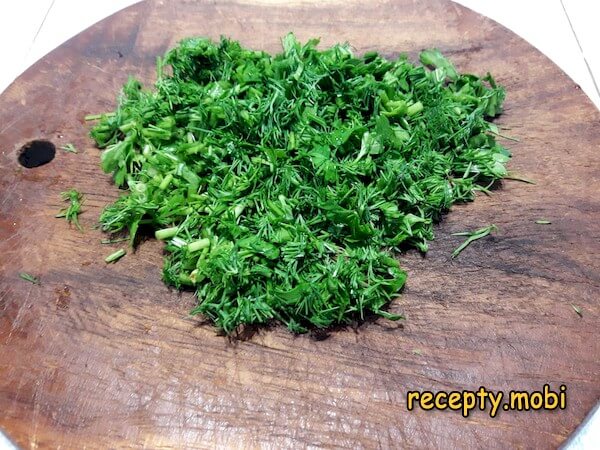
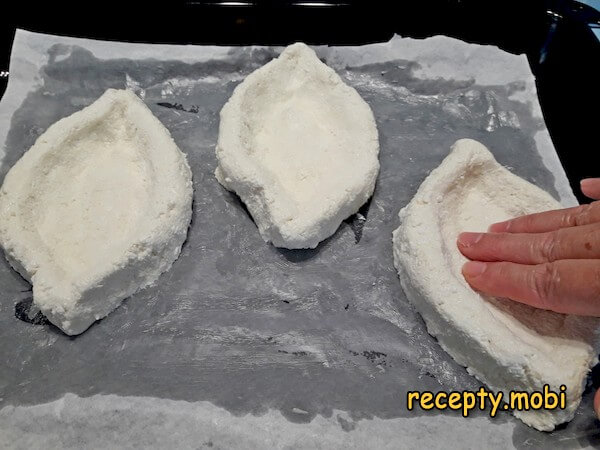
I grease my hands with vegetable oil to keep the dough from sticking. I divide it into 3 equal parts and shape each into something like a boat right on the baking sheet. I make a flat, sunken base and raised edges – the "boat" is precisely the shape of an Adjarian khachapuri.
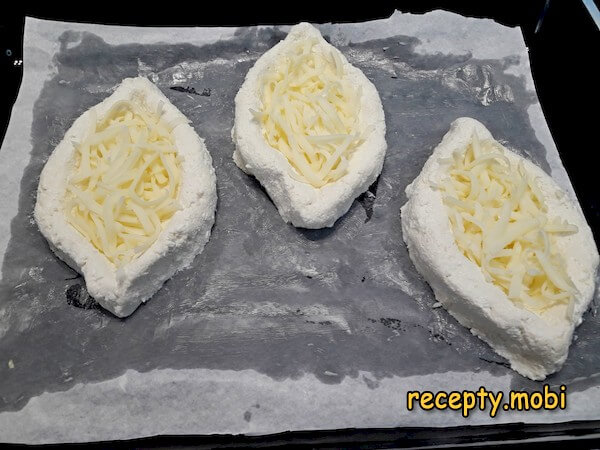
I distribute two-thirds of the cheese across the boats – the remaining 1/3 goes on top at the finish.
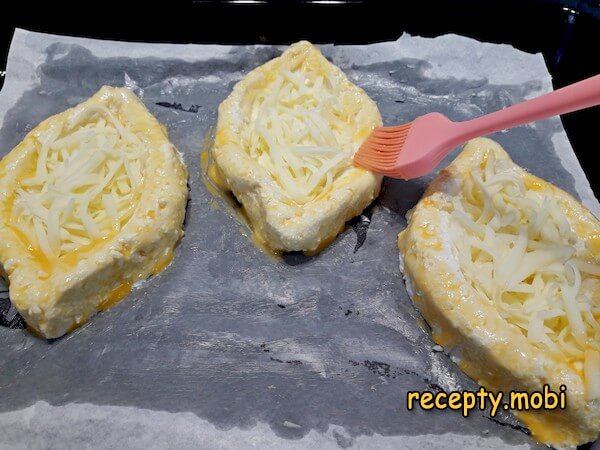
With the yolk set aside for greasing, I go over the edges of the boats. I put the baking sheet on the middle rack of the preheated oven – the yolk will give a "golden" colour.
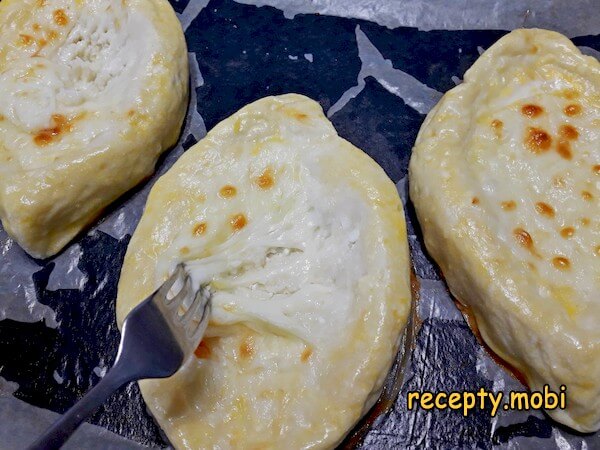
After 25 minutes I take the khachapuri out, although they are not quite done yet. I don't turn the oven off – it is still needed for the final stage.

With a fork I push the melted cheese to one side, freeing up a small hollow for the yolk – this is the "nest" for the yolk-eye.
Into each hollow I carefully place a yolk, trying to keep them whole – it is precisely the liquid yolk that is the "heart" of an Adjarian khachapuri.

I lightly sprinkle the top with the remaining suluguni and put the baking sheet back into the oven – an extra cheese layer.

After about 3–4 minutes the new layer of cheese will melt, and the yolk will set with a thin surface film. The boats will be completely ready – you can take them out of the oven. Inside, the yolk should be liquid, like the "heart" of an Adjarian khachapuri.



Tips
- 1
COTTAGE CHEESE + RICE FLOUR – the secret of clean-eating dough. Classic khachapuri dough is flour + kefir/matsoni + yeast or soda. That is the "ordinary" version, with gluten and carbohydrates. The clean-eating version: 400 g of cottage cheese (a source of protein) + 100 g of rice flour (a gluten-free carbohydrate) + 2 egg whites (the binder). A cottage-cheese-to-flour ratio of 4:1 gives a tender dough that doesn't "spread out" during baking. The key difference from ordinary khachapuri: fewer carbohydrates, more protein, no yeast. For strict clean eating the quality of the cottage cheese matters – soft, paste-like, medium fat content of 5–9%.
- 2
THE BOAT WITHOUT LEAVENING – the secret against "spreading". Ordinary dough contains soda or baking powder, which make the dough rise. In an Adjarian khachapuri leavening breaks the shape – the dough "spreads out", the edges sink, and the boat turns into a "puddle". That is why neither the ordinary Adjarian version nor the clean-eating one uses any leavening. The dough is shaped by hand strictly just before baking, and the edges are made high enough (3–4 cm) to hold the yolk.
- 3
THE LIQUID YOLK – the secret of authentic serving. If you bake the khachapuri together with the yolk right from the start, the yolk sets completely within 25 minutes – that will be an "omelette", not an Adjarian khachapuri. The authentic way: in 25 minutes the dough and cheese bake, the boats are TAKEN OUT of the oven, a raw yolk is placed into the hollow, and they are RETURNED for another 3–4 minutes. The yolk sets on top with a thin film, while inside it stays liquid. The guest stirs the yolk into the cheese while eating – the "sauce" forms inside the boat itself. The essential rule: a raw yolk, into the hollow, right at the very end.
- 4
THE STRETCHY CHEESE – the secret of the right filling. Suluguni (the Georgian classic) is the main choice. Alternatives: fresh mozzarella (not "pizza mozzarella"), Adyghe cheese (with a tablespoon of sour cream added), lightly salted brynza (soak it first to remove salt), and salty feta (used sparingly, about 1/3). Categorically unsuitable are hard cheeses like Russian cheese, gouda or cheddar – they melt but don't "stretch". For strict clean eating, brynza or Adyghe cheese (less fat) work best. The "stretchy cheese" principle is also used in lazy khachapuri with cheese in a skillet.
FAQ
What can replace suluguni in the recipe? +
Suluguni is a Georgian stretchy cheese, ideal for khachapuri. If you don't have it, the best alternatives are: fresh mozzarella (it stretches in a similar way), Adyghe cheese (soft, neutral, with a pinch of sour cream for stretchiness), brynza after a long soak (salty, for a salty authentic taste), feta (salty, half-and-half with mozzarella), and Kobi cheese (a Georgian alternative). A 50/50 combination of mozzarella + Adyghe cheese is the optimal replacement for suluguni. Ordinary "Russian" hard cheese is categorically unsuitable – it doesn't stretch and is dense.
Can I use wheat flour instead of rice flour? +
Yes, but then it is no longer a strict clean-eating version. Wheat flour will give an "ordinary" khachapuri with gluten and a lot of carbohydrates. If clean eating isn't critical, use whole-grain wheat flour (closer to clean eating) or premium wheat flour (classic baking). For a gluten-free clean-eating version, use a bag of gluten-free flour (a blend of rice, corn and tapioca), corn flour (it gives a characteristic yellow tint), or buckwheat flour (with a slight nutty flavour). Oat flour also works, but gives a denser structure. Coconut flour is categorically unsuitable – it "absorbs" all the moisture from the dough.
How many calories are in one portion of healthy khachapuri? +
A standard portion (1/3 of the recipe, about 230 g) is around 480 kcal. Composition: 130 g cottage cheese = 110–120 kcal, 33 g rice flour = 110 kcal, 50 g suluguni = 145 kcal, 1 yolk = 60 kcal. By macros: 35 g protein, 22 g fat, 25 g carbohydrates. This is a complete "clean-eating meal" with a balance of macros. To reduce the calories: use fat-free cottage cheese (–30 kcal), brynza instead of suluguni (–40 kcal), or skip the egg white used for brushing the edges. By comparison, an ordinary Adjarian khachapuri "weighs in" at 600–700 kcal per portion because of the yeast dough and butter.
Can I freeze ready-made healthy khachapuri? +
In principle you can, but the quality drops a little. The best way to freeze them is as a SEMI-FINISHED product – shaped "boats" with cheese, without the yolk, on parchment, in the freezer for 1 hour, then into a bag. Store for up to 2 weeks. Bake straight from the freezer at 180 °C for 35–40 minutes (10–15 minutes longer than fresh ones), adding the yolk according to the scheme 3–4 minutes before the end. Ready-baked khachapuri can also be frozen (for up to 1 week), but after thawing the yolk becomes "rubbery". It is better to make them "fresh" on the day you eat them – the process isn't difficult.
- Comment
or post as a guest
Be the first to comment.