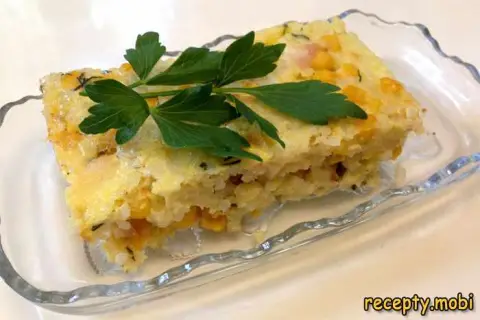
avg —
Kugel

Instructions
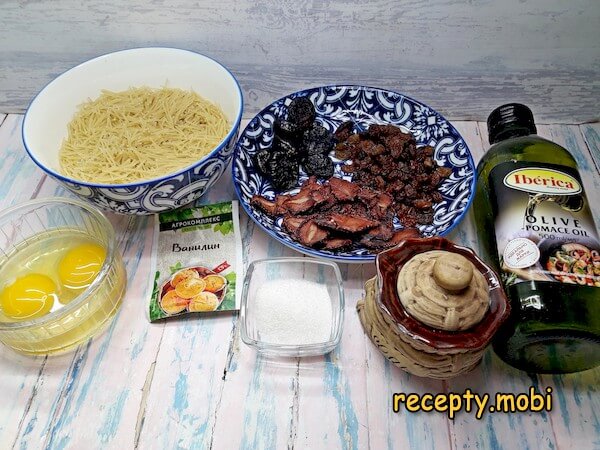
I prepare the ingredients from the list for making the kugel. The vermicelli can be replaced with fine noodles. Instead of the dried fruits listed, you may use others to taste, but raisins are essential. You can switch the oven on to 180 degrees straight away.
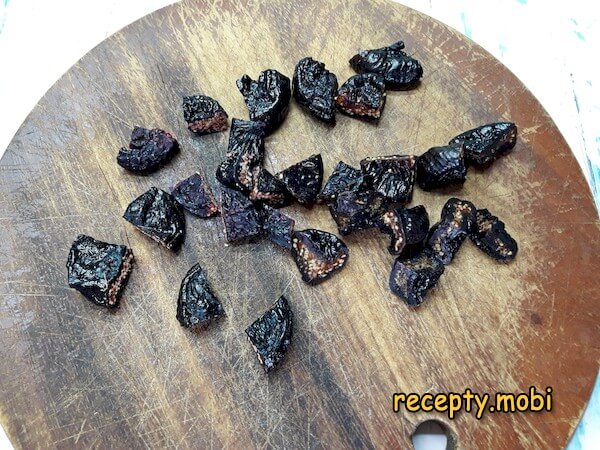
I cut large dried fruits, such as figs, into several pieces, so that the whole filling is roughly the same size.
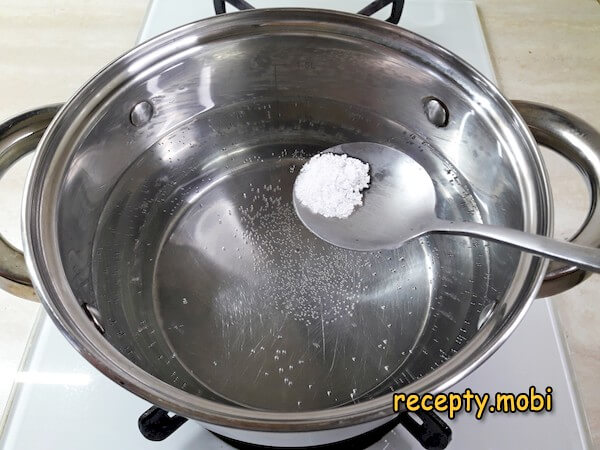
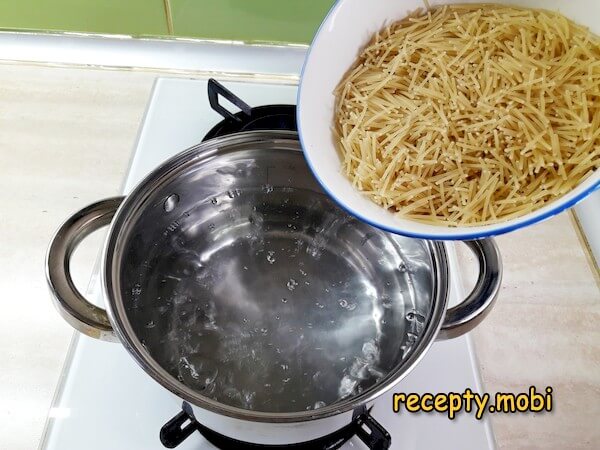
I put a pot of water on the heat. Once it comes to the boil, I salt the water.
I add the vermicelli. I cook it, stirring occasionally, for 3 minutes.
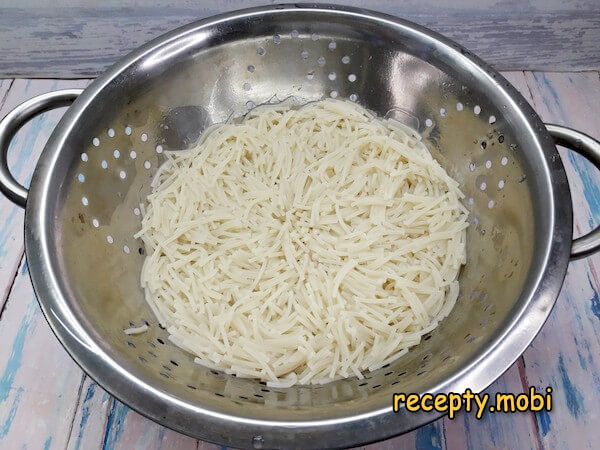
Then I drain it in a colander – let all the water run off.
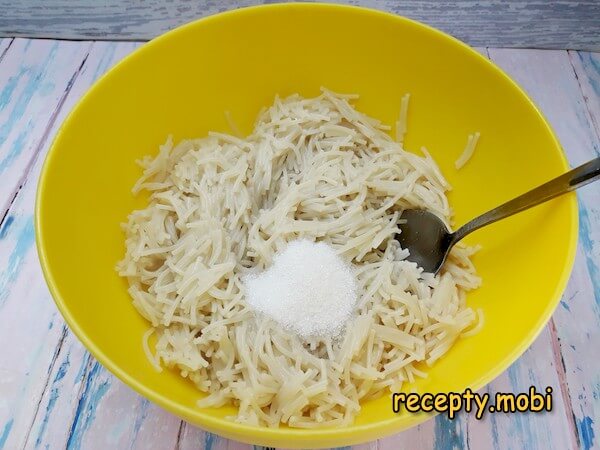
I transfer the boiled pasta to a bowl. I flavour it with vanillin and sweeten it with sugar.
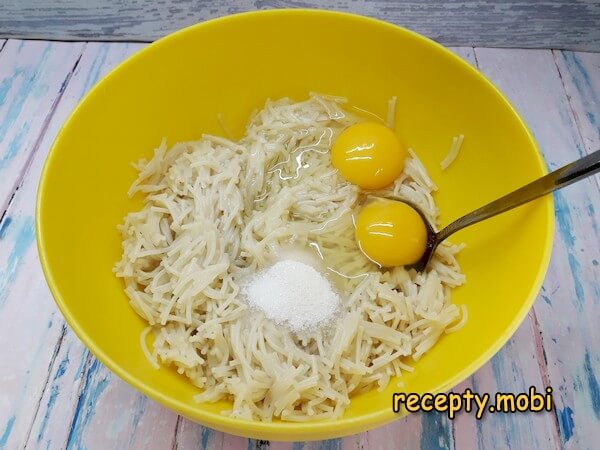
I add the eggs – they help bring all the different components together into a single whole.
I season the vermicelli with the dried fruits and raisins.
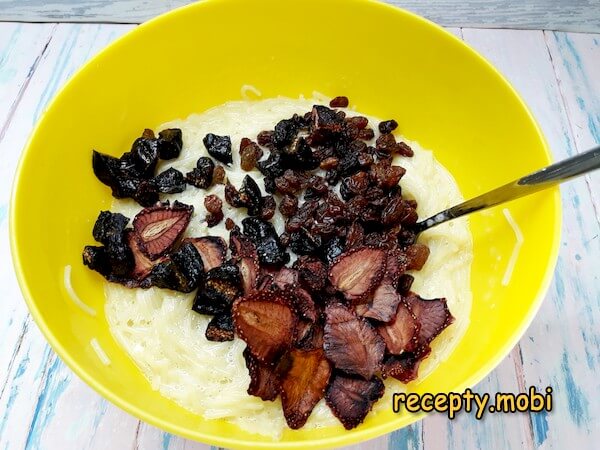
I stir the mixture, working towards an even distribution of the filling.
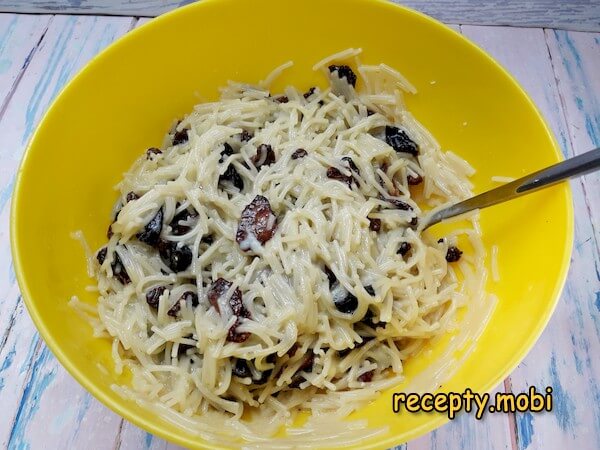
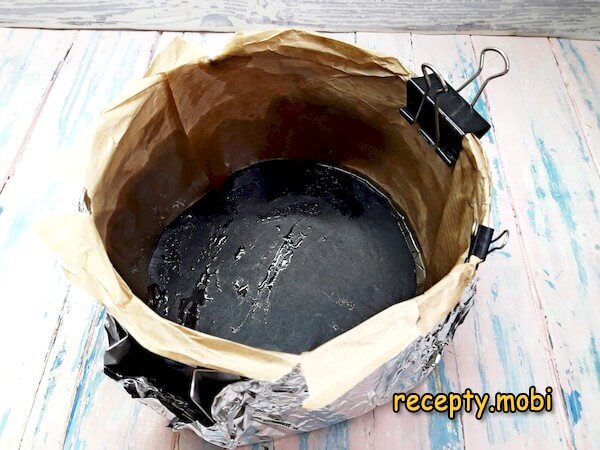
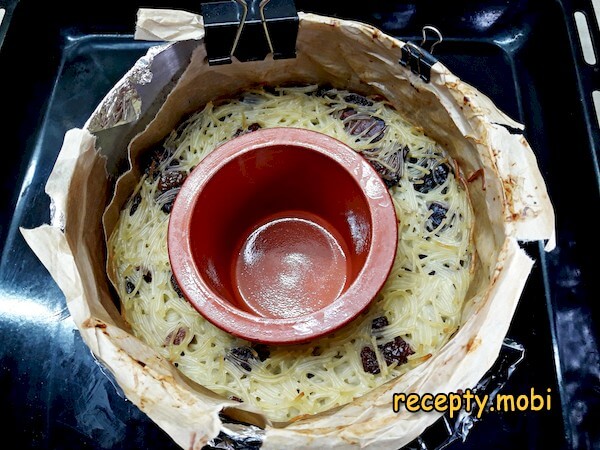
I prepare the pan, lining it with parchment inside and foil outside if needed. I grease the sides and bottom with vegetable oil.
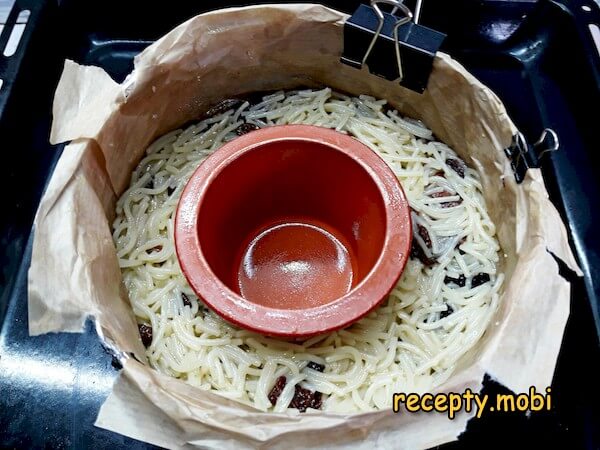
I place a glass or a round ceramic container in the centre. I fill all the free space with the vermicelli and filling. I tamp the mixture down lightly, expelling the air. I put the assembled dish into the oven, already heated to the right temperature.
After 40 minutes, the sweet Jewish dish will be ready.


Tips
- 1
VERMICELLI 3 MIN – the secret of the texture. Any longer and it will turn to mush after baking. Three minutes keeps it "al dente".
- 2
RAISINS ARE ESSENTIAL – the secret of authenticity. They are the "soul" of a sweet kugel. Without raisins, it is just an ordinary vermicelli casserole.
- 3
A GLASS IN THE CENTRE – the secret of the "round" shape. You get a ring with a hole in the centre – the classic shape of a Jewish kugel.
- 4
TAMP DOWN LIGHTLY – the secret against air. Air in the kugel means hollows. A light tamping gives a compact piece. The same principle works in other kinds of sweet casserole.
FAQ
Which vermicelli should I choose? +
Ideal is fine "cobweb" vermicelli or "stars" (200 g). Alternatives: thin noodles (200 g – the classic), "ear" pasta (200 g – unusual), broken long spaghetti (200 g – the budget option), egg vermicelli (200 g – the premium choice, more flavour). Fresh, in-date packs are the premium choice. Do not use: wholegrain (a different taste), out-of-date, or buckwheat vermicelli (it will change the flavour). For the "classic Jewish" version, fine vermicelli is a must. For premium, use Italian egg pasta, pasta all'uovo.
What can replace the figs and strawberry chips? +
Alternatives: chopped dried apricots (40 g – more delicate), stoned prunes (40 g – the "classic"), stoned dates (40 g – premium), dried cherries (40 g – more vivid), candied pineapple or orange (40 g – "tropical"), dried apples (40 g – the budget option). Fresh dried fruits are the premium option. Do not use: heavily sugared fruits (they will throw off the sweetness) or salted dried fruits. For the "classic", raisins plus at least one other dried fruit are a must. The main thing is a final weight of 60 g.
How long does kugel keep? +
In the fridge, wrapped in film or in a container, 3 days. Any longer and the vermicelli goes stale and the raisins harden. Before serving, reheat it in the oven for 10 minutes at 170 °C, or in the microwave for 1–2 minutes. Portioned in the freezer, up to 1 month. Thaw it in the fridge for 6–8 hours. Fresh kugel is at its best 30 minutes after cooling. On the second day the flavour "settles" and is brighter. Do not leave it at room temperature for longer than 12 hours in a warm room – the eggs may spoil. Dust it with powdered sugar before serving.
What to serve with kugel? +
The Jewish classic: with a scoop of vanilla ice cream. With whipped cream or soured cream. With a cup of coffee with milk. With hot cocoa or a cappuccino. With black tea and lemon. With a berry sauce or jam. With a fruit salad. With a cup of herbal tea with mint. With hot milk – the "children's" option. With a glass of dessert wine (Cahors, Muscat). For the "Sabbath lunch" – a Jewish tradition. Right after a cold starter (gefilte fish). With kompot. A versatile sweet dessert-casserole for family meals.
- Comment
or post as a guest
Be the first to comment.