avg —
Churros with milk (classic recipe)

Instructions
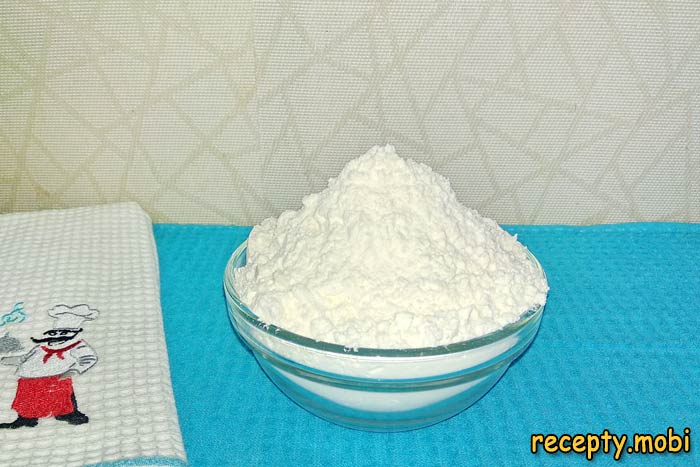
Prepare all the ingredients on the work surface. Take the flour (400 g) out 1–2 hours in advance so it warms to room temperature. Be sure to sift it through a sieve – this removes any bran and enriches it with oxygen. Sifted flour gives a more pliable dough and airier churros.
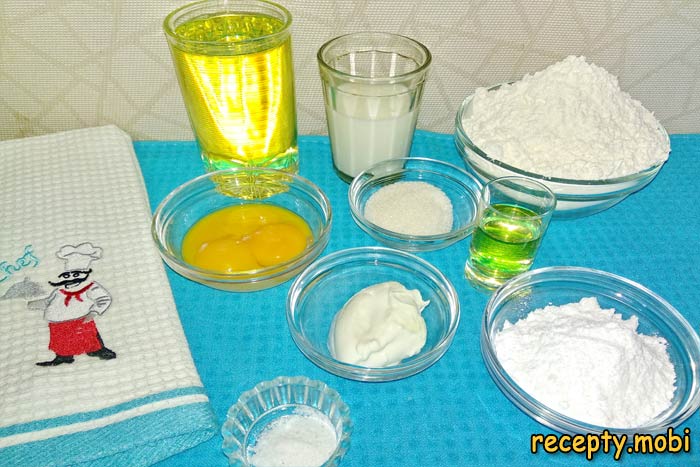
Separate the yolks (3) from the whites and transfer them to a large mixing bowl. Don't throw the whites away – you can use them for meringue, an omelette, or a baked meringue. Lightly beat the yolks with a balloon whisk until smooth, about 30 seconds – there's no need for a mixer, hand mixing is enough.
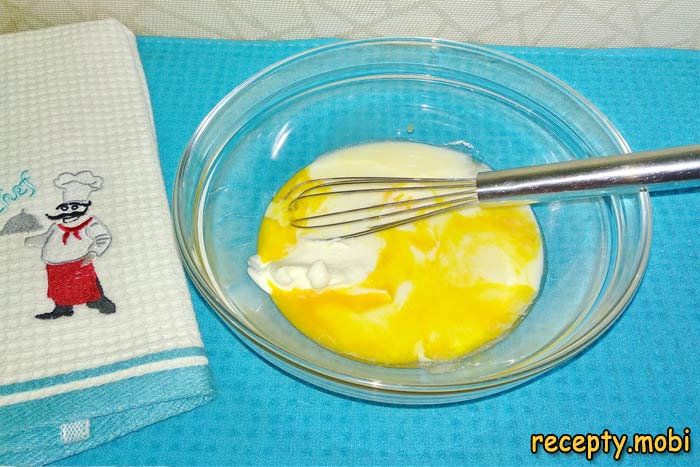
Add the salt (¼ tsp), sugar (1 tbsp), sour cream 20% (1 tbsp), milk (125 ml) and brandy or vodka (2 tbsp) to the yolks. The alcohol is the secret ingredient of classic churros: during deep-frying the spirit evaporates quickly, leaving behind the characteristic bubbles and crisp structure.
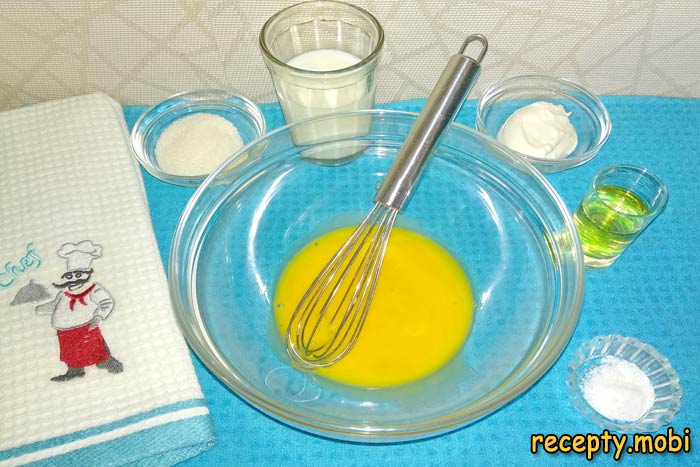
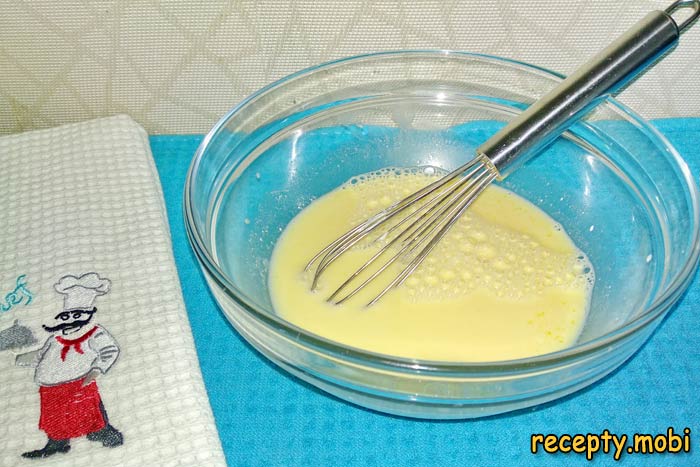
Mix all the ingredients thoroughly with a whisk until smooth, about 1–2 minutes. The liquid components should combine completely without separating. The sugar and salt should dissolve fully – check by touch (there should be no crystals).
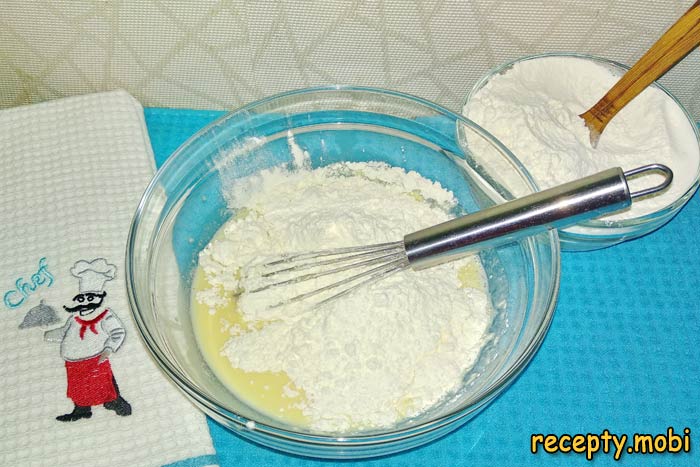
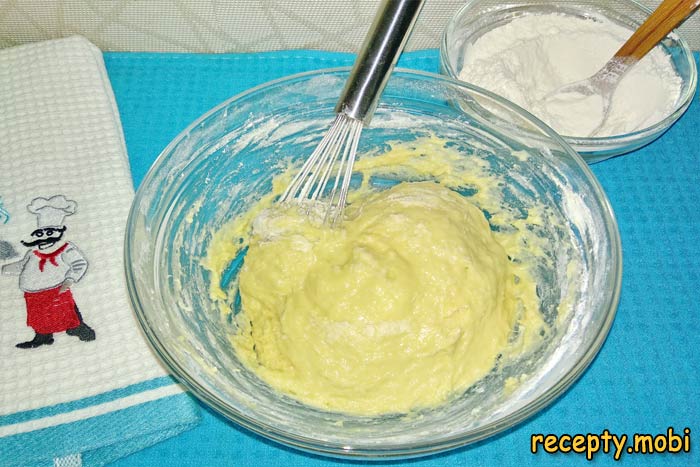
Gradually add the sifted flour to the liquid mixture, about 100 g at a time. After each addition, work it in thoroughly with the whisk, breaking up any lumps. When the dough becomes too stiff for the whisk, switch to a wooden spatula or knead by hand.
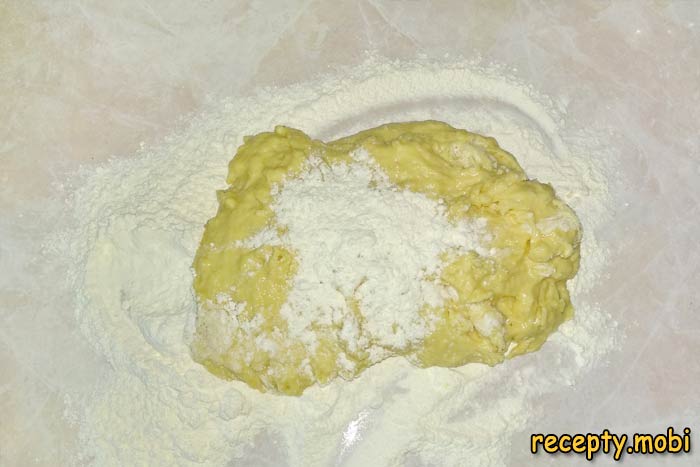
When the dough can no longer be worked in the bowl, transfer it to a floured work surface. Dust the top with flour and carry on kneading by hand. At first the dough is sticky and clings to your hands and the table – this is normal, keep kneading. Do NOT add more flour than the stated 400 g, or the churros will turn out tough.
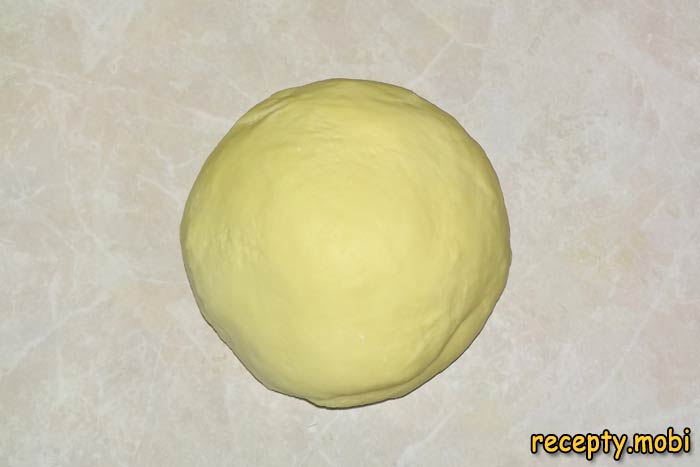
Knead the dough by hand for 7–10 minutes until you have a soft, elastic ball that has stopped sticking to your hands and holds its shape well. The finished dough should be springy, smooth and uniform. This is "secret no. 1" of good churros – proper kneading to develop the gluten.
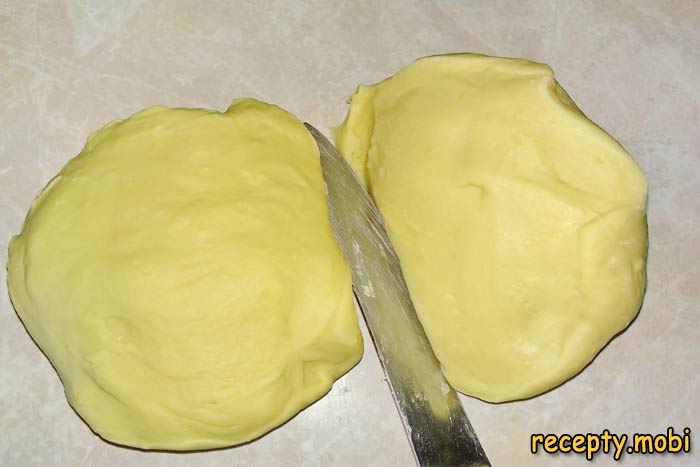
Check the quality of the kneading: cut the dough in half and look at the cross-section. The middle should be even, smooth dough with no dry "islands" of flour. If the dough is too soft in the centre, gather it back together and knead for another 2–3 minutes. Uniformity throughout is critical for good rolling.
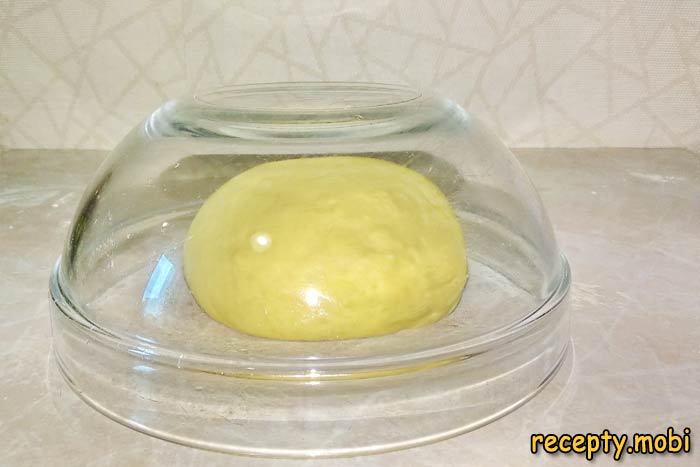
Gather the dough back into a single uniform ball. Cover it with an upturned bowl or a damp towel – this protects it from drafts and drying out. Leave it to "rest" at room temperature for 40 minutes. This step is ESSENTIAL – the gluten relaxes, the dough becomes more elastic and rolls out easily into a thin sheet.
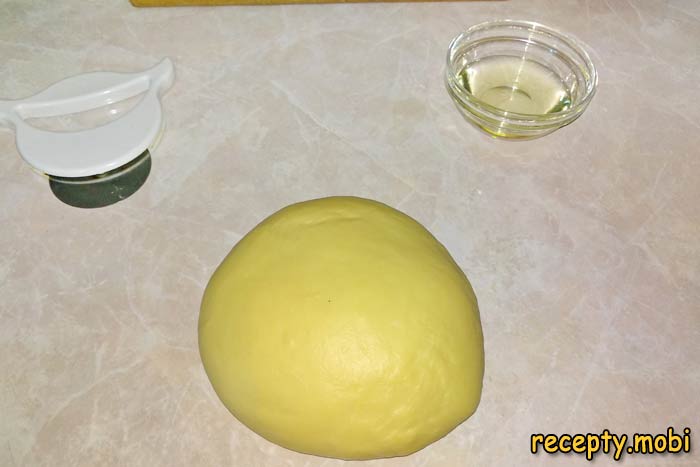
After 40 minutes the dough is rested, uniform and properly soft, ready for shaping. Prepare your tools: a rolling pin, a pizza cutter or a sharp long knife, cookie cutters (optional, for the "roses"), and a wooden stick to fix the "roses" together. Grease the work surface with vegetable oil (NOT flour – flour will burn in the hot oil and contaminate it).
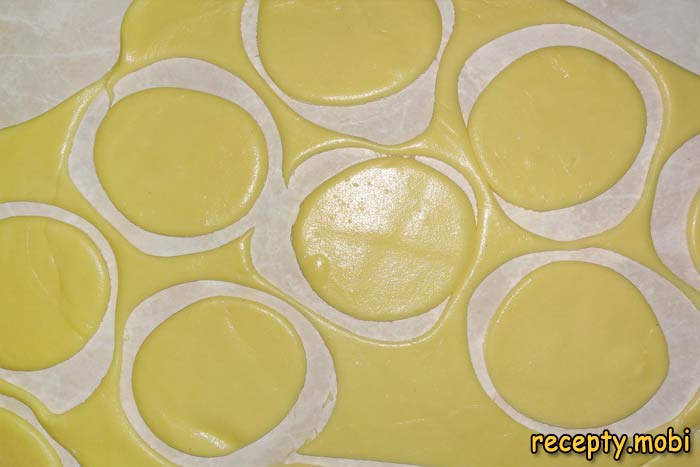
Roll the dough out with the rolling pin into a very thin sheet, 1–2 mm – the thinner it is, the crispier the churros will be. Thin dough is ideal for the classic "twists" and "branches". For the "roses" you can roll it a little thicker (3 mm) – the three-layer construction will already give the right crunch.
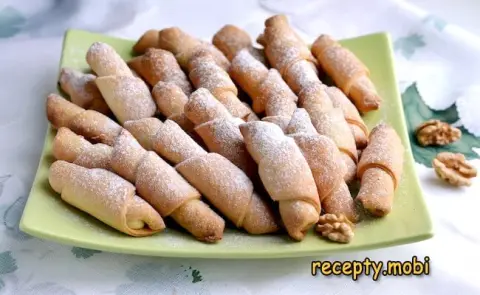
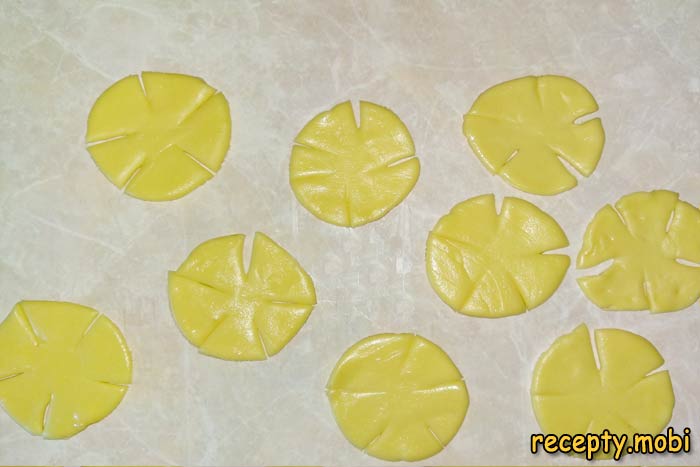
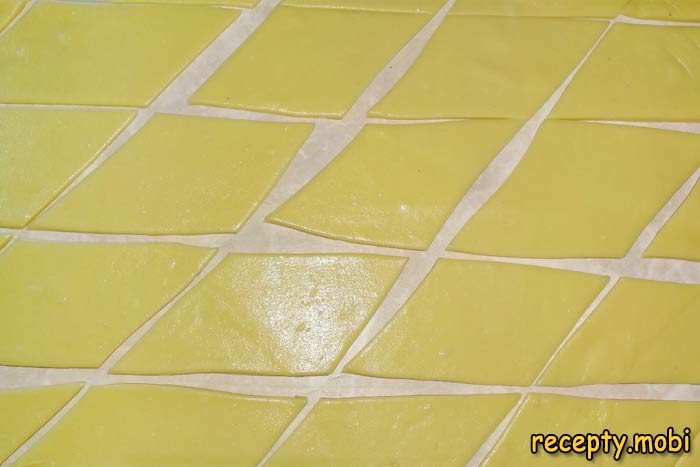
Shape the different kinds of churros. Classic "twists": cut diamonds 4x8 cm with the pizza cutter, make a lengthwise 3 cm slit in the centre of each, and pull one of the ends through it 1–2 times. "Roses": cut out circles 5 cm in diameter (a number divisible by 3), make 5 cuts around the edge of each circle (without cutting all the way through), stack 3 circles together with the cuts offset, and pierce the centre with a stick to fix them. "Branches": cut strips 1x10 cm and make cuts on both sides.
Pour the vegetable oil (500 ml) into a heavy-bottomed pan or deep-frying pot – there should be a layer 4–5 cm deep. Heat it over high heat to 180°C (you can test with a piece of dough: it should rise to the surface straight away with bubbles).
Fry the churros in small batches of 5–6 pieces at a time – don't load the fryer completely or the oil will cool and the churros will turn out greasy. Fry the more delicate "roses" first, then the "twists" and "branches". Each batch is ready in 30–60 seconds – turn them with a slotted spoon as soon as the underside turns golden.
Lift the cooked churros out with a slotted spoon and lay them on paper towels to soak up the excess oil. Let them cool completely to room temperature. Once cooled, dust the churros generously with powdered sugar through a sieve (100 g). The "roses" can be decorated with berries or raisins in the centre. The churros with milk are ready!
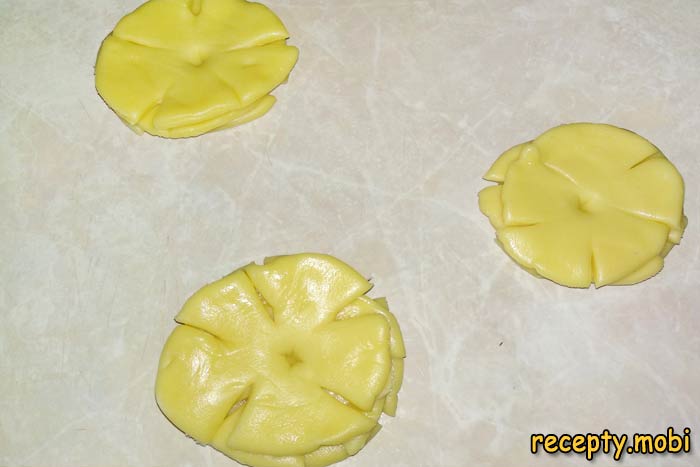
The classic dough looks especially interesting made in different sizes and shapes. You can also cut small rhombuses from the dough and leave them uncut. In many countries rhombus-shaped dough like this is made for Easter as a symbol of bunny ears.


Tips
- 1
ALWAYS let the dough "rest" under a bowl for 40 minutes – without this the sheet won't roll out thinly and will tear during shaping.
- 2
Roll the dough as THIN as possible (1–2 mm) – the thinner it is, the crispier the finished churros will be.
- 3
Grease the work surface with oil, NOT flour – flour will burn in the hot oil and spoil it. I use a similar principle when making deep-fried baursaki.
- 4
The alcohol (brandy, vodka) is the secret ingredient. During frying it evaporates, leaving behind the bubbles and the characteristic crisp structure.
FAQ
What can replace the milk in the recipe? +
Suitable substitutes are: water (the lenten, milk-free version – the churros will be less airy), kefir or soured milk (a more "Russian" classic, with a slightly sour note), cream 10–20% (a richer version), whey (a lighter version), or milk diluted 50/50 with water (a compromise). For gluten-free versions, almond or soy milk with lemon juice (as an imitation). The main condition is that the liquid should be warm, at room temperature, not straight from the fridge. Milk is the "classic" choice for Soviet-style churros, with a delicate creamy flavour.
Can I make lenten churros without eggs and milk? +
Yes, the lenten version is popular during Lent. Replace the milk with water (125 ml), leave out the yolks and sour cream, and increase the vegetable oil in the dough to 2 tbsp for pliability. The ratio: 400 g flour + 130 ml water + 2 tbsp sugar + ¼ tsp salt + 2 tbsp vegetable oil + 2 tbsp vodka + a pinch of vanillin. Keep the alcohol – it's critical for the bubbles. The dough will be less "golden" in colour but no less crispy. Lenten churros are dusted with powdered sugar just as strikingly and served at an Easter tea.
How long do the finished churros keep? +
Crispy churros keep at room temperature in an airtight container (a glass jar or plastic box) for up to 5–7 days. The main thing is to protect them from moisture in the air, otherwise they will go soft within a day. Do NOT store them in the fridge – condensation will ruin the crisp crust. Dust the cooled churros with powdered sugar right before serving – on warm churros it will "melt" and soak in. You can freeze them for 1 month in airtight bags – before serving, thaw at room temperature for 30 minutes and warm them slightly in the oven (5 min at 100°C) to bring back the crunch.
What to serve churros with? +
They are ideal with black or green tea with lemon – a classic Russian tea with home baking. With espresso or cappuccino for a more "European" serving. With cocoa and milk, hot chocolate or kissel for a children's option. With a milkshake or a fruit smoothie for a summer serving. You can serve them with homemade jam (cherry, raspberry, apricot), honey or condensed milk for "dipping". For the Easter table – with brightly coloured eggs and kulich. For a wedding or anniversary table – a large dish with churros in different shapes, dusted with powdered sugar like a "snowflake".
- Comment
or post as a guest
Be the first to comment.