avg —
Cottage Cheese Easter Cake without Yeast

Instructions
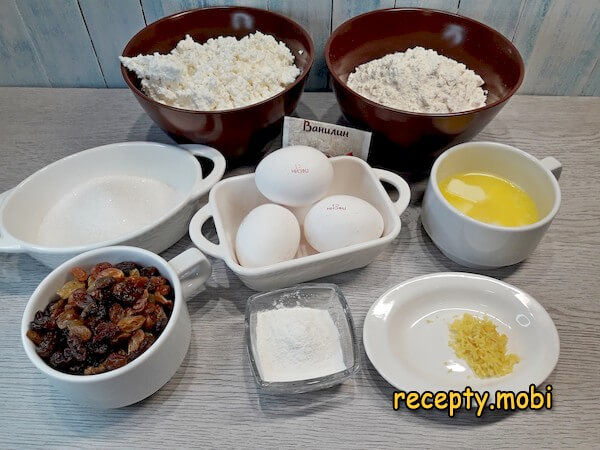
I prepare the listed ingredients. The cottage cheese must not be too wet (if it is literally floating in liquid, squeeze it through cheesecloth). But dry, fat-free cottage cheese is no good either; its fat content should be above 5%. I melt the butter to just above room temperature. The flour quantity is approximate – it will depend on how moist the cottage cheese is.
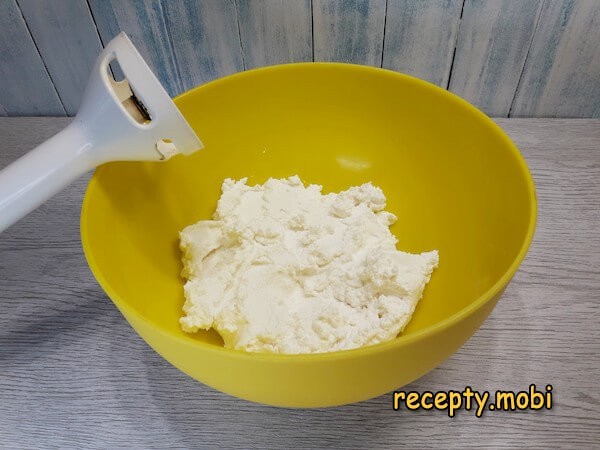
The dough comes together very quickly, so I turn the oven on straight away to 160 degrees, but with bottom heat only. I blitz the cottage cheese with a blender or pass it through a sieve. The fewer cottage cheese grains remain, the more uniform and tender the crumb of the cake will be.
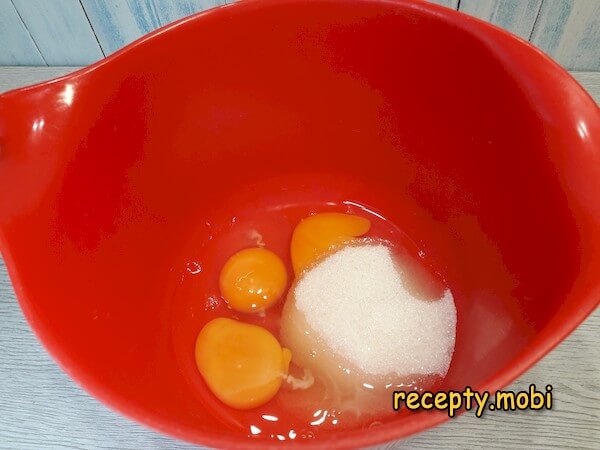
Into a roomy bowl I put the eggs, vanillin, salt and sugar.
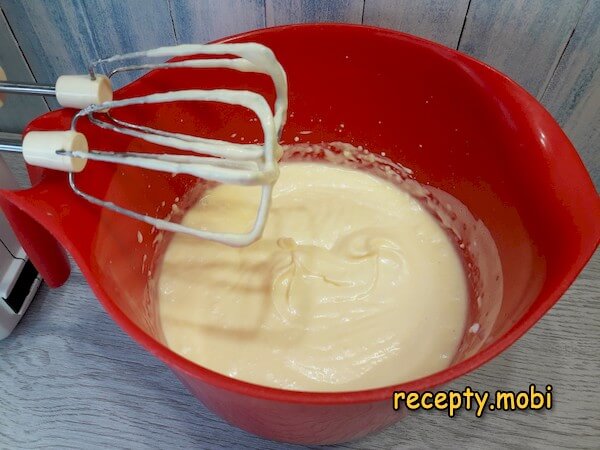
I whisk everything with a mixer to get a fluffy, light mass that has grown a little in volume.
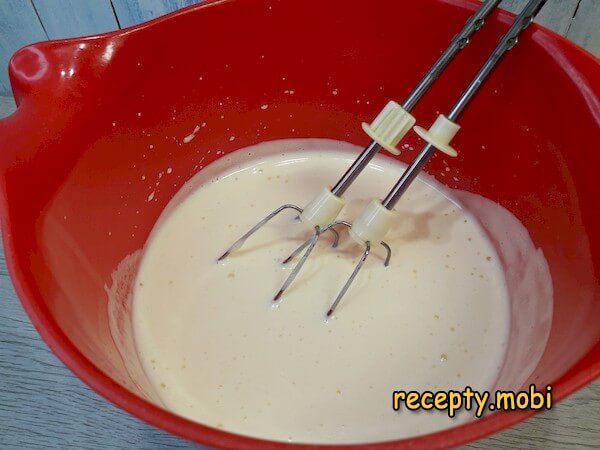
I add the butter and turmeric here as well.
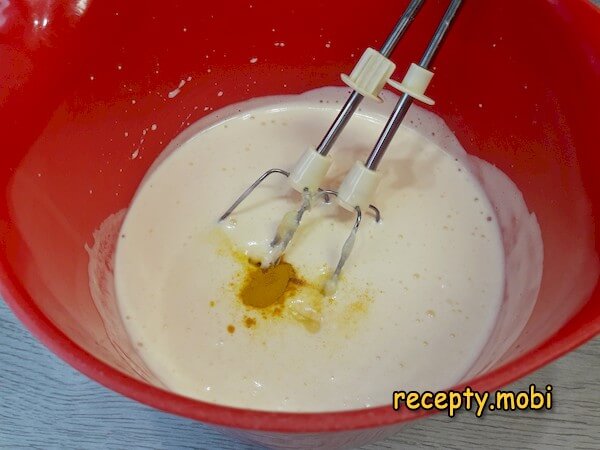
I whisk the mass once more.
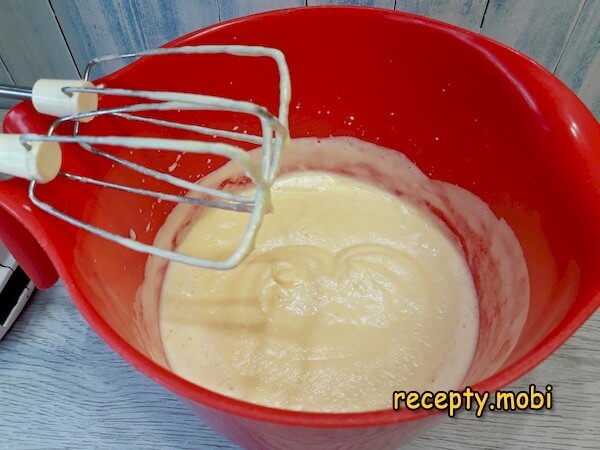
I transfer the cottage cheese into it, but not all at once – in portions.
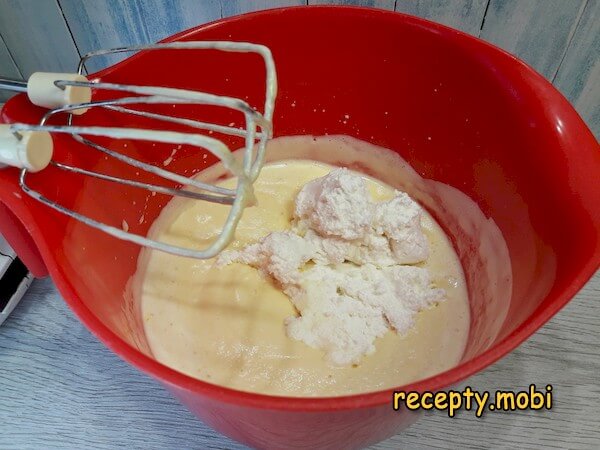
Each time I mix with the mixer on low speed.
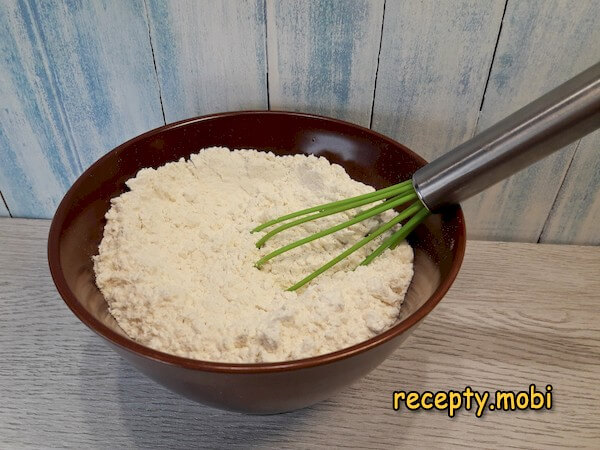
I prepare the raisins by steeping them for 3 minutes in boiling water and then patting them dry with paper towels. Separately, I mix the flour with the baking powder.
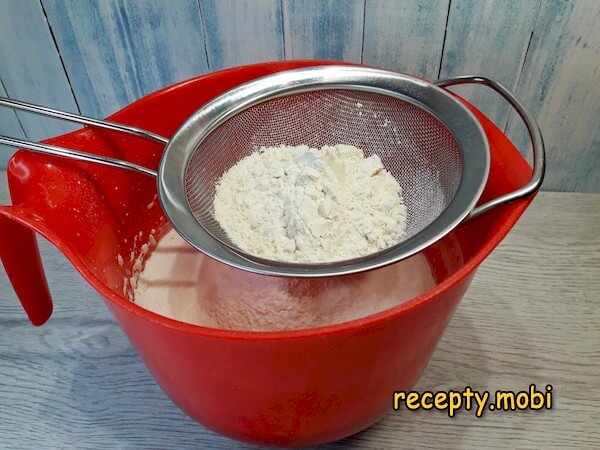
I sift it into the egg-and-cottage-cheese mixture, holding back 40 grams (this leftover may not be needed).
I mix the dough with a spatula so that no dry lumps remain.
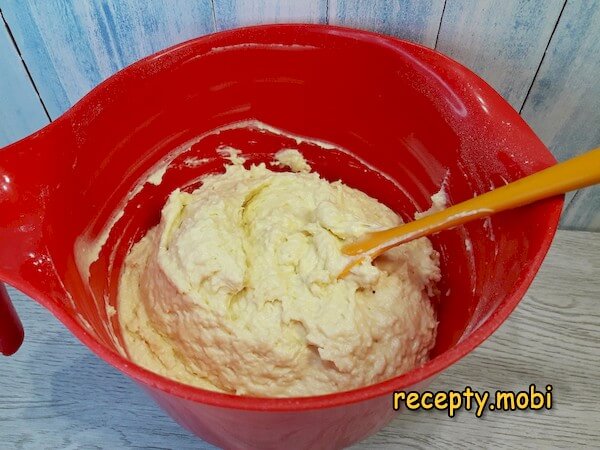
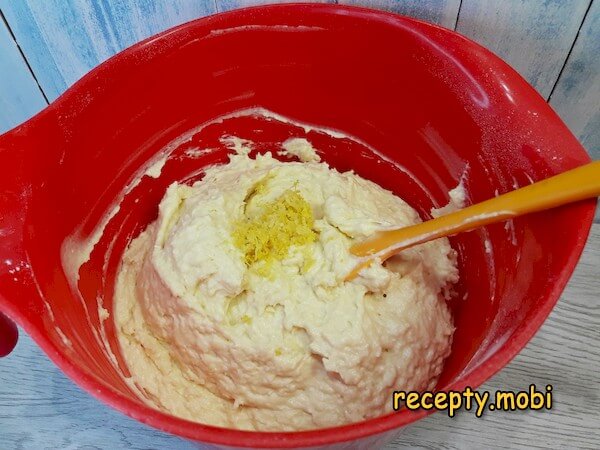
The dough turns out thick, yet sticky and pliable. If it sticks very badly, I add the remaining flour. I also flavour the mixture with lemon zest and stir it in.
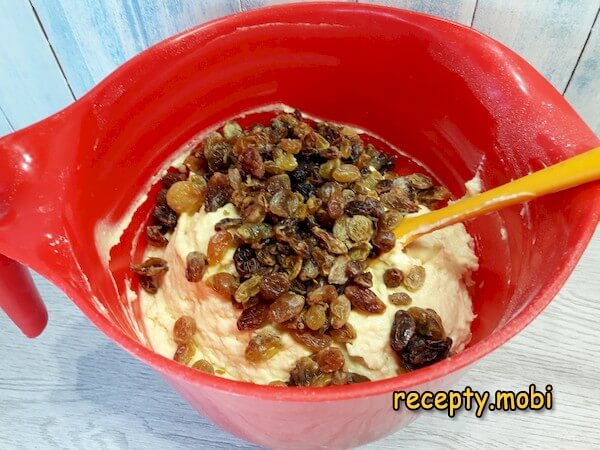
I add the raisins, distributing them evenly with the spatula.
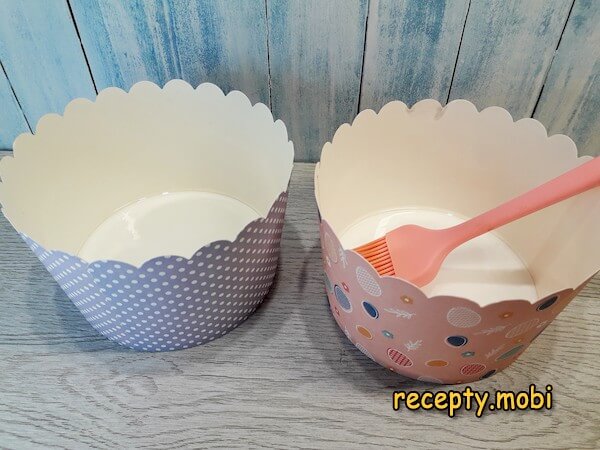
I grease the moulds with refined vegetable oil.
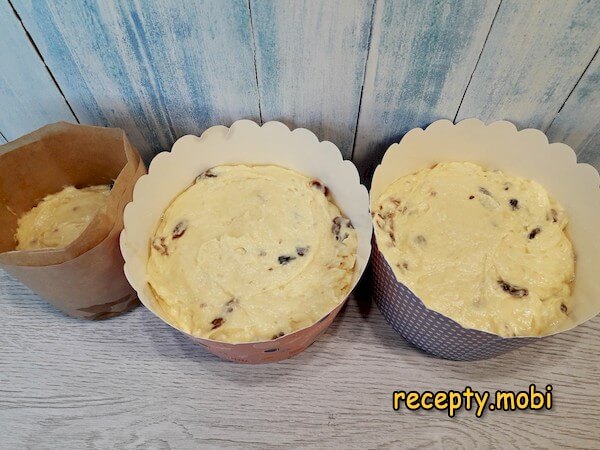
I spoon the dough into the prepared moulds, filling them halfway. I tamp it down well so that no voids remain. I level the top with a spoon dipped in water. I place the tray of cakes in the oven for 40 minutes. The small mould can be taken out after that time, while for the larger ones I switch on top heat and convection for 5 minutes. If the oven has no such functions, I simply finish baking the cakes for 7–8 minutes in the normal mode.
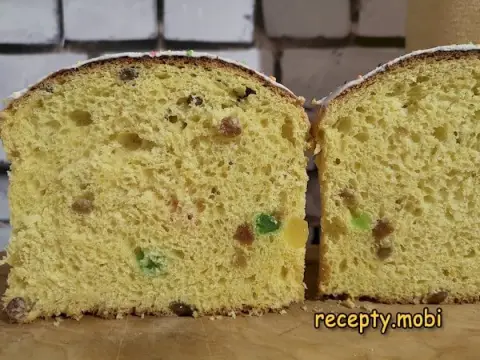
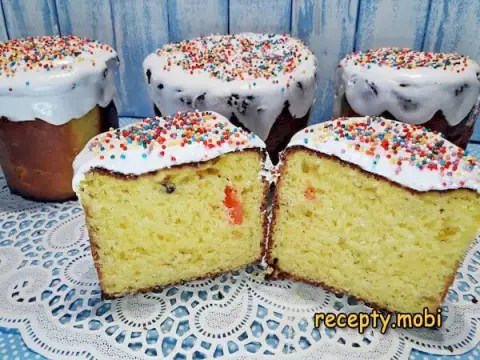
The cakes have browned nicely and baked through.
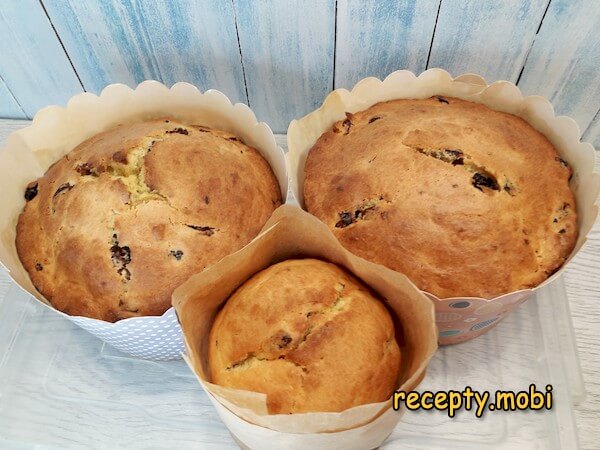
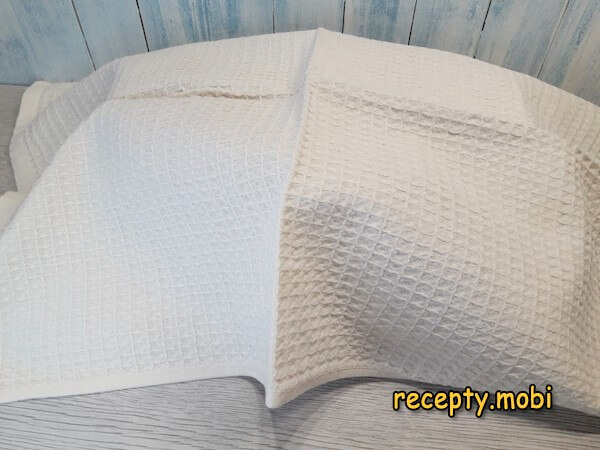
I cover them with a towel and leave them to cool.
Next, I remove the paper mould.
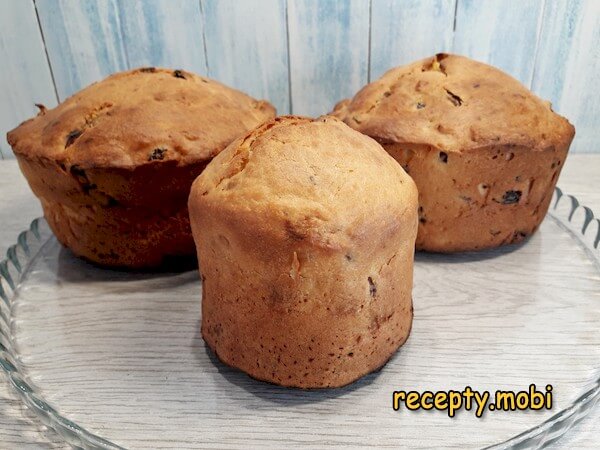
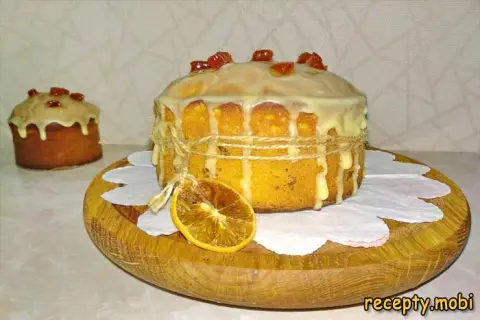
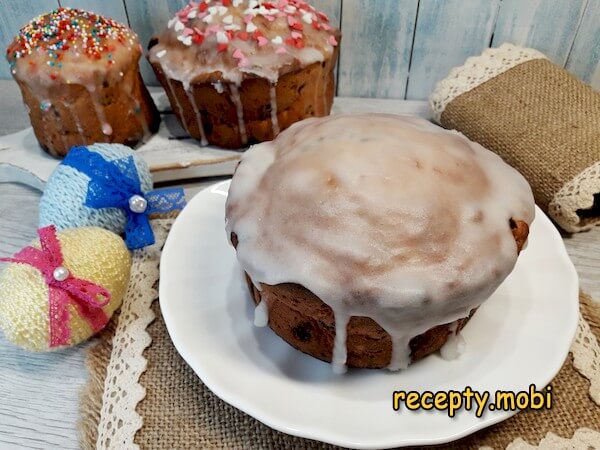
The cottage cheese Easter cake without yeast is ready. I cover it with any of the toppings – fondant or protein glaze, decorating it as you wish.


Tips
- 1
Cottage cheese of 5% or more is the secret to the flavour. Fat-free cottage cheese gives a dry cake. From 5% you get a tender, moist, porous texture with a cottage cheese tang.
- 2
Baking powder is the secret to rising without yeast. 15 g of baking powder lift the dough within minutes during baking. No proofing and no long wait.
- 3
Bottom heat only is the secret to evenness. With top heat the top would burn while the bottom stayed raw. Bottom heat alone at 160 °C bakes evenly.
- 4
Lemon zest is the secret to freshness. Without it the cottage cheese flavour is "cloyingly cheesy". Lemon zest freshens it up and adds an Easter aroma.
FAQ
Which cottage cheese should I choose? +
Ideally, fresh fat cottage cheese of 5% or higher (330 g gives a tender, moist texture). Alternatives: 9% cottage cheese (330 g, richer), 18% cottage cheese (330 g, fattier and brighter), homemade cottage cheese (330 g), soft cottage cheese in a tub (330 g, convenient), a 50/50 blend of 5% and 18% cottage cheese (165 g of each), or mascarpone plus cottage cheese 50/50 (165 g of each, creamier). Do not use: fat-free (the cake comes out dry), out-of-date, or cottage cheese with fruit additions. For a classic cottage cheese cake, 5% fat or higher is a must.
Can I bake it without a mould? +
You can use ordinary muffin or cupcake tins (silicone or metal), cylindrical baking moulds, ceramic baking pots, paper muffin cups reinforced with foil, tinned-meat or food cans about 10 cm tall, or sponge-cake tins 10–12 cm in diameter. Do not use: paper cups without support (they will collapse), or flimsy silicone moulds. For a classic look, a tall, narrow mould is a must to give the cake its characteristic shape.
How long does the cottage cheese cake keep? +
In an airtight box or bag at room temperature – 2–3 days. In the fridge, wrapped in film – up to 5 days. Before serving, let it stand for 30 minutes at room temperature. In the freezer (without icing) – up to 1 month; thaw it for 8 hours in the fridge, then apply the icing. A fresh cake is at its best a few hours after baking, once it has settled. On the second day the flavour is deeper. Cottage cheese cakes go stale faster than yeast ones – do not leave them out in the open. It is ideal to bake them 1–2 days ahead.
Which icing should I use to cover the cake? +
Ideally, a gelatine-based icing without eggs (it does not crumble and is safe). Alternatives: protein glaze (made using the Swiss meringue technique), fondant of icing sugar with lemon or orange juice, chocolate icing (melted chocolate plus cream), sugar icing with milk, or a syrup soak. Decorate with confectionery sprinkles, candied fruit or nuts. For a classic look, white icing and bright sprinkles on top are a must.
- Comment
or post as a guest
Be the first to comment.