avg —
Moroccan pancakes

Instructions
I prepare the ingredients for the Moroccan pancakes. The water should be slightly warmer than room temperature, so it feels mildly warm. That keeps the yeast comfortable but does not let the baking powder start working straight away in the bowl because of an over-warm environment; its action shows up later, directly on the pan.
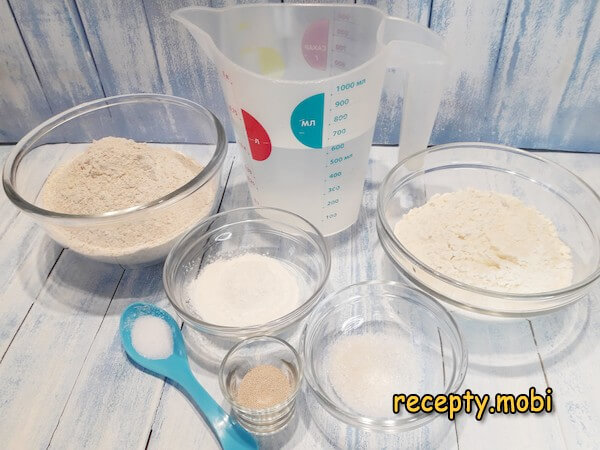
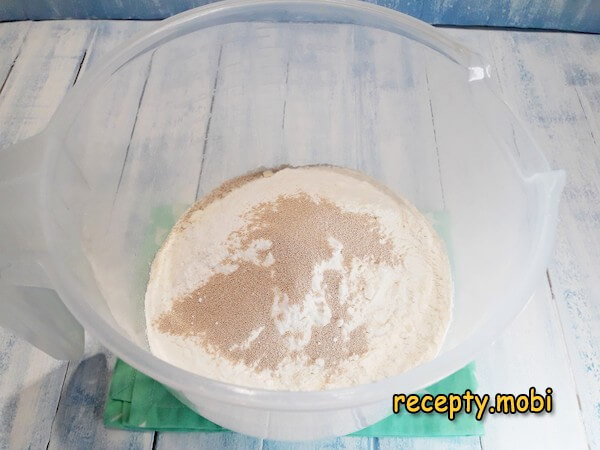
To the bowl with the two types of flour, I add the yeast and the baking powder.
I add the vanillin, sugar and salt to the same bowl and mix everything with a hand whisk.
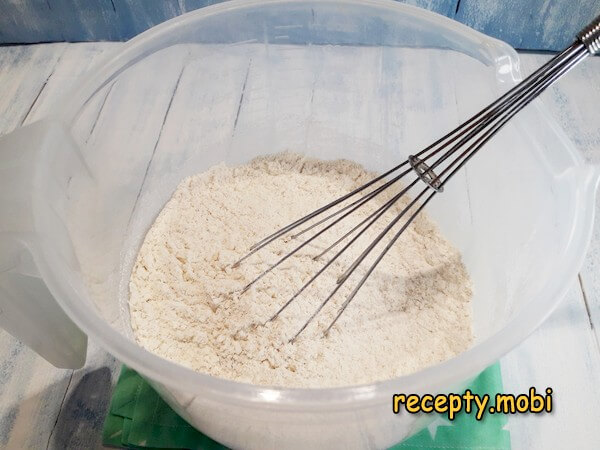
I start to pour in the water gradually, mixing it into the dry ingredients at the same time.
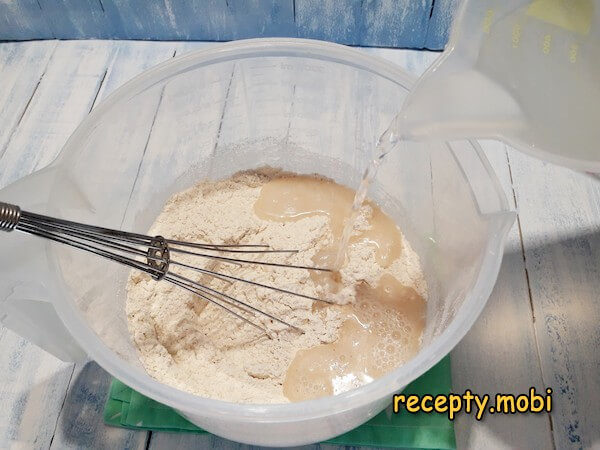
Once a thick mixture forms, I set the remaining water aside.
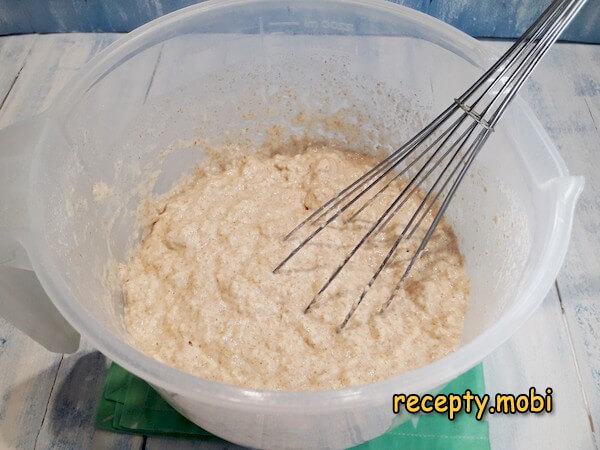
With an immersion blender, I blend the mixture thoroughly until it is completely uniform.
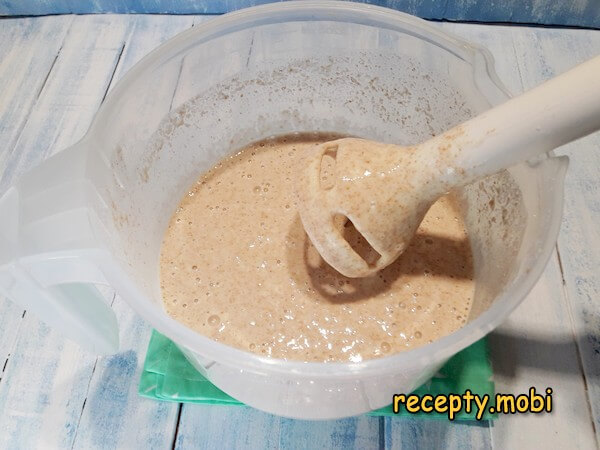
Only then do I stir the rest of the water into the batter.
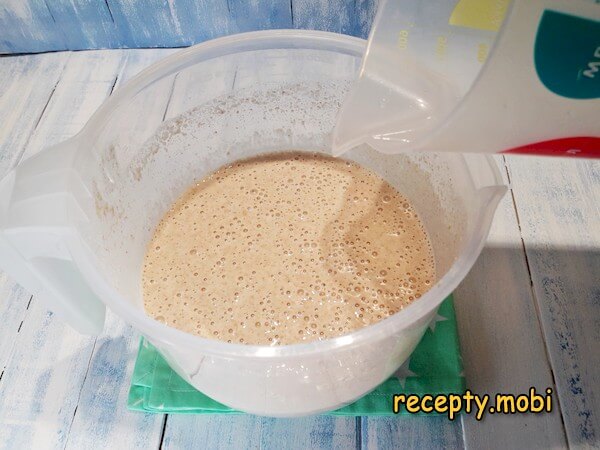
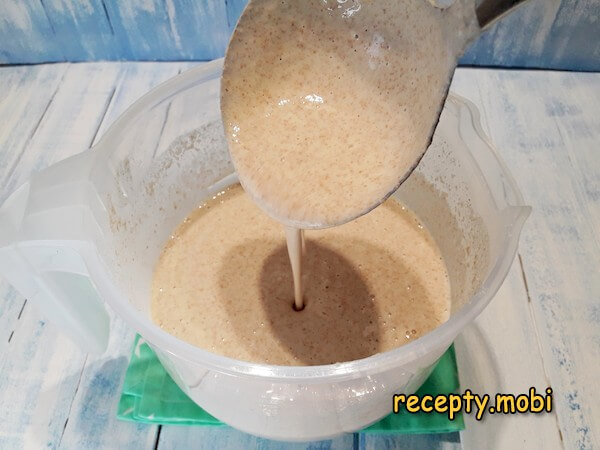
The batter should turn out slightly thicker than pouring cream.
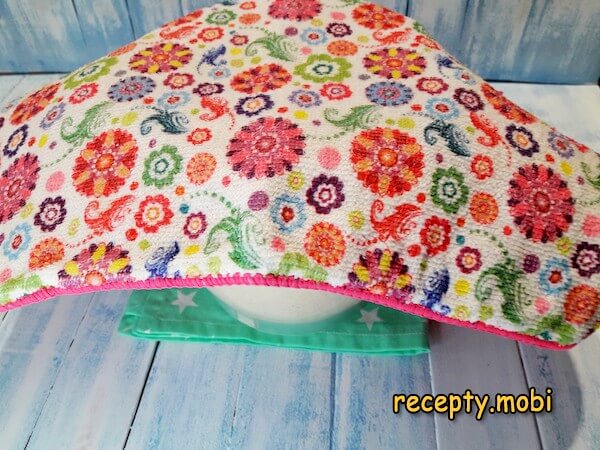
I cover it with a towel and leave it for 20 minutes so the yeast comes to life.
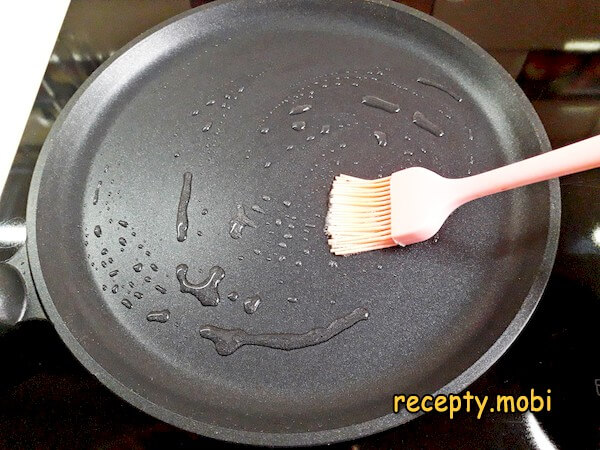
I cook these pancakes in a dry non-stick pan. For the very first one, though, it is better to grease the base with vegetable oil. I set the heat to medium.
I take a full ladle of batter and pour it into the centre of the heated pan. Large and small bubbles begin to burst straight away.
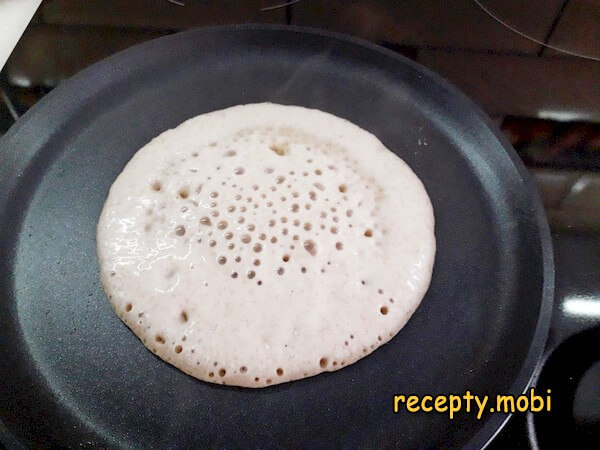
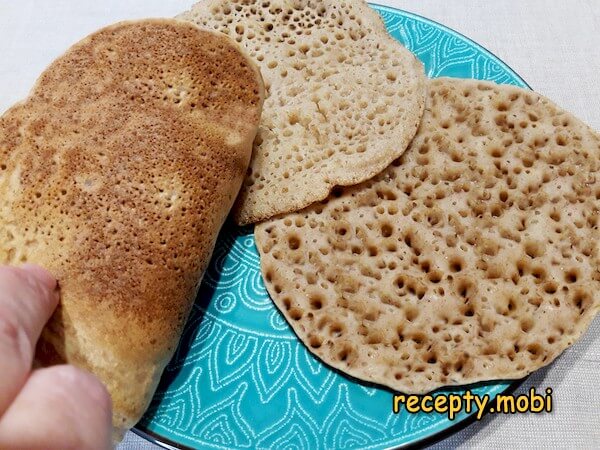
More and more holes appear, while the surface of the pancake dries out.
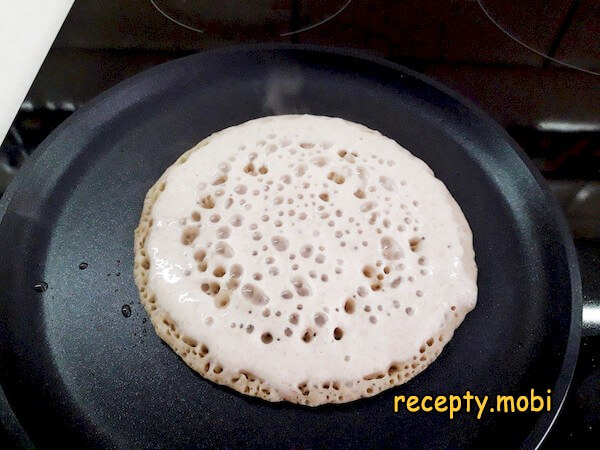
Gradually the whole top of the pancake dries and turns matte – now the porous Moroccan pancake can be lifted off the pan, because I cook it on one side only and do not flip it. I pour the next portion of batter onto the hot surface that has just been freed up, and repeat the whole process.
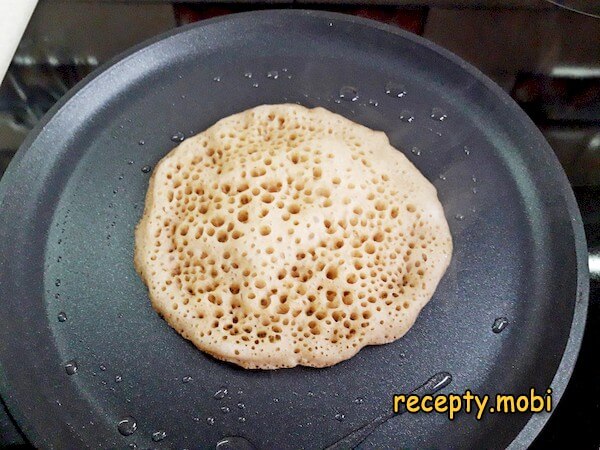
At first I lay the pancakes out separately on a towel so they do not stick to one another.
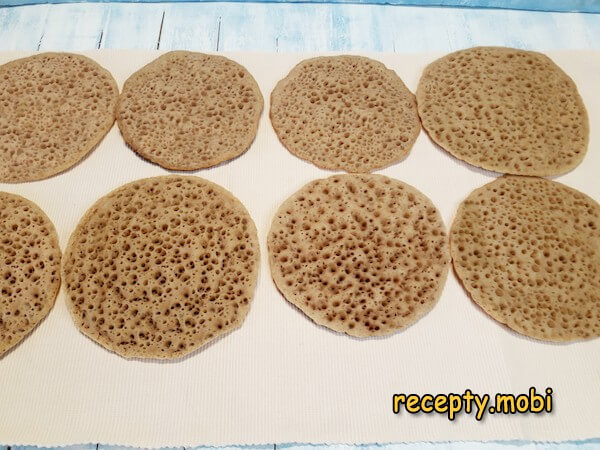
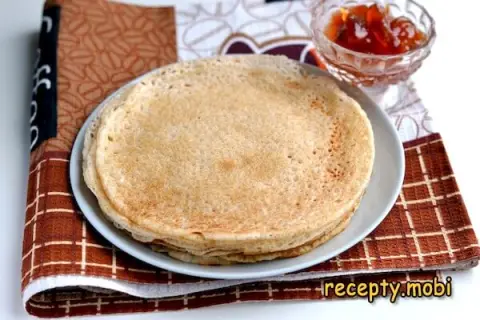
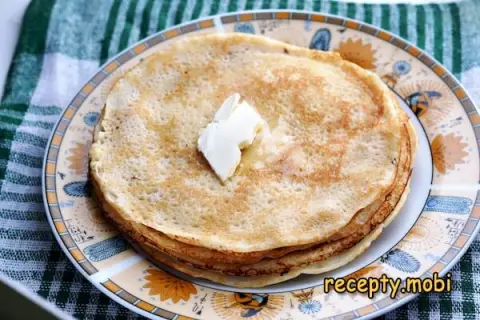
The underside of the finished pancake has not burnt on the medium heat but is nicely golden, and the centre is fully cooked through.


Tips
- 1
TWO FLOURS – the secret of the honeycomb. Plain wheat flour alone gives dense pancakes with no holes. Durum wheat together with ordinary wheat flour is what creates the porous structure.
- 2
WARM WATER – the secret of the yeast. With cold water the yeast stays asleep. With hot water the baking powder works in the bowl. Water that is just slightly warmer than room temperature lets both leavening agents act at the right moment.
- 3
THE BLENDER – the secret of a uniform batter. A whisk leaves lumps, and the pancake will not cook through in those spots. An immersion blender works the batter to a silky texture.
- 4
ONE SIDE – the secret of the holes. Flip the pancake and the honeycomb flattens. Cook on one side only, until the top is matte. The same principle works for other kinds of lacy pancakes.
FAQ
Where can I get durum wheat flour? +
The ideal choice is Italian semola di grano duro (a premium option). Alternatives include durum flour, fine semolina made from durum wheat (a budget but perfectly workable substitute), and pasta-mix flour, which is convenient to use. Italian semola is the premium choice. Do not use rice or corn flour, as they have a different gluten, or wholemeal flour, which gives a coarse texture. For the classic result, durum wheat flour or semolina is essential.
Can I replace the yeast with baking powder alone? +
Possible alternatives include baking soda (5 g) with kefir (100 ml) for a classic yeast-free version; baking powder alone (25 g), which is quick but less porous; a lievito madre sourdough starter (50 g), which is slow but premium; fresh pressed yeast (15 g); or sour kefir (200 ml) used in place of 200 ml of the water, for natural leavening. Fresh live yeast is the premium choice. Do not use brewer's yeast, which leaves a bitter aftertaste, or expired yeast, which will not rise. For the classic result, use yeast and baking powder together.
How long do Moroccan pancakes keep? +
In the fridge, in a tightly closed container, they keep for 2 days. Any longer and the pancakes dry out and lose their honeycomb structure. Before serving, warm them for 10 seconds in the microwave or 30 seconds in a dry pan. In the freezer they keep for up to 1 month; defrost them in a bag at room temperature. Fresh and warm they are at their best, with maximum absorbency. On the second day the flavour holds up, but the honeycomb dries out a little. Do not leave them at room temperature for longer than 6 hours; it is ideal to serve them straight away. The finished batter does not keep after proving, so fry it all in one go.
What do you serve Moroccan pancakes with? +
The Moroccan classic is honey and butter, with mint tea. They are also good with rose petal jam, date paste, orange marmalade, chocolate spread with banana, thick sour cream, soft goat's cheese with herbs, hummus, honey with walnuts, peanut butter, coconut cream, apple butter, peach jam or maraschino cherries. They are a versatile choice for a family breakfast, and the honeycomb pancakes also suit a healthy-eating menu (with honey) and a vegan diet.
- Comment
or post as a guest
Be the first to comment.