avg —
Chudu with Pumpkin

Instructions
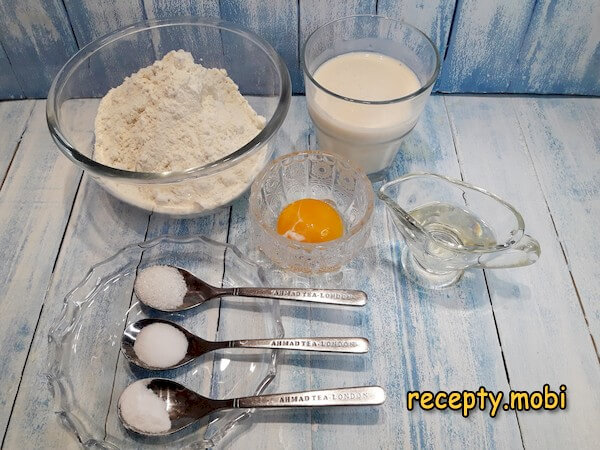
I prepare the ingredients for the dough. The kefir should be warm – I heat it in the microwave to 36–38 degrees. Warm kefir works better with the baking soda and activates it. You may need a little more or a little less flour – it depends on its particular properties and moisture content.
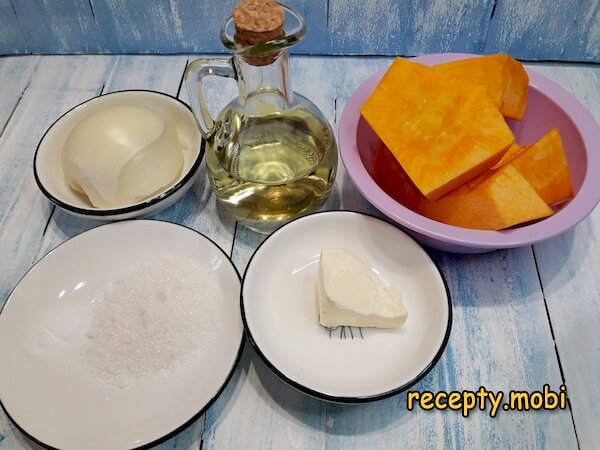
I prepare the products needed for the filling. I cut off the hard skin from the pumpkin, having first sliced it into small pieces – this makes it easier and safer to do: with a large piece the knife can slip.
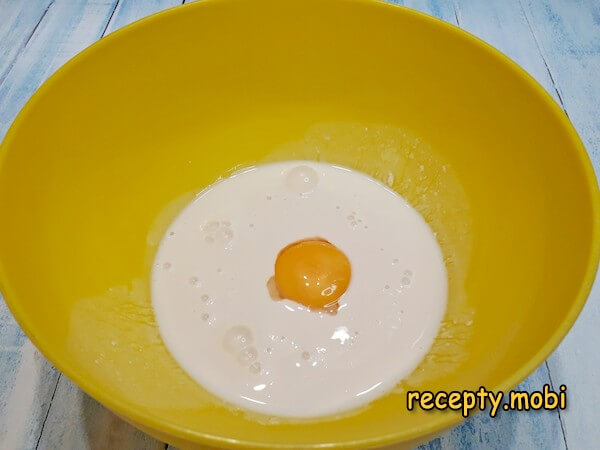
Into the bowl for kneading the dough I place the warm kefir and the egg yolk. The yolk gives the dough a golden tint and enriches it with fats – without the yolk the dough turns out harsher and blander.
I add the salt, sugar, and vegetable oil. The sugar is needed not for sweetness, but to activate fermentation and to brown the crust – without it the dough stays pale on the skillet.

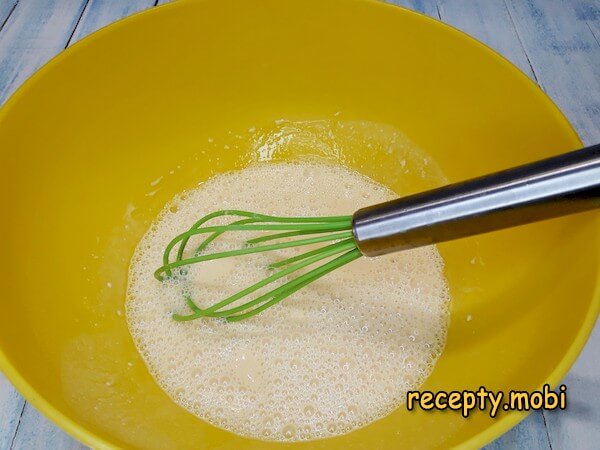
With a whisk I mix the mixture until completely uniform – the yolk should fully disperse in the kefir, and the oil should emulsify evenly.
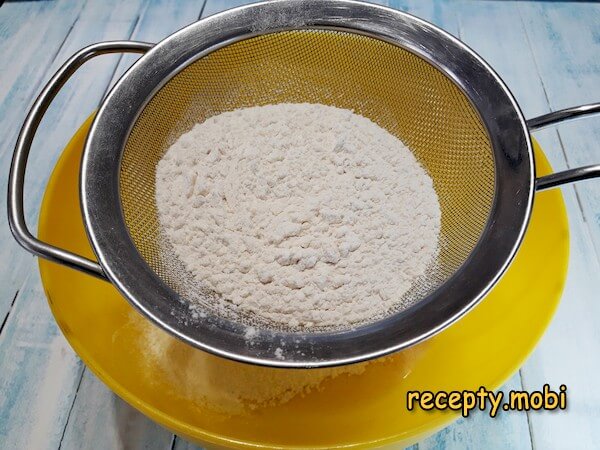
Into this bowl I sift half of the stated amount of flour – sifting enriches the flour with oxygen, and the finished dough turns out more airy and elastic.
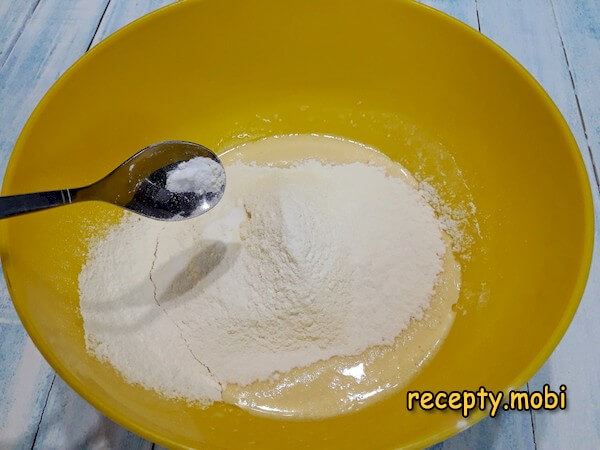
On top of the flour I sprinkle the baking soda – it is better not to add it directly into the kefir, a premature reaction will occur and the dough will no longer be so fluffy and airy. The soda comes into contact with the acidity of the kefir already within the dough.
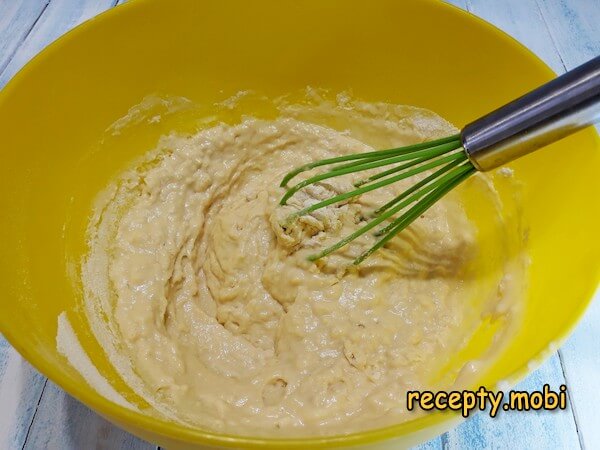
I mix the liquid mass – at this stage the dough resembles a thick pancake batter, and the first bubbles from the reaction of the soda with the kefir are already visible in it.
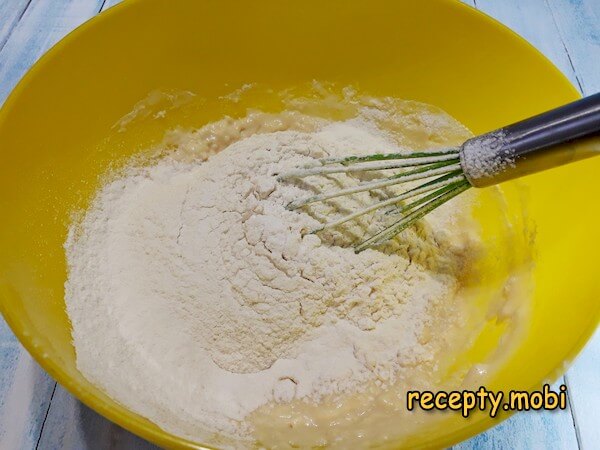
I add the rest of the flour through a sieve – the second portion thickens the dough and turns it from liquid into an elastic one, ready for rolling out.
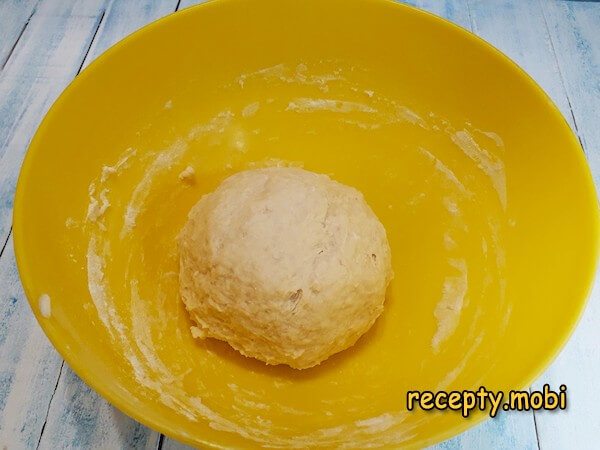
I finish kneading the dough by hand now – it should turn out very soft, not stiff, and right on the edge of stickiness. Stiff dough will give tough flatbreads, soft dough – tender and thin ones.
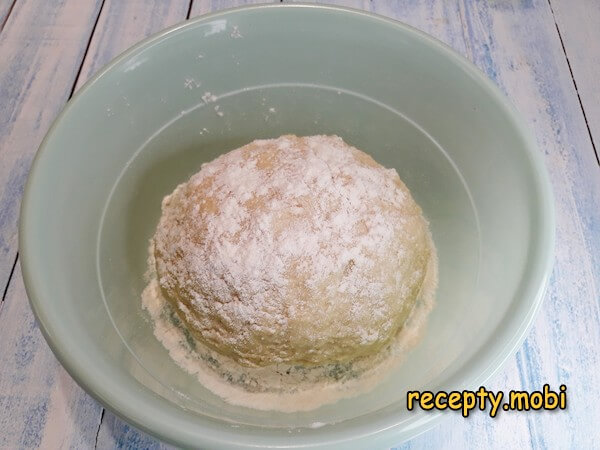
I dust the bottom of a clean bowl with flour and place the dough ball there. I likewise dust its top with flour and cover it with a towel – let the dough rest while the filling is being made. The rest is needed for the gluten to develop.
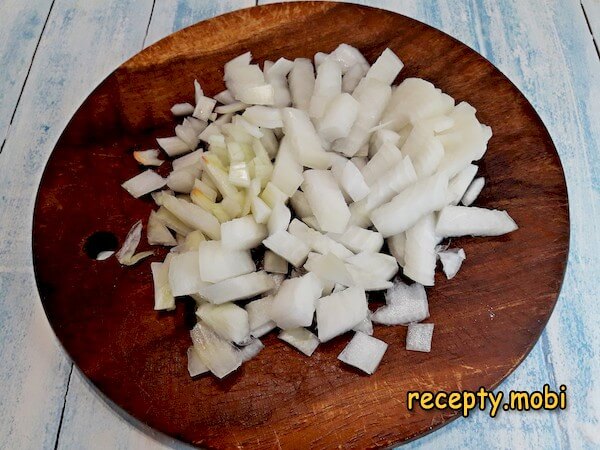
I cut the onion into small cubes – the finer it is, the more evenly it distributes in the pumpkin filling, and there will be no large pieces falling out when folding the flatbread.
In a skillet I melt the mixture of oils – the butter gives aroma, the vegetable oil protects against burning and raises the smoke point.
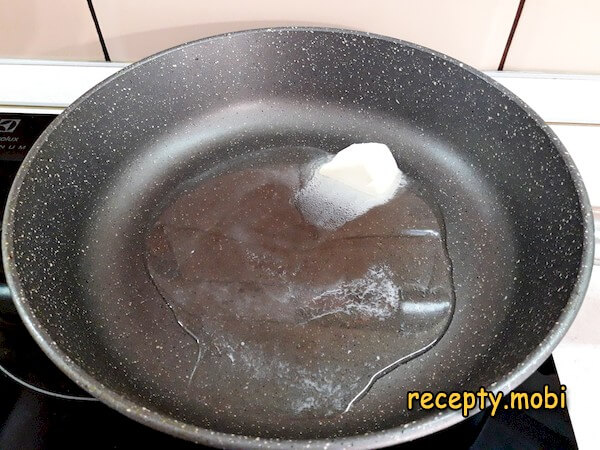
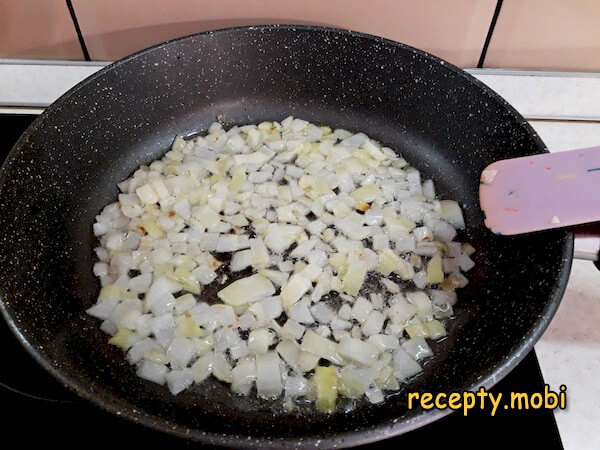
I sauté the onion there until transparent – exactly until transparent, not until golden. Golden onion would give the filling a coarser, "roasted" note, but we need a soft, neutral one.
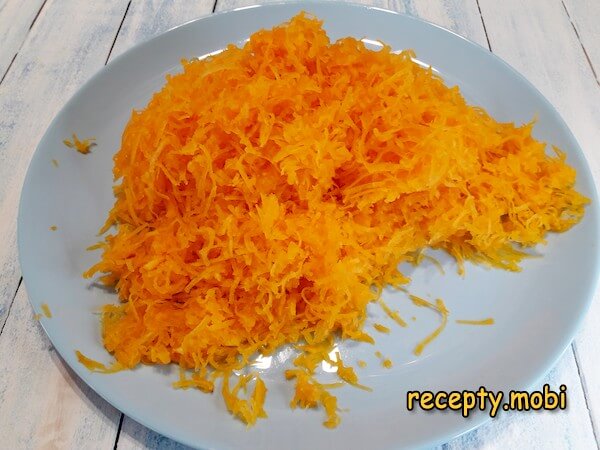
On a fine grater I grate the pumpkin – a fine grater gives a tender filling without large pieces. A coarse grater would leave pumpkin strands, and they change the texture of the final dish.
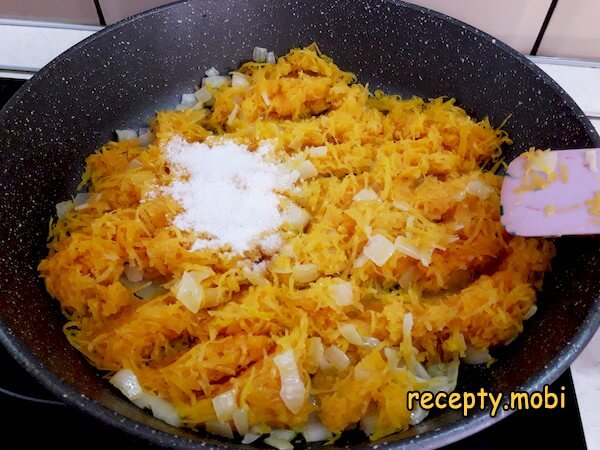
I add it to the onion. I sauté everything together for about 4 minutes, to evaporate some of the moisture from the orange shavings – without this stage the filling would be too wet and would soak through the dough during baking.
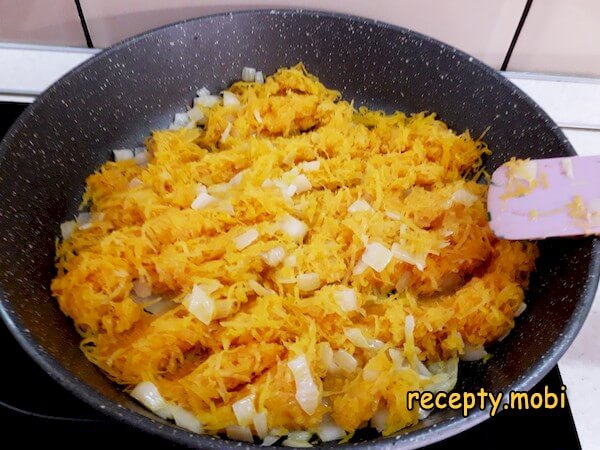
I season the filling with salt and sugar and switch off the burner. The sugar balances the natural sweetness of the pumpkin – even sweet varieties of the vegetable turn out "flat" in taste without a pinch of sugar.
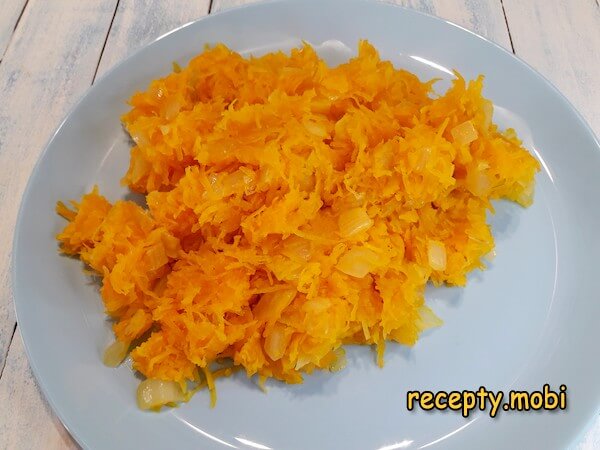
I transfer the filling onto a plate to speed up the cooling process – hot filling must not be put into the dough, it will spread and "float" across the table.
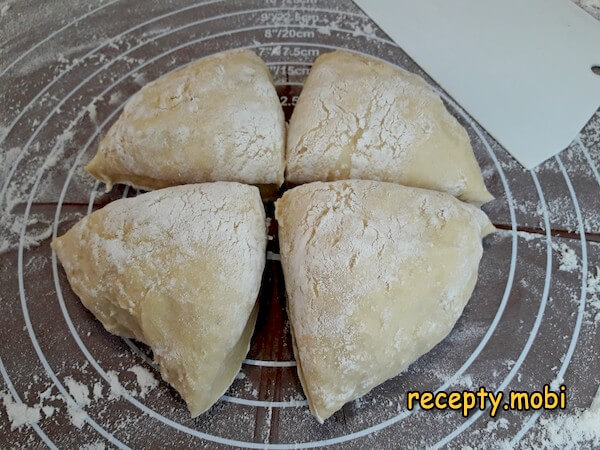
I place the dough ball on a floured surface and divide it into 4 parts – into 4 large chudu with a diameter of 20 cm. You can divide it into 6–8 parts for smaller portioned flatbreads.
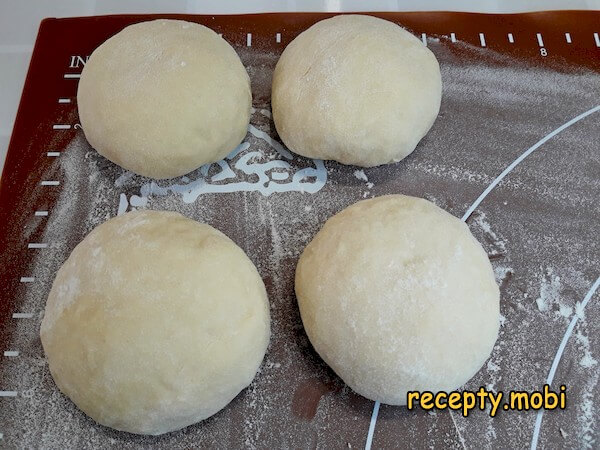
I roll each of them into a ball and leave them under film for 5 minutes – a short rest after dividing is needed to relax the gluten, otherwise the dough will shrink during rolling.
Next I roll the piece out to a thickness of no more than 2 millimetres – the diameter of the flatbread is 20 centimetres. If necessary, I dust the table with flour. The thinner the dough, the better the finished chudu will turn out.
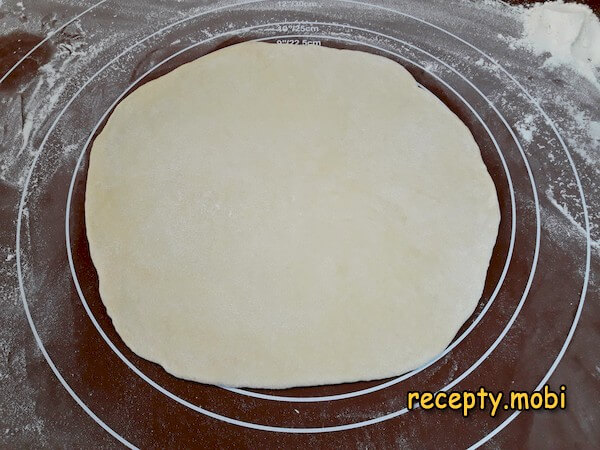
Onto one half of the flatbread I place 1/4 of the filling and level it with a spoon, not going right up to the edges – the free edges are needed for a secure seal. If 1.5–2 cm is left to the edge, the seam will be perfect.
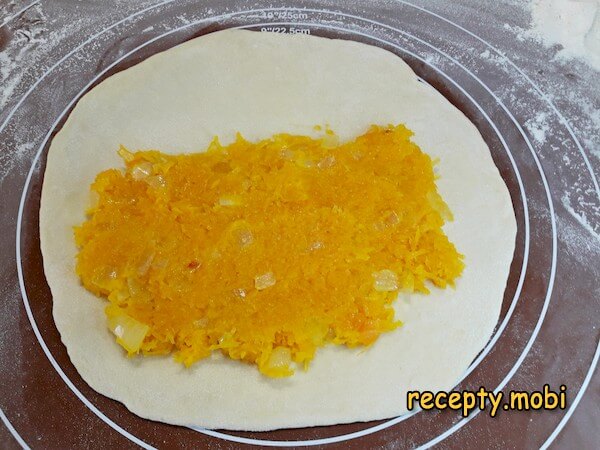
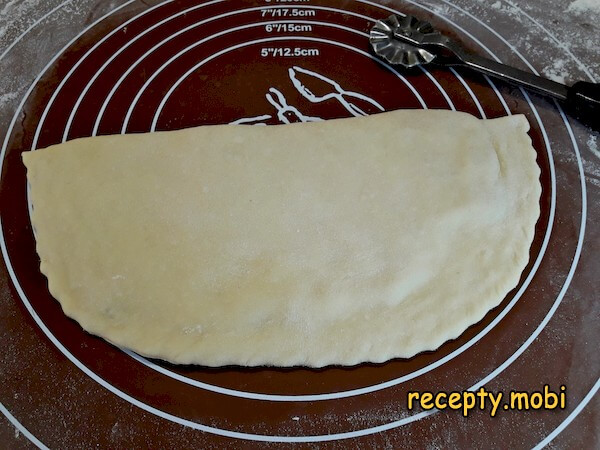
I cover the contents with the second half of the flatbread, drive out the air and press the edges of the piece with my fingers. Then I run a fluted cutter along the seal – it gives a beautiful patterned seam and at the same time additionally secures the edges.
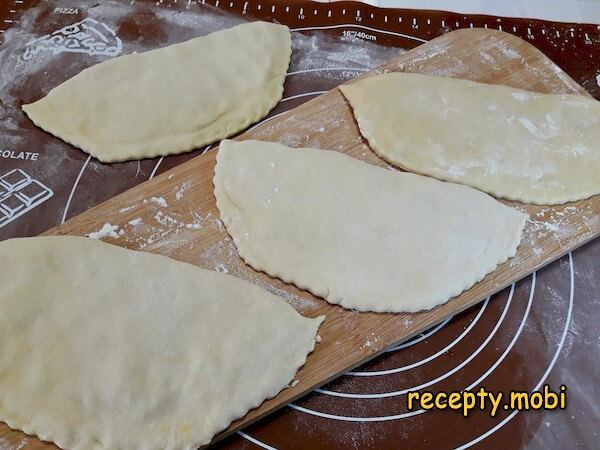
I stack the pieces on a flour-dusted board – the flour is needed so that the raw dough does not stick to the board and is easily transferred to the skillet without deformation.
I heat the skillet without oil and place the chudu on it. I bake about 4 minutes on each side – it is precisely the dry skillet that gives chudu their characteristic "dry" charred spots on the crust.
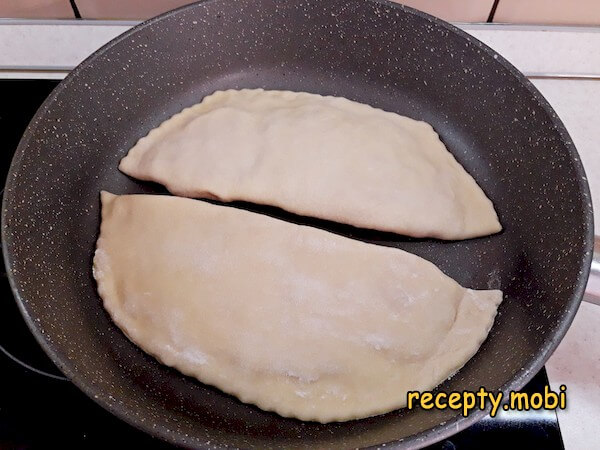
I turn the flatbreads over several times so that they bake more evenly – the chudu need to heat through completely, so that the pumpkin filling reaches full readiness.
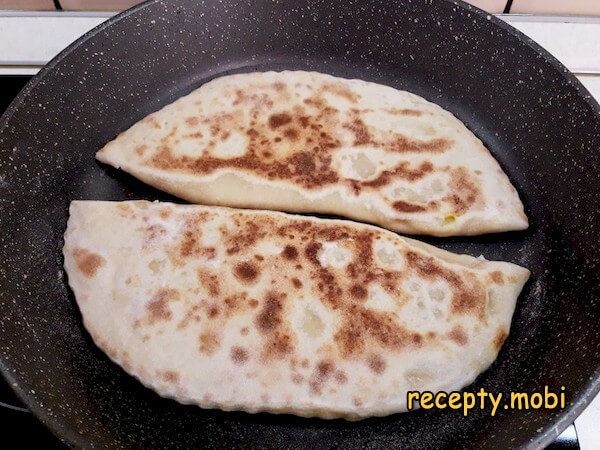
The finished chudu, while they are hot, I brush on both sides with butter – a thin layer of butter softens the crust and gives the flatbreads their characteristic milky aroma.



Tips
- 1
WARM KEFIR – the secret of airy dough. Cold kefir straight from the fridge slows the reaction with the baking soda – the dough turns out dense and rolls out poorly. Kefir warmed to 36–38 degrees activates the soda at full strength – the dough becomes airy, elastic and rolls out easily to a thin film 2 mm thick.
- 2
SAUTÉING THE PUMPKIN – the secret against spreading. Raw grated pumpkin releases a lot of moisture during baking, and the chudu dough spreads, while the flatbread itself turns out "raw" inside. 4 minutes of sautéing evaporates the excess water – the filling becomes firm and holds its shape. The same principle works in chudu in the Dagestani style with any filling.
- 3
A SKILLET WITHOUT OIL – the secret of authenticity. Dagestani chudu are baked precisely on a dry, red-hot skillet – this is the "correct" method that distinguishes them from chebureki. A thin crust, ruddy "charred" spots, and no fat inside the flatbread. After cooking, the hot chudu are brushed with butter for softness and aroma.
- 4
THE PUMPKIN VARIATION – the secret of the sweet version. For sweet chudu you can add a handful of steamed raisins and a pinch of cinnamon to the pumpkin – you will get a dessert variation. A similar aromatic trick works in fluffy pumpkin fritters on kefir – pumpkin + kefir + sugar as a universal sweet base.
FAQ
What is chudu in Dagestani cuisine? +
Chudu are traditional Dagestani flatbreads made from a thin unleavened or kefir dough with a variety of fillings. They differ from chebureki in their method of cooking: chudu are baked on a dry, red-hot skillet without a drop of oil, which makes them less greasy and lighter. The fillings can be very different: pumpkin, potato with herbs, meat with onion, cottage cheese with herbs, cheese. The finished chudu is brushed with butter and served hot with fresh herbs and fermented milk drinks.
Can the pumpkin be replaced with another filling? +
Yes, chudu are a universal base for any filling. Classic Dagestani options: potato with herbs and onion, minced meat with onion and spices, cottage cheese with herbs and cheese, boiled offal. Vegetable alternatives to pumpkin: grated courgettes with onion, spinach with egg, boiled beans with herbs. Sweet options: pumpkin with raisins and cinnamon, cottage cheese with sugar and vanilla. The main rule is that all fillings are heat-treated beforehand, so that the dough does not soak up moisture.
Why does the dough tear when rolling out? +
The main reasons: the dough was poorly kneaded and the gluten did not develop in it – you need to knead by hand for at least 5–7 minutes until smooth. The dough did not rest – the gluten did not relax and resists rolling, you need to let the dough sit under a towel for at least 20–30 minutes. Too much flour – the dough turned out stiff, brittle, without elasticity. Proper dough for chudu should be soft, slightly sticky, and stretch rather than tear when stretched with the fingers.
What to serve chudu with pumpkin with? +
In the Dagestani tradition, chudu are served with fresh herbs – a bunch of cilantro, parsley, dill, green onion. For drinks – ayran, tan, kefir, matsoni, any fermented milk drinks. Chudu also go well with tea – especially if there are sweet notes in the filling. For a hearty lunch, chudu can be accompanied by a bowl of rich meat broth or Dagestani khinkal. Cold chudu the next day do not lose their taste – they can be wrapped up to take to work or on the road as a standalone snack.
- Comment
or post as a guest
Be the first to comment.