avg —
French Quiche

Instructions
I prepare the ingredients for the shortcrust pastry. The butter must be thoroughly frozen and firm in texture – it is cold butter that gives the characteristic "flaky" shortcrust pastry, which crumbles delicately when sliced.
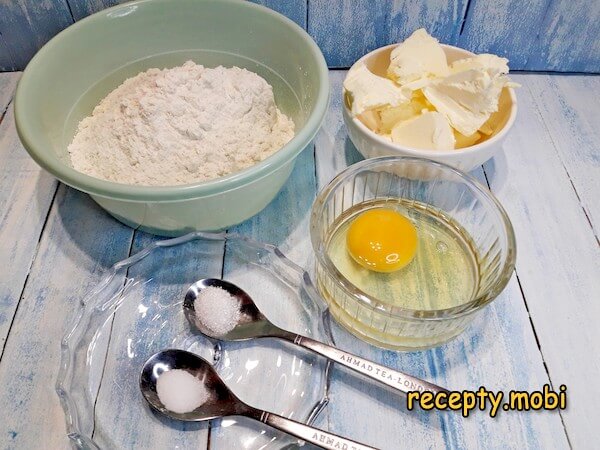
I prepare all the products for the filling. If champignons are used as the mushrooms, there is no need to pre-boil them. The cream can be any fat content, but the richer it is the tastier the pie – 20–30% is optimal.
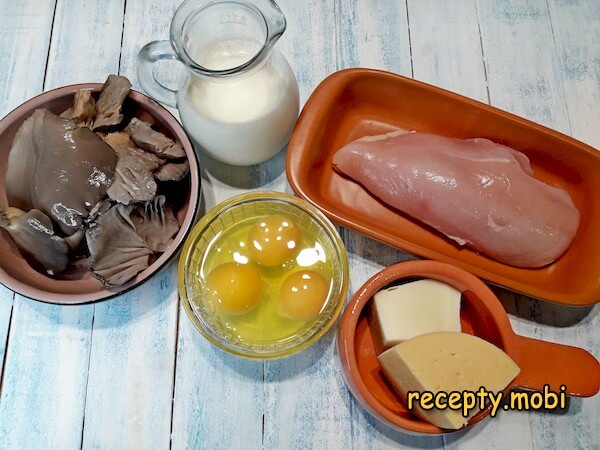
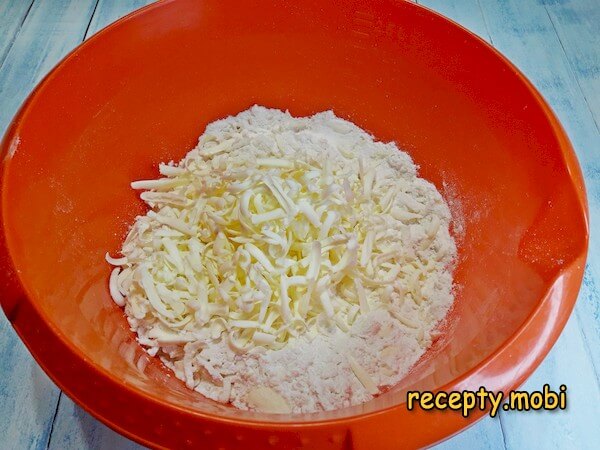
I tip the flour into a spacious bowl and grate the butter into it on a coarse grater, dusting it with flour now and then – the dusting stops the shavings sticking into a lump and makes the later rubbing-in easier.
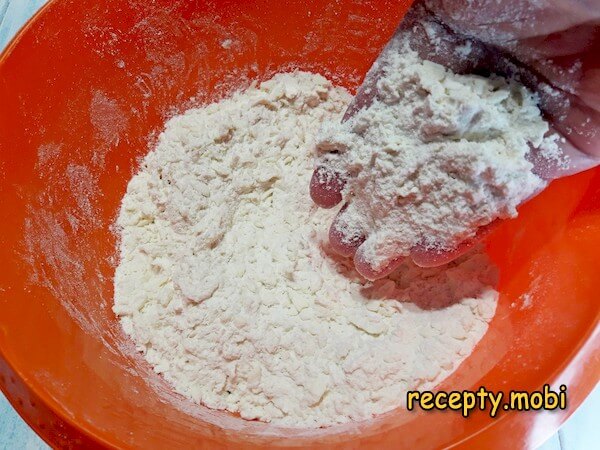
Then I rub both components together by hand to get a floury, buttery crumb – a crumb, not a paste. The less warmth from your hands passes to the butter, the more crumbly the finished pie will be.
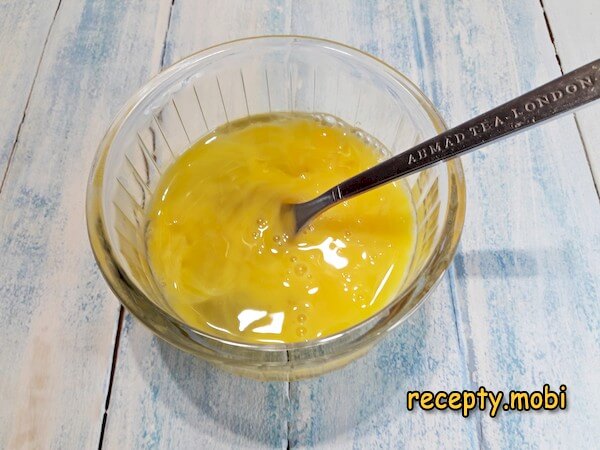
I whisk the egg with the salt and sugar – the salt and sugar work on the flavour balance, while whisking helps the yolk and white combine into a uniform mass for even distribution through the dough.
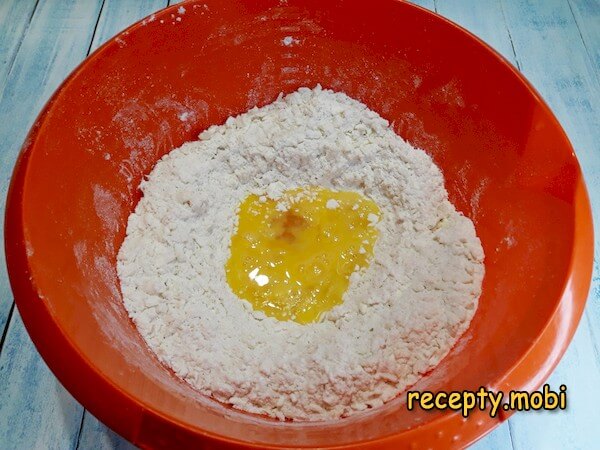
I pour it into the bowl with the crumb. I mix everything first with a spoon – the spoon lets the components combine without warming the dough with your hands.
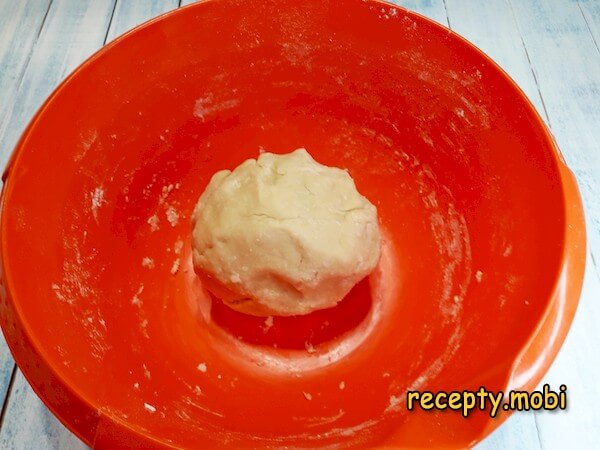
Then I try to gather the dough into a ball as quickly as possible, pressing its lumps together by hand into a single whole. The less warmth from your hands passes to the butter and melts it, the more crumbly the dough will be. I put the ball in a bag and into the fridge while the filling is being made. This dough can be made in advance and kept for months in the freezer, so you can bake your favourite pie at the right moment without much fuss.
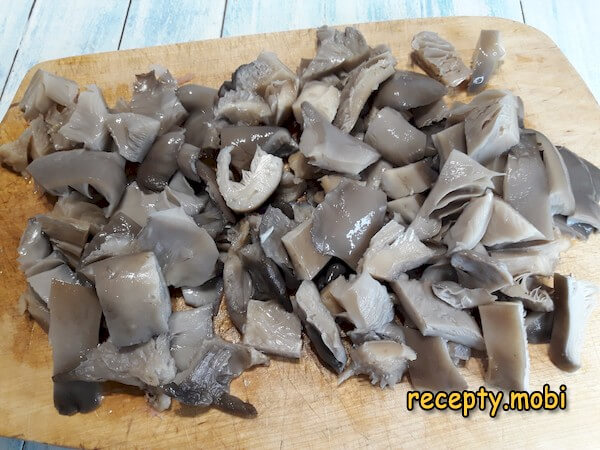
I cut the mushrooms into pieces – roughly 1×1 cm in size. I don't cut them too small, otherwise the mushrooms lose their textural accent in the overall composition of the pie.
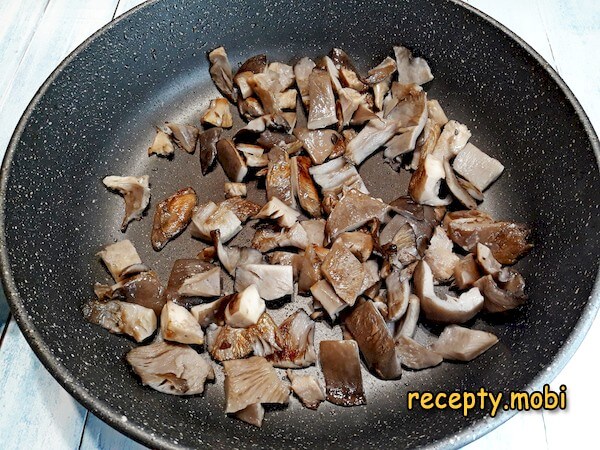
I fry them in a small amount of heated oil until golden brown, then transfer them to a plate – the golden crust gives the mushrooms a nutty note that is heightened in the finished pie.
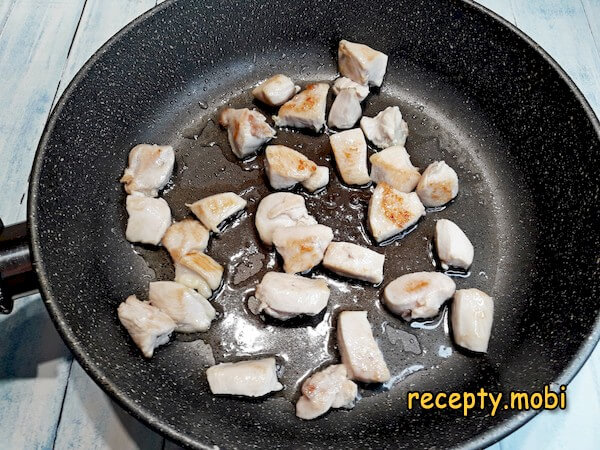
I cut the chicken into medium pieces – the size should be similar to the mushrooms, so that in the finished pie the filling reads as a whole.

I fry them in the pan in exactly the same way – to a light golden crust. They don't have to be fully cooked through inside; the filling will finish cooking in the oven together with the pie.
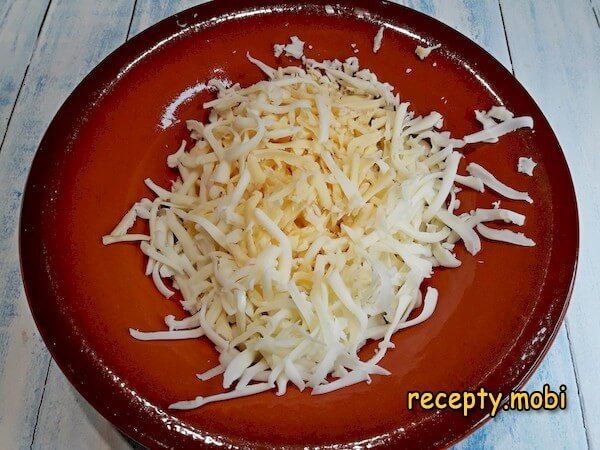
I grate the cheese coarsely – coarsely on purpose, so that during baking it melts into a characteristic "netted" crust rather than merging into a uniform greasy layer. I switch the oven on to preheat to 200 degrees.
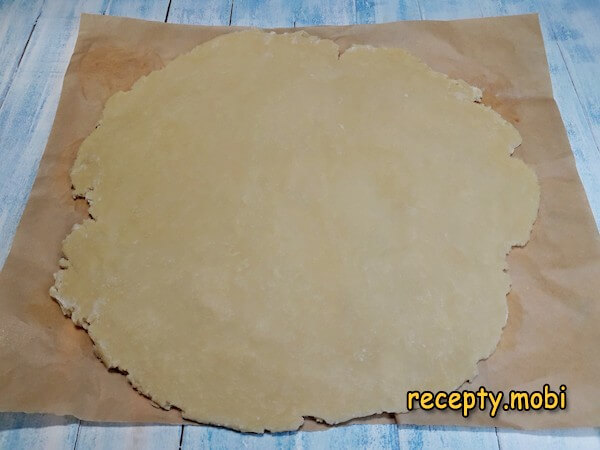
I take out the dough and, right on the parchment, roll it out to the size of the dish base plus another 5 cm or so for the sides. The sheet ends up about 5 millimetres thick – no thinner, as the dough has to hold the liquid custard.
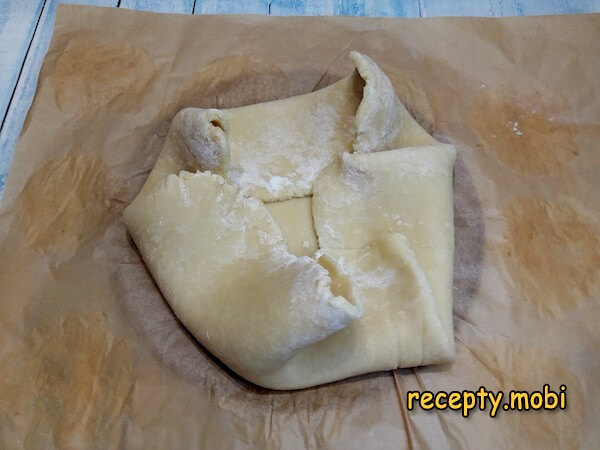
If the mould is a springform, the easiest way to transfer the sheet of shortcrust pastry into it is to slide the mould base under the parchment and fold the edges inward. That way the sheet won't tear during the transfer.
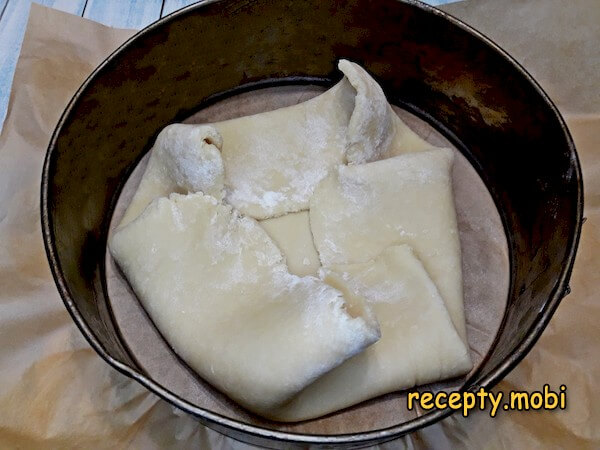
Next I fit the mould ring onto the metal base with the parchment and straighten out the edges of the dough, forming the height of the pie from them – the sides should be 4–5 cm high to hold the custard.
Now the base of the pie needs a light pre-bake. So that the dough doesn't bubble up during baking, I prick it densely over the bottom and sides with a fork. I put the mould on the middle rack of the oven – this is the secret to a shortcrust base for a moist filling.
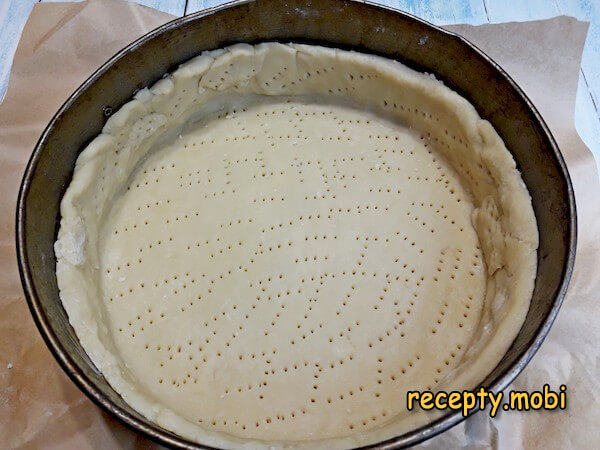
After 10 minutes I take the base out of the oven and fill it with the mixture of chicken and mushrooms. I salt the mixture a little – salty cheese and salted custard will still be added later.
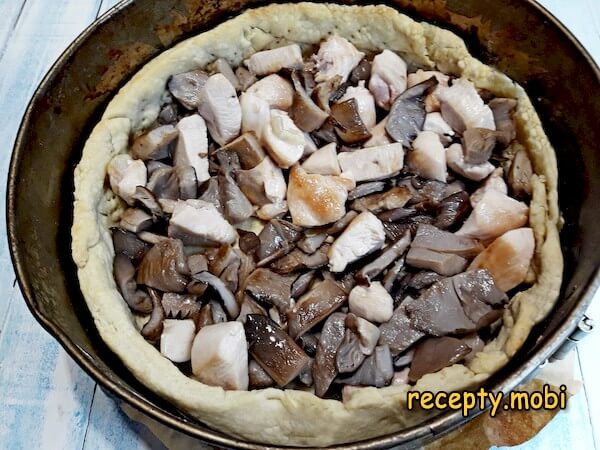
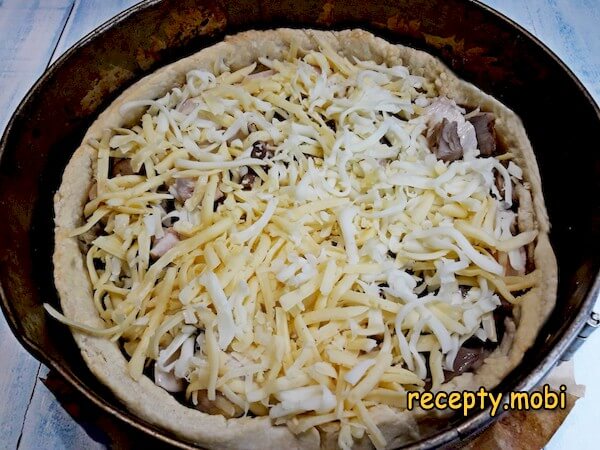
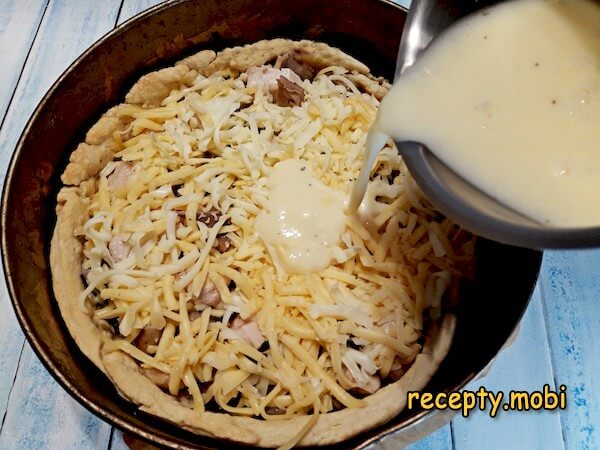
I hide the filling under the grated cheese – an even layer of grated cheese protects the meat and mushrooms from drying out in the hot air of the oven.
Into a separate saucepan I pour the cream. I pepper and salt it – it is cream of 20% fat that gives that very "tender, silky" effect to the custard of the finished quiche.
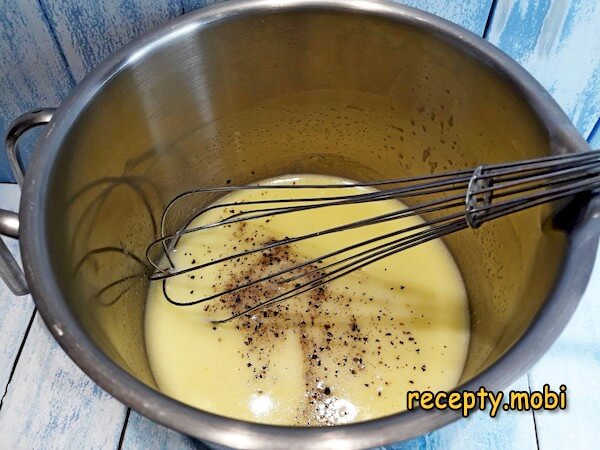
I add the eggs here and mix everything with a whisk – the custard is ready. In the French classics this is called "appareil à quiche" – the cream-and-egg custard for baking.
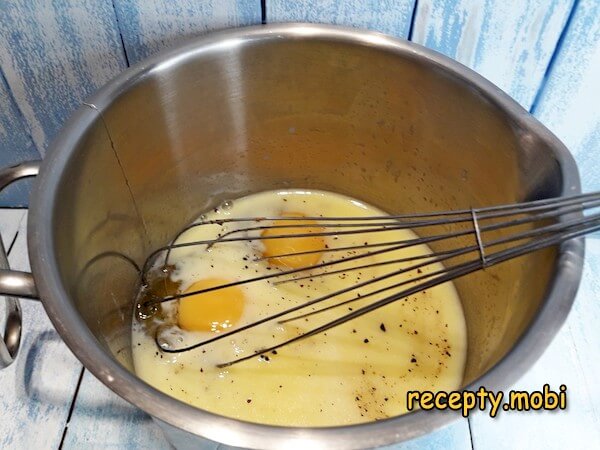
I pour it over the whole surface of the filling, after which I put the pie in the oven, lowering the heat to 180 degrees – the high temperature was only needed to bake the base; from here on the custard bakes gently.
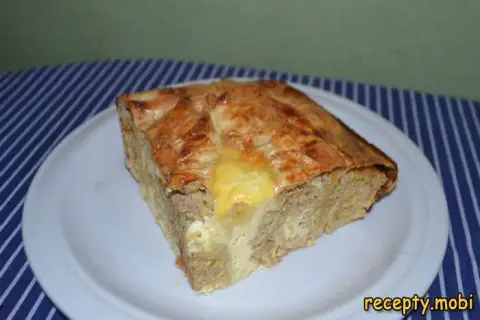
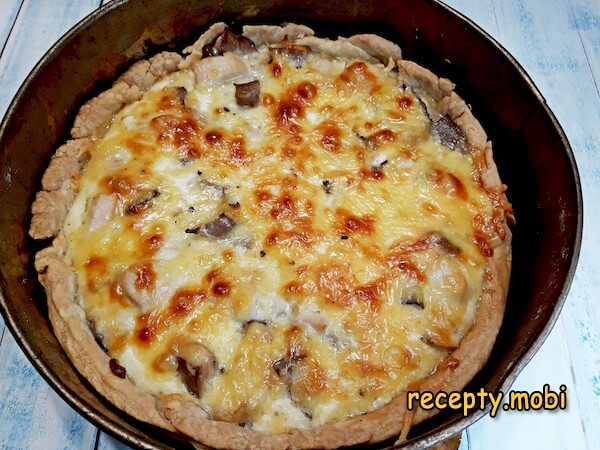
After 30–35 minutes the bake takes on a golden crust and the dough is fully baked – the custard should wobble slightly in the centre when you nudge it; it will "set" completely as it cools.


Tips
- 1
COLD BUTTER is the secret to crumbly shortcrust pastry. Only thoroughly frozen butter gives that characteristic "flaky" dough – warm butter will blend with the flour into a solid paste and the pie will be tough. Before starting I keep the butter in the freezer for at least 30 minutes, and I chill the mixing bowl too – the colder everything around it, the more fragile the finished quiche.
- 2
PRE-BAKING THE BASE is the secret against a soggy bottom. If you pour the filling onto raw dough, the bottom layer of the quiche will stay raw and underbaked. The 10-minute pre-bake, with the dough pricked, fixes the structure – the custard won't soak right through the base, and the pie comes out with clear layers. The same trick works in the savoury pie with onions and processed cheese.
- 3
CHEESE BETWEEN THE FILLING AND THE CUSTARD is the secret to protecting the flavour. The cheese works not only as a base layer – it protects the meat and mushrooms from direct contact with the custard. Without the cheese layer the chicken would release too much liquid into the custard and the custard would turn watery. With the cheese the custard stays firm and silky in texture.
- 4
FILLING VARIATIONS are the secret to versatility. The basic quiche technique works with any filling – meat, fish, vegetables, seafood. You can make a "country" version with pumpkin and spinach, an "Italian" one with tomatoes and basil, or a "Mediterranean" one with salmon and broccoli. A similar principle of layered filling is used in the poured pie with chicken, tomatoes, cheese and greens.
Video

FAQ
Why is quiche called French? +
The name "quiche" (Fr. Quiche) comes from the Lorraine region in north-eastern France – it was there, in the 16th–17th centuries, that the classic "Quiche Lorraine" recipe with bacon, onion and egg custard took shape. The word "Quiche" in turn came from the German "Kuchen" – cake or pie. Lorraine was historically a disputed territory between France and Germany, hence the mixed linguistic origin of the name. Today quiche is one of the best-known dishes of French cuisine and is served in any French bistro or brasserie.
Can cream be replaced with milk? +
You can, but the texture of the custard will change significantly – milk gives a more watery and less tender consistency. If you have no cream, the best substitute is full-fat sour cream 20% (200 ml) or a mix of milk and butter (180 ml milk + 20 g melted butter), or mascarpone cream cheese thinned with milk to a liquid consistency. Made purely with milk, the quiche turns out "pale" in flavour and loses its signature creamy tenderness. Dairy-free option: coconut cream 20%.
Which cheese is best for quiche? +
The classics of French cuisine are Gruyère or Emmental – both melt into characteristic "threads" and give a nutty note. An affordable substitute: hard Russian cheese, Dutch cheese, Gouda, cheddar, Maasdam. For a more pronounced flavour I add a little Parmesan (20–30 g) to the main quantity of cheese. Soft cheeses (mozzarella, feta, brie) are best avoided – they release too much moisture when melting and spoil the structure of the custard. The ideal cheese is hard, aged and full-flavoured.
How to store a finished quiche? +
In the fridge under cling film or in an airtight container – for up to 3 days without loss of flavour. Before serving I reheat it in the oven at 160 degrees for 8–10 minutes – the microwave makes shortcrust pastry rubbery. A finished quiche can be frozen for 1 month; defrost it in the fridge for 12 hours and then reheat it in the oven. The dough for the base keeps well in the freezer for up to 3 months as a ball or as a rolled-out sheet between sheets of parchment – handy to make ahead and bake when needed.
- Comment
or post as a guest
Be the first to comment.