avg —
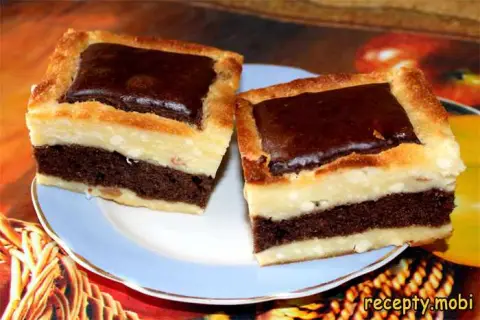
Italian Pie 12 Spoons

Instructions
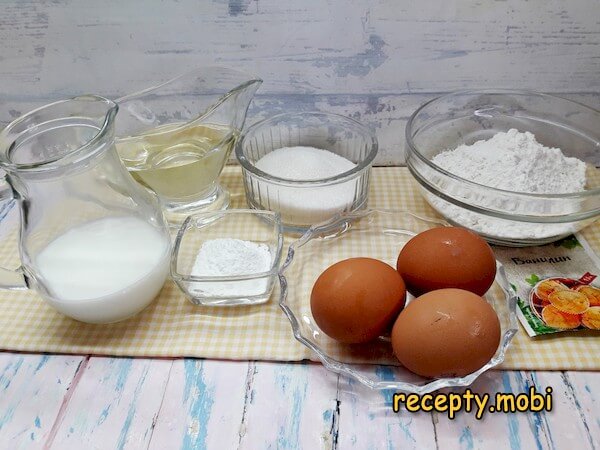
I prepare the listed ingredients for the Italian pie "12 spoons". I use milk with a fat content of at least 3.2 per cent. All the ingredients should be at room temperature. I switch the oven on straight away to heat to 180 degrees.
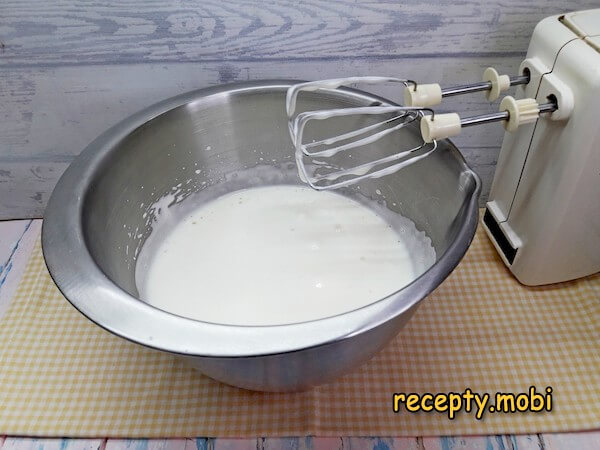
In a deep bowl I beat in the eggs. I add the flavouring (vanillin) and the sugar. I whip the mixture with a mixer on high speed. It should increase in volume, lighten in colour and become fluffy. The pattern left by the whisks should stay on the surface for a while and not disappear straight away.
I pour in the oil.
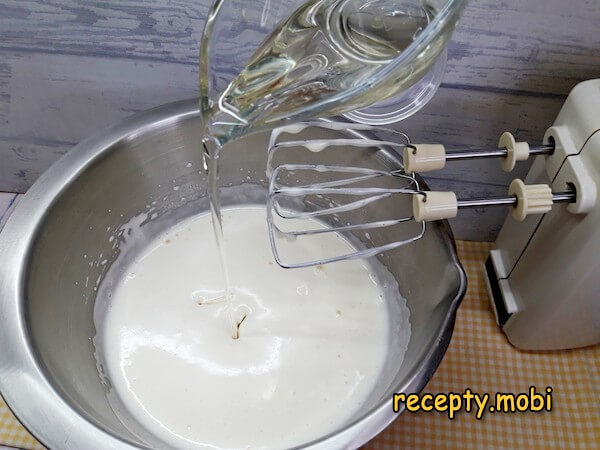
Then, after it, the milk. I quickly mix everything with the same mixer.
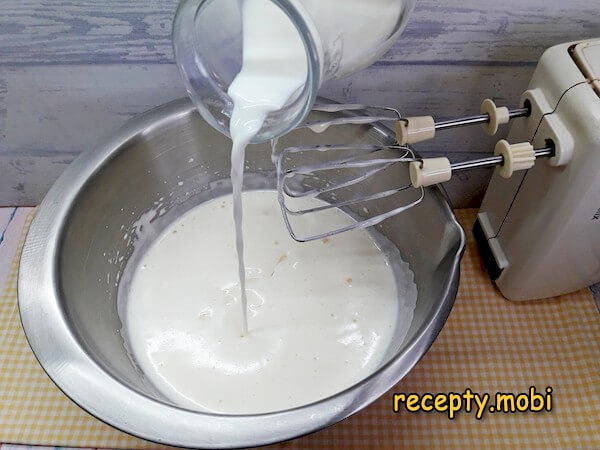
I add the flour and baking powder to the bowl, sifting them through a sieve.
With a spatula, not the whisks, I gently stir the batter until completely smooth, so as to keep as many air bubbles as possible.
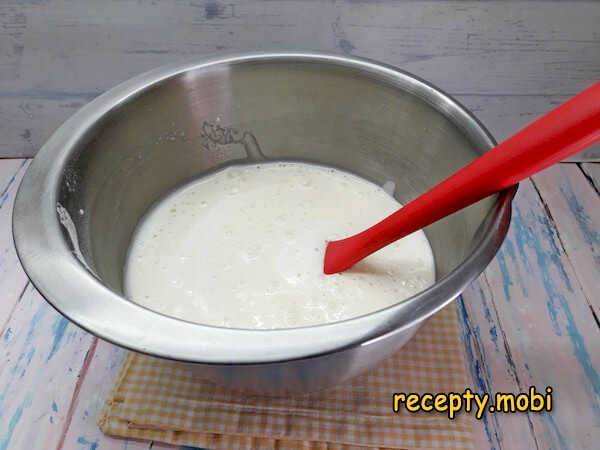
If necessary I line the mould with parchment. I pour in the sponge batter and turn the mould a little so the mixture spreads evenly. I place the tin with the batter on the middle level of the oven.
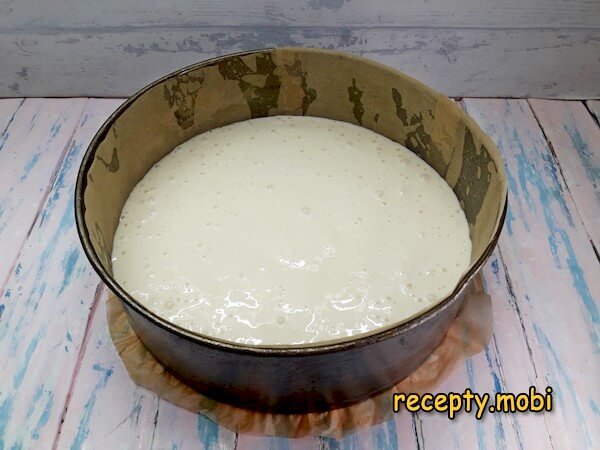
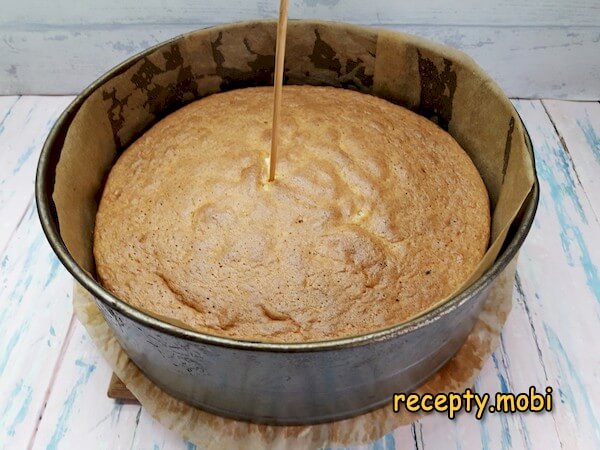
After half an hour (not before – until then I don't open the oven door, or the batter will sink) I check the pie for doneness with a wooden skewer. If it comes out dry after piercing, the cake is ready.


Tips
- 1
ALL INGREDIENTS AT ROOM TEMPERATURE is the secret to the rise. Cold eggs + cold milk = a dense sponge. Warm ones hold the air better and the batter is fluffy.
- 2
FOLD IN THE FLOUR WITH A SPATULA is the secret to airiness. A mixer will knock the air bubbles out of the beaten eggs. A spatula with bottom-to-top movements keeps the bubbles in.
- 3
DON'T OPEN THE OVEN is the secret against sinking. Cold air during the first 30 minutes will instantly make the sponge collapse. I only open it after 30 minutes, to do the skewer test.
- 4
12 LEVEL SPOONS is the secret to accuracy. The proportions are the same and easy to remember: 12-12-12-12 (sugar, oil, milk, flour) + 3 eggs. The same principle works in other kinds of simple sponge cakes.
FAQ
Which oil to choose? +
Ideally refined sunflower oil with no pronounced smell (12 tbsp ≈ 180 ml). Alternatives: refined olive oil (180 ml – premium), corn oil (180 ml – "economy"), rapeseed oil (180 ml – "diet"), a 50/50 blend of sunflower and olive oil (90 ml of each – premium), grapeseed oil (180 ml – premium). Fresh oil in a glass container is the premium option. Do not use: unrefined oil (a harsh smell in the baking), extra virgin olive oil (turns bitter when heated), butter (it will spoil the consistency). For "Italian classics" a neutral vegetable oil is a must.
What can replace baking powder? +
Alternatives: baking soda + citric acid, 1/4 + 1/2 tsp (replaces 1 tsp of baking powder); baking soda + kefir, 1/2 tsp + 50 ml (then reduce the milk); ready-made "Dr. Oetker" baking powder, 1 packet of 10 g; a mix of 5 g soda + 3 g citric acid + 2 g starch (homemade baking powder); ammonium carbonate, 1/4 tsp (the "grandma's" option); cream of tartar + soda, 1 + 0.5 tsp (premium). Fresh baking powder in a sealed sachet is the premium option. Do not use: yeast (a different structure), expired sachets (they won't give any rise).
How long does the cake keep? +
In an airtight box at room temperature – 2-3 days. In the fridge under cling film – up to 5 days (but it becomes less fluffy). Longer than that and it will dry out and lose its tenderness. Before serving, warm it in the oven for 5 minutes at 150°C to bring back the softness. In the freezer (cut into pieces) – up to 1 month; defrost for 2 hours at room temperature. The cake is at its "star" best 30 minutes after the oven (let it cool a little, dust with powdered sugar). On the second day the flavour is deeper and more aromatic. Don't leave it out in the open without wrapping – it goes stale quickly.
What to serve the cake with? +
Italian classic: with a cup of espresso or cappuccino. With a cup of cocoa or hot chocolate. With a glass of milk (family style). With whipped cream and vanilla. With a scoop of vanilla ice cream ("hot vs cold"). With fresh berries (strawberries, raspberries, blueberries) on top. With powdered sugar on top (a classic way to serve). With a cup of black tea with lemon. With dried-fruit compote. With berry kissel. With a glass of dessert wine, "Moscato d'Asti" (an Italian accent). With a cup of herbal tea for an afternoon snack. For an "Italian breakfast" – with coffee and fruit. A universal sweet bake for any occasion.
- Comment
or post as a guest
Be the first to comment.