avg —
Puff Pastry Samosa with Minced Meat

Instructions
I start with the dough: I dissolve the salt in slightly warm water, make a well in the flour and pour the water into it. I knead the dough by hand – if you have a kitchen processor, the job becomes much easier.
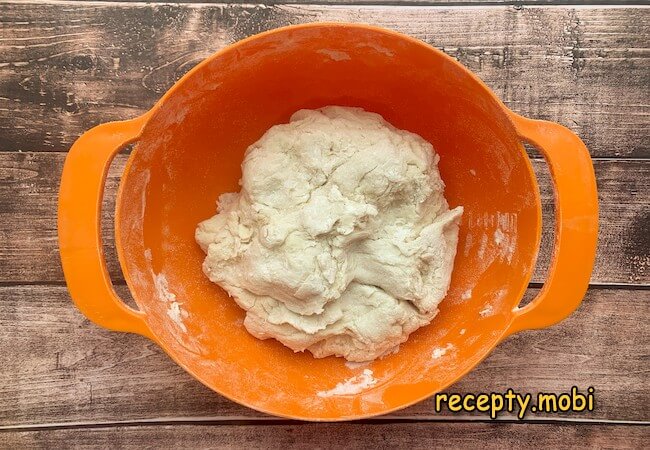
I add a little vegetable oil so the dough becomes pliable. I knead it for 7–10 minutes on the table or a silicone mat. I cover it with cling film for 20 minutes – the gluten relaxes and the dough becomes more comfortable to work with.
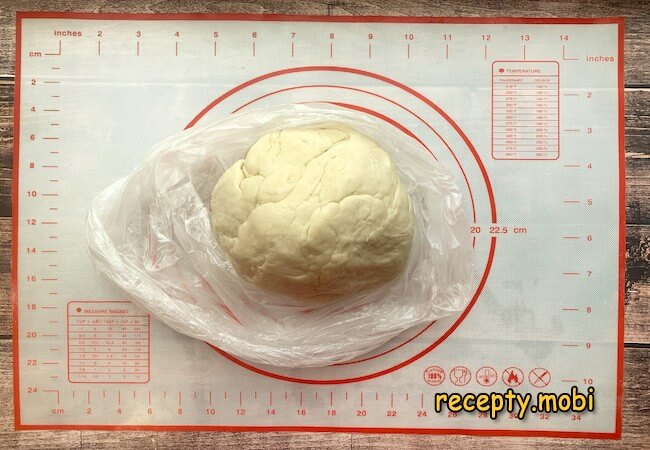
After resting, I knead the dough for another 5 minutes – the consistency becomes noticeably more elastic. I wrap it in film for 15 minutes more, then knead it again and roll it out. Smear the dough ball with a drop of vegetable oil – this makes it easier to achieve a thin layer. The thinner you roll it, the better the finished samsa.
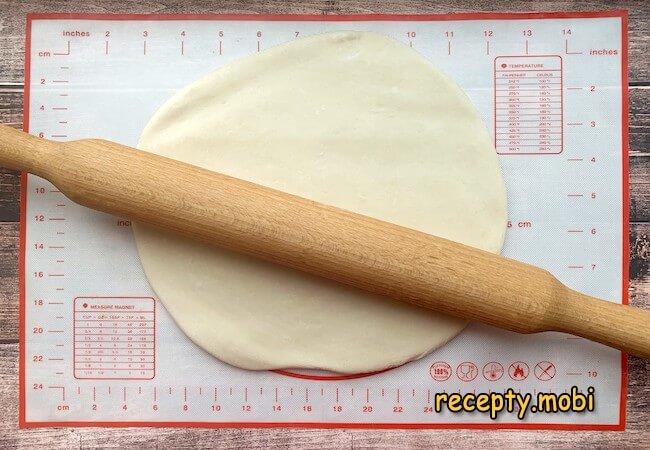
I spread the clarified butter evenly over the surface of the rolled-out dough. I roll the dough into a tight cylinder, avoiding air bubbles – this has to be done carefully so as not to tear the sheet. I twist the resulting "sausage" slightly into a rope. I put it in the fridge for 2–3 hours, or, if short on time, in the freezer for 20 minutes.
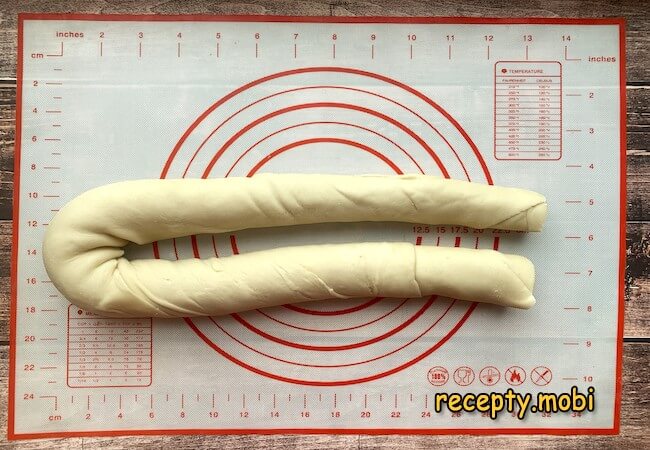
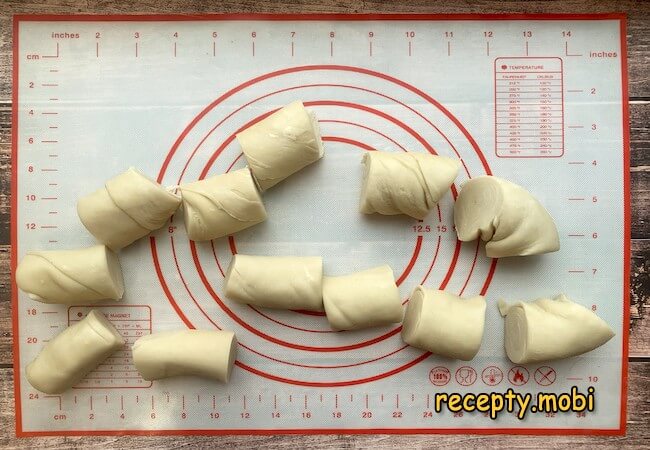
I divide the chilled dough into pieces. So that the layers can be felt, I do not roll it too thinly a second time – the main thinning is done before rolling it into the spiral. So now I divide the rope into substantial pieces – ideally 12 from the whole batch.
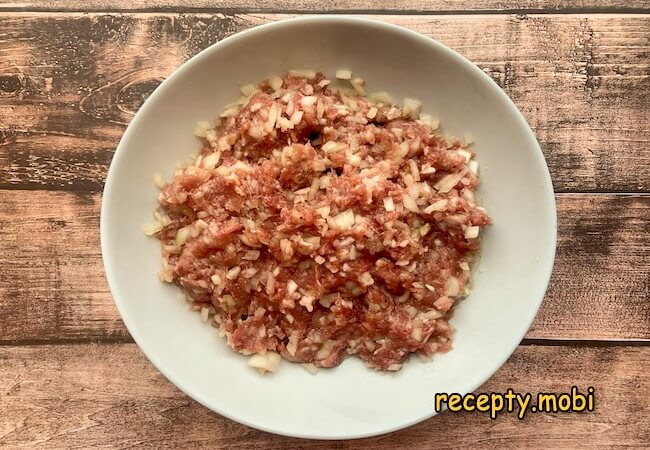
I move on to the filling. I add spices, salt and finely diced onion to the minced meat. I mix it. If the meat is dry, I add a drop of vegetable oil or fat. Traditionally samsa is filled with hand-chopped meat – use fatty cuts, and if there is not enough fat, add oil. The meat is cut into small cubes, then everything is the same: onion, spices, salt.
I press each piece of dough flat with my palm and roll it out to a thickness of 3–4 mm. I place a tablespoon of filling in the centre. There are many shaping methods, but I make the simple triangular version: I fold one side toward the centre, then the second and the third, and twist the sharp corners slightly. I place the samsa seam-side down.
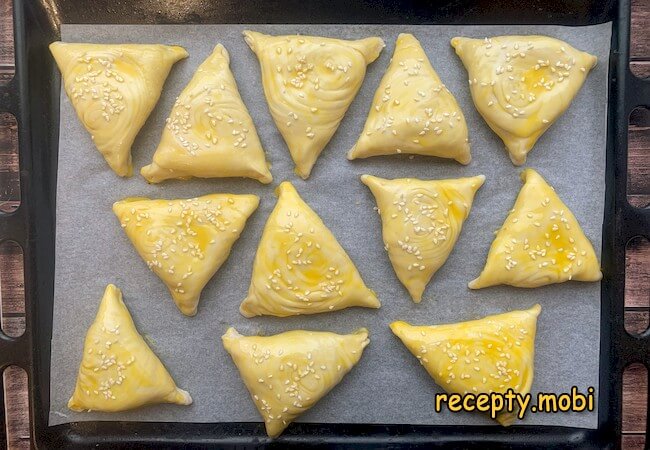
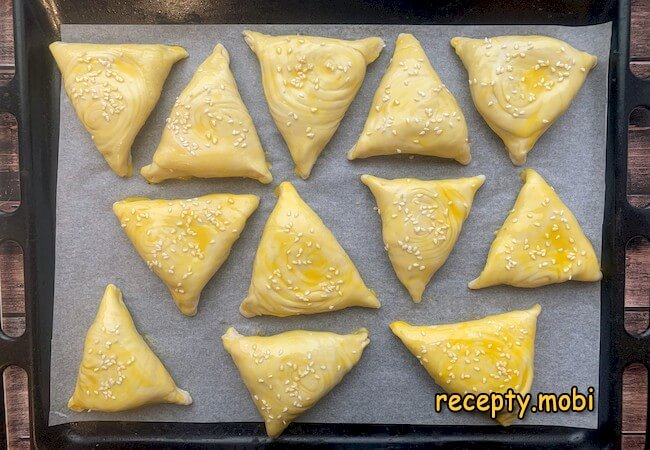
I transfer the pieces onto parchment and brush the edges with beaten yolk. I sprinkle them with sesame seeds – this is part of the traditional recipe. I put the tray into an oven preheated to 180 °C and bake for 45–60 minutes, depending on the power of the oven.
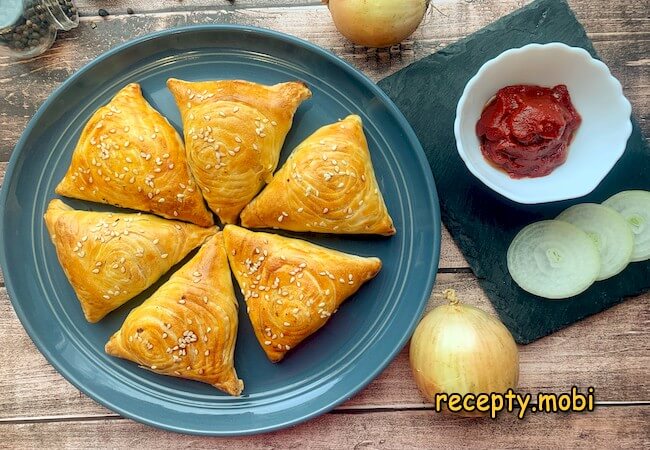
The puff pastry samsa with minced meat is ready. The beautiful crisp pastry and juicy filling are fantastic. Be sure to try it!


Tips
- 1
LET THE DOUGH REST twice for 15–20 minutes – the gluten relaxes, elasticity increases, and it becomes easier to roll out.
- 2
CLARIFIED BUTTER on the sheet is the basis of the flaky layers. Spread it evenly in a thin layer, otherwise the roll will "slide" as you roll it out.
- 3
AS MUCH ONION AS MEAT – a 1:1 ratio. This is the Uzbek rule; the onion adds juiciness and takes away the "heaviness" of the meat filling.
- 4
BAKE SEAM-SIDE DOWN – otherwise the samsa will open up in the oven and the juices will leak out. The same principle works in other puff pastry dishes.
FAQ
Which meat should I choose for the filling? +
Traditional samsa is made with hand-chopped lamb and fat-tail fat – this is the Uzbek classic. Alternatives: fatty beef (juicier), pork (for a non-traditional version, not halal), turkey with chicken fat (a lighter option). Minced or chopped – chopping by hand into 3–5 mm cubes is better: the texture is preserved and you can feel the meat. Ready-made shop mince is acceptable, but less tasty. Fat content should be at least 20%, otherwise the filling will be dry. Add 1 tbsp of fat-tail fat or butter to a lean filling.
What can replace clarified butter? +
Alternatives: softened butter (the classic choice for flakiness, but a more "European" taste), margarine (an economical option, with a poorer aroma), coconut oil (a vegan substitute with an exotic note), vegetable oil (the simplest option, but lacking aroma). Clarified butter is the "benchmark" for samsa and Eastern baking: a neutral aroma, a high smoke point and long storage. Make it at home from 82.5% butter – melt it, then skim off the foam and sediment. Good-quality shop-bought ghee will also do.
How long does samsa keep? +
In the fridge, in a container – 2–3 days. The next day the pastry "softens", but the filling tastes brighter. It is best reheated in the oven at 180 °C for 5–7 minutes (a microwave makes the pastry soft and "rubbery"). In the freezer – up to 2 months, raw or baked. Bake raw frozen pieces without thawing, increasing the time to 60–70 minutes. Reheat thawed baked ones in the oven for 10 minutes at 180 °C. Fresh samsa is the best option, but it is handy to keep a stock in the freezer.
What to serve with samsa? +
The Uzbek classic: with green tea and lemon or with black tea and milk. With tomato sauce or adjika – for some heat. With "Achik-chuchuk" salad (tomatoes + onion + pepper) – the classic accompaniment. With sour katyk or ayran – it balances the richness. For a buffet – as a starter or a main dish. For a picnic it is ideal: tasty both warm and cold. For a tea ceremony – with honey, dried fruit and nuts. During a fast, replace the filling with vegetables (pumpkin, potato, onion) or pulses.
- Comment
or post as a guest
Be the first to comment.