avg —
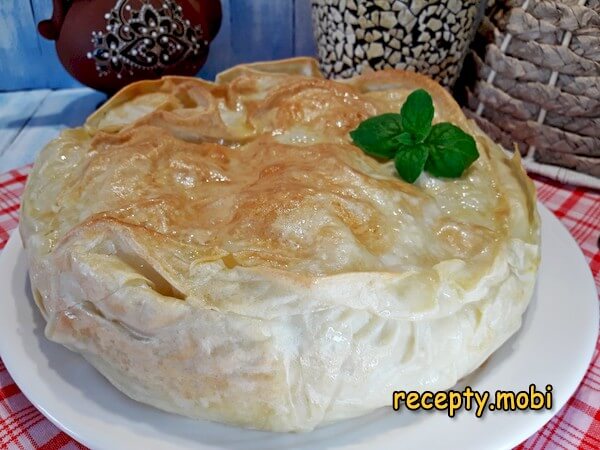
Saburani – impress your guests with the incredible taste of this pie

Instructions
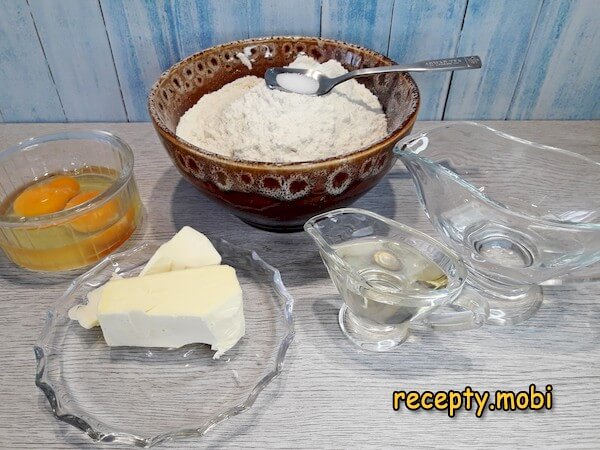
I get all the ingredients ready for making Saburani. The butter and vegetable oil will be used for greasing the layers.
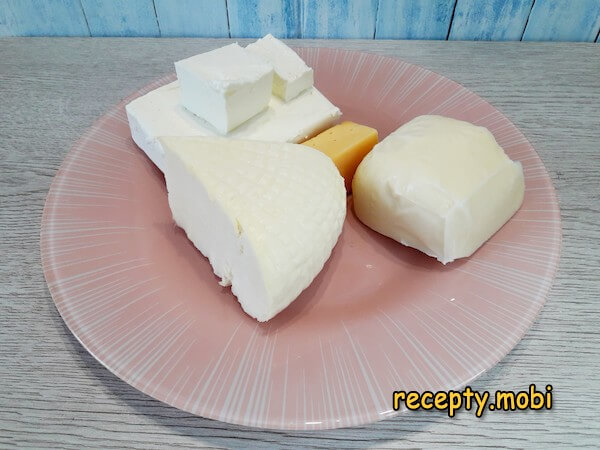
I put together the cheese assortment. In terms of quantity, the larger share is Adyghe cheese and brinza. The other kinds may vary in weight – the main thing is that the total mass is not less than 500 grams.
I salt the eggs, add the water and stir until fully combined.

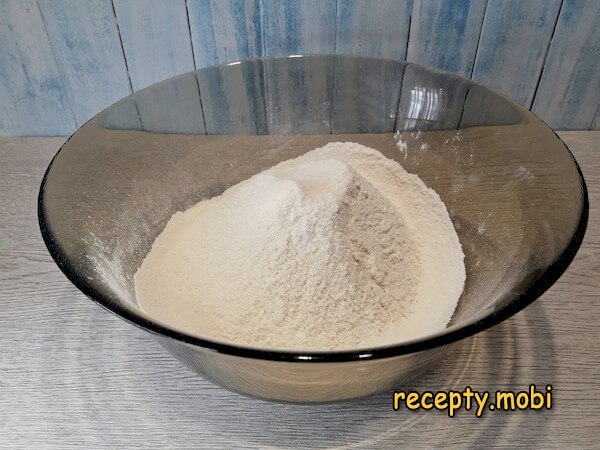
I sift all the flour into a separate deep bowl.
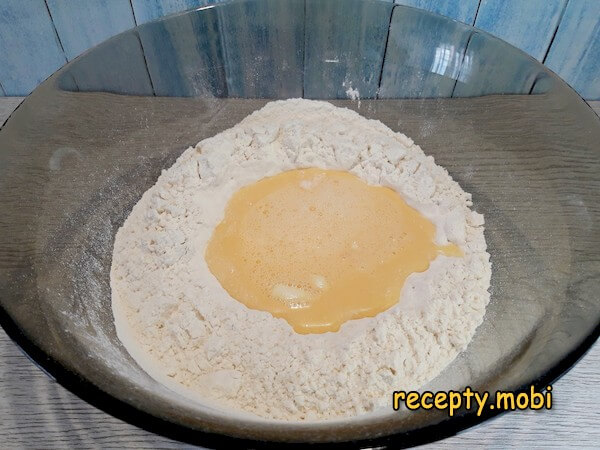
I make a small well and pour in the egg mixture.
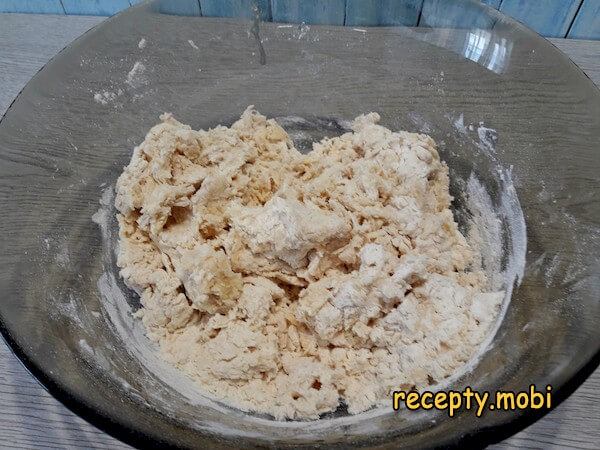
I stir the mixture until all the moisture is absorbed and lumps form.
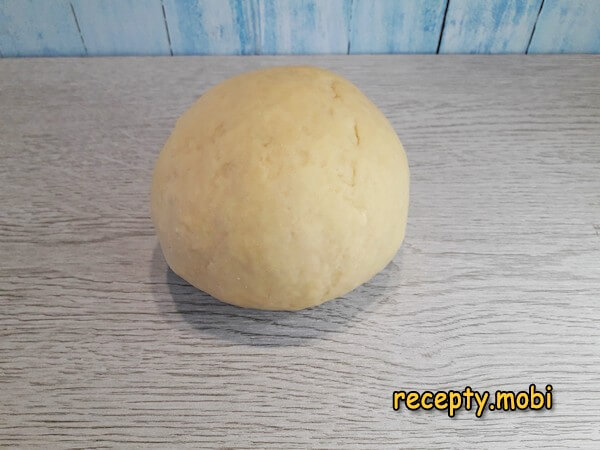
I turn them out onto the table and knead a stiff dough. It is not easy to knead – it is very dense and tough, much like dumpling dough. But after 5–6 minutes the dough becomes smooth and uniform. I gather it into a ball.
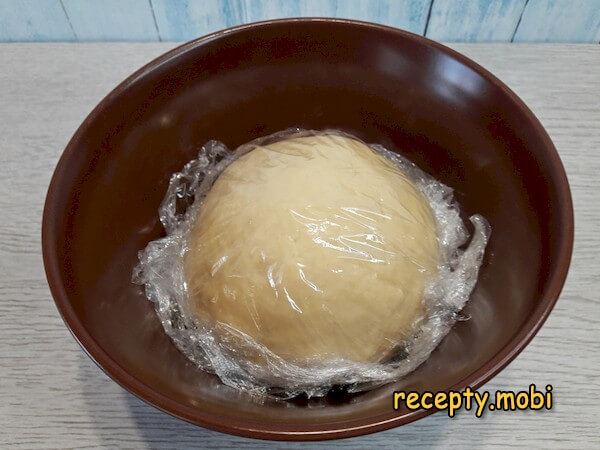
I place the dough in a bowl and cover it with plastic wrap so the gluten relaxes. I leave it like this for about 15 minutes.
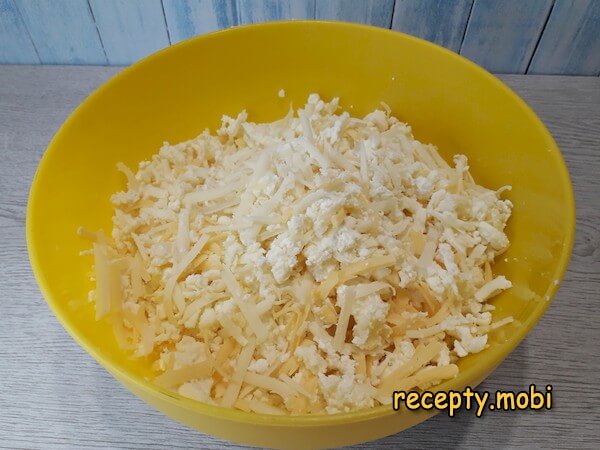
I grate all the kinds of cheese on a coarse grater. Brinza can be crumbled by hand. I mix them and taste for salt – the filling should be slightly salty, so if needed I add salt and cover it with a towel so it does not dry out.
I melt the butter, then mix it with the vegetable oil and set it aside for now.

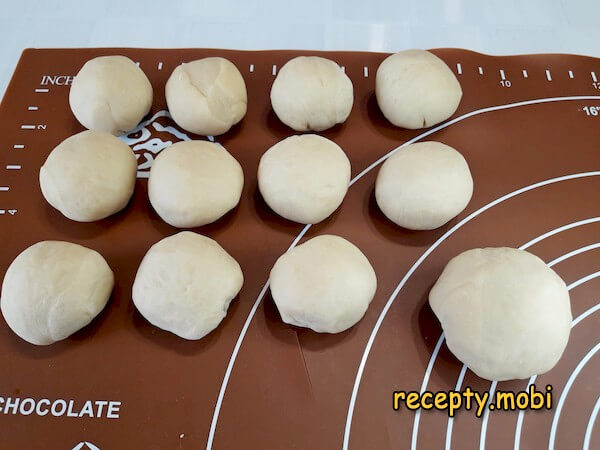
By this time the dough has rested and become softer. I roll it into a log and divide it into 13 equal portions, about 34 grams each.
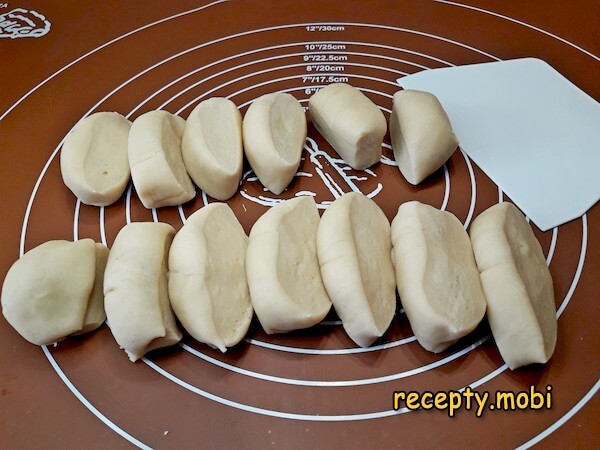
I join two portions together and round all the pieces. In the end I get 11 small balls and 1 large one. I cover them with plastic wrap.
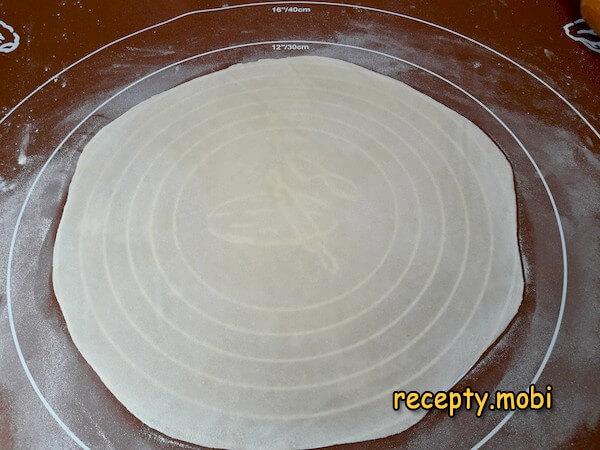
I roll out the pieces very thinly, until they are transparent, dusting them with flour on both sides. The diameter should be a little larger than the mould or the same.
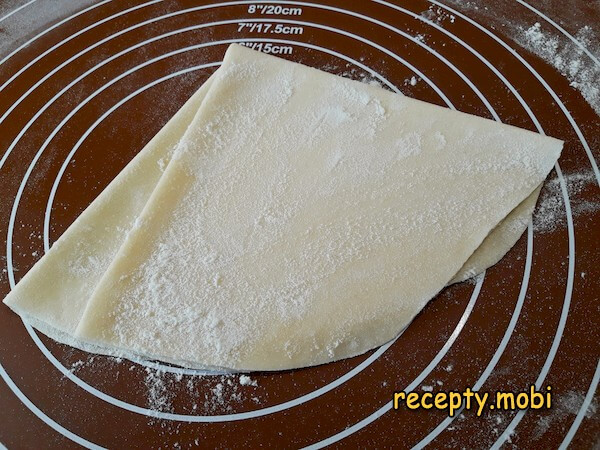
I fold the circles envelope-style, sprinkling each fold with flour so the dough does not stick together.
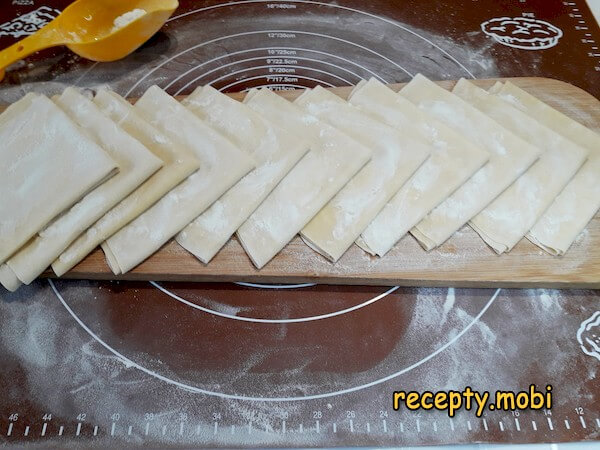
I lay the envelopes on top of one another, overlapping them.
I roll out the largest ball last – this will be the base of the pie. It does not need to be folded – it will be boiled first.
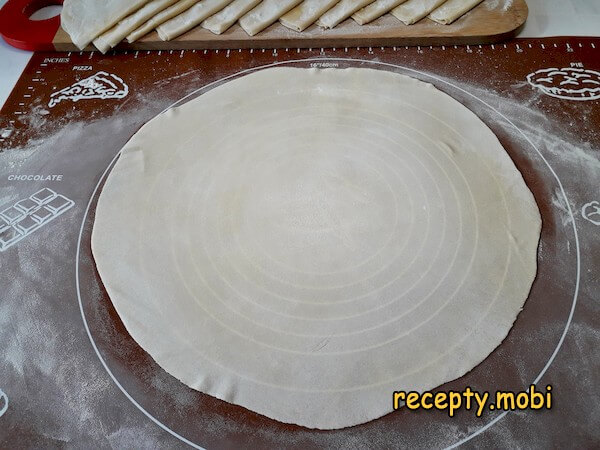
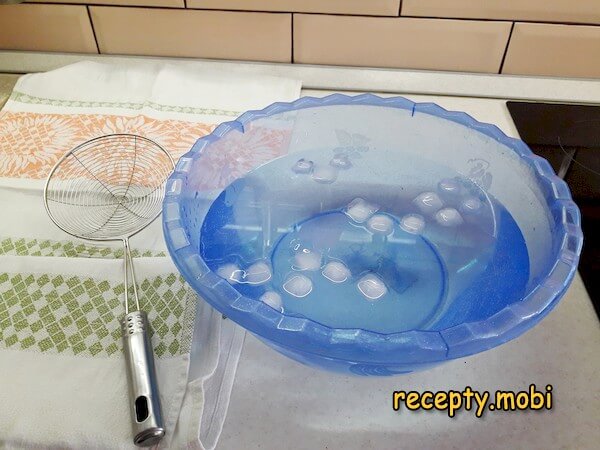
I grease the mould or line it with siliconised parchment. I put a large pot of water (4 litres) on maximum heat. I add a teaspoon of salt. I prepare a wide bowl of iced water and several towels.
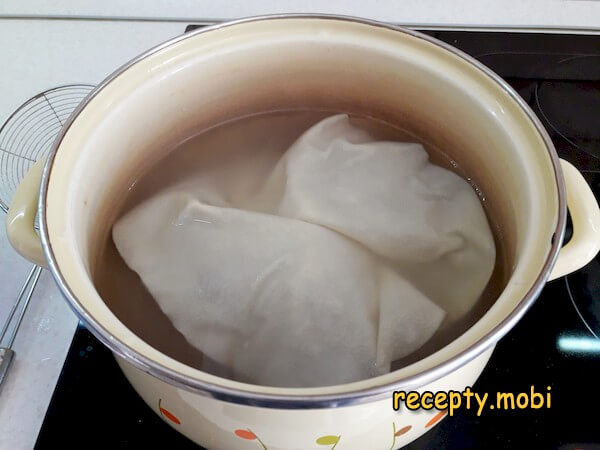
As soon as the water boils, I lower the large rolled-out sheet into it. I boil it for 20 seconds.
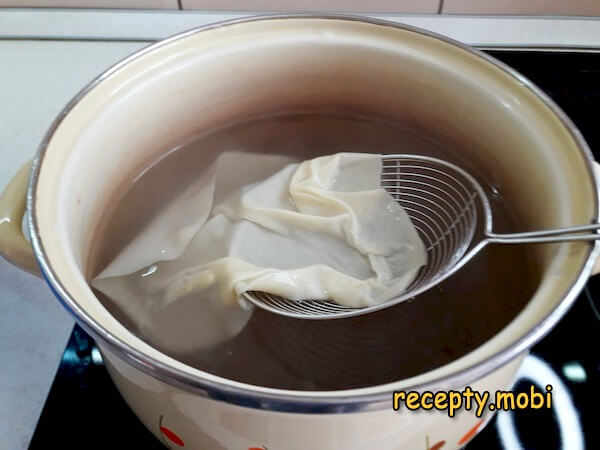
I lift it out with a slotted spoon.
I immediately plunge it into the iced water.
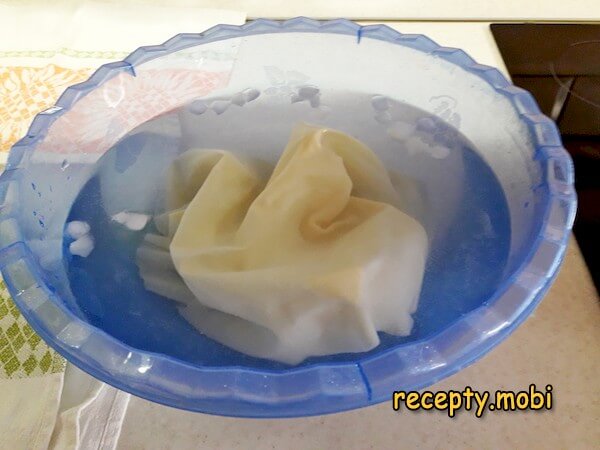
After 20 seconds I take the sheet out by hand, lay it on a towel and blot it dry.
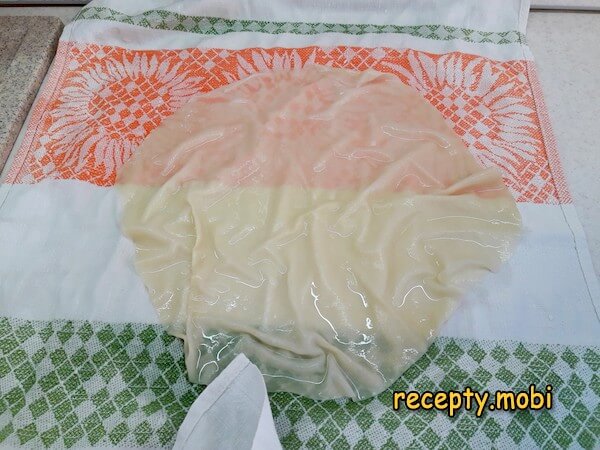
I transfer it to the mould and arrange it so the edges cover the sides. The folds that form are welcome in this pie.
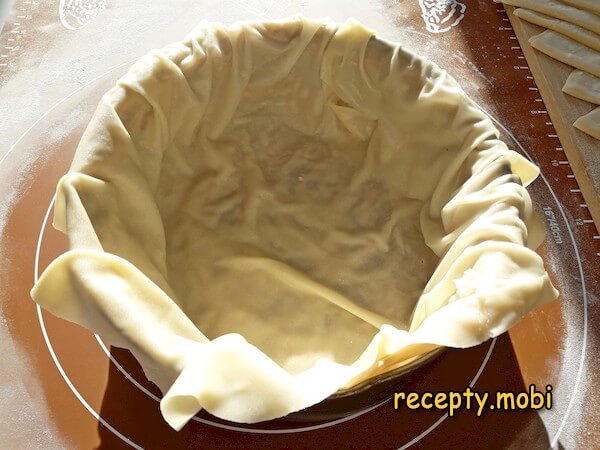
In the same way I boil a small circle and lay it in the mould, distributing the gathers randomly.
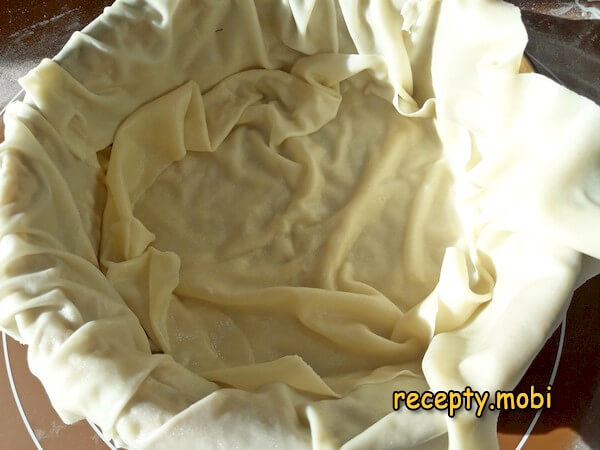
I brush each layer with the oil.
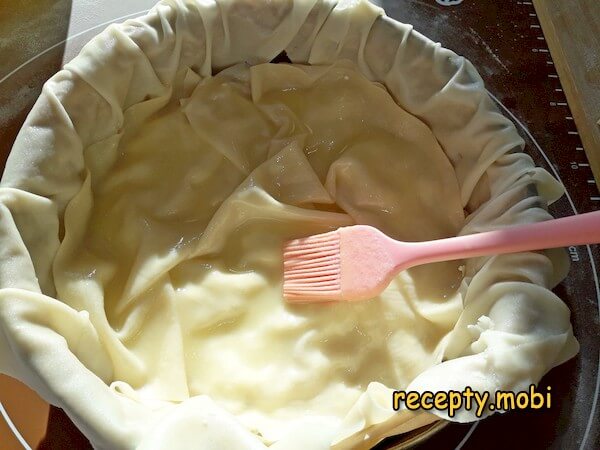
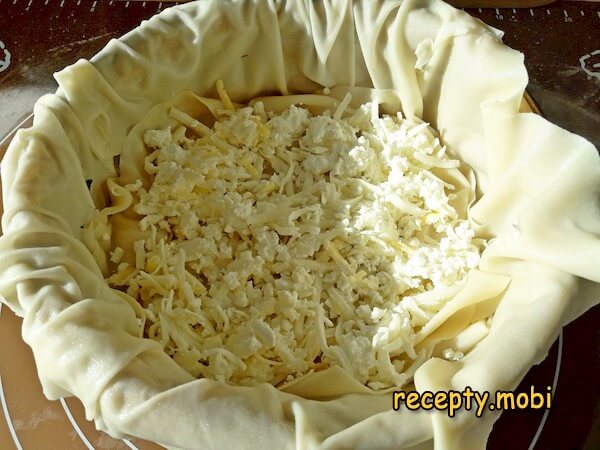
And I add the cheese filling. If there is not enough cheese for the last couple of sheets, I leave them empty and simply grease them with oil.
I tuck the edges of the last sheet inside the pie and brush it well with the remaining oil.
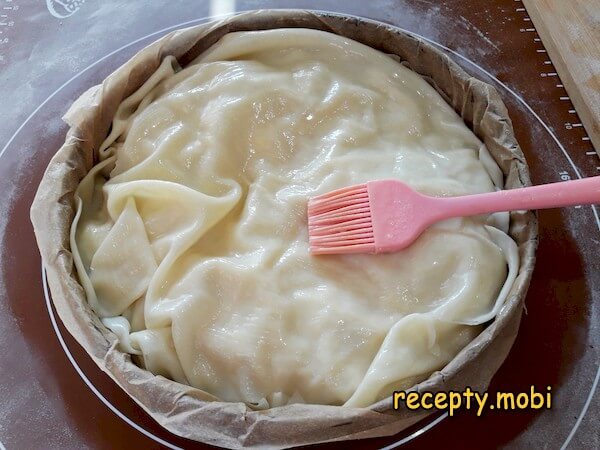
I put the mould into an oven preheated to 180 degrees. If possible, I turn on top and bottom heat with convection. The baking time depends on the oven, but you can go by the top crust – once it turns golden, the pie is ready, since all the layers were pre-boiled and the cheese is already done. The approximate baking time for Saburani is 20 minutes.
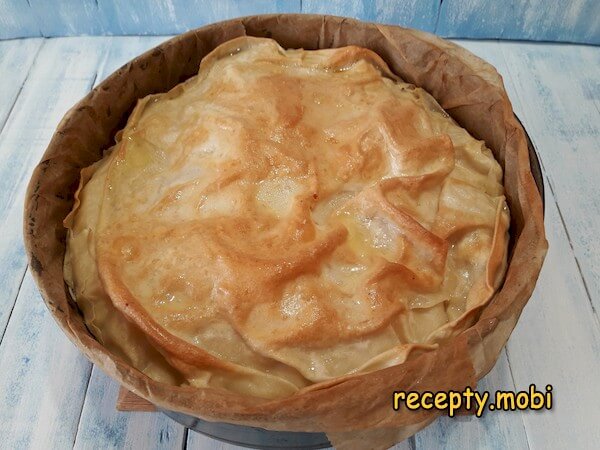
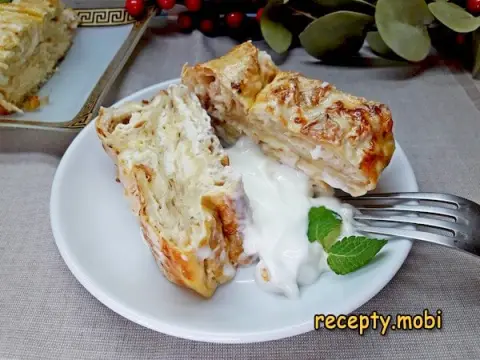
I let the pie cool slightly. The golden, wavy crust is infused with a creamy flavour. Saburani comes out of the mould easily and is cut into portions; the layers are clearly visible and the filling stretches. An incredibly tender, delicious and hearty Caucasian pie is waiting for its admirers.


Tips
- 1
BOILING THE LAYERS is the "secret" of Saburani. Raw dough would stick together during baking. Each circle is boiled for 20 seconds plus an ice shock – the layers stay separate.
- 2
LIFTING FROM THE WATER INTO ICE is the "secret" against sticking. Without the ice bath the boiled dough would keep cooking. The cold shock stops the process.
- 3
4–5 KINDS OF CHEESE is the "secret" of the flavour. A single cheese is "ordinary". An assortment with the obligatory Adyghe cheese and brinza gives a complex Caucasian taste.
- 4
OIL BETWEEN THE LAYERS is the "secret" of the flaky structure. Dry layers would glue together during baking. Layers brushed with the butter-and-oil mixture stay separate, as in baklava. The same principle works in other kinds of Caucasian cheese pies.
FAQ
Which cheeses should I choose for the filling? +
Ideal is an assortment of 4–5 kinds with a total weight of 550–600 g: Adyghe (200 g), brinza (150 g), suluguni (100 g), mozzarella (75 g), hard "Russian" cheese (75 g). Alternatives: Imeretian cheese + brinza + mozzarella (200 g each – "premium Caucasian"), feta + ricotta + parmesan (200 g each – "premium Mediterranean"), processed cheese + curd cheese + hard cheese (200 g each – "budget"), halloumi + feta + mozzarella (200 g each – "premium"). The brands "Svalya", "Brest-Litovsk" and "President" are reliable. Fresh homemade cheeses from a farm are the "premium" option. Do not use: blue-veined cheeses (they will spoil the taste) or sweet dessert cheeses. For "Caucasian classic" – Adyghe cheese and brinza are a must.
What can replace iced water? +
Ideal is water with ice cubes (a bowl, as advised in the recipe). Alternatives: very cold water from the fridge (you can chill it in advance), water with frozen berries or fruit (unusual, for experimenting), cold mineral water (cools faster), water plus a frozen food gel pack (a universal cooler), or simply cold running water (if the tap is really cold). The main thing is rapid cooling to stop the dough from cooking. Do not use: warm water (it will not stop the boiling) or salted water (it will change the taste). For "classic Saburani" – iced water is a must.
How long does Saburani keep? +
In the fridge in plastic wrap or a container – 2–3 days. Longer than that and the pie loses its tenderness and the cheese becomes rubbery. Before serving, warm it in the oven for 10 minutes at 150 °C under foil. A microwave is not suitable – the cheese will melt into a "puddle". In the freezer (cut into pieces) – up to 1 month; defrost for 8 hours in the fridge, then warm in the oven. A fresh pie is at its "best" 5–10 minutes after the oven (let it cool a little so the cheese does not "run away"). On the second day the flavour is deeper and brighter. Do not leave it at room temperature for longer than 4 hours.
What goes with Saburani? +
The Caucasian classic: with Provençal cabbage (as advised in the recipe) – a fresh contrast. With a green salad of rocket and spinach. With fresh herbs (parsley, coriander, tarragon). With Georgian red wine (Saperavi, Khvanchkara). With a shot of chacha. With a cup of Georgian tea with lemon. With a glass of brandy after dinner. With a garlic sauce of yogurt and herbs. With tomato salsa. With adjika or tkemali (for heat). With boiled rice or bulgur (a more filling meal). With a glass of freshly squeezed pomegranate juice. With a cup of strong Turkish coffee. For a "Caucasian feast" – a universal serving. A hearty cheese pie for guests.
- Comment
or post as a guest
Be the first to comment.