avg —
Shepherd's Pie

Instructions
I prepare the ingredients for the Shepherd's Pie. The green beans should first be boiled in salted water for 2 minutes. You can replace them with fresh or frozen green peas. I switch the oven on to 200 °C straight away, so that it is hot by the time for baking.

I cut the potatoes into several pieces, cover them with water and put them on the stove to boil until tender. Once it comes to the boil, I reduce the heat and add salt.
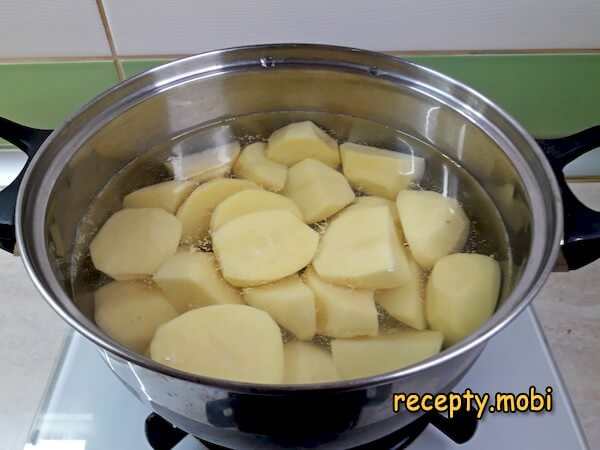
When the potatoes pierce easily with a fork, I drain the water completely. I add the butter and mash with a masher.

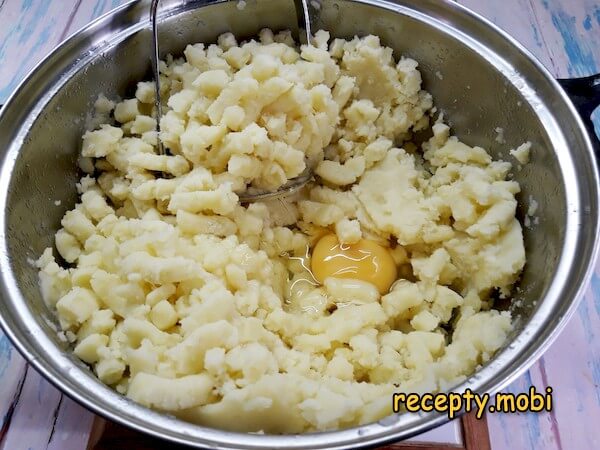
I add the egg and mash again. I set the puree aside.
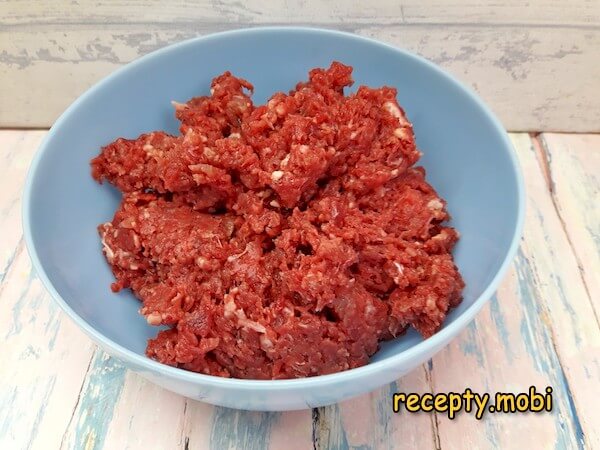
I cut the veal into pieces and put it into a chopper.
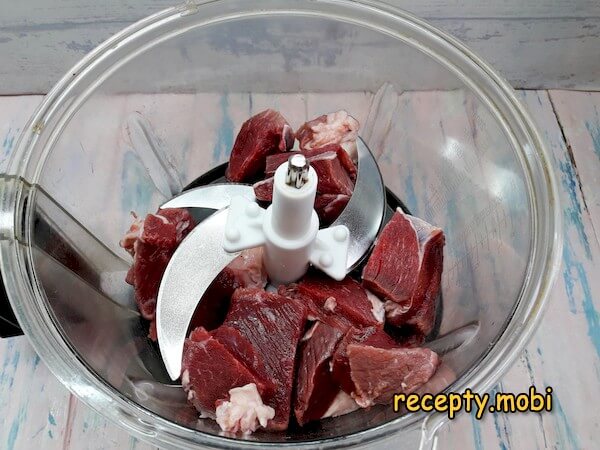
I grind the mince.
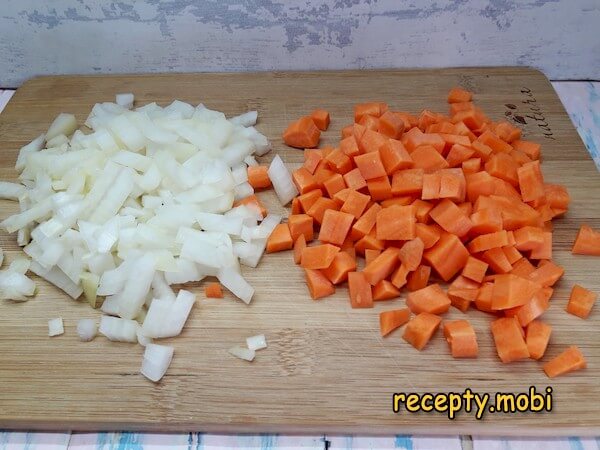
I chop the onion and carrot into medium cubes.
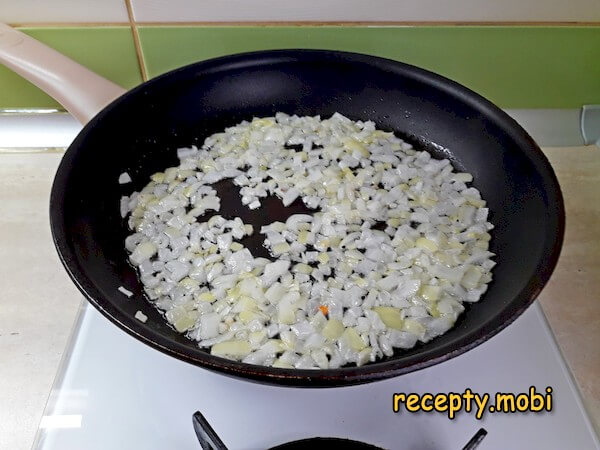
In the vegetable oil I sauté the onion first for about a minute.
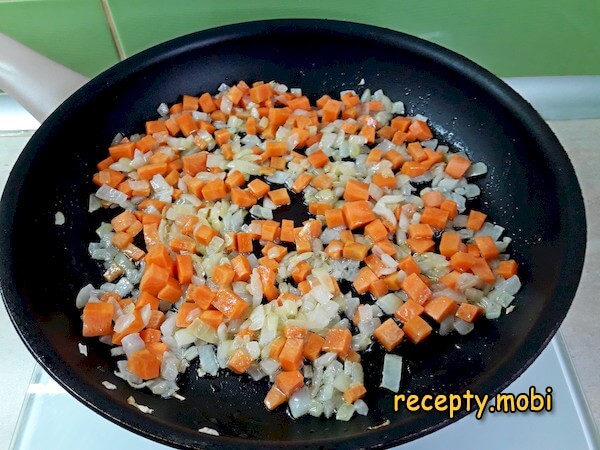
Then I add the carrot and keep it over medium heat for another 3 minutes.
Next I add the mince, breaking up the lumps with a spatula. I fry it until the colour changes. I season with salt and pepper.
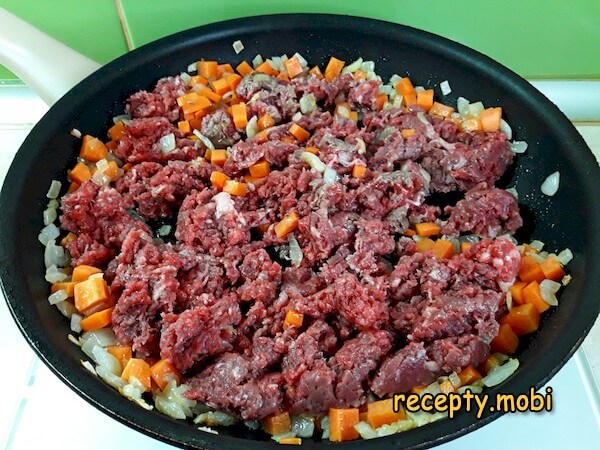
I pour in the broth and let everything simmer for about 7 minutes.
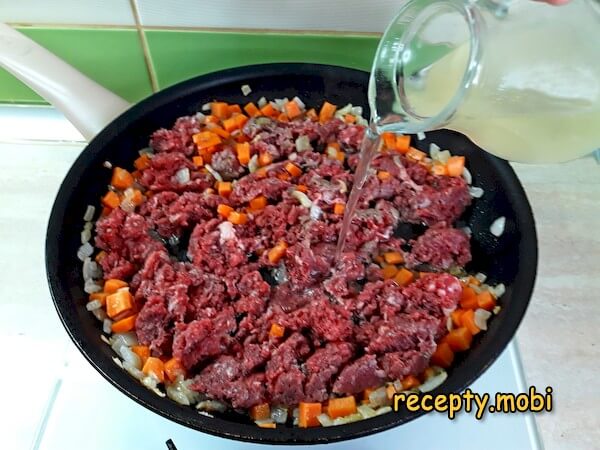
While the meat simmers, I cut the bell pepper, green beans and tomato into small cubes (the same size as the carrot).

I add the vegetables to the skillet. I stir and fry this colourful mixture for 3–4 minutes. I season with salt and pepper.
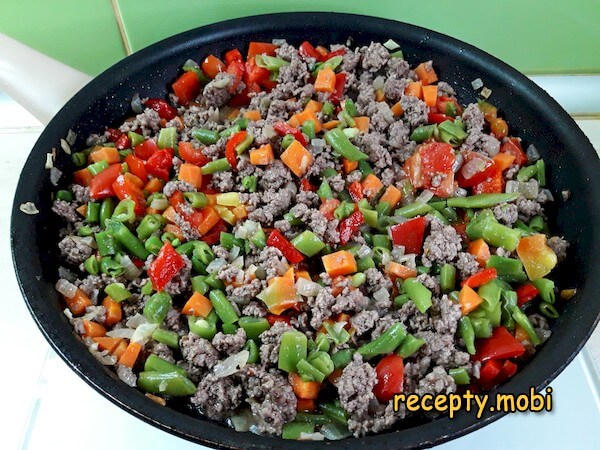
At the end, I press the garlic through a press. As it warms through, the kitchen instantly fills with a warm garlic aroma.
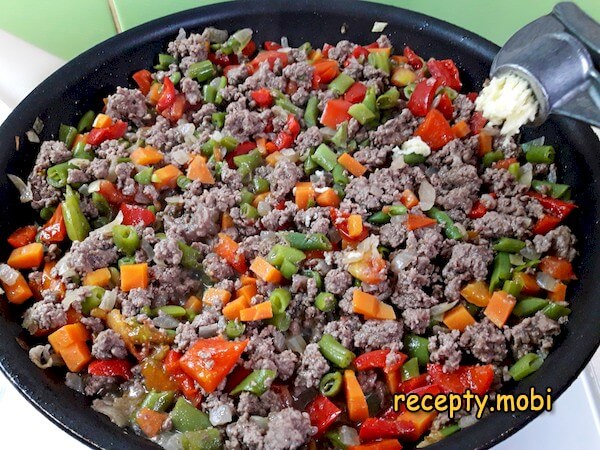
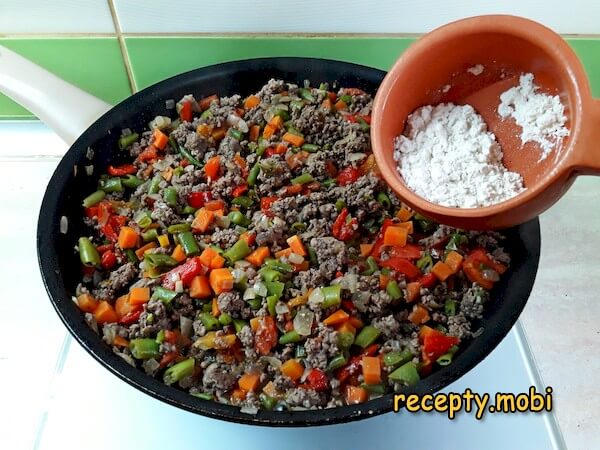
Now I need to thicken the meat filling. To do this I add the flour and stir quickly so that no lumps of flour form. As soon as the flour is evenly distributed, I turn off the heat.
I grate the piece of cheese for the top crust on a fine grater.

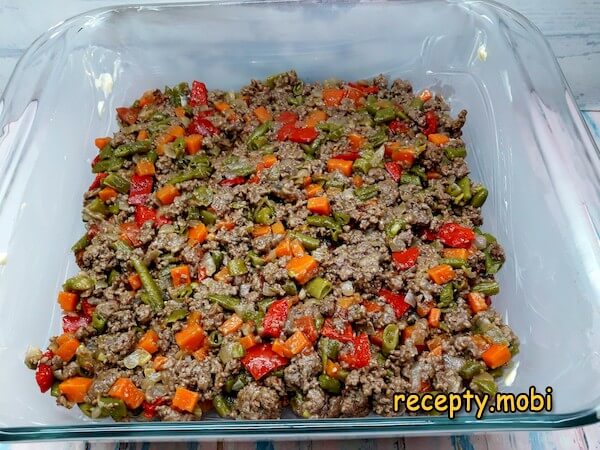
I grease the form well with butter. I spread out the meat filling and level it.
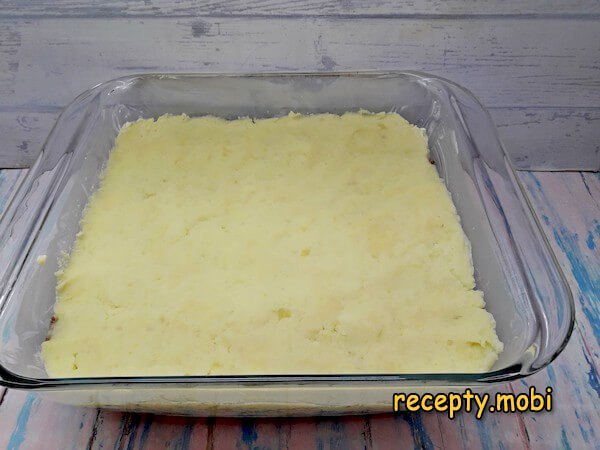
On top of it I spread the mashed potato. Without much pressure, I press it down onto the lower layer.
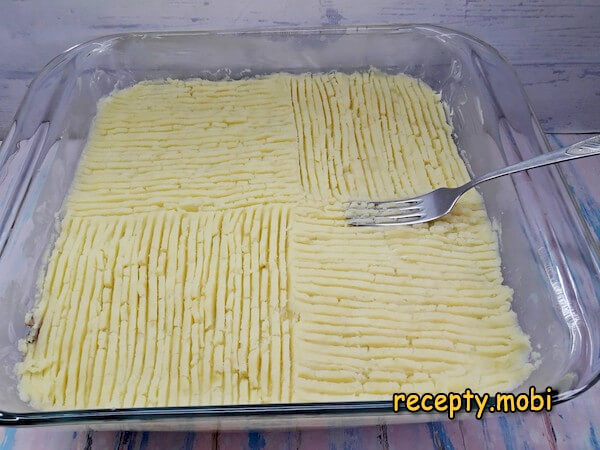
For decoration, I draw ridges across it with a fork.
For a more piquant taste and an attractive look, I sprinkle the surface with the grated cheese.
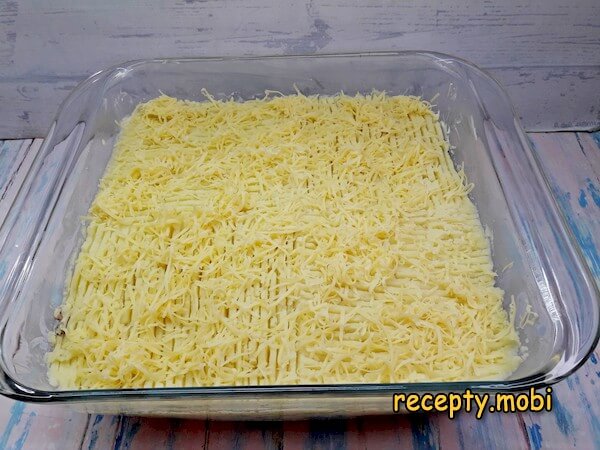
I place the form on the middle rack of the oven and bake it for 25 minutes, after which the cheese melts completely and soaks the potato layer with its flavour, while the vegetables and meat exchange aromas.
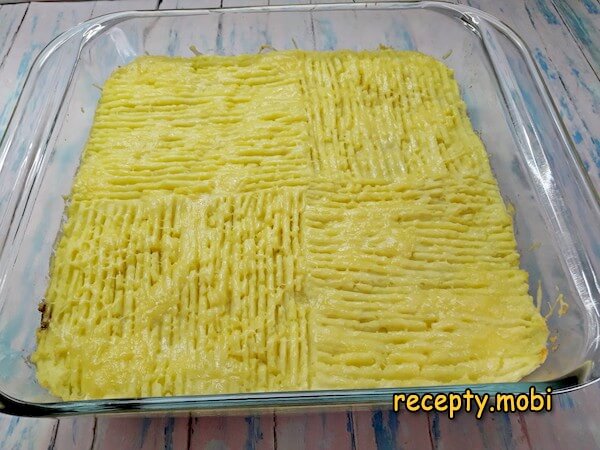
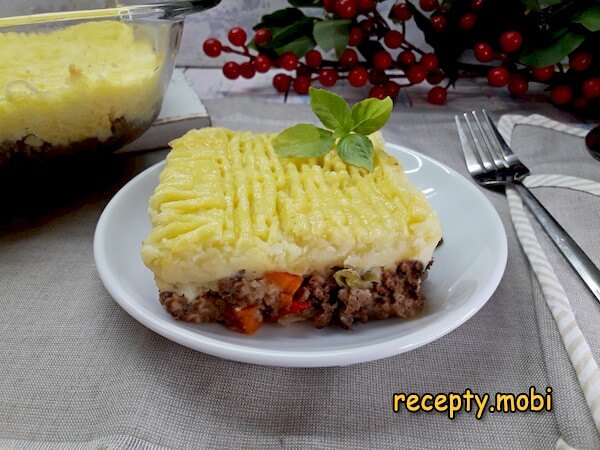
After baking, you need to wait a little for the Shepherd's Pie to cool, because when it is hot it is very difficult to cut while keeping its shape and layers intact. It is best served with cold sour cream. In this form the dish is much tastier than plain mashed potatoes with mince. Be sure to give it a try!


Tips
- 1
EGG IN THE PUREE – the secret of a firm shape. Plain mashed potato "spreads" over the mince. The egg sets the mixture during baking, so the pie can be cut into neat layers.
- 2
FLOUR AT THE END – the secret of thickening the sauce. Without flour, the meat layer will "float". Stir 15 g of flour into the hot mince and the sauce becomes thick, like gravy.
- 3
RIDGES WITH A FORK – the secret of the crust. A smooth puree surface looks dull. In the oven the ridges brown and form a golden pattern.
- 4
COOL BEFORE CUTTING – the secret of a neat serving. A hot pie falls apart. 15–20 minutes of resting and the layers hold their shape, so it cuts like a cake. The same principle works in other kinds of meat bakes with mashed potato.
FAQ
Which meat should I choose? +
Ideally veal, shoulder or tenderloin (500 g – the most tender once minced). Alternatives: lamb shoulder (500 g – the British classic, with a brighter flavour), beef (500 g – the economy choice), a 50/50 mix of veal and lamb (250 g of each), turkey fillet (500 g – the lighter option) or chicken thigh fillet (500 g – cooks faster). Do not use fatty mince with a large proportion of fat (it spreads), or frozen mince of unknown origin. For a classic Shepherd's Pie, use lamb or veal.
What can replace the green beans? +
Alternatives: fresh or frozen green peas (120 g – as suggested in the recipe), green string beans (120 g – the closest match), broccoli in small florets (120 g), cauliflower (120 g – more tender) or corn kernels (120 g – for a brighter colour). Do not use pickled beans (they upset the flavour) or grated carrot (it is already in the recipe). For the classic version, use a green vegetable for colour and crunch.
How long does Shepherd's Pie keep? +
In the fridge, in the form and covered with foil, it keeps for 3 days. Any longer and the potato darkens and the meat loses its juiciness. Before serving, reheat it in the oven for 15 minutes at 150 °C under foil. A microwave for 2–3 minutes works too, but the crust turns rubbery. In the freezer (cut into pieces) it keeps for up to 2 months; thaw it in the fridge for 8–10 hours and then reheat. Do not leave it at room temperature for longer than 4 hours.
What should I serve Shepherd's Pie with? +
It is best served with a tablespoon of cold sour cream. It also goes well with a fresh leaf salad (iceberg, rocket and cherry tomatoes), with boiled green peas, or with a slice of dark rye bread. It makes a hearty family main course for a weekend dinner.
- Comment
or post as a guest
Be the first to comment.