avg —
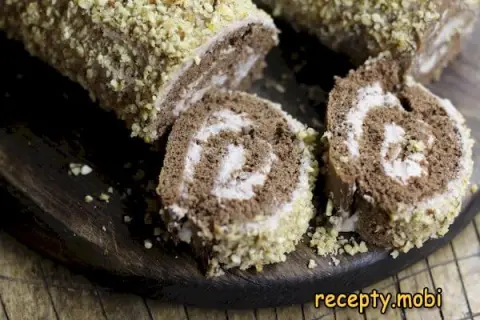
Cherry Roll with Custard

Instructions
I start with the custard, as it needs time to cool. Into a deep pot of at least 2 litres I add 5 tablespoons of wheat flour, 1 cup of sugar and 0.5 teaspoon of vanillin. I add 1 teaspoon of turmeric – it acts as a natural colouring and gives the custard a beautiful golden-yellow colour, which makes the roll look striking when sliced.
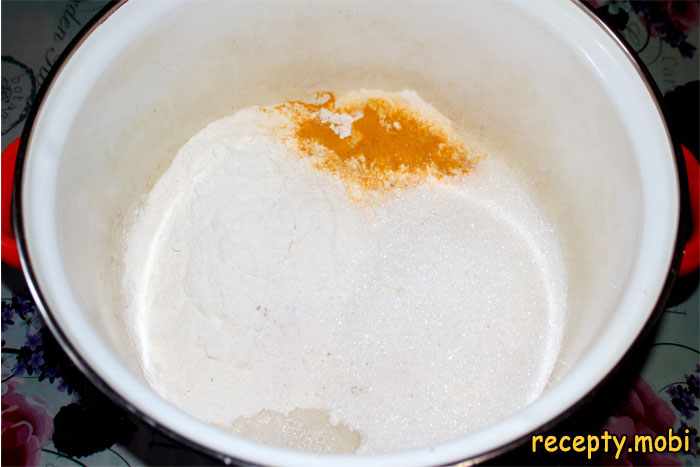
I mix the dry ingredients thoroughly with a whisk, breaking up all the lumps. Gradually I pour in 3/4 litre of room-temperature milk (I keep 1 cup back for the dough), stirring constantly. For a perfectly smooth, lump-free custard you can use an immersion blender or a mixer on low speed for 1–2 minutes.

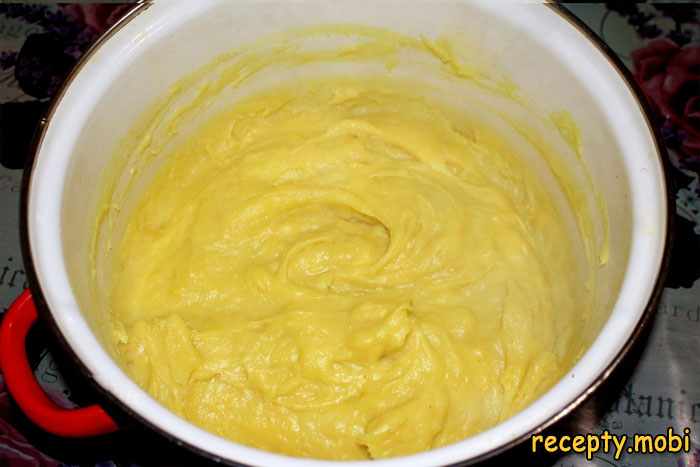
I put the pot on the lowest heat and cook the custard, stirring constantly with a wooden spatula or silicone spoon – the custard scorches very quickly, especially on the bottom. I cook it for 10–15 minutes until it thickens: the finished custard should thickly coat the spatula and not run off it. Into the thickened hot custard I add 20 g of butter – it gives the custard shine, a silky texture and a richer flavour.
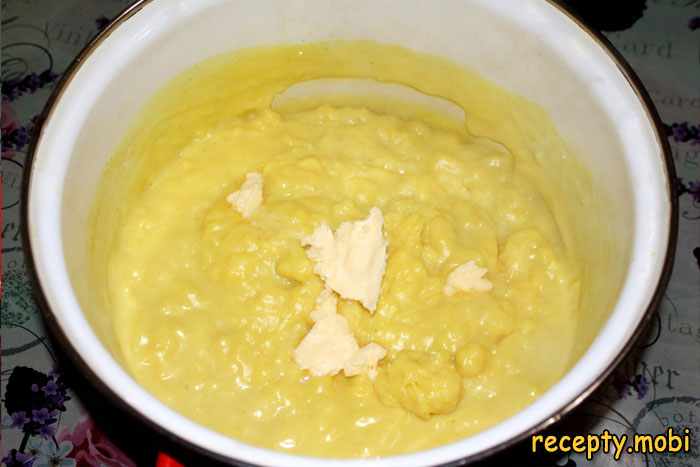
I stir the custard with the butter until it is fully dissolved, then cover the surface with cling film placed directly in contact with it (the film touches the surface of the custard) – this prevents a skin from forming as it cools. I set the pot aside to cool to room temperature, at least 30–40 minutes. Meanwhile I move on to the yeast dough.
For the starter, I crumble the fresh pressed yeast (50 g) into a deep bowl and add 5 tablespoons of flour and 5 tablespoons of sugar. Fresh yeast works better than dried for rich dough – the bake turns out lighter and more fragrant. Important: the yeast should be fresh, with a pleasant bready smell and no dark spots.
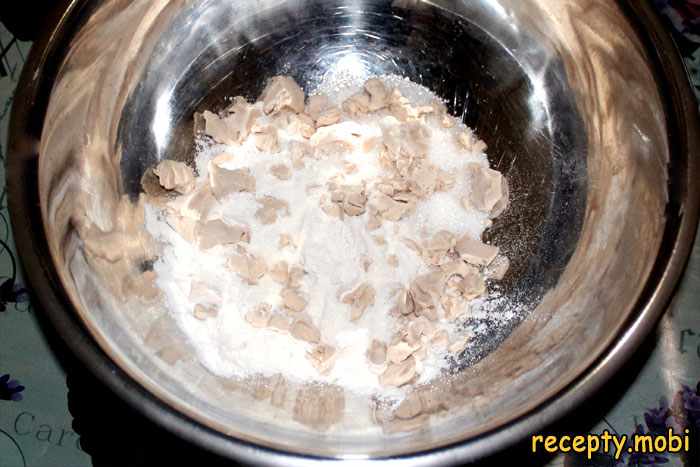
I warm a cup of water (250 ml) slightly to 35–40 °C – the water should feel pleasantly warm to the touch but not hot. I pour the warm water into the yeast mixture and stir until the yeast has fully dissolved. This is a crucial moment: a temperature above 45 °C will kill the yeast and the dough will not rise.
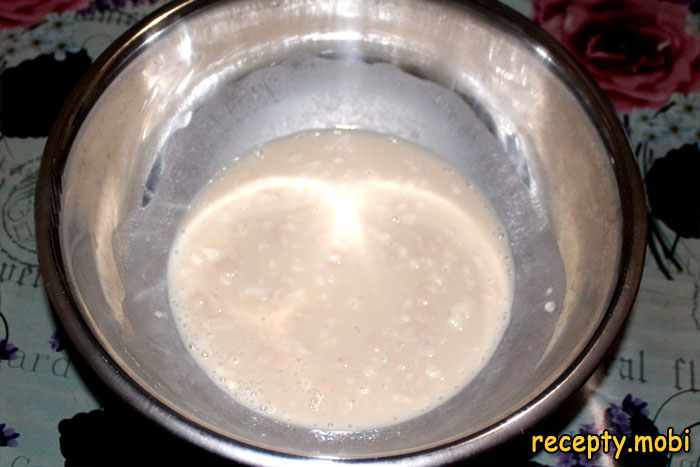
I cover the bowl with a clean kitchen towel and place it in a warm, draught-free spot (around 30 °C) for 15–20 minutes. An ideal place is a slightly warmed oven (turn it on to 50 °C for 2 minutes, then switch it off). When the mixture froths actively and doubles in volume, the starter is ready.
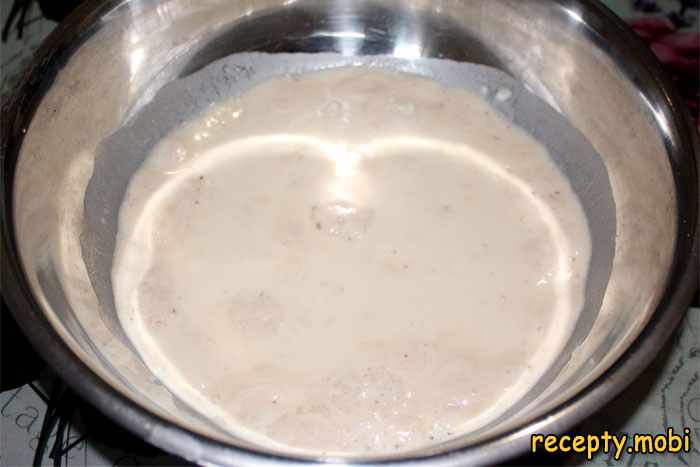
To the risen starter I add the remaining cup of milk, pre-warmed to 35–40 °C, another 1 cup of sugar and 0.5 teaspoon of vanillin. I gradually add the rest of the flour and knead a springy, soft, slightly sticky dough – it should not stick to your hands, but it should not be too stiff either. I add 3 tablespoons of vegetable oil for elasticity.
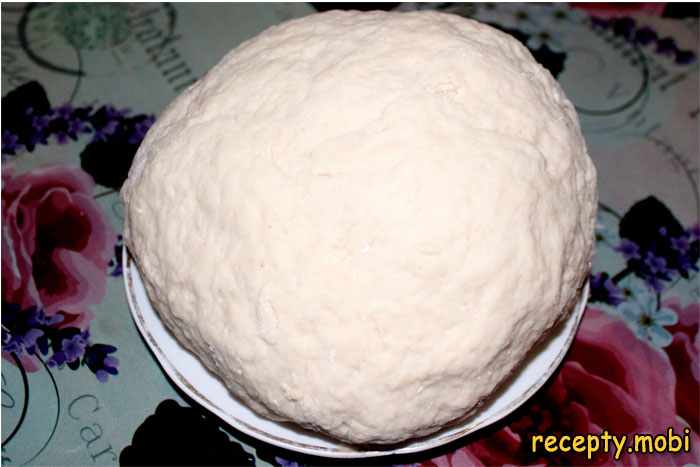
I cover the dough with a towel and put it in a warm place to rise. When the dough doubles in size (after 30–40 minutes), I knock it back with my hands, releasing the gases, and leave it to rise again. I repeat the knocking back at least 2 times – this makes the dough more elastic and gives the bake a fine, even crumb. Then I move on to shaping the roll.
I dust the work surface with flour. With a rolling pin I roll the dough into a rectangular sheet about 40×60 cm and 5–7 mm thick – too thick a sheet gives a coarse roll, too thin and it will tear when rolled up. The dough should be of even thickness all over.
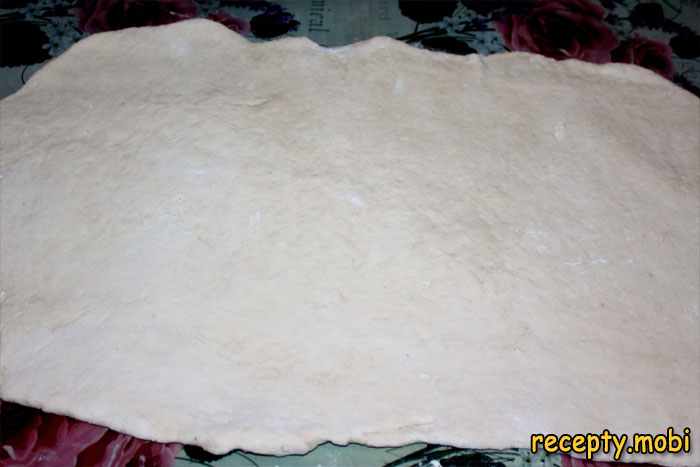
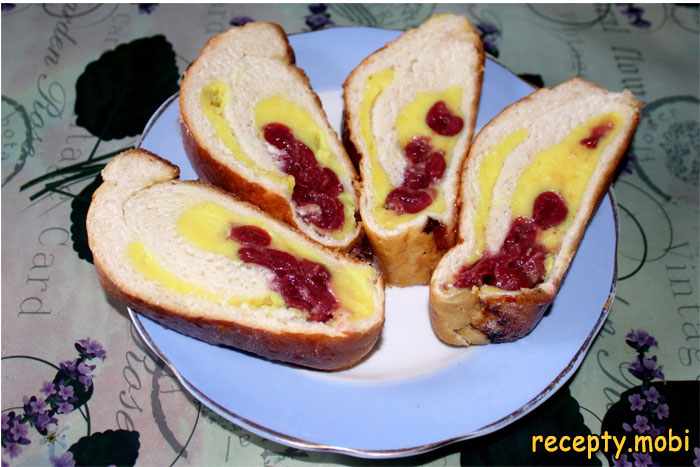
I spread the cooled custard evenly over the rolled-out sheet, leaving 2 cm clear around the edges – this is needed for sealing. I smooth the custard with a spoon or silicone spatula. Over the custard I scatter the pitted cherries (500 g), first drained in a sieve to remove excess syrup – too much liquid will make the dough soggy.
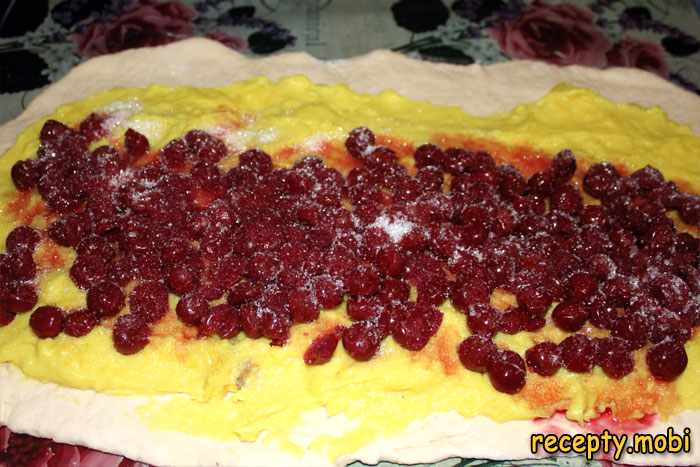
I line a baking sheet with parchment or grease it with oil. I carefully roll the sheet with the filling into a tight roll, starting from the long side – the tighter you roll it, the prettier the slices will be. I pinch the edges of the dough closed so the filling does not leak out during baking. I bend the roll into a ring, joining the ends, and place it on the baking sheet seam-side down.
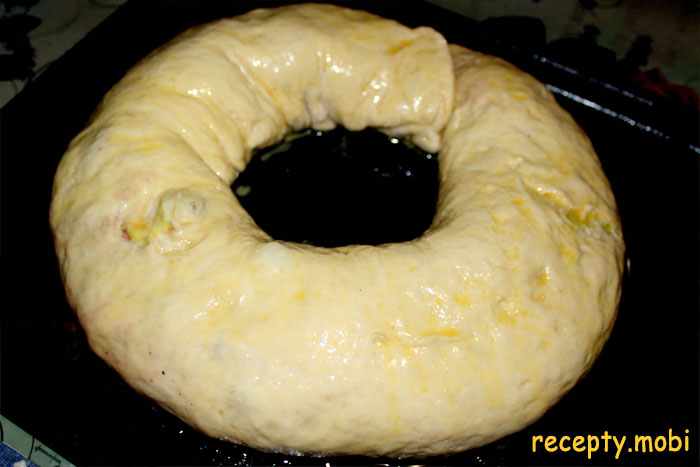
I lightly beat the egg with a fork together with 1 tablespoon of milk or water – this glaze gives a nicer shine. With a silicone brush I coat the whole surface of the roll with the beaten egg. I leave the roll to prove for 15–20 minutes – during this time it rises slightly and the bake will be airier.
I preheat the oven to 180 °C. I put the baking sheet in the centre of the oven and bake for 30–40 minutes until golden brown. I check it is done with a wooden skewer – it should come out dry, with no traces of raw dough. Do not open the oven during the first 20 minutes of baking – the roll may collapse.
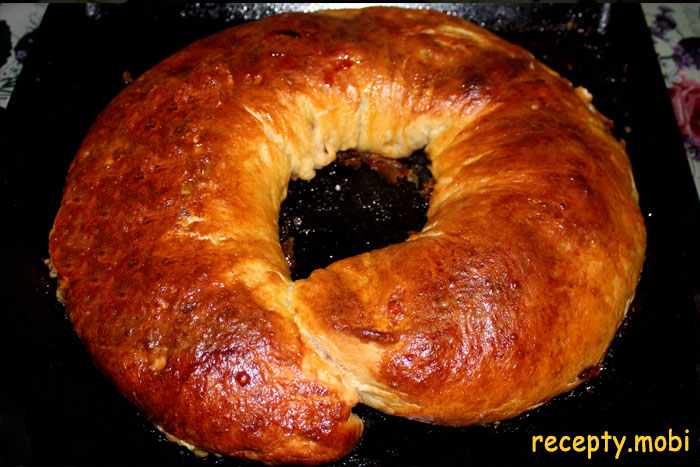
I take the finished roll out of the oven and leave it to cool on the baking sheet for 10–15 minutes – hot pastry is very tender and may break when moved. The cherry roll with custard is ready! I cut it with a sharp knife into slices 3–4 cm wide and arrange them on a dish. I serve it warm or at room temperature. If you like, decorate it with whipped cream or icing sugar.


Tips
- 1
The cherries can be replaced with any other berry – sweet cherries, strawberries, raspberries or currants. Sprinkle fresh berries lightly with sugar first and let them stand for 10 minutes to release their juice.
- 2
For a richer golden colour to the custard, increase the amount of turmeric to 1.5 teaspoons. Turmeric adds no flavour, only colour – don't be afraid of using too much.
- 3
The dough should rise in a warm, draught-free place – cover it with a clean kitchen towel rather than cling film so it can "breathe".
- 4
The roll goes beautifully with warm milk, tea or freshly squeezed juice. For a festive presentation, decorate it with whipped cream and fresh berries.
FAQ
Can I use fresh cherries instead of canned? +
Yes, but be sure to remove the stones and lightly sprinkle the cherries with sugar (2–3 tablespoons per 500 g). Fresh cherries are more tart than canned ones, so you may need more sugar. Let the cherries stand for 15–20 minutes and drain off the juice that is released.
Why didn't the yeast dough rise? +
The main reasons are: the yeast was past its date or stored incorrectly; the water or milk was too hot (above 45 °C) and killed the yeast; the dough stood in a cold place or in a draught. Store fresh yeast only in the fridge for no more than 2 weeks.
How long does the finished roll keep? +
At room temperature under a towel, the roll stays fresh for 1–2 days. In the fridge in a sealed container, up to 4–5 days. Before serving, warm it in the microwave for 20–30 seconds or in the oven at 150 °C for 5–7 minutes – the bake will become soft and fragrant again.
Can the roll be frozen? +
Yes, sliced roll freezes excellently for up to 2 months. Wrap the portions in cling film, then in foil. Defrost at room temperature for 2–3 hours, or warm a frozen slice in the microwave.
- Comment
or post as a guest
Be the first to comment.