avg —
Homemade Bread Kvass

Instructions
I slice the rye bread about a centimeter thick and dry it in the oven at 180 degrees until golden, about 15-20 minutes. I watch that the rusks brown but do not burn to black, otherwise they turn bitter.
I put the ready rusks into a clean three-litre jar or an enamel pot.
I boil the water and let it cool a little, then pour the hot water over the rusks so they are completely covered. I cover the pot with a towel and leave it to steep for 3-4 hours, until the infusion cools to warm and takes on the bread aroma.
I strain the infusion through a sieve or cheesecloth into a clean jar, lightly squeeze the rusks and set them aside.
I add sugar to the warm infusion (no hotter than 35-40 degrees, so a hand can bear it) and stir well until it dissolves completely.
I dissolve the yeast in half a glass of the warm infusion, let it stand about five minutes until a light foam forms, and pour it back into the jar. It is important that the infusion is warm, not hot, or the yeast will die.
I drop a handful of unwashed raisins into the jar: they give the kvass natural carbonation and pleasant bubbles.
I cover the jar with cheesecloth or a loose lid so the kvass can breathe, and leave it to ferment at room temperature for 1-2 days. Foam and a sour-bready smell appear within a day. I taste it: as soon as the kvass becomes pleasantly sour and fizzy, I consider it ready.
I strain the kvass through cheesecloth or a fine sieve into clean containers. The bread sediment can be kept as a starter for the next batch instead of being thrown away.
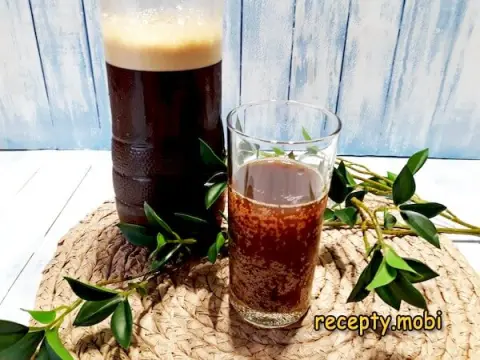
I pour the kvass into clean plastic bottles, drop a couple of raisins into each and close them tightly.
I put the bottles in the fridge for at least 4-6 hours: in the cold the kvass finishes fermenting, builds up gas and becomes cool and refreshing. If I leave the bottles in the warm for stronger carbonation, I check them by touch and move them to the cold as soon as they feel firm, so the caps do not blow off.
I serve it chilled and open the bottles carefully over the sink. I store the finished kvass in the fridge and drink it within 3-4 days, while it is at its best.
- Comment
or post as a guest
Be the first to comment.