avg —
Dried Tea Rose – A Simple Drying Method

Instructions
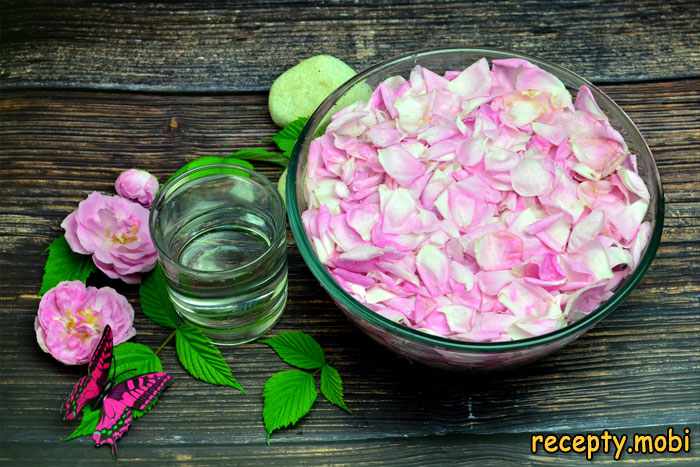
In season, a home-grown tea rose bush "throws out" new buds every day – this floral abundance lets you stock up on both fragrant jam and dried petals for future tea brews. I gather the opened buds early in the morning (once the dew has dried), when the concentration of essential oils is at its highest. It is important to take only home-grown roses from your own bush – shop bouquets are treated with chemicals that make them unsuitable for consumption.
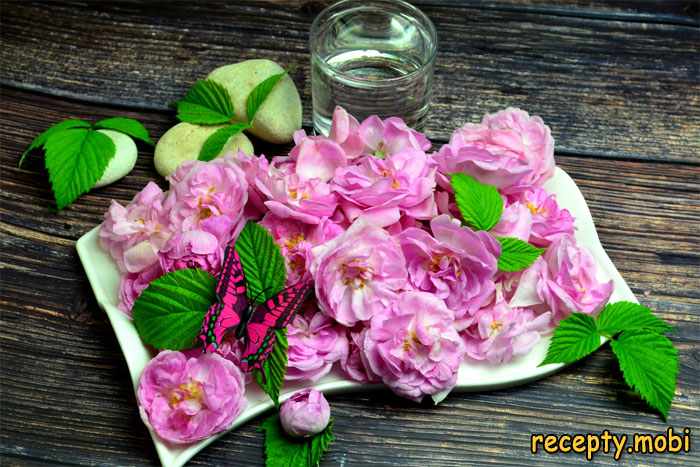
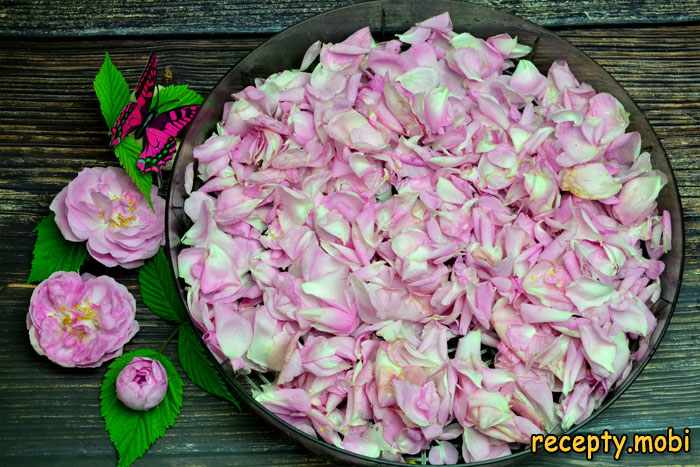
I gently break the opened buds apart by hand and separate the petals from the green base (the calyx). I sort the petals carefully, removing any that are damaged, wilted or show signs of disease. Only fresh, bright-pink petals without defects go into drying – the rest are discarded. For 1 kg of petals you usually need 15–20 large buds.
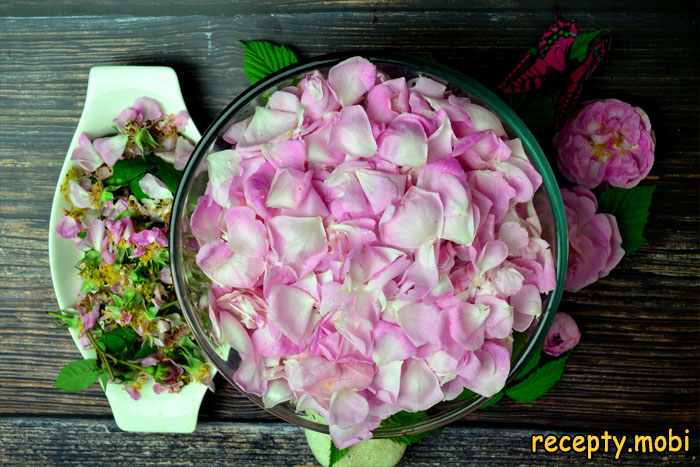
I quickly rinse the prepared petals under cold water in a colander and immediately lay them out in a single layer on clean paper towels to drain. Once the paper towels are fully moistened by the drips (about 5–10 minutes), I transfer the petals to the trays of an electric dehydrator in a single layer, trying not to overlap them – this ensures even drying.
In stable, hot, sunny weather the tea rose petals can also be dried on a windowsill in a warm, well-ventilated room – but with this open method part of the characteristic floral aroma may escape. Home-grown roses dried specifically in the closed trays of an electric dehydrator fully retain their natural smell and aroma – this is a fundamentally important difference. The closed chamber of the dehydrator holds in the essential oils.
Before pouring the finished petals into glass jars for storage, I make sure that all the petals are completely dried to a characteristic crispness. A properly dried petal does not bend when folded but snaps with a slight sound. If some of the petals are still soft, I continue drying for another 1–2 hours. Under-dried petals will go mouldy in storage within 1–2 weeks – this is a critical check.
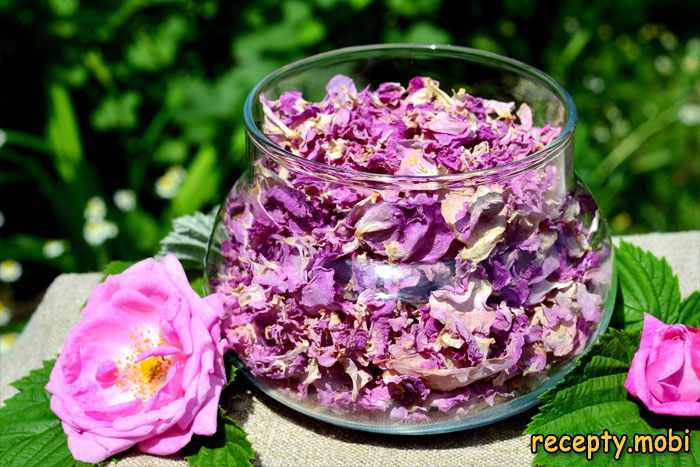
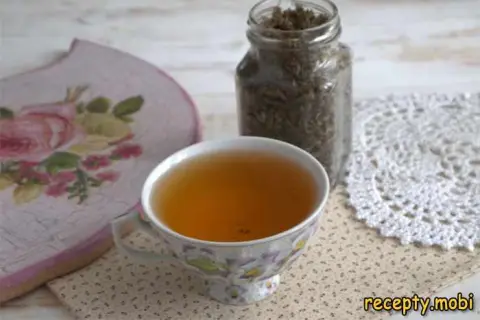
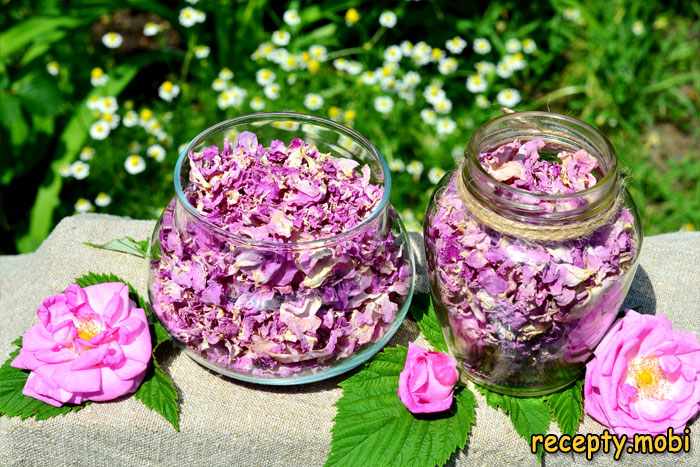
In dried form, the original 1 kg of fresh petals fits into two small glass jars of 0.5 l – they shrink considerably in volume as they lose moisture. After brewing, the dried tea rose petals straighten out in the hot water and regain their usual size, giving the drink its characteristic amber colour and exquisite floral aroma. I keep the homemade rose tea in tightly lidded jars in a dark, dry place for up to 1 year.


Tips
- 1
Gather petals only from home-grown rose bushes or roses grown without the use of chemicals. Shop bouquet roses are treated with preservatives and fungicides that make them unsuitable for tea and potentially dangerous.
- 2
Dry tea rose only at a low temperature of 35–40 °C – this is the only way to preserve the maximum floral aroma and essential oils. A high temperature speeds up the process but completely destroys the characteristic smell.
- 3
The petals must dry to a characteristic crispness – this is the main sign that they are ready. When folded, a properly dried petal snaps rather than bends. Under-dried petals will go mouldy in storage.
- 4
Store the finished dried petals in glass jars with a tight screw-on lid in a dark, cool place – light and moisture destroy the aroma and colour. Homemade dried tea will keep its properties for up to a year.
FAQ
Can tea rose be dried in the sun? +
It can, but with this open method a significant part of the floral aroma and essential oils is lost due to direct exposure to ultraviolet light and wind. For open drying, spread the petals out in a thin layer in a well-ventilated, shaded spot (not in direct sunlight!) – in a gazebo, in an attic or on a balcony. Such drying takes 2–3 days in stable, dry weather. The best option is still an electric dehydrator with a closed chamber, or an oven at 40 °C with the door ajar. For small batches, drying on the bottom shelf of the fridge in an open container works – 4–5 days, but with all the aromas preserved.
How long do dried tea rose petals keep? +
With proper storage in a glass jar with a tight lid in a dark, dry place – up to 1 year without significant loss of aroma and beneficial properties. In transparent jars in the light the shelf life drops to 6 months – light destroys the essential oils. The optimal storage temperature is 15–20 °C (ordinary room conditions in a closed cupboard). Signs of spoilage: an off, musty smell, the appearance of mould, loss of the characteristic colour to a brownish shade. Discard such petals. It is best to renew your home supply every year – freshly gathered petals are always more fragrant.
How do you brew tea from dried rose petals correctly? +
Pour a glass of hot but not boiling water (the ideal temperature is 85–90 °C) over 1–2 teaspoons of dried petals – boiling water destroys the delicate floral aroma. Leave to infuse for 5–7 minutes in a teapot with the lid closed to preserve the essential oils. Strain through a small sieve and serve. You can add 1 teaspoon of natural honey to taste (once it has cooled to 40 °C, so as to keep the honey's beneficial properties) or a slice of lemon. Homemade rose tea is especially good with dried raspberries or leaves of fresh mint. Drink 1–2 cups a day.
What are the beneficial properties of dried tea rose? +
Dried tea rose is a natural product with a rich composition. It contains vitamins C, A and the B group, minerals (potassium, calcium, magnesium, iron), antioxidants and essential oils. Tea made from the petals has a calming effect on the nervous system, helps with stress and insomnia, is good for the skin (it contains natural collagen-forming substances) and improves digestion. It also relieves inflammation and helps with colds thanks to its vitamin C. For the bath you can add a handful of dried petals – the result is a fragrant spa treatment at home. Precautions: during pregnancy and if you are allergic to roses, consult a doctor.
- Comment
or post as a guest
Be the first to comment.