Alcoholic Gluhwein
Mulled wine from dry red wine is the famous traditional warming drink of European Christmas cuisine, most often made at home in winter to warm up on a cold frosty evening by the fireplace or after a long walk. In recent years mulled wine (Glühwein) has gained incredible popularity far beyond its historic homelands (Germany, Austria, the Czech Republic) and has become an essential attribute of Christmas markets and festive gatherings around the world. The main ingredients are a quality dry red wine, fragrant spices (cinnamon, cloves, star anise, nutmeg), citrus fruits (orange, lemon) and sugar or honey to taste. In a pot combine the wine, slices of orange and lemon, spices and sugar. Warm over low heat to 70-80°C (160-175°F), never letting it come to a boil — otherwise the alcohol will evaporate. Proportions for 1 liter of wine inside.
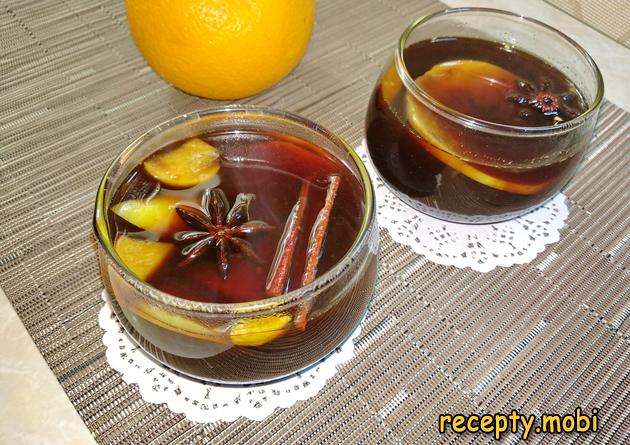
I make alcoholic mulled wine at home in winter, to warm up on a frosty evening. In recent years it has gained incredible popularity – an aromatic, delicious and warming drink made from red wine and spices.
This step-by-step recipe is my winter classic for get-togethers with friends and cosy evenings. The preparation time is 60 minutes and it makes 4 servings. The calorie content is 125 kcal per 100 g, which is typical for a drink with wine and sugar.
Ingredients
Show ingredients
- red dry wine – 750 ml (1 bottle);
- sugar – 2 tbsp;
- honey – 1 tsp each (in the glass);
- orange (large) – 1 pc;
- sweet apple (medium) – 1 pc;
- ginger – a little (optional);
- cardamom – 10 pods;
- cloves (buds) – 8–10 pcs;
- cinnamon sticks – 2–3 pcs;
- star anise – 2 stars;
- nutmeg (grated) – ⅓ tsp;
- bay leaf – 1 pc.
Preparing the mulled wine step by step
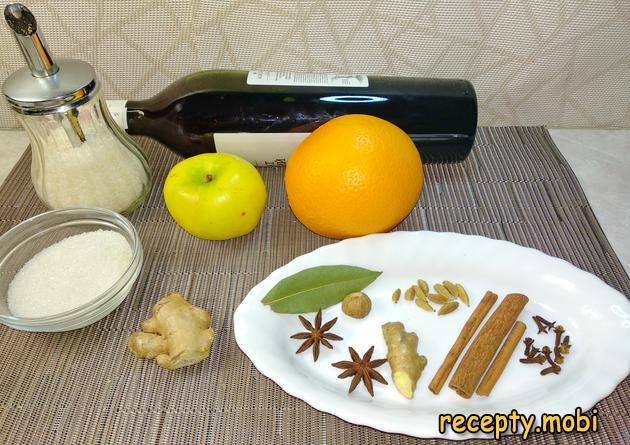
1. I gather all the ingredients from the list for making the alcoholic mulled wine. The quality of the wine is the key point: use a good dry wine, as a cheap "table" wine will ruin the whole drink.
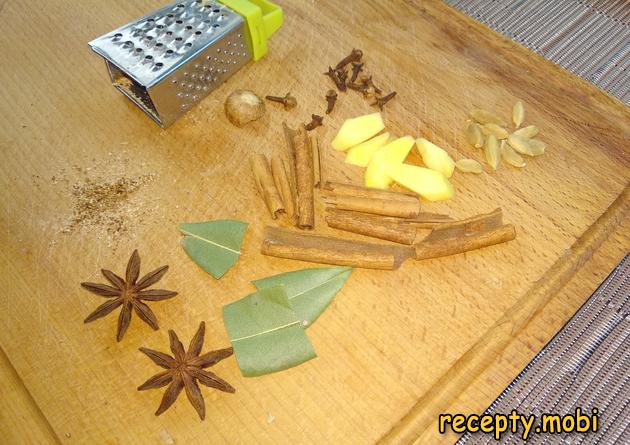
2. I prepare the spices: I cut the ginger into slices, break the cinnamon sticks into pieces, grate the nutmeg on a grater, and break up the bay leaf. Freshly prepared spices give off the most aroma.
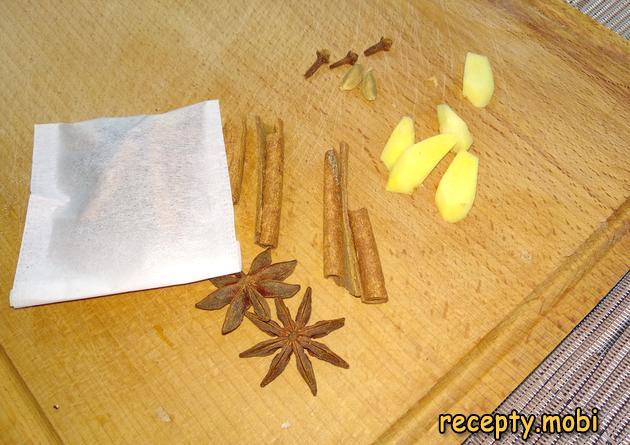
3. If you wish, transfer the spices into a special little bag (so they are easy to remove afterwards), leaving a few aside to decorate the glasses when serving.
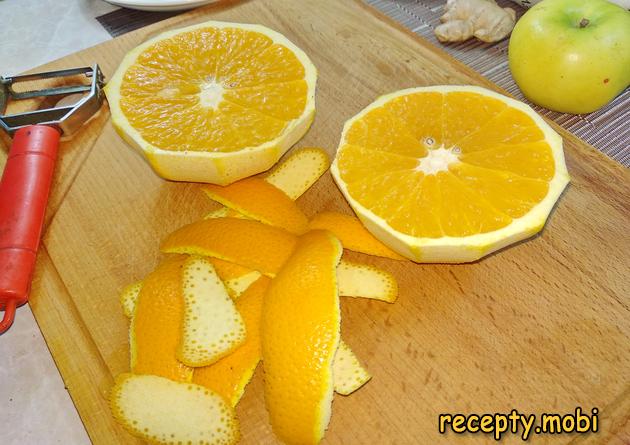
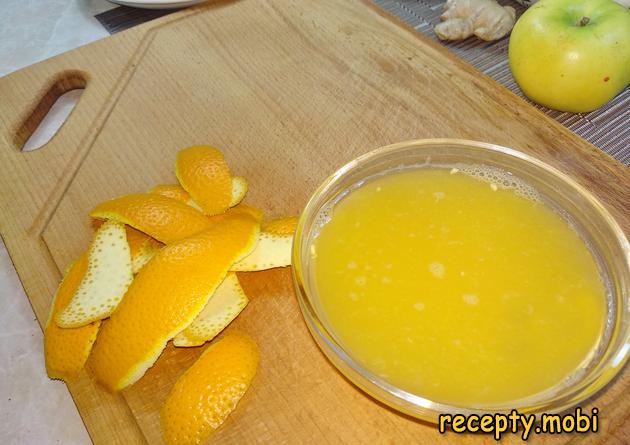
4. I peel the zest from the orange in a thin layer – without the white part, as it tastes bitter. The zest gives the mulled wine its characteristic citrus aroma.
5. I squeeze the juice from the orange. Freshly squeezed juice is more aromatic than shop-bought – it gives the finished drink a more "lively" citrus flavour.
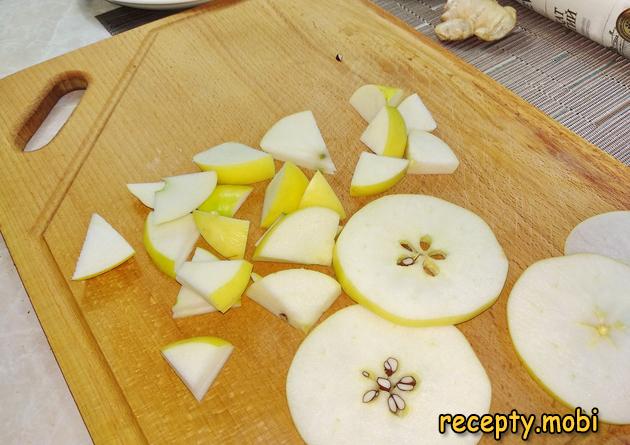
6. I cut the apple however I like – into wedges, cubes or slices. A sweet apple adds a pleasant fruity accent to the drink.
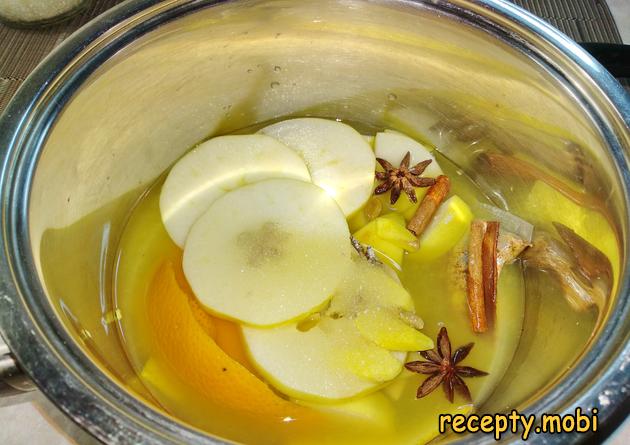
7. Into a thick-bottomed pot I pour the orange juice and add the zest, apple, spices and sugar. I put it on the stove and bring it to the boil, cooking for 1–2 minutes – this "activates" the spices. Then I take the pot off the heat and pour in all the wine. I set the heat to minimum. The wine should only be warmed through – mulled wine MUST NOT be boiled. Boiling evaporates the alcohol and the aromas are lost. I heat it until steam appears – usually 8–10 minutes.
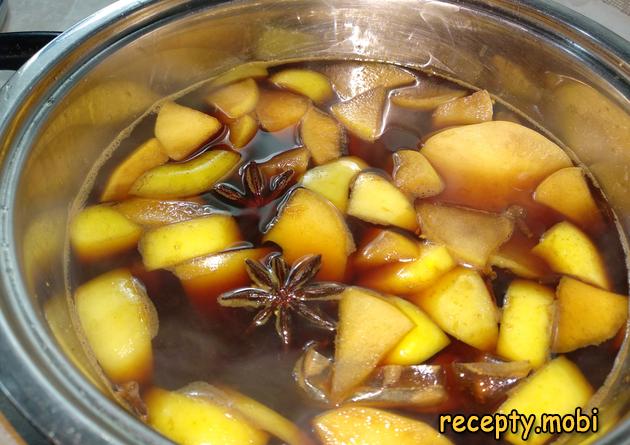
8. Steam has appeared above the pot – the mulled wine made from red dry wine is ready. This "steam" is the signal of a temperature of around 70–80 °C, which is optimal for classic mulled wine.
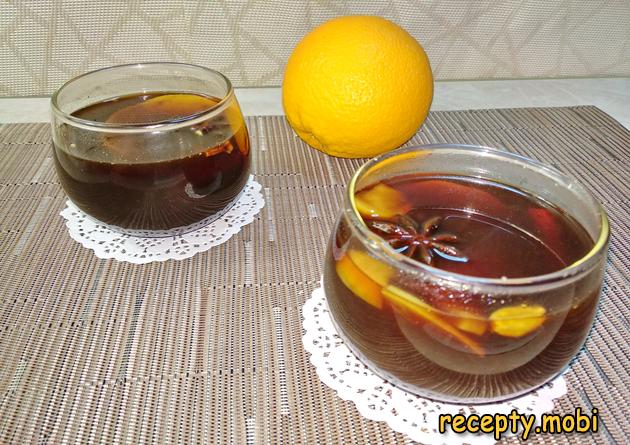
9. I pour the alcoholic mulled wine into glasses and add 1 tsp of honey to each. I decorate to taste – with a slice of orange, a cinnamon stick or a star of anise. I serve it at the table. The finished mulled wine can be poured into a thermos and taken along on a winter walk with friends.
Tips and Tricks
Tip 1. Mulled wine absolutely must not be boiled – the alcohol will evaporate and the characteristic "wine" flavour will be lost. Only warm it through until it steams (70–80 °C).
Tip 2. Add the honey to the finished, slightly cooled drink (50–60 °C) – in a hot drink honey loses its beneficial properties and simply turns into ordinary syrup.
Tip 3. Use the spices in a little bag – that way they are easy to remove before pouring, and nothing gets in the way in the glass. I use a similar trick in other warming drinks.
Tip 4. Good-quality wine is the basis of tasty mulled wine. Choose a good dry wine (not a "table" one), but not a very expensive one either – heating kills the subtle nuances, so an expensive wine "loses its character".
FAQ
What wine is best for mulled wine?+
The classic choice is a mid-priced dry red wine. The best options are Cabernet Sauvignon, Merlot, Shiraz or Tempranillo (Spanish or Chilean). A "table" wine with no stated grape variety is not suitable – it gives a "chemical" aftertaste when heated. An expensive aged wine is not needed, as heating kills the nuances. A semi-dry wine will also do, but reduce the sugar. Semi-sweet and sweet wines are not suitable: the result will be cloying. For a non-alcoholic mulled wine, replace the wine with grape juice (dark) – the method is the same.
Can the spices in the recipe be substituted?+
The basic "essential" spices are cinnamon, cloves and star anise – without them it is not mulled wine. Cardamom, nutmeg and ginger add complexity to the aroma, but you can manage without them too. Bay leaf is a "Russian-European" note, not a classic one, but I like it. Substitutions: instead of cinnamon sticks use ground cinnamon (½ tsp per bottle); instead of whole cloves use ground (¼ tsp), but ground spices leave a cloudy sediment. Star anise can be replaced with aniseed (5–6 seeds). The minimum set is cinnamon + cloves + orange = already mulled wine.
How long does the finished mulled wine keep?+
In the refrigerator in a sealed container – 2–3 days. Before serving, warm it gently without bringing it to the boil. On the second day the flavour is even better – the spices give more of their aroma to the wine. In a thermos, hot mulled wine keeps its temperature for 4–6 hours, which is handy for walks and picnics. There is no point in freezing it. If mulled wine is left in the pot overnight at room temperature, it may "ferment" slightly (a wine drink keeps on "living"). It is better to put it in the refrigerator straight away.
How do I make non-alcoholic mulled wine?+
Replace the wine with: grape juice (dark, unsweetened) – the closest in flavour; pomegranate juice (more "tart"); cherry juice (slightly sweet); or a 1:1 mix of apple and cranberry juice (fruity). Reduce the sugar to 1 tbsp (the juices are sweet themselves). The method is the same: spices + juice + fruit + warming until it steams. You get an excellent "children's" mulled wine or a version for those who do not drink alcohol. It is also suitable for pregnant women and drivers.
Video preparation
{ytvideo https://youtu.be/nA-RgMtDdl4|16-9|Mulled wine alcoholic}