avg —
Alexandrian Easter Bread with Baked Milk

Instructions
I prepare the sponge ingredients. PLAN: prepare in evening so the sponge ferments overnight. Eggs and butter must be at room temperature.
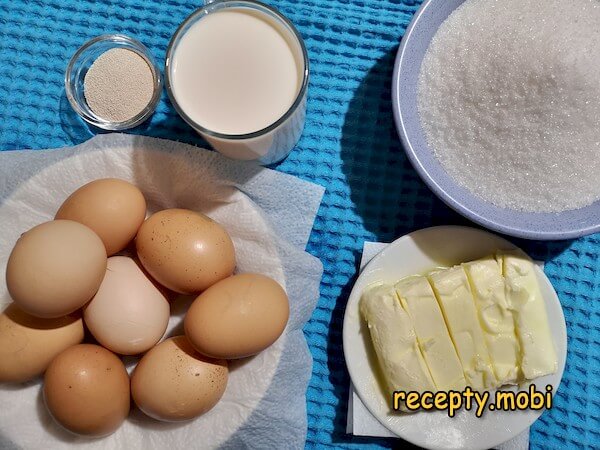
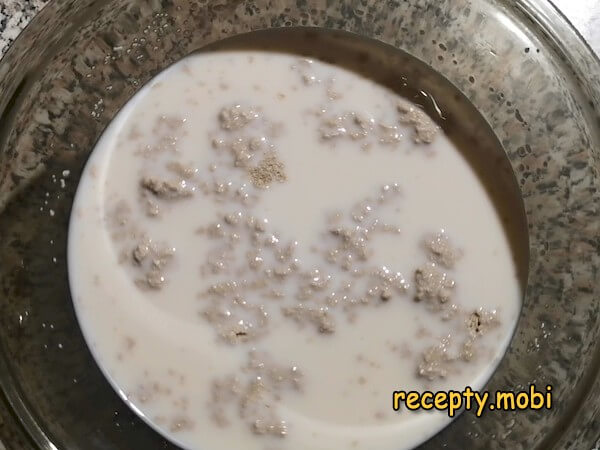
Add 17 g dry yeast to 500 ml sour milk; mix thoroughly to dissolve.
In a deep bowl, crack 6 whole eggs + 2 extra yolks. The 2 leftover whites can be saved for French meringue or another dish.

Lightly beat eggs with a whisk to integrate yolks + whites.

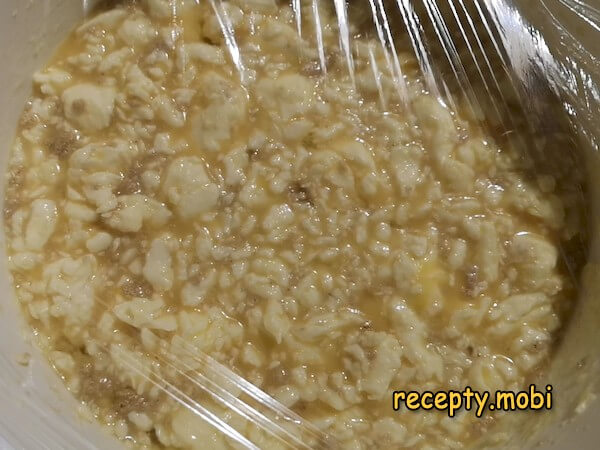
To the egg mixture: add the sour-milk-yeast mixture + room temperature butter + 500 g sugar. Mix all ingredients well. Cover with plastic wrap; leave at room temperature 10-12 hours (overnight).
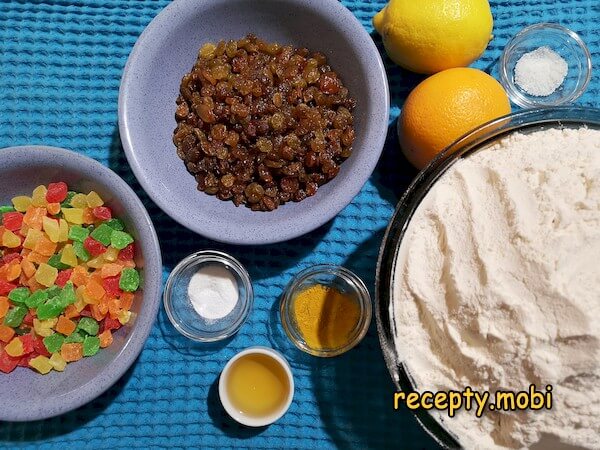
Next day: sponge has fermented. Prepare the dough ingredients. Rinse raisins + candied fruits thoroughly.
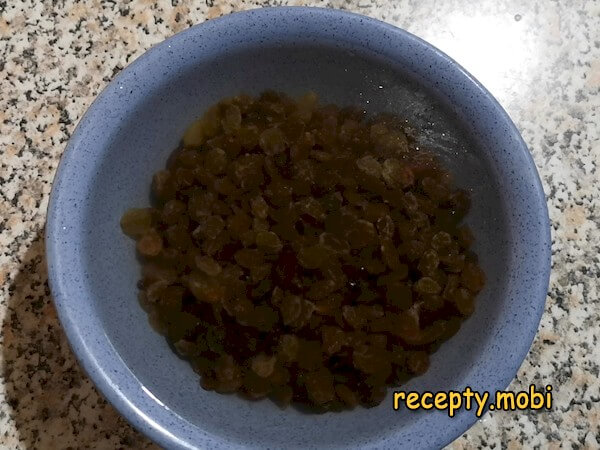
Pour boiling water over raisins; let cool.
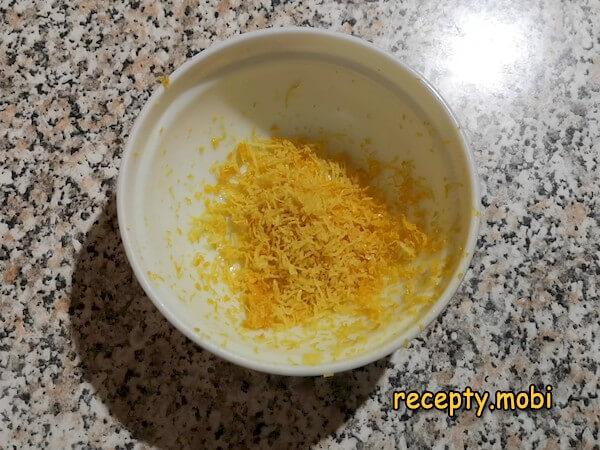
In a small dish, grate lemon zest + orange zest finely.
The fermented sponge — visibly bubbly, increased in volume.
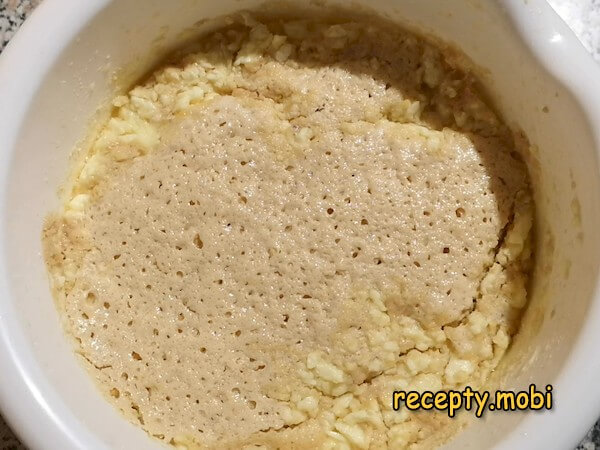
Mix the fermented sponge briefly to deflate slightly.
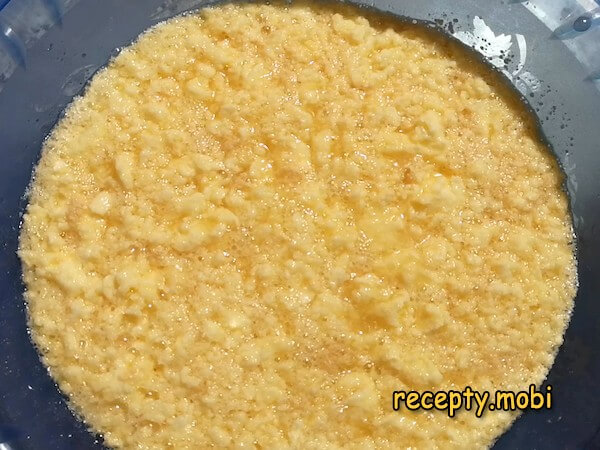
Begin Alexandrian dough preparation. Add to the sponge: lemon + orange zest, 1/2 tsp turmeric (optional), 2 tbsp brandy, 2 g vanillin, 1/2 tsp salt. Mix everything.
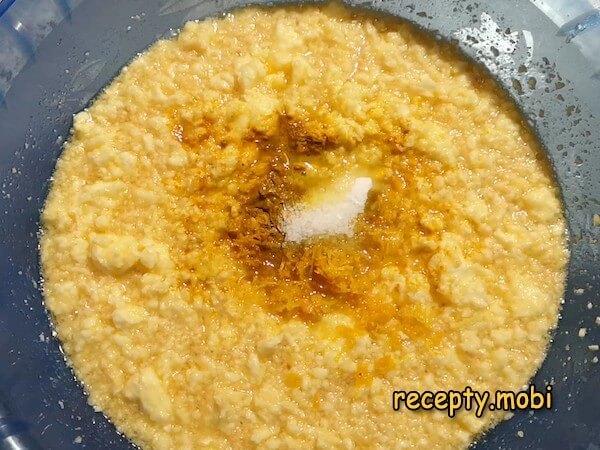
Sift HALF the flour (about 600 g) in small portions; mix between each addition.
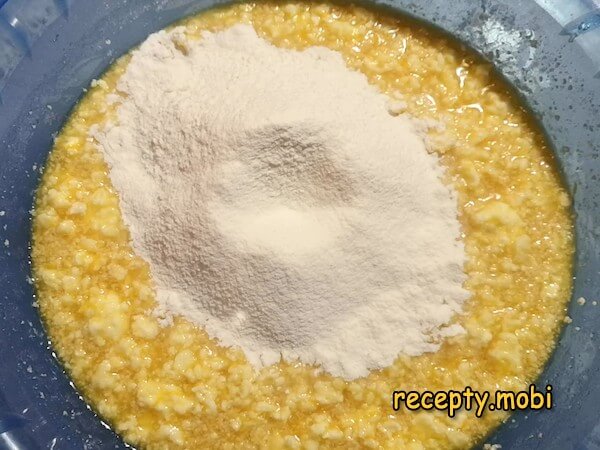
Drain cooled raisins; pat dry. Toss with 1 tbsp flour (prevents clumping in dough).
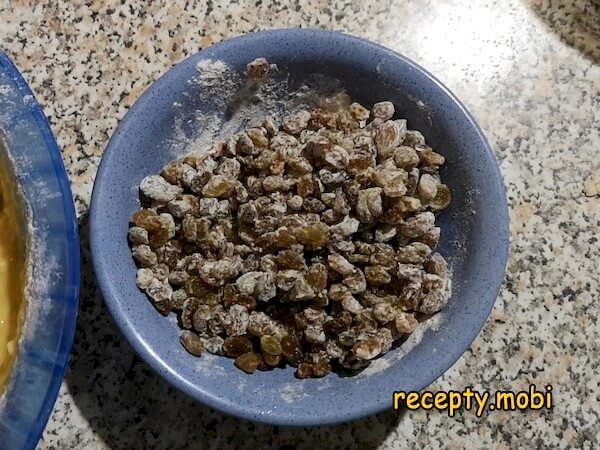
Add raisins + candied fruits to the dough. Mix to distribute evenly.
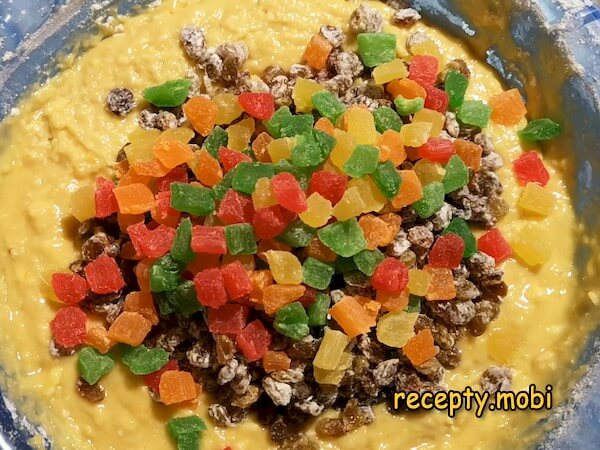
Sift remaining flour gradually; mix. When too thick for spoon-mixing, switch to hand-kneading 10 minutes. Dough is sticky — that's correct.
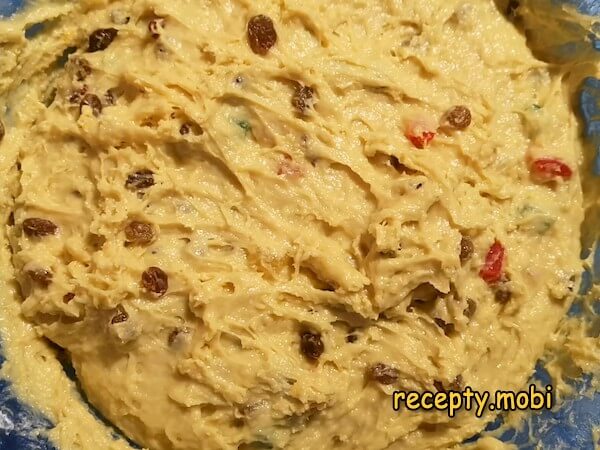
Transfer dough to a larger container (it'll DOUBLE during rise). Cover with plastic wrap; place in warm spot. Rise 1.5-2 hours.
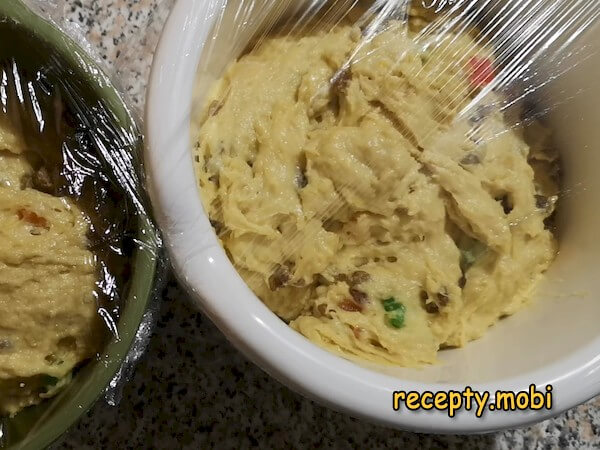
After 1.5-2 hours, dough has risen significantly.
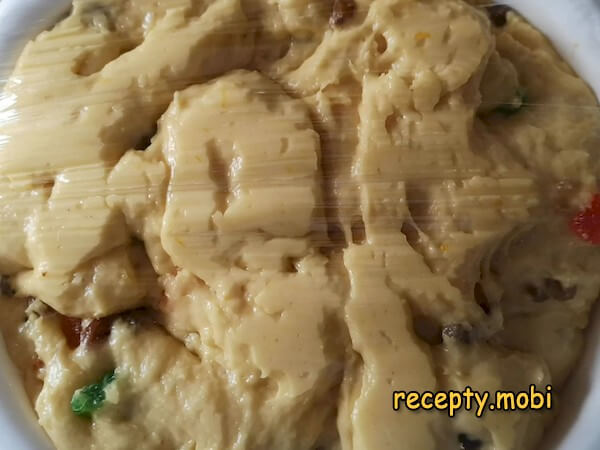
Remove plastic wrap. Grease hands with vegetable oil; knead briefly to deflate.
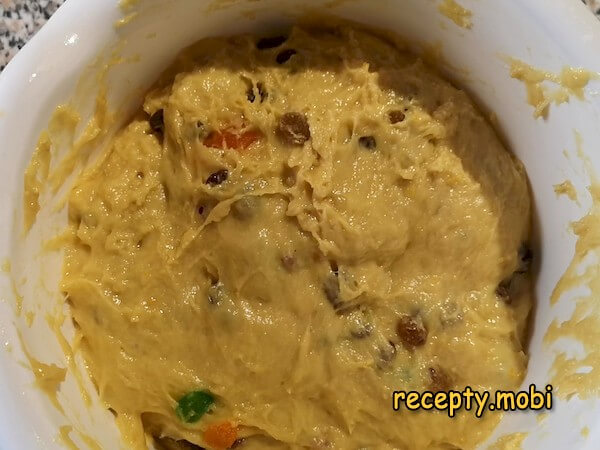
Grease hands again with oil. Distribute dough among kulich moulds, filling 1/3 of their size (significant rise still to come). Place moulds in warm spot; cover with towel. Final proof 1.5 hours.
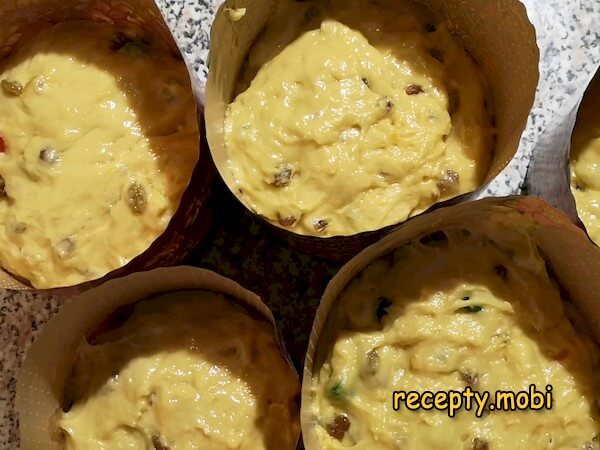
After final proofing, dough has risen near the mould tops.
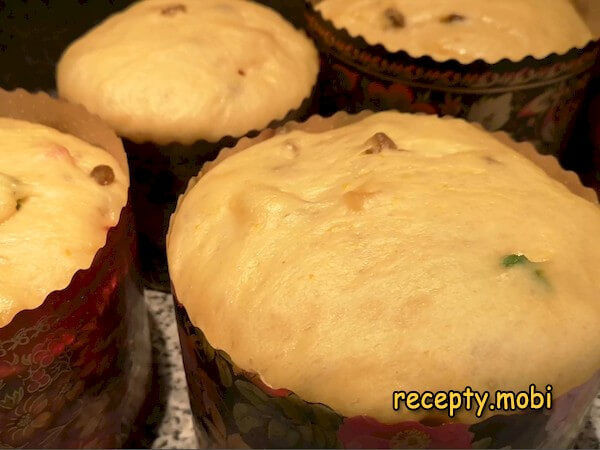
Transfer moulds to baking sheet; bake in preheated oven at 170-180 °C for 30 minutes. Test doneness with wooden skewer (should come out dry).

Remove from oven; let cool completely on rack.
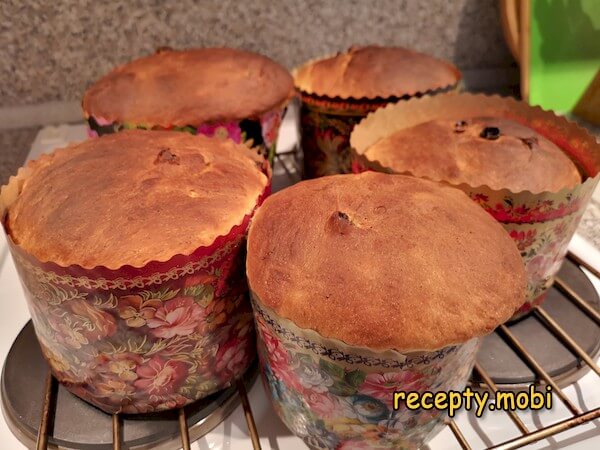
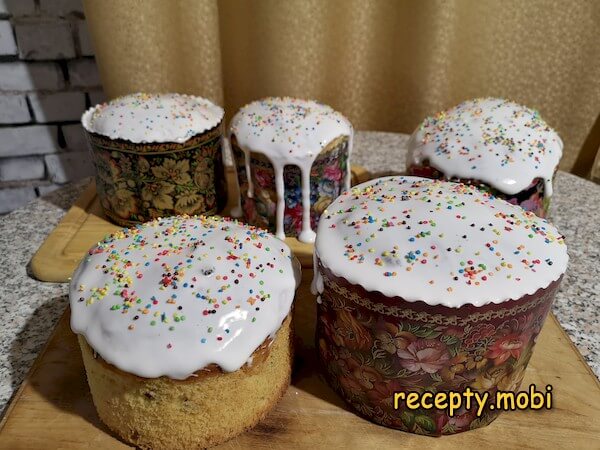
Once cooled, cover with gelatin glaze. Since glaze hardens quickly, sprinkle with decorations IMMEDIATELY after applying.

The Alexandrian kulich made with sour milk is ready. This incredibly fragrant pastry decorates the Easter table beautifully.Happy Easter!


Tips
- 1
THE OVERNIGHT FERMENTATION IS FLAVOUR DEPTH. Step 5's 10-12 hour overnight fermentation is what distinguishes Alexandrian kulich from same-day quick versions. Long fermentation: yeast metabolises slowly, producing complex flavour compounds (organic acids, esters, fusel alcohols) that develop the characteristic deeply aromatic Alexandrian flavour. Short fermentation: rapid yeast activity = simple bread flavour. The 10-12 hour window is calibrated. Plan accordingly: prepare sponge BEFORE bedtime; assemble dough next morning. Don't shortcut.
- 2
THE SOUR-MILK BASE IS REGIONAL TRADITION. The recipe specifies "sour milk" (Russian "prostokvasha" or "kefir") as the liquid base — this is the Alexandrian style's defining feature. Sour milk vs regular milk: the natural lactic acid + lactose acts as additional fermentation substrate for yeast, accelerating the rise + adding tangy flavour notes. Substitutes that work: kefir, buttermilk, thinned yogurt, regular milk + 2 tbsp lemon juice (let stand 10 min to "sour" briefly). For another cottage-cheese-with-candied-fruits Easter bread variation worth comparing, see Easter Bread with Cottage Cheese and Candied Fruits.
- 3
THE TWO-STAGE-PROOF SCHEDULE. The recipe has TWO proofing stages after the overnight fermentation: 1.5-2 hours for the assembled dough rise, then 1.5 hours for final proof in moulds. Skipping either stage = dense kulich. The first stage develops the dough texture; the second stage creates the final shape AND establishes the air pockets that produce the porous crumb. Plan the timing: total is 3+ hours for both proofs. Use the proofing time productively — prepare gelatin glaze, set up decorating station.
- 4
THE FILL-1/3-NOT-MORE RULE. Step 19's "fill moulds 1/3 of their size" instruction is precision rise math. The dough roughly TRIPLES from final proofing + baking expansion. Filling 1/3 = correct final size (just below mould top). Filling 1/2: dough overflows mould during baking, makes a mess. Filling 1/4: dough doesn't fill the mould, produces "shrunken" appearance. Use a kitchen scale to divide dough evenly across moulds — produces uniform sizing that bakes consistently. For a cinnamon-nut Easter kulich variation worth trying, try Easter Kulich with Cinnamon and Nuts Made with Dry Yeast.
FAQ
Why is it called "Alexandrian"? +
The name "Alexandrian" (Aleksandriyskiy in transliteration) attributes the recipe to Alexandria — historically considered an important Mediterranean culinary crossroads. However, the recipe's actual development is uncertain — some sources trace it to St. Alexander Nevsky monastery (medieval Russian), others to wider Mediterranean Easter traditions. Modern usage: the name has stuck without clear etymology. The recipe IS distinctly Russian/Eastern European in style despite the foreign-sounding name. Each region has its own preferred kulich recipe; Alexandrian is one of the most highly-regarded "premium" preparations among Russian baking enthusiasts due to its complex flavour development.
Can I skip the overnight fermentation? +
You can but lose the recipe's defining feature. Without overnight fermentation: the kulich becomes just "another sweet bread" — pleasant but not Alexandrian. The complex flavour development requires the long slow yeast activity. Compromise option: 4-6 hour fermentation at warm temperature (not overnight, but still slow). This produces flavour partway between standard kulich and proper Alexandrian. For full Alexandrian flavour: commit to the overnight schedule. The extra hours are mostly hands-off (you sleep through them); the flavour reward is dramatic.
What kulich moulds work? +
Traditional metal kulich moulds (tall cylindrical, like coffee cans but designed for baking) work best. Substitutes that work: tall food cans (35+ oz tomato cans, repurposed and cleaned thoroughly), parchment-paper moulds (homemade, see DIY mould recipes), commercial paper kulich moulds (sold seasonally at baking supply stores), tall ceramic ramekins. For shape variety: square or octagonal moulds produce visually distinct kulich. Avoid: shallow wide moulds (lose the iconic tall shape), non-stick aluminum (modern coatings sometimes flake during long bakes). The 13 cm diameter × 15 cm tall standard size is most traditional.
How long does Alexandrian kulich keep? +
Properly made Alexandrian kulich keeps EXCEPTIONALLY long — 10-14 days at room temperature in airtight wrap. The rich butter + egg + sugar content acts as natural preservative; the slow-fermentation flavour compounds also have antimicrobial properties. Other quick-yeast kulich types last only 5-7 days. This longevity is part of why Alexandrian style was historically prestigious — it lasted through the Easter Bright Week (week of celebration) and beyond. Storage: wrap individual kulich in plastic wrap, place in airtight container, room temperature. Don't refrigerate (drys faster). Freeze for longer storage (3 months freezer life).
- Comment
or post as a guest
Be the first to comment.