avg —
Baked Crucian Carp in the Oven under Mayonnaise Sauce and Sesame

Instructions
Start with the fish. Thoroughly clean it from scales. After scraping all the scales off the crucian carp, hold it under running water to wash away any remaining stuck scales from the fish body.
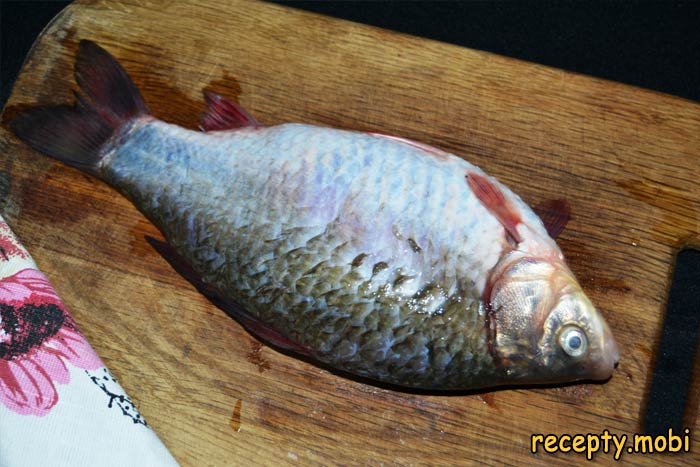
Cut open the belly, removing the insides along with the film covering the inside of the fish’s belly. If there is roe, rinse it and set aside on a plate. Remove the gills from the head. Thoroughly rinse the whole fish inside and out.
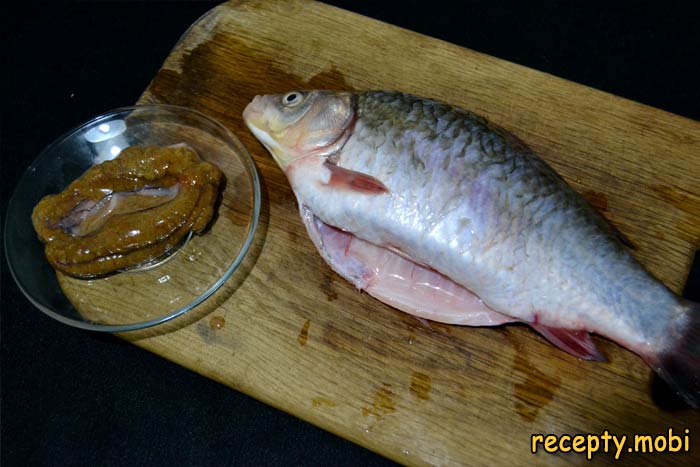
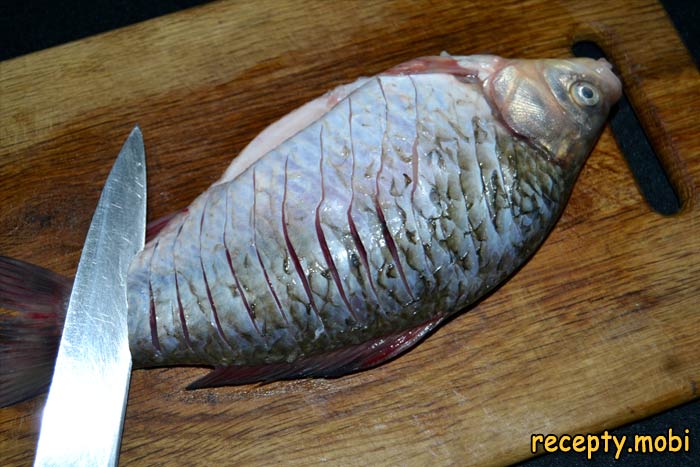
Using a sharp knife, make cuts on the sides of the fish about 1 cm apart. The cuts soften the small bones during baking and allow the seasoning to penetrate the flesh.
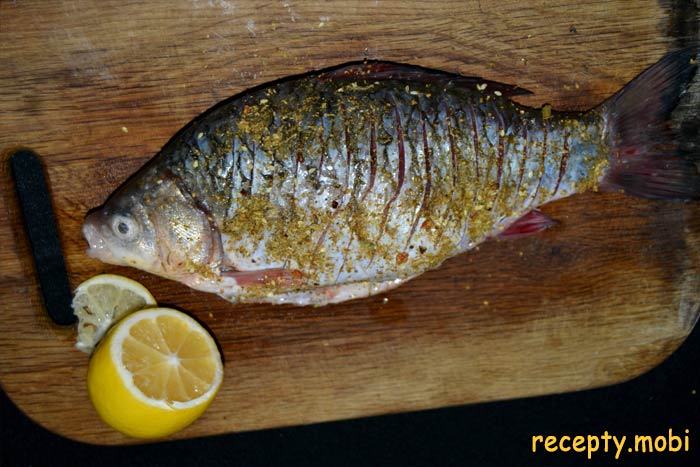
Cut off 1/3 of the lemon (if the citrus fruit is small, take ½ of it). Squeeze the juice from the cut piece onto the whole carp, inside and outside. Sprinkle the carp with fish seasoning, not forgetting the inside of the belly.
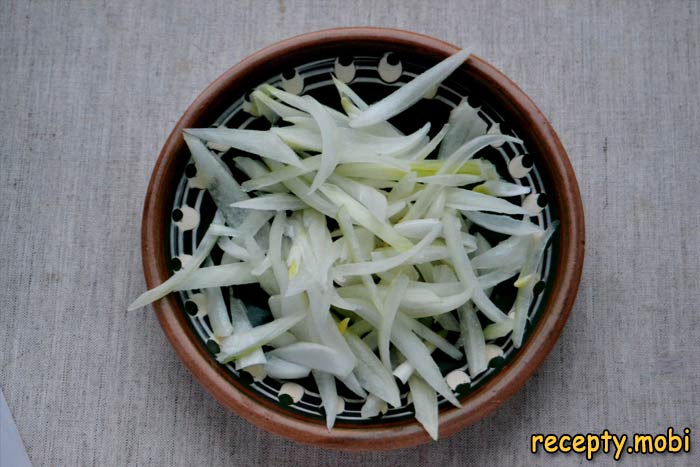
After peeling the onion, cut it into feathers (long thin slices). The onion feathers fill the belly cavity and add aromatic flavor during baking.
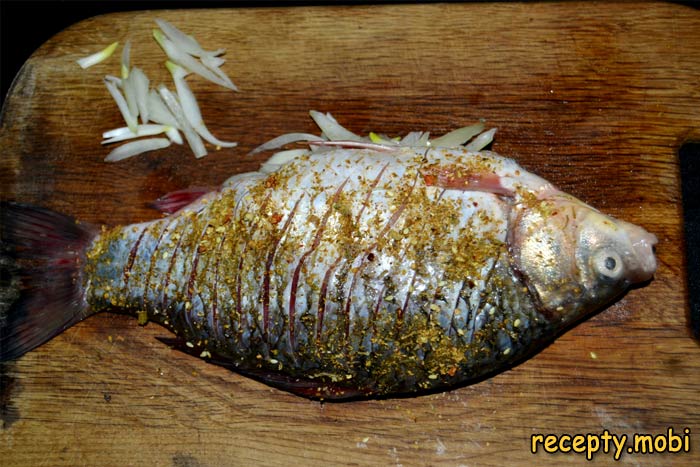
Fill the belly of the fish with the chopped onion. Any fish roe (if present) is also placed inside the belly. The stuffed belly traps flavors during baking and bastes the fish from within.
Mix 1 tbsp of mayonnaise with 1 tbsp of prepared mustard. The mayo-mustard blend creates the signature glaze for this dish.
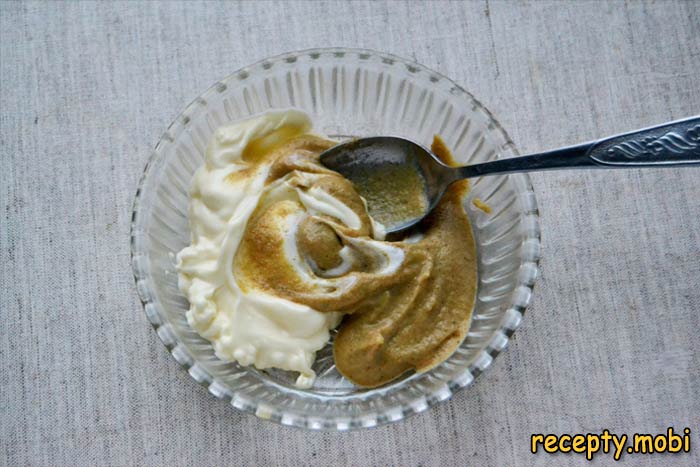
Cover the entire fish with the resulting marinade of mayonnaise and mustard. Do not forget about the inside of the carp’s belly. Let the carp marinate for 10 minutes to allow flavors to penetrate.
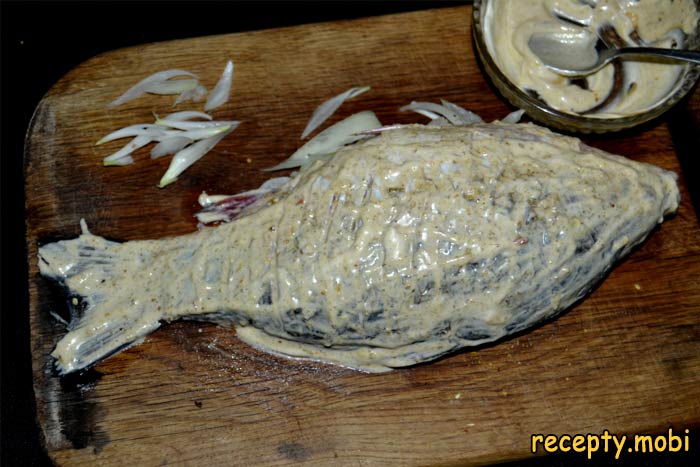
Cut a suitable sheet of parchment for the baking dish and place it inside. Pour 1 tbsp of vegetable oil on the spot where the carp will lie, then transfer the crucian carp onto the parchment.
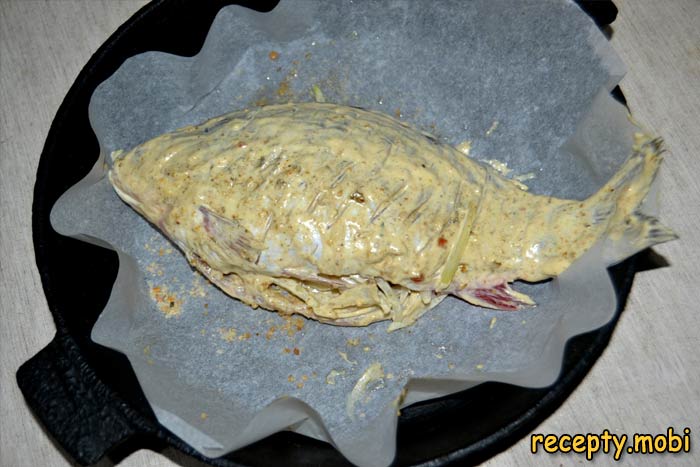
Cover the tail fin of the crucian carp with foil to prevent burning in the oven. The delicate tail fin chars before the rest of the fish cooks through.
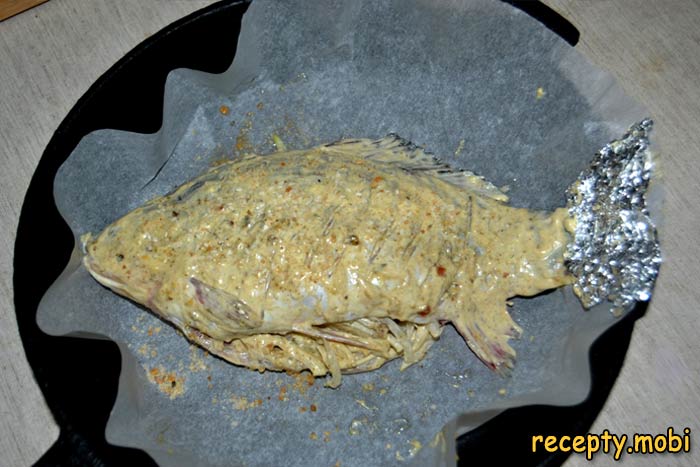
Sprinkle the top side of the carp with sesame and send to the oven preheated to 200°C. During baking, take it out a couple of times to baste with the fat that has accumulated at the bottom of the baking dish. Bake for 30 minutes total. The basting keeps the fish juicy and develops the deepest color.
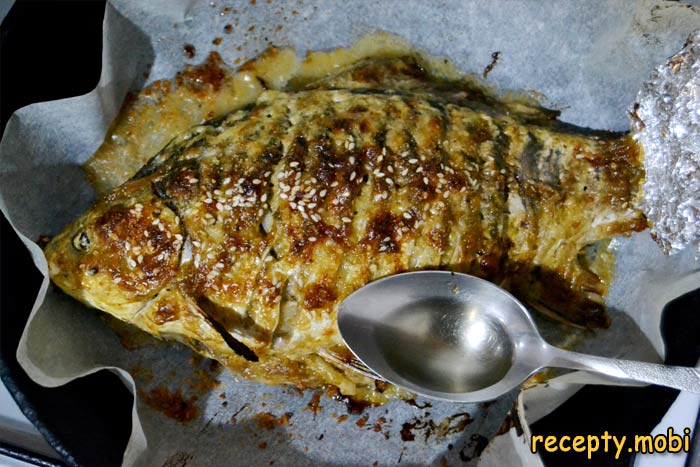
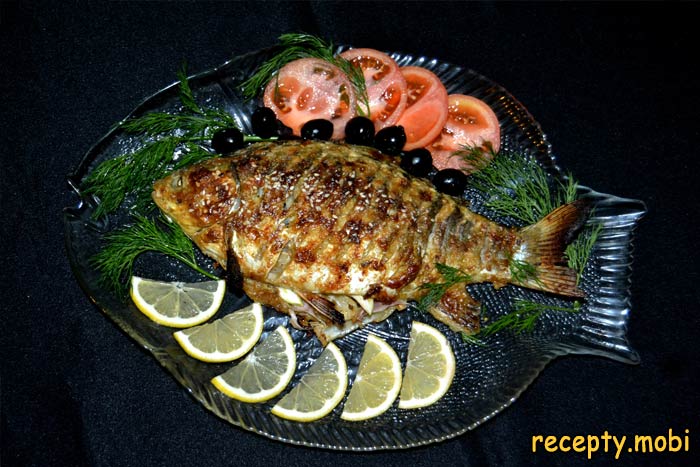
Baked crucian carp in mayonnaise sauce and sesame is ready. Serve the carp hot with lemon wedges. The presentation can be beautifully decorated with greens, vegetables, and olives for festive appearance.


Tips
- 1
Score the fish sides at 1 cm intervals to soften small bones. The cross-cut method partially severs the troublesome rib bones so they melt during baking rather than presenting hazards at the table. The same technique works for any fish with abundant small bones — carp, crucian, herring varieties. Skip this step at your peril; eating fish with countless intact bones becomes tedious dental work rather than dining.
- 2
Use whole fish with head and tail intact for the juiciest results. The skeleton and head act as natural racks that keep the flesh elevated and self-basting throughout the bake. The bones and head also contribute flavor to the cooking juices. The same whole-fish principle elevates many baked fish preparations including whole baked fish in the oven and similar oven-roasted whole-fish recipes.
- 3
Stuff the belly with fresh aromatics for flavor infusion. Onion is traditional and works beautifully; garlic, fresh herbs, lemon slices, or fennel fronds all add complementary character. The internal aromatics infuse the fish from inside while baking, complementing the external mayonnaise-mustard glaze for layered flavor depth that simple seasoning cannot achieve.
- 4
Serve with lemon wedges and fresh dill or parsley garnish. The bright citrus cuts the rich fish oils and brings the dish into balance. Pair with crusty homemade bread and a simple cucumber-tomato salad for the complete meal. A glass of dry white wine like Sauvignon Blanc or Pinot Grigio completes the restaurant-quality experience at home.
FAQ
What other fish work for this recipe? +
Pike, pike perch (zander), perch, trout, bream, or any small whole fish 0.5-1 kg work beautifully in this preparation. Choose fish with intact skin since the crispy crust requires skin to develop properly. Avoid very oily fish like mackerel which can taste fishy when baked this way — reserve those for grilling or other preparations. Sea bass and bream are particularly elegant choices for special occasions.
Can I skip the mayonnaise? +
Yes — substitute with Greek yogurt mixed with mustard, sour cream with herbs, or simple oil-and-herb marinade. Each substitution produces slightly different glaze characteristics. The mayonnaise version is most traditional and produces the deepest golden crust thanks to its egg-and-oil content. The substitutions work but produce milder crust development than mayonnaise versions.
How do I tell when the fish is done? +
The flesh easily flakes when poked with a fork or knife tip, and the eye turns opaque white. For larger fish, check the internal temperature at the thickest part — 63°C indicates properly cooked fish. The crispy crust should be deep golden brown. If the skin is browning faster than the inside is cooking, cover loosely with foil for the last 5-10 minutes of baking.
How long do leftovers keep? +
Stored covered in the refrigerator, leftover baked fish keeps for 2-3 days at peak quality. Reheat gently in a covered pan with a splash of water to prevent drying out; microwave reheating tends to overcook fish and produce rubbery results. The leftovers work wonderfully cold flaked into salads or sandwiches. The fish does not freeze well after baking; eat fresh for best texture and flavor.
- Comment
or post as a guest
Be the first to comment.