avg —
Baked Pink Salmon in the Oven

Instructions
I prepare the ingredients. The fish bakes head-on or head-off — both work. Head-on requires removing gills; either way the belly cavity gets cleaned. Butter softens at room temperature 30 minutes before assembly. Oven preheats to 180 °C.
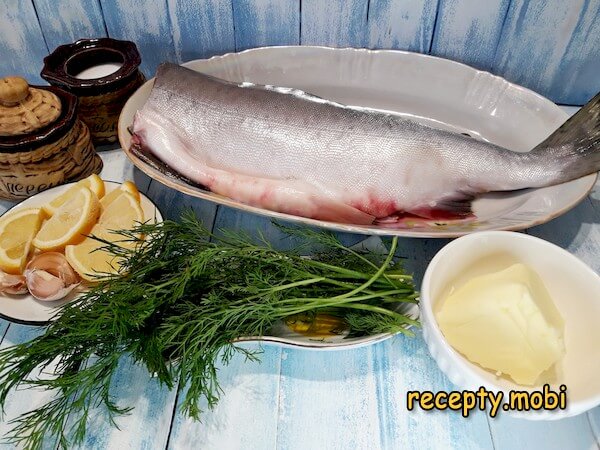
Pink salmon has very fine scales embedded in the skin — they melt during cooking, so no scaling needed. Just rinse the fish, pat dry with paper towel, and set aside. For the sauce: finely chop half the dill bunch.
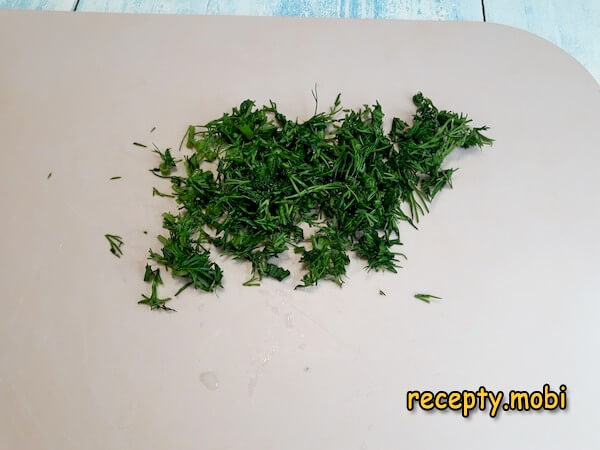
The chopped dill goes into a bowl with the soft butter.
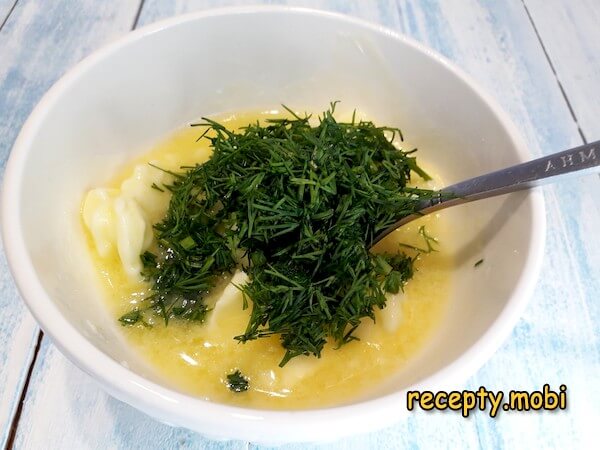
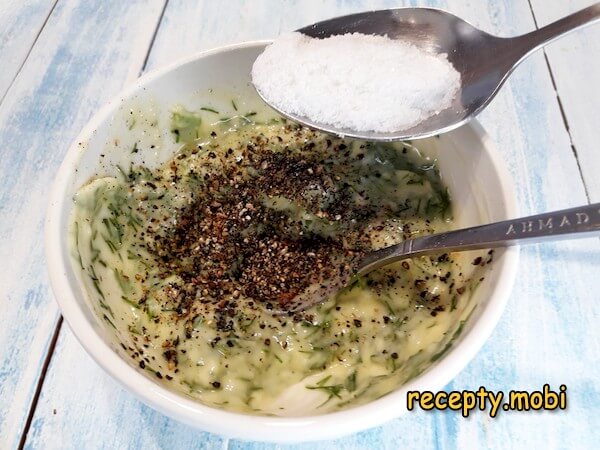
I mix the dill into the butter and add freshly ground black pepper — pepper pairs beautifully with fish.
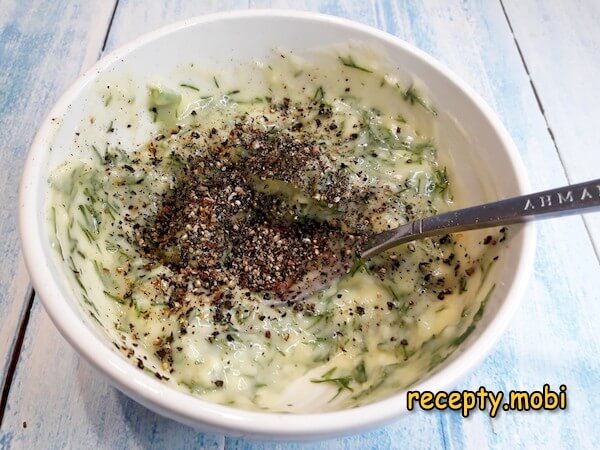
Salt goes in (2/3 tbsp). The salted-butter compound becomes the cooking sauce.
I use 1/4 of this thick sauce to grease one side of the salmon — coating the underneath surface that will rest on the foil.
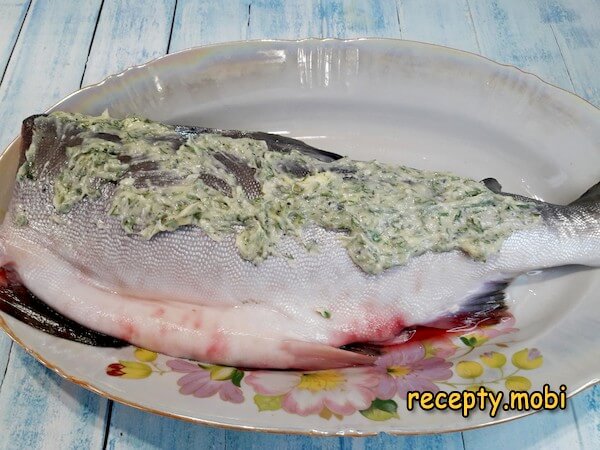
The baking sheet gets lined with several layers of foil. The fish goes greased-side-up on the foil bed. Another 1/4 of the sauce coats the top side of the fish.
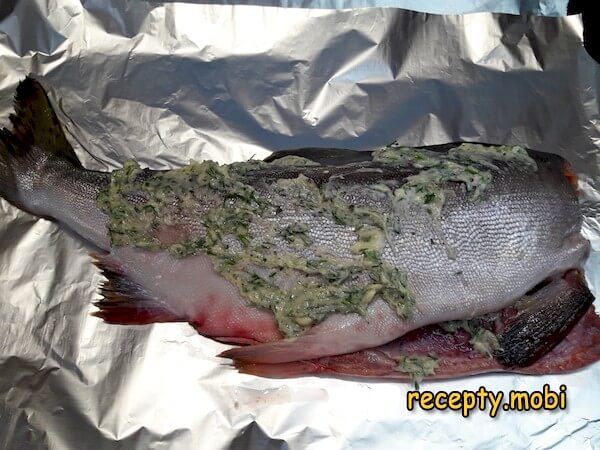
I crimp the foil edges into a sealed cocoon — no open seams. The wrapped fish goes onto the middle oven rack.

While the fish bakes, I modify the remaining half of the sauce: lemon juice from the half-lemon plus garlic pressed through a press join the dill-butter mixture.
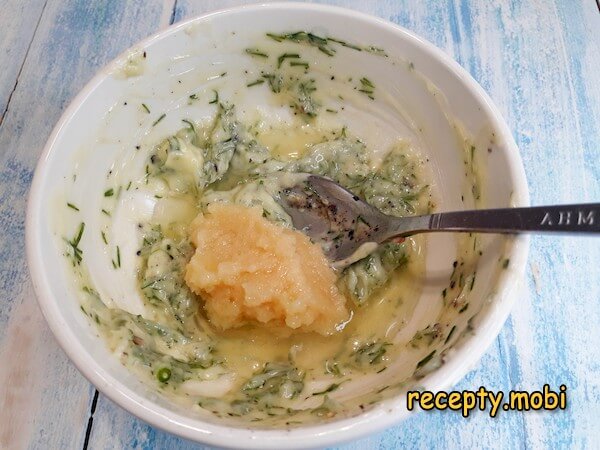
The remaining (uncut) dill chops finely and joins the modified sauce — this becomes the finishing sauce.
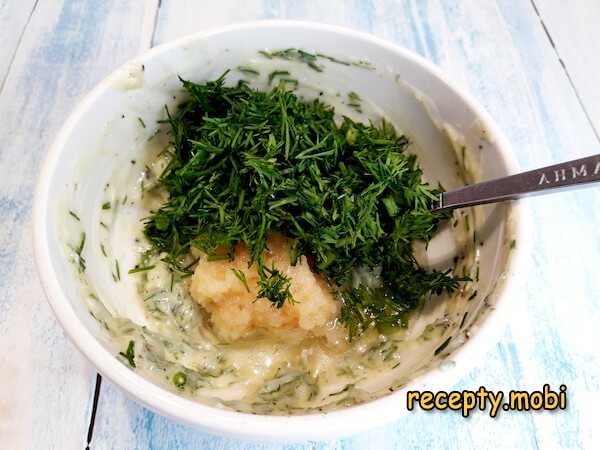
After 25-30 minutes, I take the baking sheet out and unwrap the foil cocoon.
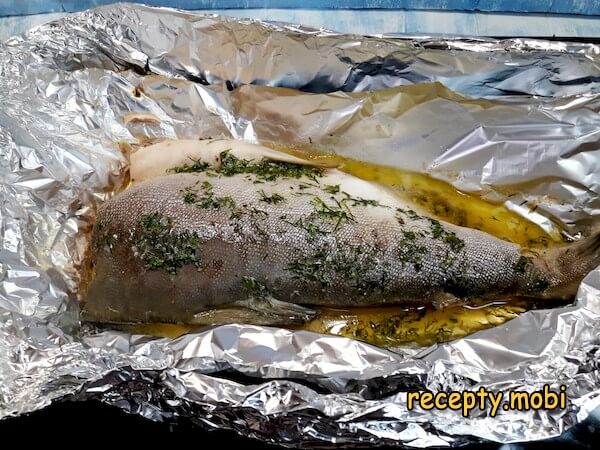
The fish goes back in for skin-browning, but the herbs on top need to be scraped down into the melted butter pooled around the fish — exposed dill burns at 180 °C. The salmon returns to the oven (uncovered now) for another 15 minutes.
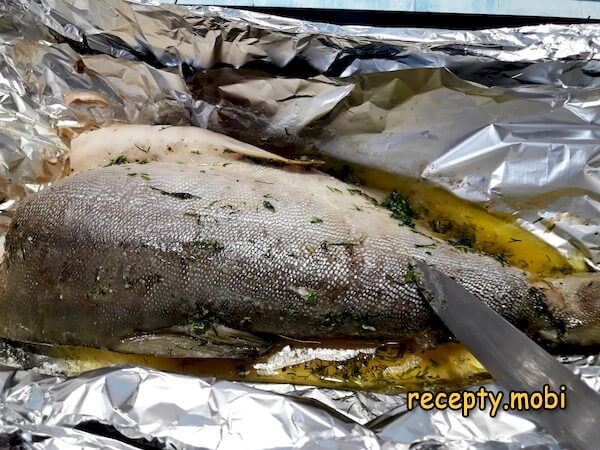
After the second bake, I transfer the fish to a plate and carefully pour the hot pooled cooking liquid into the bowl with the finishing sauce — this enriches the sauce with all the rendered fish flavour.
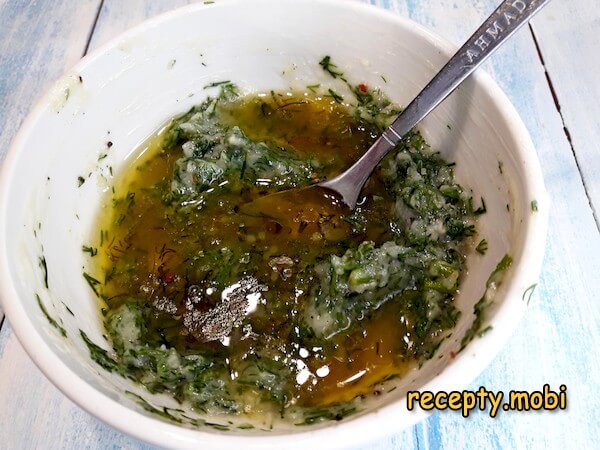
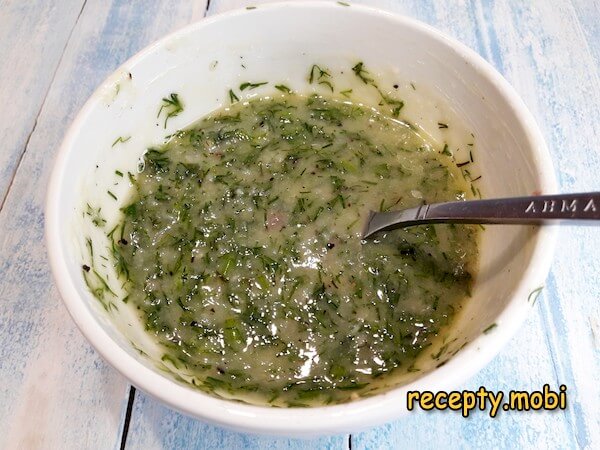
I whisk the combined liquid until it turns whitish-creamy — emulsion of butter, fish juices, lemon, and herbs.
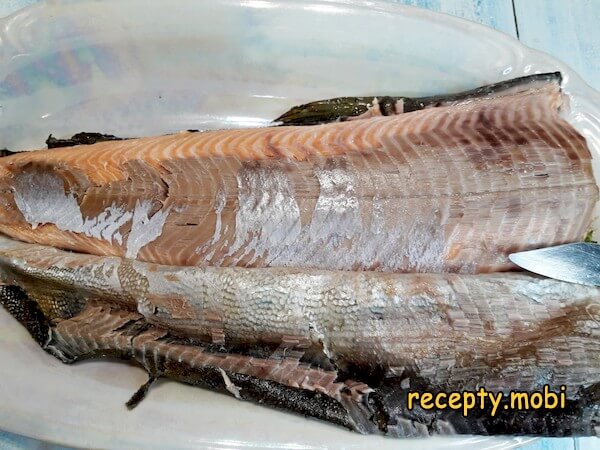
I cut the skin near the tail and along the back, then pull it down — it lifts off effortlessly. Don't discard the skin: salmon skin is delicious and juicy, perfectly crisp on the surface from the second bake.
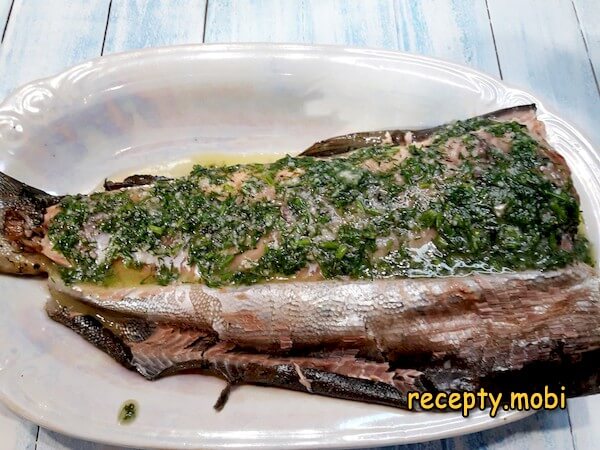
Half of the finishing sauce drizzles over the now-skinned top fillet. After the top half is consumed, the spine lifts cleanly off and the bottom fillet gets the remaining sauce.The technique transforms naturally lean pink salmon into juicy, tender, sauce-rich fish. Cut into portioned pieces and serve with boiled potatoes (the classic pairing), fresh vegetables, or a simple green salad. The crisped skin pieces are particularly prized — share them around the table.


Tips
- 1
NO SALT ON THE FLESH DIRECTLY. Step 1's specific instruction — salt only in the sauce, never rubbed onto the bare fillet — is the moisture-preservation secret. Pink salmon is naturally lean (about 7% fat vs 13% for Atlantic salmon); direct salt rubs draw out what little moisture is present, producing dry fish. The sauce-application method delivers salt flavour without dehydrating the flesh.
- 2
THE FOIL COCOON + UNWRAP TWO-STAGE METHOD. Step 8's tight foil seal traps steam for the first 25-30 minutes, keeping the flesh juicy. Step 12's unwrap-and-finish gives the skin a chance to brown and crisp during the final 15 minutes. Skip the unwrap and you get steam-pale skin (still tasty but visually sad). Skip the cocoon and you get dried-out flesh with crispy skin (also tasty but defeats the moisture-preservation goal). Both stages are essential. For another foil-baked fish recipe to compare, see Salmon Baked in the Oven in Foil.
- 3
THE TWO-SAUCE TRICK. The recipe makes one base sauce (dill-butter-pepper-salt) and divides it: half cooks with the fish, half gets enriched with lemon-garlic-fresh-dill and finished with pan juices. The first sauce flavours the cooking process; the second sauce adds bright fresh notes that haven't been blunted by heat. This two-stage approach gives layered flavour that single-sauce versions can't match. The technique works for any baked fish.
- 4
POTATO PAIRING IS NON-NEGOTIABLE. Russian-Soviet tradition ALWAYS serves baked salmon with boiled potatoes — this isn't conservative, it's calibrated. The mild starchiness of potato perfectly absorbs the rich finishing sauce, complements the fish without competing, and balances the meal. Specifically: small new potatoes boiled in salted water, drained, and dressed with a tiny knob of butter and chopped dill. For another whole-fish baked preparation, try Crucian Carp Baked Whole in the Oven.
FAQ
Why is pink salmon prone to dryness? +
Pink salmon (Oncorhynchus gorbuscha) is one of the leanest salmon species — about 7% fat by weight, compared to 13-18% for Atlantic salmon (Salmo salar) or king salmon (O. tshawytscha). The lower fat content means there's less moisture-protective oil throughout the flesh. Standard cooking methods (grilling, dry-roasting) push the small amount of moisture out, leaving dry stringy fillets. The foil-cocoon + sauce technique compensates by adding fat and trapping steam — turning the lean flesh into something rivalling fattier species.
Can I use other salmon species? +
Yes — fattier species (Atlantic, king, sockeye) need slight adjustments. Reduce the foil-cocoon time to 20 minutes (less moisture-protection needed) and the unwrap time to 10 minutes (skin browns faster). Use less butter (25 g instead of 40 g) since the fish is already richer. Pink salmon is the species that genuinely needs every protective trick; with fattier salmon the technique is forgiving and the result is excellent regardless.
What if I don't have whole fish, only fillets? +
Fillets work but the timing changes dramatically. For 200 g pink salmon fillets at 180 °C: 12 minutes in foil cocoon + 5 minutes uncovered = 17 minutes total. Skin-on fillets retain more moisture than skinless. The two-sauce technique applies identically. The downside: fillets don't give you the carved-from-whole-fish presentation drama, and you lose the fish-juice for the finishing sauce (substitute with a tablespoon of fish stock or chicken broth). Fillets are still tasty, just visually less striking.
Why salt the sauce instead of the fish? +
Two scientific reasons. First, salt is hygroscopic — direct contact with raw fish flesh draws moisture out via osmosis, dehydrating the muscle fibres. Salt in butter sauce contacts the fish surface only via the buttery medium, which protects the flesh from direct contact. Second, salt distributed in the sauce gets evenly seasoned through every bite via the sauce; salt rubbed on raw fish concentrates at the surface and the centre stays bland. The sauce-salt technique gives more uniform seasoning with less moisture loss — a double win.
- Comment
or post as a guest
Be the first to comment.