avg —
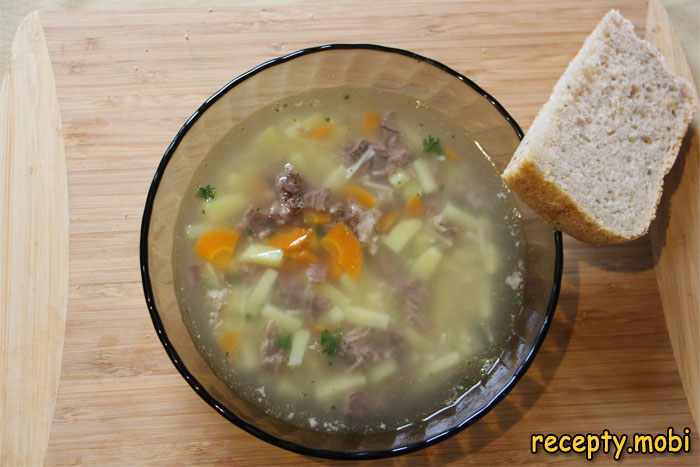
Borscht Base for Winter with Beets (+Cooking Video)

Instructions
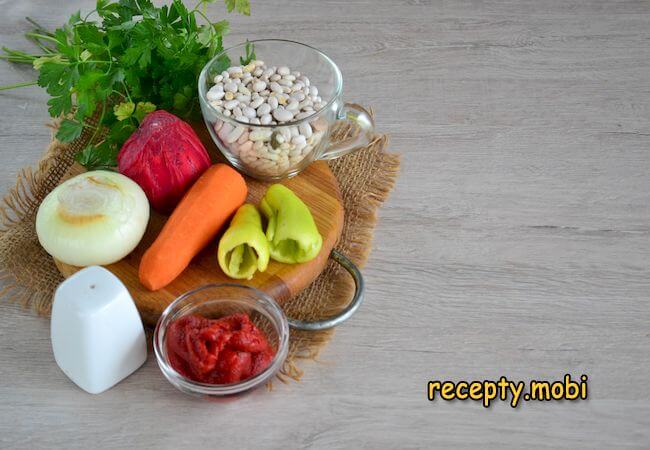
Lay out every ingredient before starting the canning project. Peel all the root vegetables (beets, carrots, onions). Remove the seeds and stem from the sweet pepper. Pick over the beans for any debris and rinse them under cool water; for faster cooking, soak them in cold water for several hours beforehand or overnight in the refrigerator.
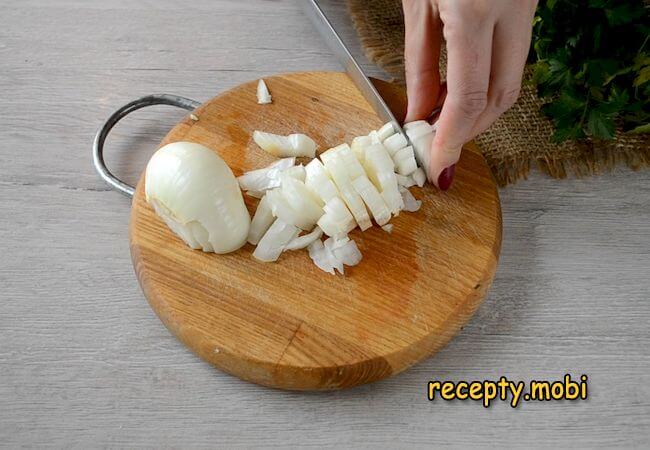
Cut the peeled onion into small even cubes. Smaller cubes melt more thoroughly into the finished base and produce a smoother texture in the eventual borscht; larger chunks remain visible and disrupt the mouth-feel of the final soup at the table.
Grate the peeled carrot on the coarse side of a vegetable grater. The coarse grate produces strands that hold their shape during the long stewing without disintegrating into mush, giving the finished base a pleasingly textured appearance.

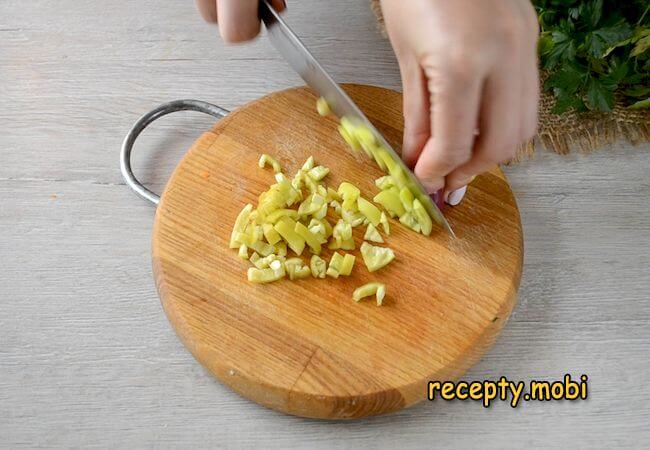
Finely chop the cleaned sweet pepper into small even cubes matching the onion in size. Uniform cubes give the finished base a tidy, professional appearance and ensure every spoonful of the eventual borscht delivers the same balanced flavor profile.
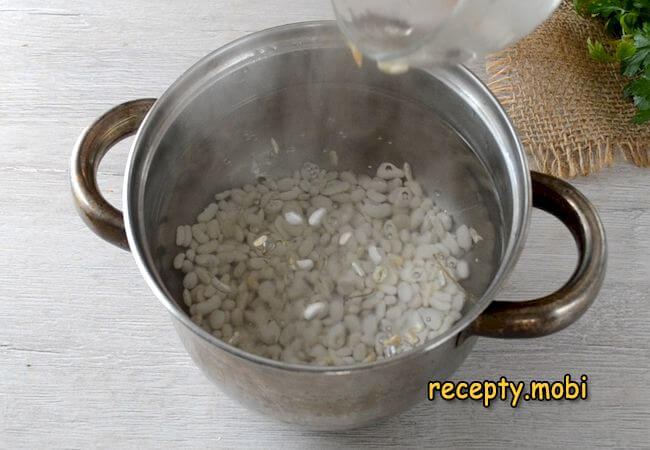
Boil the beans until half-cooked, about thirty minutes for typical white or kidney beans. Cooking time varies significantly depending on the type and age of the beans; some old beans take much longer than fresh-season ones. The beans should be just tender enough to bite through but still firm in the centre; they finish cooking in the canning step.
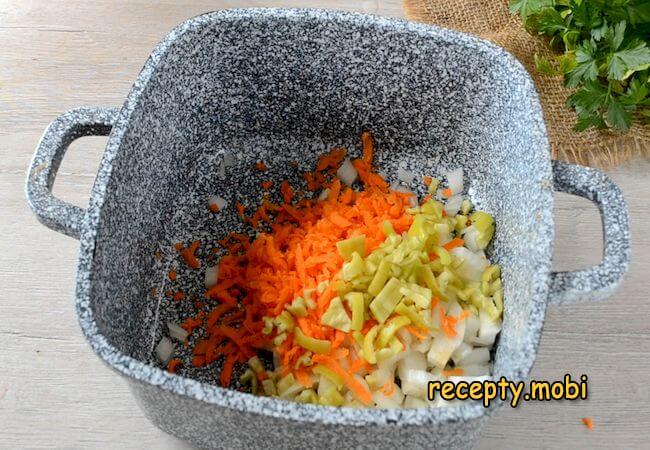
In a thick-walled pot or large skillet, heat the vegetable oil over medium heat. Add the chopped onion, the grated carrot, and the diced sweet pepper all at once and cook, stirring occasionally, for about five minutes until the vegetables soften and start to release their natural aromas into the kitchen.
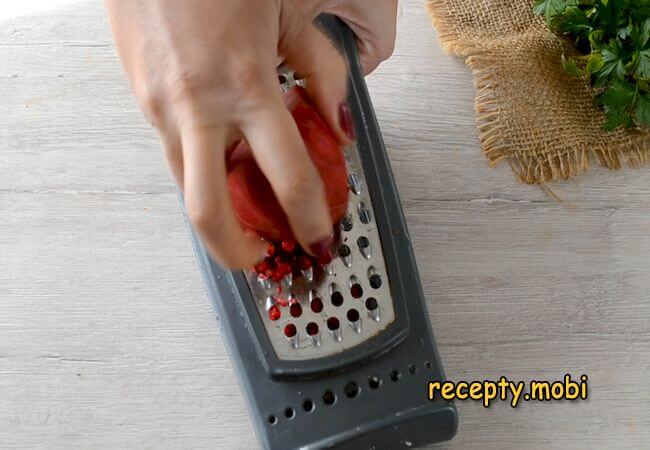
While the vegetables soften, grate the peeled beetroot on the coarse side of the grater. The bright magenta color of the fresh-grated beet is the heart of any proper borscht; the same coarse-grate strands that worked for the carrot give the beet the right texture for the eventual soup.
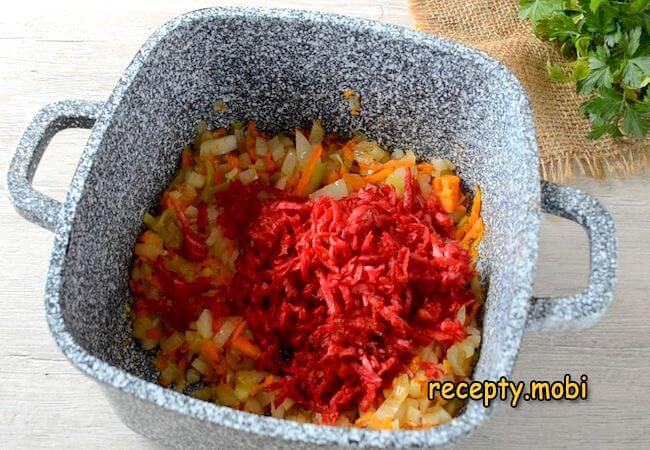
Add the grated beetroot to the other vegetables in the pot and stir to combine. Cook over medium heat until all the vegetables are soft and the beetroot has darkened to a deep red color, releasing its juice into the surrounding mixture for the characteristic borscht hue.
Stir in the tomato paste and pour in about two hundred millilitres of water. Bring the mixture to a boil, then reduce the heat slightly and stew for a few more minutes to let the tomato flavor meld with the surrounding vegetables and bind them into a unified base.
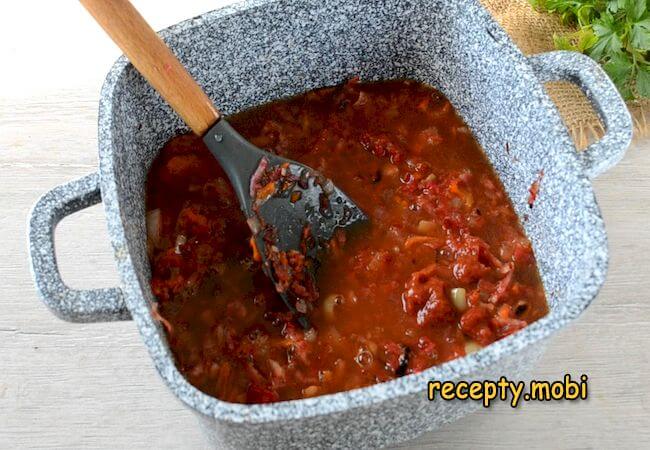
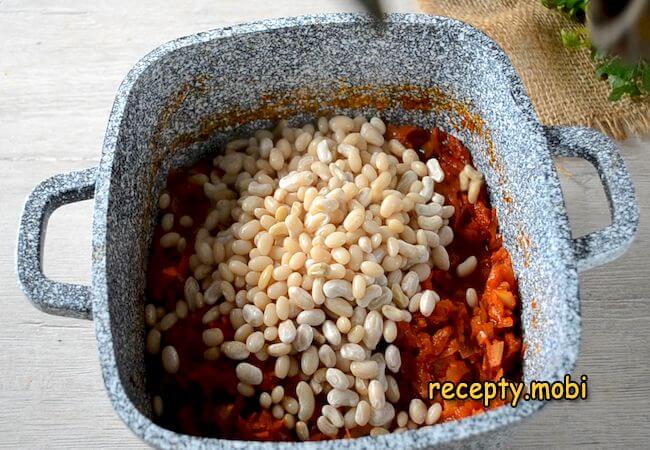
Add the half-cooked beans, the salt, and the table vinegar to the pot. Stir everything together gently to distribute the seasonings evenly and cook the entire mixture together for about five to seven minutes more. The vinegar protects the bright red color of the beets and prevents the dreaded color fade that ruins the appearance of so many home-canned borscht bases.
Distribute the hot borscht base into sterilized glass jars and seal each with a metal lid. The yield from this batch is typically two jars of about four hundred and twenty millilitres each, which is enough for two complete borscht dinners. Turn the sealed jars upside down and wrap them in a heavy blanket overnight to ensure perfect seals.
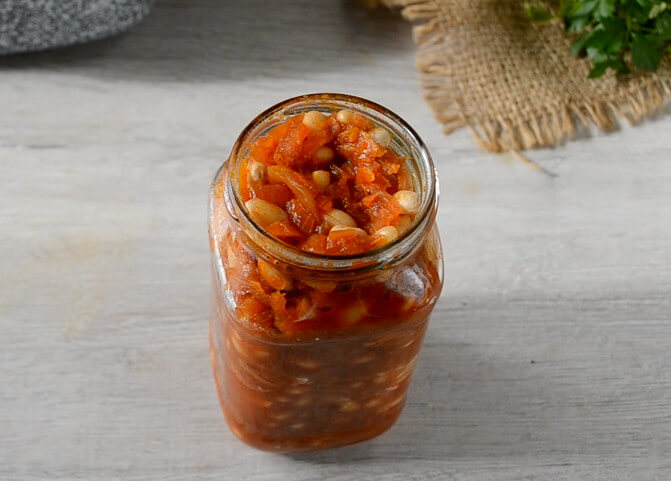
The borscht base for winter with beets is ready to store for the cold months ahead. Keep the jars in a cool dark cellar or pantry shelf for up to one year. When ready to make borscht, simmer meat broth with potato cubes and shredded cabbage, then stir in one full jar of the prepared base. The kitchen smells like a Sunday-afternoon soup within minutes. Cook with pleasure.



Tips
- 1
Use only non-iodized salt for any home-canning project. Iodized table salt clouds the brine permanently and can leave a faintly bitter aftertaste that develops over months of storage. Look for kosher salt, pickling salt, or coarse sea salt without anti-caking additives. The right salt simply dissolves cleanly into the cooking liquid and steps quietly into the background, letting the natural vegetable flavors shine in the finished borscht.
- 2
Add the vinegar at the end of cooking rather than the beginning to preserve the brightest red color in the finished base. The acetic acid sets the betalain pigments in the beetroot and prevents the dreaded color fade that turns home-canned borscht bases into a sad orange-brown rather than the deep crimson of the original fresh ingredients. Pair the eventual borscht with a slice of dark rye bread spread with the salty herring spread "Fake Caviar".
- 3
Sterilize the jars and lids thoroughly before filling. Boil the lids for five minutes in a separate small saucepan and either bake the empty jars at one hundred and twenty degrees for fifteen minutes or steam them over a kettle of boiling water. Properly sterilized vessels are the single most important factor in the long shelf life of any home preserve, and skipping this step risks losing entire jars to spoilage long before the winter season arrives.
- 4
Leave the sealed jars inverted under a heavy blanket for the full twenty-four hours, never less. The slow cooling under insulation creates the strong vacuum seal that keeps the borscht base safe through months of cellar storage. Rushing this step risks weak seals that allow air back into the jar and spoil the contents within weeks. For another reliable winter pantry preserve, see this recipe for marinated Bulgarian peppers for winter.
FAQ
How long does the canned borscht base keep on the shelf? +
Properly canned and sealed borscht base keeps for up to one year in a cool dark cellar or pantry shelf without significant loss of flavor or color. After one year, the texture starts to soften and some color fading occurs, though the base remains safe and usable for another six months. Always check the seal before opening: a properly sealed jar shows a slightly concave lid that does not pop when pressed. Any jar with a popped lid, off odor, or visible mold should be discarded immediately and the contents thrown away rather than tasted to confirm.
Can I add other vegetables to expand this borscht base? +
Yes, several vegetables work beautifully alongside the basic recipe. Diced celery adds aromatic depth that suits classic Eastern European borscht. Garlic cloves crushed and stirred in at the very end deliver punch without becoming bitter during the long stewing. Diced tomatoes (fresh or canned) replace some of the tomato paste for a brighter fresher flavor. A pinch of dried dill or fresh chopped dill stirred in just before canning lifts the flavor with a green herbal note. Whatever additions you choose, keep the beetroot as the dominant ingredient because it defines the dish.
What kind of beans work best in this base? +
Small white beans like cannellini or navy beans are the most traditional choice and produce the cleanest visual presentation in the finished base. Red kidney beans add a more substantial bite and pair particularly well with the beetroot color. Black beans work in a pinch but tint the base unattractively dark. Avoid green beans, which turn mushy during the long cooking and cannot withstand the storage period. Whatever beans you choose, half-cook them before adding to the base; fully cooked beans turn to mush during canning, while raw beans need much longer cooking that overworks the other vegetables.
How do I use the prepared base to make actual borscht? +
Making borscht from the prepared base is remarkably quick. Simmer about a litre of meat broth (beef, pork, or chicken work equally well) with diced potatoes for fifteen minutes until the potatoes are nearly tender. Add a generous handful of finely shredded cabbage and cook for five more minutes. Stir in one full jar of the prepared base, simmer everything together for ten more minutes to meld the flavors, then taste and adjust the salt as needed. Serve in deep bowls with a generous dollop of sour cream and a sprinkle of fresh dill on top of each portion.
- Comment
or post as a guest
Be the first to comment.