avg —
Borscht with Beets and Cabbage

Instructions
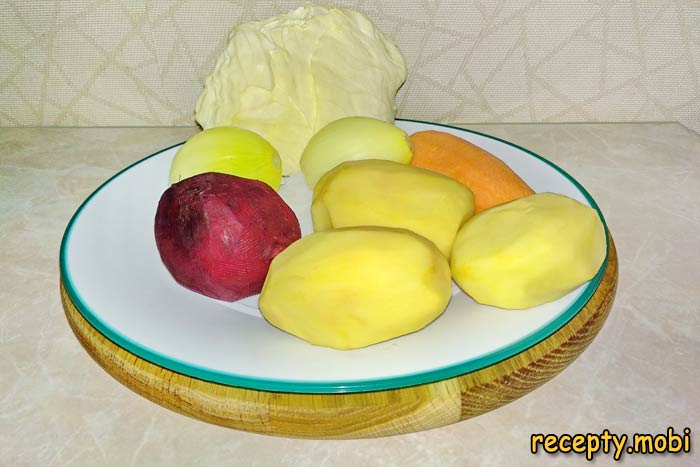
Prepare the vegetables, based on a four-liter pot. Lay everything out on the counter so the cooking flows from one step to the next without searching for ingredients mid-process. This kind of mise en place is what turns soup-making from chaos into an enjoyable hour in the kitchen.
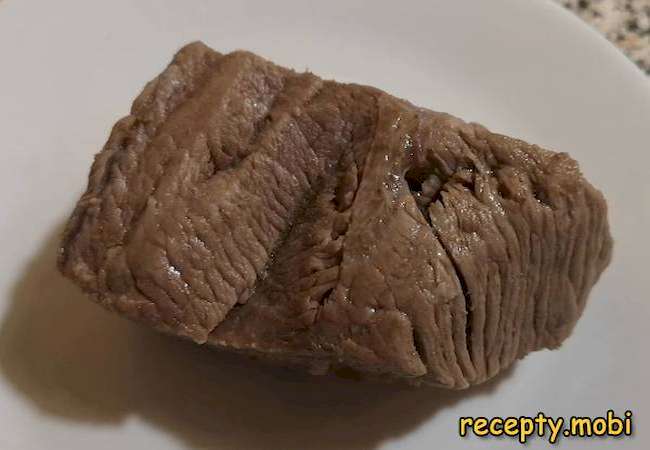
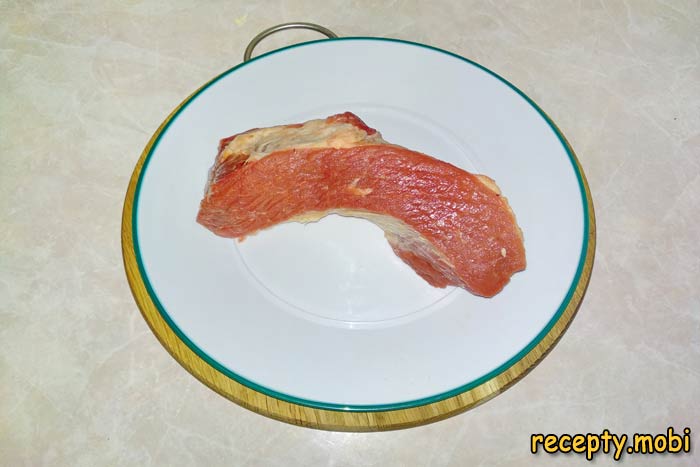
Wash the piece of beef, cut it into portion-sized pieces, and trim off excess fat. Place in a pot with water and bring to a boil. From the moment it boils, the meat should cook for five to ten minutes. After that, pour out the water — we do not need it anymore. Rinse the pot and meat well. In the clean pot, again place the pieces of meat and pour in clean water, and set to cook on the stove. We will prepare the borscht on this second broth. Salt the broth.
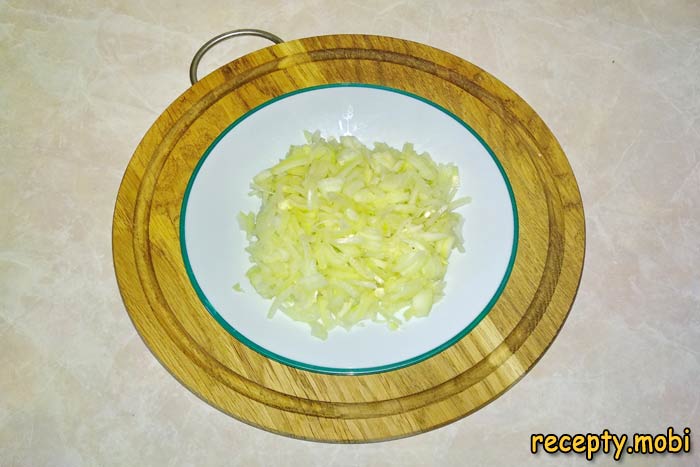
Finely chop the onion. We will prepare the roux in a frying pan. Heat the frying pan on the stove and add a little vegetable oil. The onion is the foundation of the soffritto-style base that gives borscht its layered depth and round flavor.
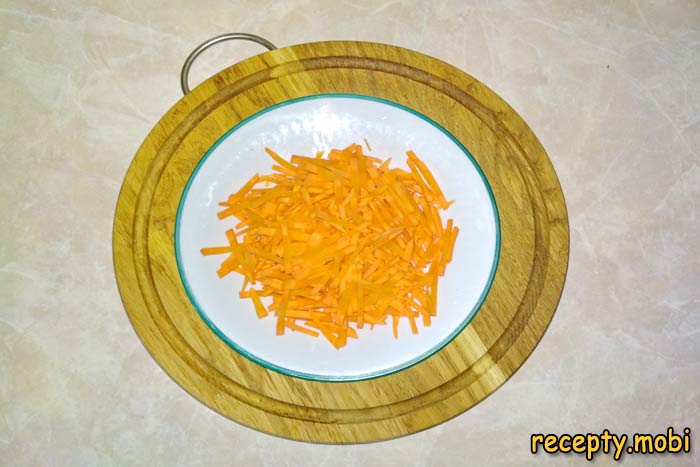
Grate the medium carrot into small sticks. Add the carrot to the frying pan to fry alongside the onion. The carrot brings sweetness and color to the roux, balancing the acidity of the tomato that will follow.
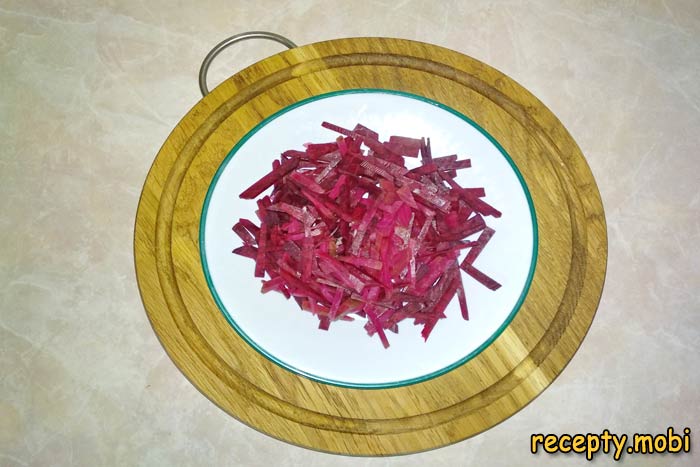
While the vegetables sauté in the frying pan, cut the beet into sticks. Add the beet to the sautéing vegetables. Let them stew for about seven to ten minutes. The beet should soften slightly but keep its shape and brilliant color.
After ten minutes, pour two ladles of meat broth into the roux, add tomato paste, spices, salt, and bay leaf. The broth deglazes the pan, picking up all the caramelized bits stuck to the bottom and folding them back into the dressing for maximum flavor.
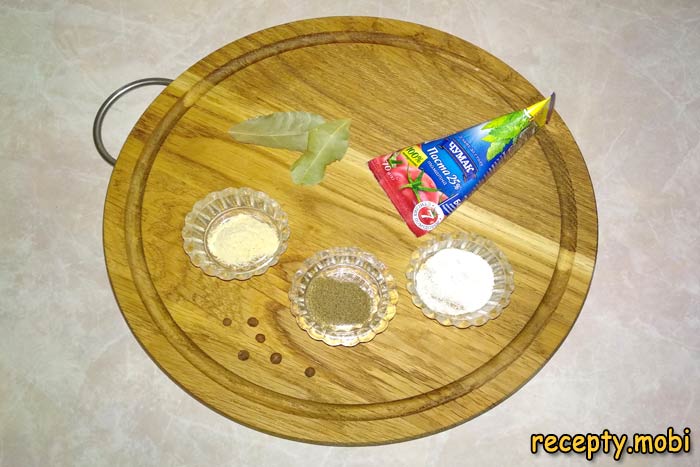
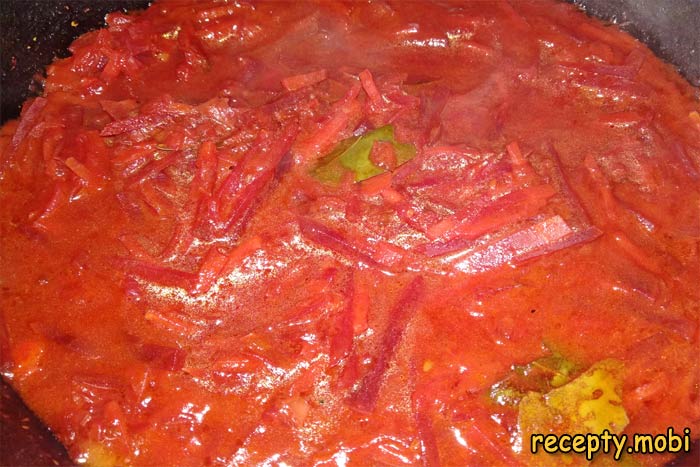
The roux should stew until the beet is cooked, which takes about twenty minutes. The slow simmer melds the flavors and softens the beet to the perfect tender-but-not-mushy texture that is characteristic of well-made borscht.
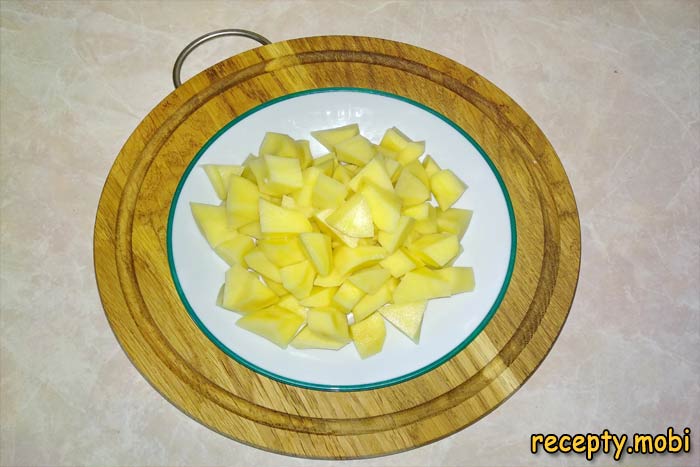
While the roux is stewing, cut the potato into medium cubes and add it to the pot with the meat. Potato cubes hold their shape during the boil, while the starch they release thickens the broth slightly and gives the soup body.
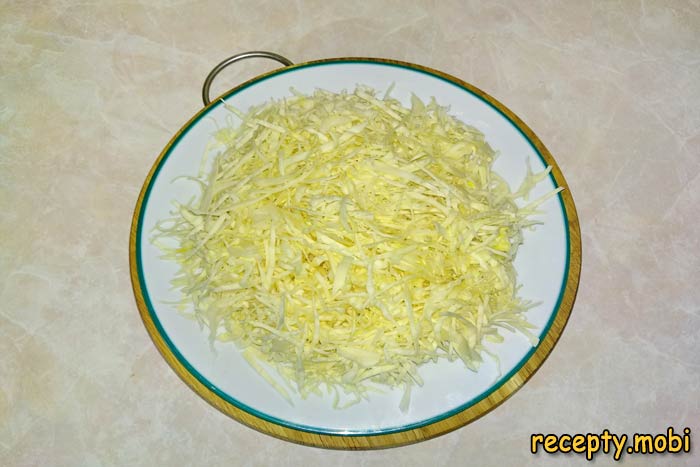
Finely chop the cabbage using a knife or a shredder. Thin shreds cook quickly and integrate with the broth, while thicker cuts give a more rustic, country-style finish to the soup.
By this time, the potato is almost cooked. Add the prepared cabbage to the pot. Boil the vegetables for another five minutes. The cabbage should not be overcooked or too soft — some bite is desirable. But this is a matter of family preference; some prefer their cabbage almost dissolved in the soup.
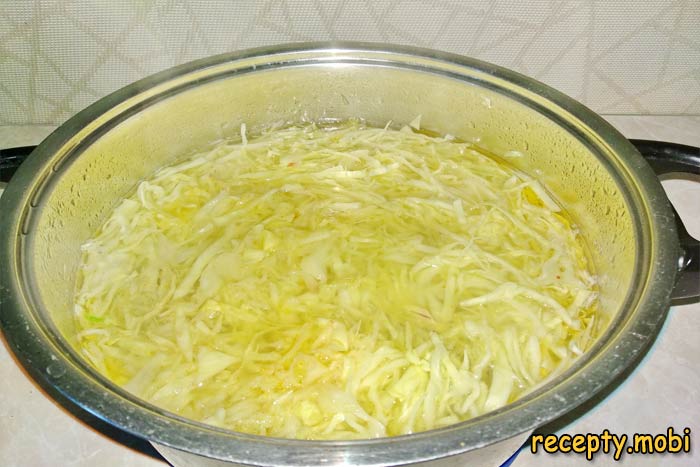
Add the roux with beets and tomato to the pot. Bring the borscht to a boil and continue to cook for another five minutes. The roux infuses the broth with its concentrated flavor, color, and aroma all at once, transforming a simple vegetable soup into proper borscht.
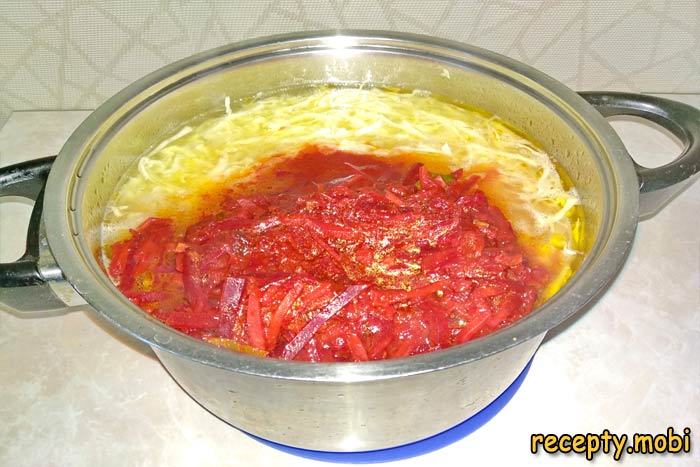
Our borscht is almost ready — taste it, and if necessary, add salt and spices. Remove the pot from the heat and let the finished dish infuse for about fifteen minutes. This rest is crucial; the flavors meld and round out, and the soup transforms from good to genuinely excellent during this short pause.
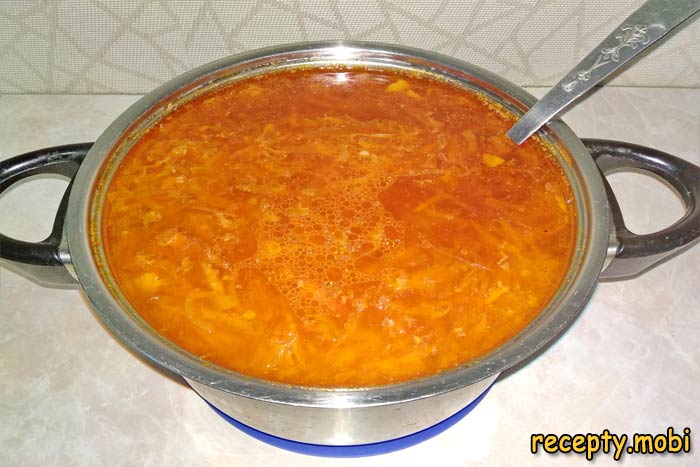
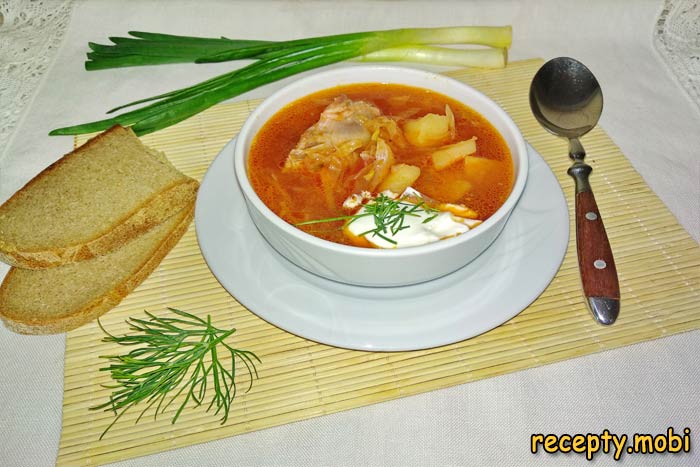
Borscht with beets and cabbage is ready. Pour the borscht into bowls and serve with sour cream, green onions, and slices of black bread. A clove of raw garlic to chew alongside the soup is the traditional Ukrainian finishing touch that wakes up every spoonful.


Tips
- 1
Boil the beef twice and discard the first water. This step pulls out blood and impurities that would cloud the broth, leaving a cleaner, brighter color and a more refined flavor. The technique adds five minutes but transforms the final result. The same trick works for any meat broth where clarity matters, particularly for clear soups served at formal occasions.
- 2
Add a splash of vinegar or lemon juice to the beet roux. The acid does two things: it preserves the brilliant ruby color of the beets (which fades to dull brown without acid), and it balances the natural sweetness of the vegetables. A teaspoon is enough. The same color-locking principle works for other beet preparations and for keeping braised cabbage visually appealing.
- 3
Let the soup rest at least fifteen minutes before serving, ideally overnight. Borscht is famously better on day two — the flavors deepen, the broth thickens slightly, and every component reaches its peak. Make a double batch, cool the second portion in the fridge, and reheat gently the next day for an even more delicious lunch.
- 4
Serve traditionally for the full experience. A generous spoon of cold sour cream stirred into hot borscht, fresh dill, chopped green onion, and a wedge of dark rye or homemade bread with a clove of raw garlic on the side are non-negotiable. Skipping any of these omits part of what makes borscht borscht and not just beet soup.
FAQ
What is the difference between Russian and Ukrainian borscht? +
Both versions share the beet-based broth, but Ukrainian borscht is generally thicker, richer, and includes more vegetables — often cabbage, beans, and potatoes — with pork or beef as the meat. Russian variants tend to be lighter and may skip the cabbage. Ukrainian borscht almost always includes a fat-fried roux of vegetables, while Russian versions sometimes simmer everything in the pot. Both are delicious; the differences come down to regional preference and family tradition.
Can I make borscht vegetarian? +
Yes. Skip the beef and build a deep vegetable broth from carrot, onion, celery, parsnip, and a piece of dried mushroom for umami. Add an extra cup of beans for protein. The roux, beet, cabbage, and potato carry the heart of the dish, and the result is a satisfying, nutritionally complete bowl. Many traditional recipes are naturally vegetarian during Lent, so this is well-trod culinary territory in Eastern Europe.
Why does my borscht turn out too watery or too thick? +
Too watery usually means too much liquid for the amount of vegetables. Reduce the water by 500ml next time, or add an extra potato to absorb liquid as it cooks. Too thick comes from overcooked, broken-down vegetables. Stop the cooking earlier, especially for the cabbage, and remove from heat as soon as everything is tender. The proper consistency is somewhere between a thick stew and a thin soup — chunky but spoonable.
How long does borscht keep in the fridge? +
Properly cooled and stored in a covered container, borscht keeps for four to five days in the refrigerator. The flavor actually peaks on day two and stays excellent through day four. Reheat gently on the stove rather than in the microwave for best results. Borscht also freezes well for up to three months — freeze in portion-sized containers and thaw overnight in the fridge before reheating.
- Comment
or post as a guest
Be the first to comment.