avg —
Broken Glass Cake with Sour Cream and Jelly

Instructions
I prepare the ingredients for the Broken Glass Cake. The visual impact maximises with CONTRASTING jelly colours — pick combinations like cherry (red) + peach (orange) + lemon (yellow), or strawberry (pink) + kiwi (green) + raspberry (red). Avoid all-similar shades (3 red jellies = boring single-colour result). Sour cream must be FRESH (no off-sour notes — these would dominate the dessert). Powdered sugar quantity (250 g) targets pleasant slight sourness; reduce by 30-50 g for very tart sour cream, increase by 30-50 g for sweeter taste.
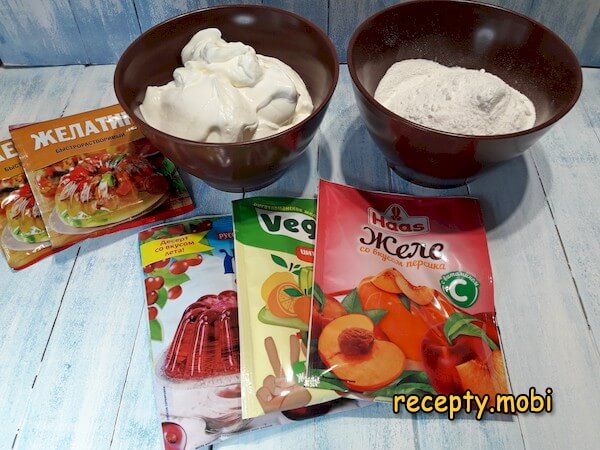
Pour one packet of dry jelly into a separate mixing bowl.
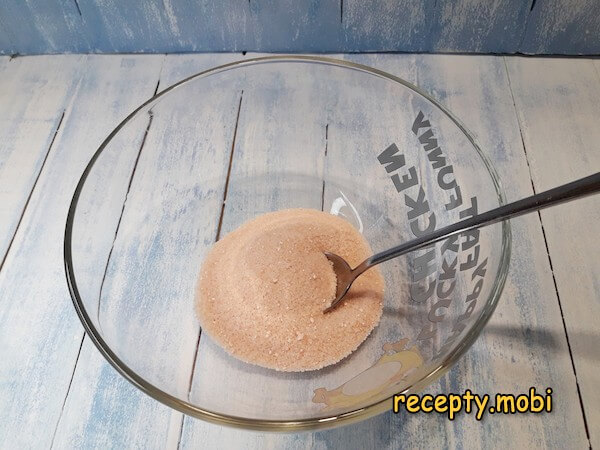
Pour 150 ml of HOT (about 80 °C) water into the jelly. The package typically recommends a larger water volume — IGNORE the package recommendation. Less water produces firmer jelly that holds shape when cut into cubes; package-recommended water produces too-soft jelly that disintegrates in the cake.
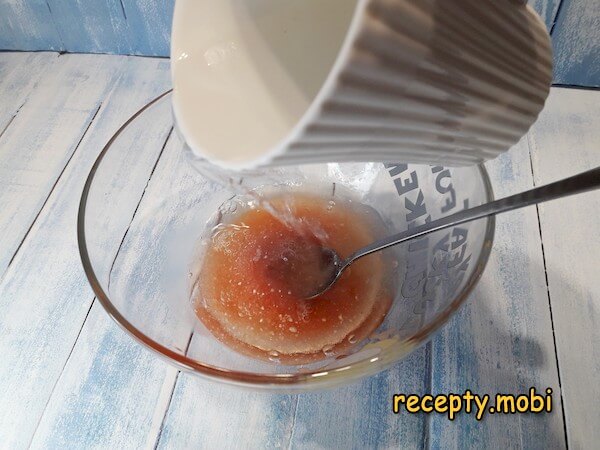
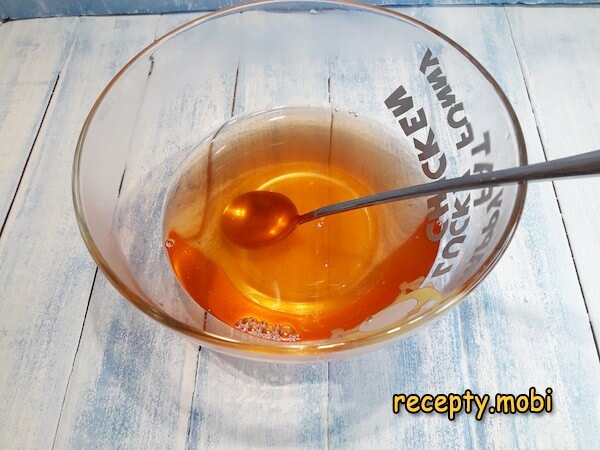
Stir until the jelly powder fully dissolves (no granules visible). Repeat the process for each remaining packet — separate bowls for each colour.
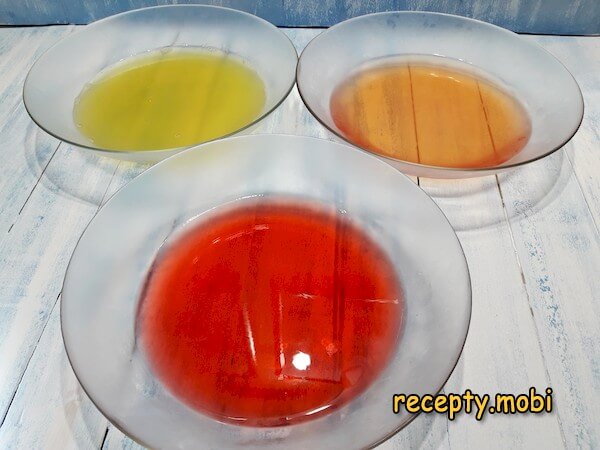
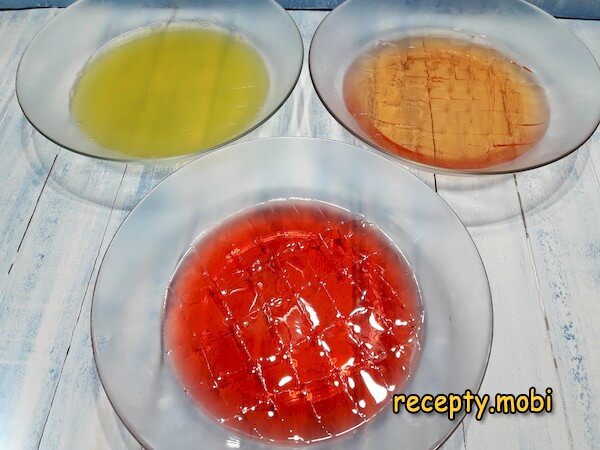
Pour each hot dissolved jelly into a wider shallow container — aim for 1.5-2 cm depth. Cool to room temperature, then refrigerate 20 minutes for full setting. Wider/shallower = faster setting + easier cutting into cubes.
Meanwhile, dissolve gelatin in 80 ml COLD water. Let it swell for the full package-recommended time (usually 5-10 minutes for granular gelatin, longer for sheet gelatin).
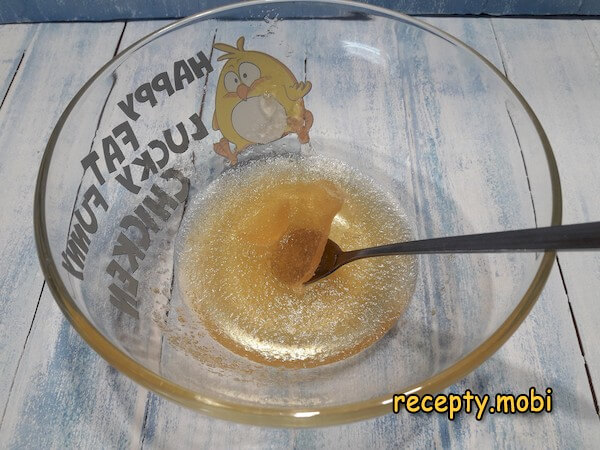
Cut the set jellies into MEDIUM cubes directly in their containers (1.5-2 cm cubes look most "shattered glass-like" when sliced). Don't make them too small — tiny cubes lose the dramatic visual effect; too-large cubes are awkward to eat.
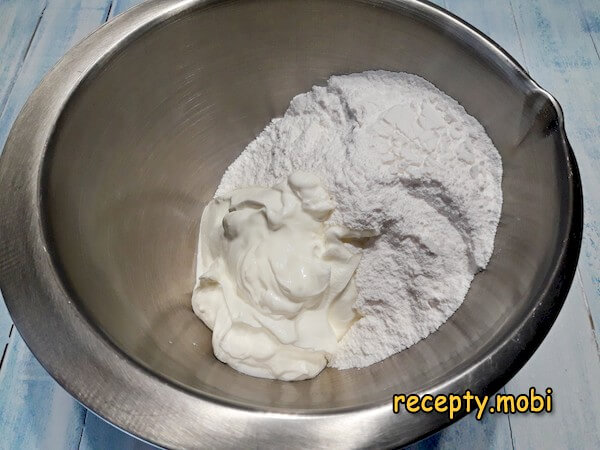
Place sour cream in a whipping bowl. Add powdered sugar.
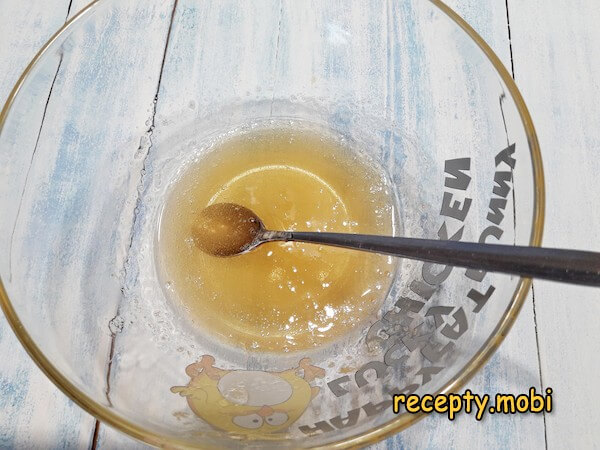
Melt the swollen gelatin to liquid state — short microwave pulses (10-second bursts, stir between each) work well, or use a water bath. DO NOT BOIL the gelatin — boiling destroys its setting power.
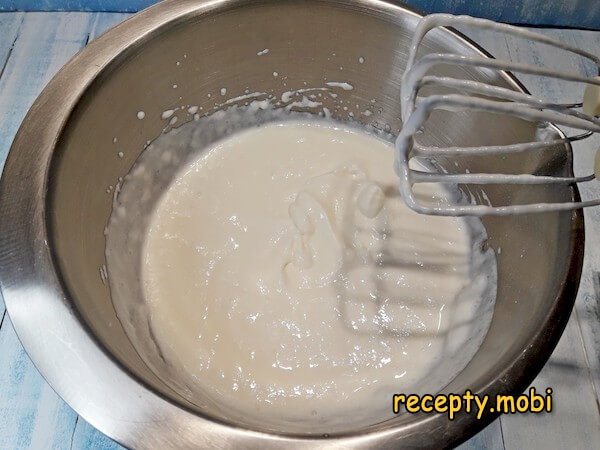
Pour the warm liquid gelatin into the sour-cream-sugar mixture. Mix with electric mixer at medium speed until uniform. The mixture should be smooth and silky.
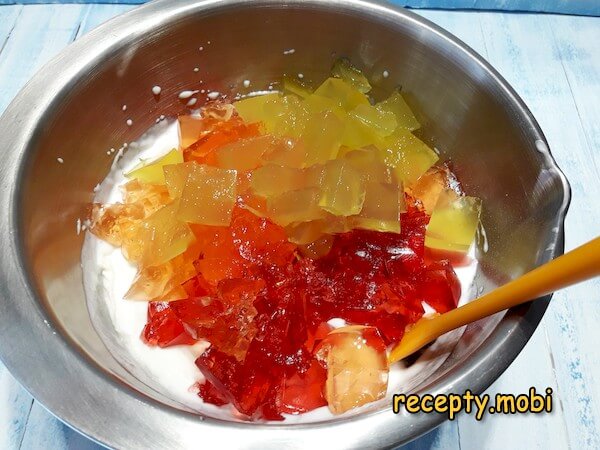
Add the cut jelly cubes to the sour-cream mixture. Mix gently with a spatula — folding motion to distribute the cubes throughout without breaking them. Aggressive mixing crushes the jelly cubes and produces muddy colours instead of distinct shards.
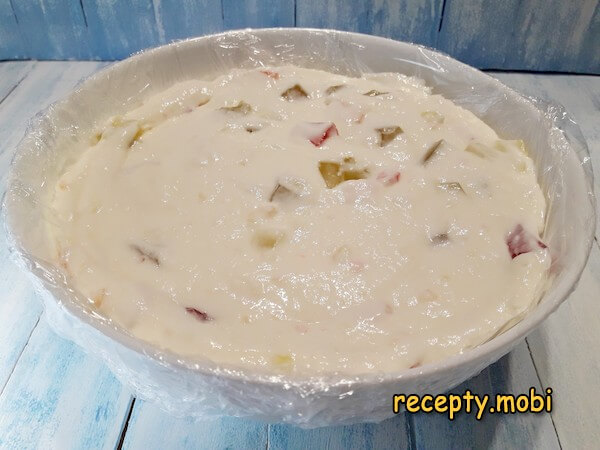
Line a dome-shaped salad bowl with cling film, leaving generous overhang on the sides (silicone moulds need NO lining — non-stick by nature). Transfer the sour-cream-jelly mixture into the lined bowl. Smooth the surface. Fold the overhanging cling film over the top to seal. Refrigerate 3-4 hours for full setting (taller dome = more time).
After full setting (or just before serving), unfold the top cling film. Place a serving plate over the bowl, then flip the assembly upside down — the cake releases easily from the bowl, and the cling film peels off cleanly.
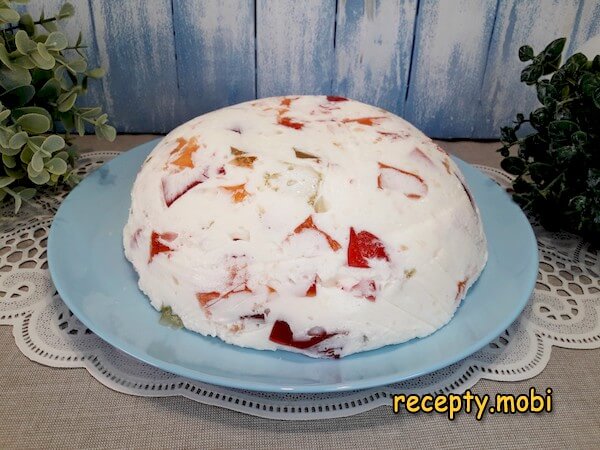
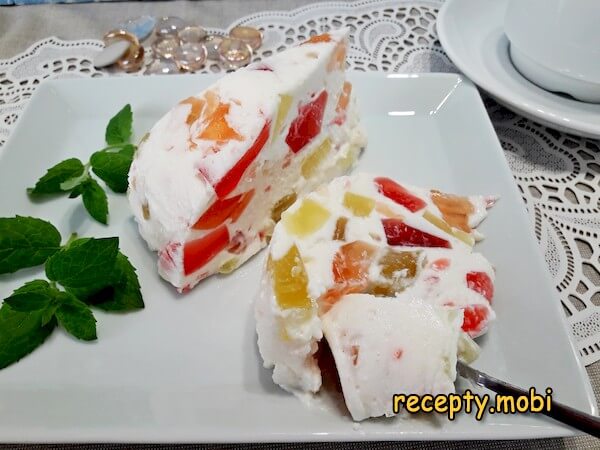
The Broken Glass Cake with Sour Cream and Jelly is ready. Slicing reveals bright colourful jelly cubes scattered through the white sour-cream matrix — the signature "shattered glass" pattern. At any party, in any season, this dessert disappears within minutes. Try it for yourself!Enjoy your meal!


Tips
- 1
THE LESS-WATER-THAN-PACKAGE-SAYS RULE. Step 3's instruction to use LESS water than the jelly package recommends is the recipe's structural secret. Package-instruction-strength jelly is calibrated for desserts where you eat the jelly directly — a softer wobbly texture is desired. For this cake, the jelly cubes need to MAINTAIN their shape suspended in sour cream — they need to be FIRMER than dessert-jelly. The reduced water (150 ml vs typical 200-250 ml) produces this firmer texture. Don't trust the package; trust the recipe.
- 2
THE GELATIN MELT TEMPERATURE IS CRITICAL. Step 9's "DO NOT BOIL" warning prevents the most common dessert-gelatin disaster. Gelatin's setting proteins denature at around 100 °C — boiled gelatin loses some or all of its gelling power, producing a never-setting soft mess. Microwave in 10-second bursts (stop as soon as fully liquid), or use a water bath at 60-70 °C. The same temperature rule applies to all gelatin-based desserts. For another sour-cream-frosting cake worth comparing, see Bird Cherry Cake with Sour Cream Frosting.
- 3
THE COLOUR-CONTRAST CHOICE IS DESIGN ESSENTIAL. The visual impact of "broken glass" depends entirely on contrasting jelly colours. The standard combination: red (cherry/strawberry) + orange (peach/apricot) + yellow (lemon/pineapple) — three primary-fruit colours produce maximum visual punch. Alternative combinations: red + green (kiwi) + yellow (lemon), red + blue (blackcurrant) + yellow (mango). Avoid: 3 packets of similar-shade jelly (3 red, or 3 yellow) — looks muddy, single-colour, defeats the cake's signature look. Plan colours before shopping.
- 4
THE DOME SHAPE PRODUCES MAXIMUM IMPACT. The dome-shape mould (round salad bowl) creates the most dramatic "broken glass" cross-section when sliced — the radial cuts reveal jelly cubes at every depth, producing maximum colour-distribution effect. Flat rectangular pans produce less visually striking slices. The taller the dome, the more dramatic the cake. For events: use a deep mixing bowl (rather than a shallow one) for maximum height. For another sour-cream-based dessert with dried-fruit pieces worth trying, try Sponge Cake with Sour Cream and Dried Fruits.
FAQ
Can I use homemade jelly instead of packet jelly? +
Yes — homemade jelly works but requires extra effort. Method: 250 ml fruit juice + 7 g gelatin + 20-30 g sugar (adjust to juice sweetness) — heat juice + sugar, dissolve gelatin separately, combine, set. The advantage: no artificial colours/flavours, real fruit character. The disadvantage: extra prep time (1 hour total for all 3 colours vs 5 minutes for packets). Use vibrant juices for colour — pomegranate (deep red), apricot (orange), green grape (pale yellow). Don't use pineapple or kiwi juice — they contain enzymes that destroy gelatin (won't set).
Why does my cake collapse when unmoulded? +
Three common causes. First: insufficient gelatin (20 g is the minimum for this recipe; reducing it produces unstable structure). Second: insufficient setting time (3-4 hours is the minimum; tall domes need 5-6 hours; overnight is safest). Third: gelatin overheated during melting (boiled gelatin loses setting power, won't structure properly). The diagnosis: if the cake is wobbly but holds shape briefly before collapsing = under-set, refrigerate longer. If the cake is liquid centre = gelatin disaster, remake with fresh gelatin properly melted. The cake should be FIRM but jiggly when properly set.
How long does it keep? +
Refrigerated, the cake holds peak quality for 2 days. After 48 hours, the jelly cubes start releasing their colour into the surrounding sour cream — the sharp colour boundaries blur, and the white matrix takes on a pinkish-orange "tie-dye" effect. The taste is still good, but the visual impact diminishes. Don't freeze — the gelatin matrix breaks structure when thawed (becomes watery + grainy). For events: make the cake the day before serving, no earlier. For meal-prep approach: prepare and cube the jelly portion 1-2 days ahead, assemble the full cake on serving day.
Can I add fresh fruit pieces? +
Some yes, some no. Friendly fruits (add at step 11 with jelly cubes): canned mandarin segments (drained), canned peach pieces (drained), maraschino cherries, pomegranate seeds, blueberries, raspberries (whole, not crushed). UNFRIENDLY fruits (will prevent setting or weep liquid): fresh pineapple (enzyme breaks gelatin), fresh kiwi (same problem), fresh papaya (same problem), watermelon (too watery). The canned versions of pineapple/kiwi work because heat-processing destroys the problem enzymes. Strawberries are borderline — use whole, not sliced (cut surfaces release juice that thins the matrix).
- Comment
or post as a guest
Be the first to comment.