avg —
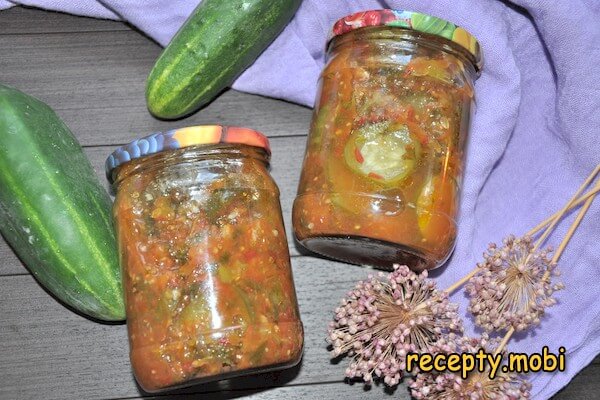
Canned Sorrel (Winter Appetizers)

Instructions
Prepare the fresh sorrel (2 kg) – choose juicy green leaves with no damage, yellowing or dryness. The ideal time to put it up is early June (the first harvest) or September (the second cutting after the summer heat). Sorrel from your own garden is the best choice. Check shop-bought sorrel for freshness – the leaves should be firm, with no "wilted" look.
Wash the leaves thoroughly in a large bowl of cold water, changing the water several times – sorrel always carries plenty of fine soil particles and sand, especially after rain. After each change of water, make sure no sediment is left at the bottom – that is the sign of clean greens.
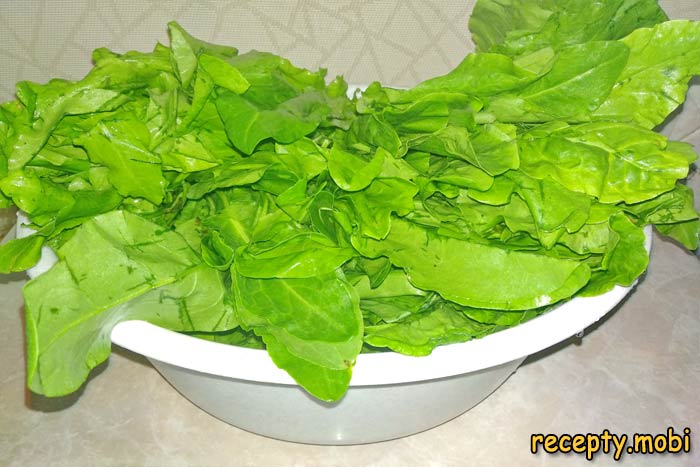
Transfer the washed leaves to a large sieve or colander and let the excess water drain off. There is no need to wait for them to dry completely – we will stew the sorrel in its own juice, and a little extra water only helps the process.
Cut off the tails (the tough stems) from the leaves – they are hard and "woody" and would spoil the texture in the preserve. Use only the green leaf blades. If the stems are long and soft, you can leave 1–2 cm at the base of the leaf for "texture".
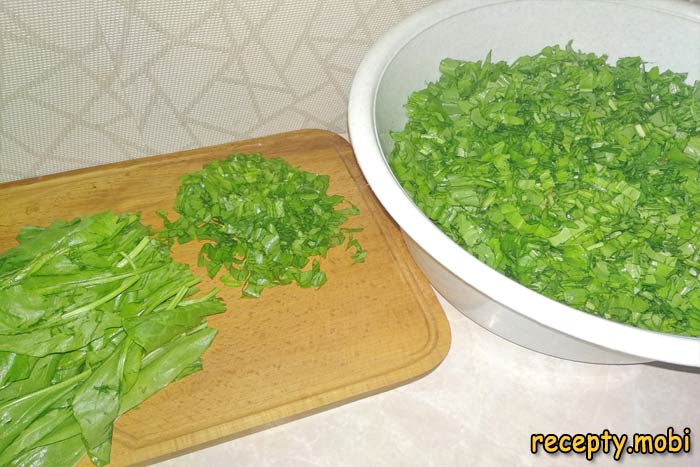
Stack the leaves in even bunches of 20–30 and, with a sharp knife, cut them into thin strips 3–5 mm wide – the same thickness as when you shred sorrel for fresh green borscht. An even cut gives uniform heating and a nice look in the finished soup in winter.
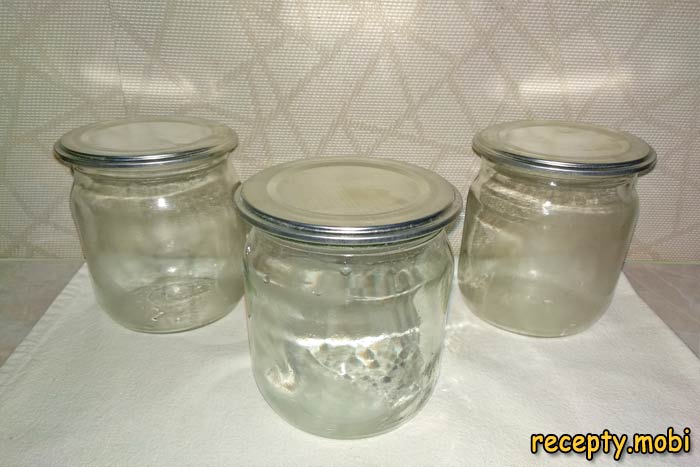
Meanwhile, prepare the 0.5-litre glass jars (4 of them) and the metal lids. Wash the jars thoroughly in a hot soda solution (1 tbsp baking soda per 1 litre of water) and rinse with boiling water. Sterilise the jars over steam from a kettle for 5 minutes (neck down), in the oven at 100°C for 10 minutes, or in the microwave with 2 tbsp of water for 3 minutes at 800 W. Boil the lids separately for 5 minutes.
Take a large, heavy-bottomed pot of 5–6 litres (there is a LOT of sorrel, but it cooks down a great deal). Pour in 1 cup of clean water (250 ml) – no more is needed, as the sorrel will give off enough juice of its own as it cooks. Turn on medium heat.
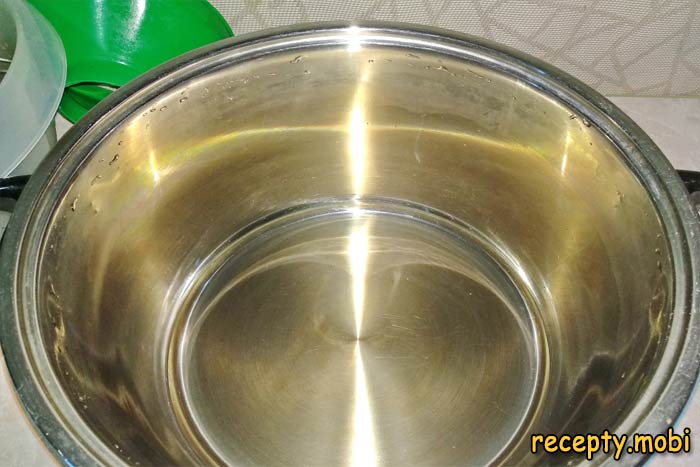
Transfer all the chopped sorrel into the pot – at first it will look like a "mountain", but don't worry, it will settle as it cooks. Cover the pot tightly with a lid to create a "steam effect" that speeds up the process.
Cook the sorrel over medium heat, stirring from time to time with a silicone spatula or a ladle. Every 2–3 minutes, lift the lid and stir so the bottom layer does not catch. You will see the sorrel change colour from bright green to a yellowish olive and release plenty of juice – this is normal for canning.
The total heat treatment takes 15–20 minutes. In that time the sorrel will "settle" completely, turn soft and release all its juice. The amount of liquid in the pot increases noticeably thanks to the sorrel's own juice. Let it boil for another 2–3 minutes over low heat for guaranteed sterilisation.
If you like, add finely chopped dill and parsley (½ bunch of each) 1 minute before the end of cooking – extra aroma for winter borscht. The salt (1 ½ tsp) can be added now or later when you make the borscht in winter – it is up to you. For a "plain" preparation without additions, do not add salt.
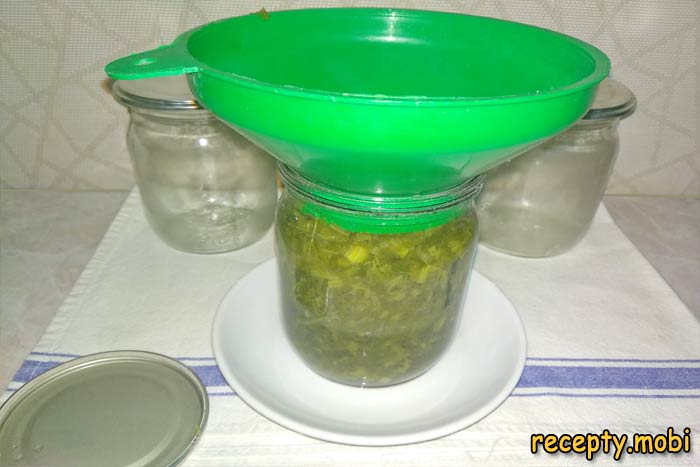
WITHOUT removing the pot from the heat, use a slotted spoon to transfer the cooked sorrel into the prepared sterile jars. Fill each jar tightly with sorrel up to the "shoulders" (not all the way to the top), then top up with boiling juice from the pot right to the rim of the neck – this leaves no air bubbles.
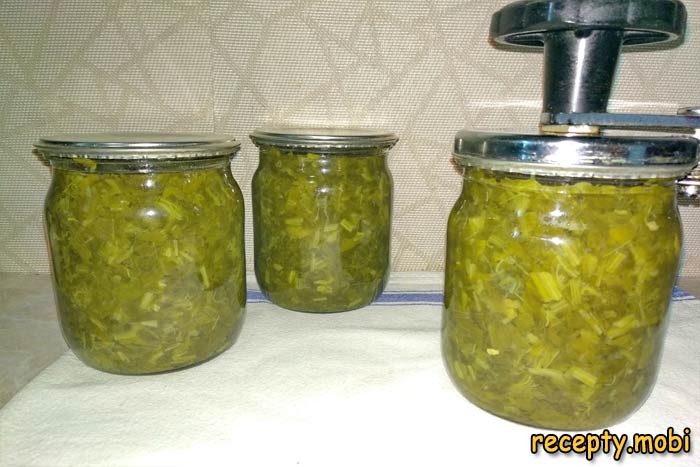
Seal the jars at once with sterile lids using a canning key, or close them with twist-off caps. Check the seal – turn the jar upside down; there should be no liquid around the edges of the lid.
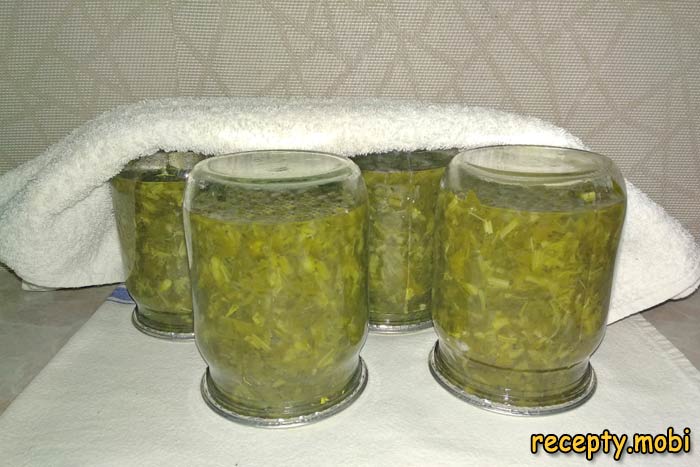
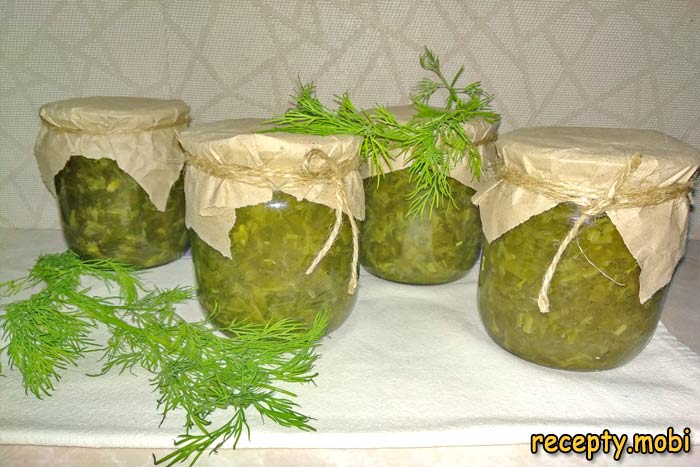
Wrap the upside-down jars in a thick towel or blanket "in a fur coat" for 12 hours until they cool completely. This is an "extra sterilisation" by the steam of the jars' own juice, and it extends the shelf life. Once fully cooled, store in a cool, dark cellar or pantry at 5–15°C for up to 1 year. The canned sorrel for winter is ready!


Tips
- 1
Pick the sorrel in EARLY SUMMER (May–June) or in AUTUMN (September) – summer heat makes the leaves slightly bitter and dry.
- 2
Do NOT add much water when cooking – the sorrel gives off plenty of juice of its own, and 1 cup is quite enough.
- 3
You can leave out the salt – the sorrel keeps well even without it thanks to its own acidity. By the same principle I also preserve spinach for winter.
- 4
A 0.5-litre jar is the ideal size for one pot of green borscht of 3–4 litres serving 6.
FAQ
Why can sorrel if you can just freeze it? +
Both methods have their advantages. Canning: keeps at room temperature in the pantry (takes up no freezer space), is ready to use straight away (no need to thaw), keeps for a long time – up to 2 years, and is handy for small flats without a large freezer. Freezing: preserves the maximum of vitamins and the bright green colour, is simpler to do (wash, chop, freeze – 5 minutes of work) and can be used in portions. The best solution is to freeze part of the harvest for salads and quick dishes and to can part of it for borscht. Canning is the tried-and-tested "grandmother's" method; freezing is the modern one.
How do you use canned sorrel in winter? +
It is a versatile base for winter dishes: green borscht (1 jar per pot of 3–4 litres of stock + potatoes + boiled eggs + sour cream), sorrel soup (the same, but without beetroot), filled pies (fry the sorrel with onion, boiled egg and rice for the filling), sorrel omelette (add the sorrel to the egg mixture before frying), a sauce for meat (stew the sorrel with sour cream and garlic – a side for pork or chicken), and a filling for pancakes (with egg and herbs). One jar = one meal for a family of 4–6.
How long does the finished preparation keep? +
Properly sterilised and sealed jars keep in a cool, dark cellar (5–15°C) for up to 1–2 years. It is best to use them up before the next season (1 year). Keep an opened jar in the refrigerator under its lid for up to 5 days. Signs of spoilage: a bulging lid (gas from fermentation), cloudy juice, an unpleasant "yeasty" smell, mould on the surface – throw such jars away, as they are dangerous to eat. You can keep them on a flat balcony in winter (if it does not freeze), and move them to a cool place in spring.
Can you can other greens this way? +
Yes, the method is universal for different greens. Spinach: the same process, 2 kg = 4 jars of 0.5 litres, for spring soups and pasta. Beet greens: ideal for "Ukrainian-style" green borscht, with a bright green colour. Young nettle: a "medicinal" preparation, for vitamin-rich soups. Dill and parsley: a shorter cooking time of 5 minutes, for sauces and dressings. Wild garlic (ramson): a spring delicacy, put up for the summer. Canning is not suitable for leaf salads (rocket, lettuce, baby spinach) – they lose their texture. Those are better frozen or made into oil-based sauces and pastes.
- Comment
or post as a guest
Be the first to comment.