avg —
Chashushuli Georgian Style

Instructions
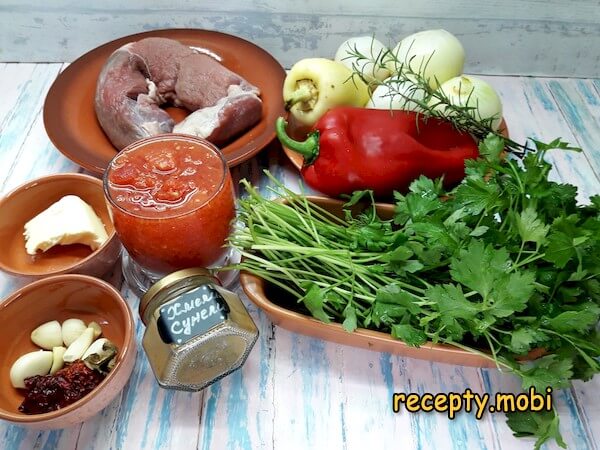
I prepare the ingredients per list. ONION QUANTITY cannot be reduced — the more, the tastier + softer the dish. Tomato juice with pulp can be obtained by GRATING fresh tomatoes (homemade equivalent of canned).
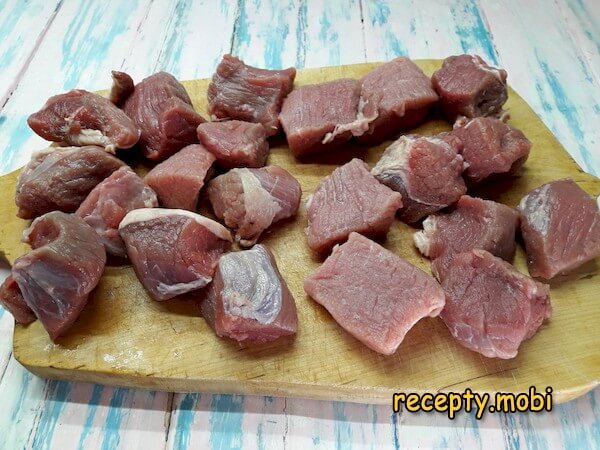
Cut meat into MEDIUM pieces. DON'T remove film or veins — everything stews to extreme tender state, dissolves into overall mass.
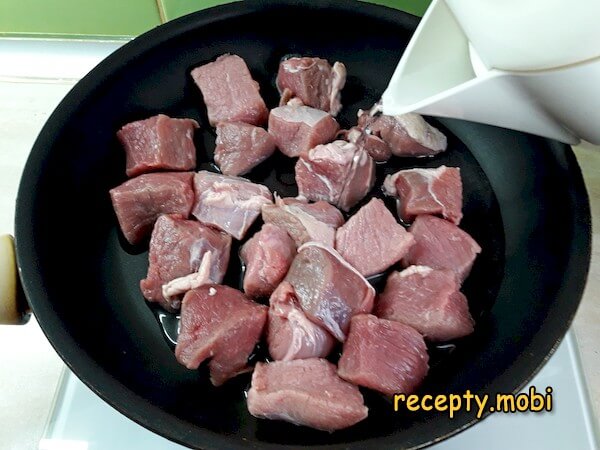
Place cut meat in deep frying pan; add little water (reaches 1/3 of meat-piece height). Cover with lid; bring to boil; reduce flame to MINIMUM; simmer 40-50 minutes.
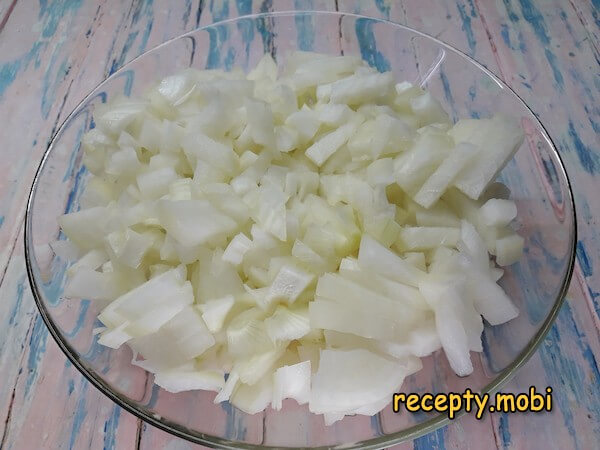
While meat simmers, prepare vegetables. Cut all 500 g onion into MEDIUM cubes (don't be intimidated by the volume — it reduces dramatically).
Clean + rinse sweet pepper. Cut into wide strips.

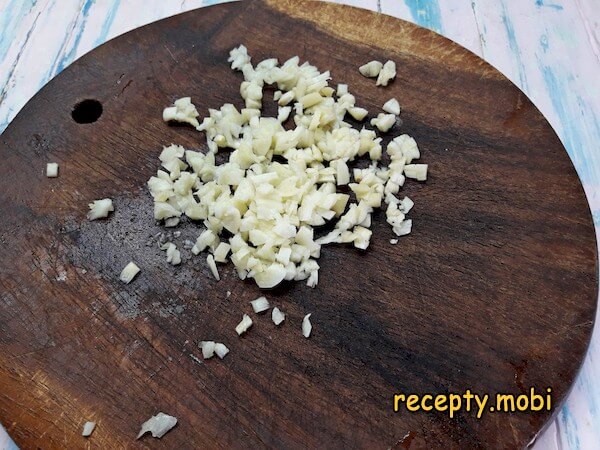
Finely chop garlic with knife (knife-cut preserves more aroma than press).
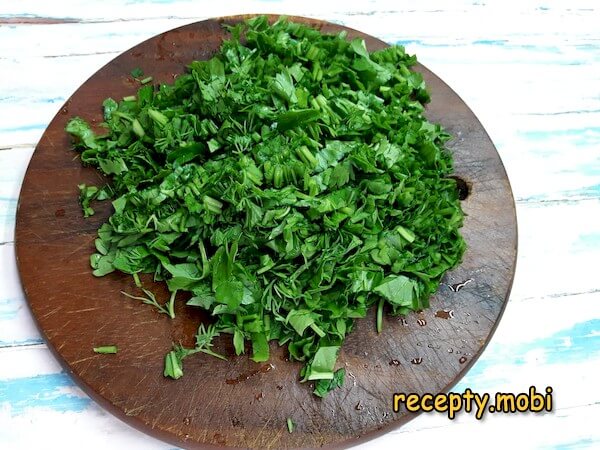
Chop the greens (parsley + cilantro mixture).
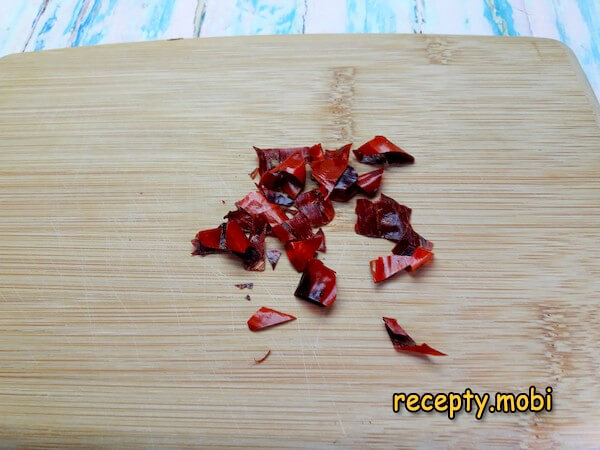
Cut hot pepper (adjust quantity to heat tolerance).
After 20 min of meat simmering, add ROSEMARY + khmeli-suneli to pan. DON'T salt yet (salt at this stage would over-concentrate during liquid reduction).
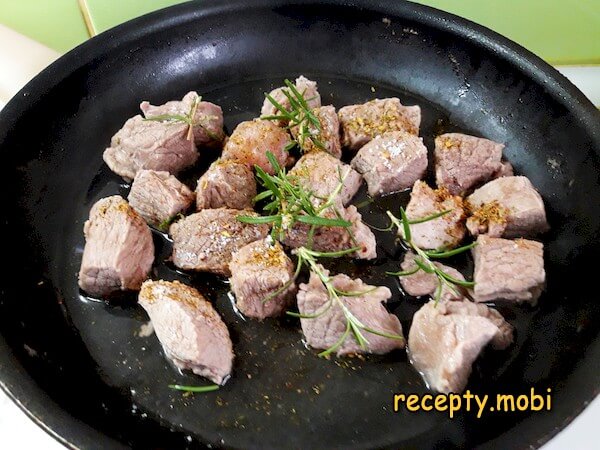
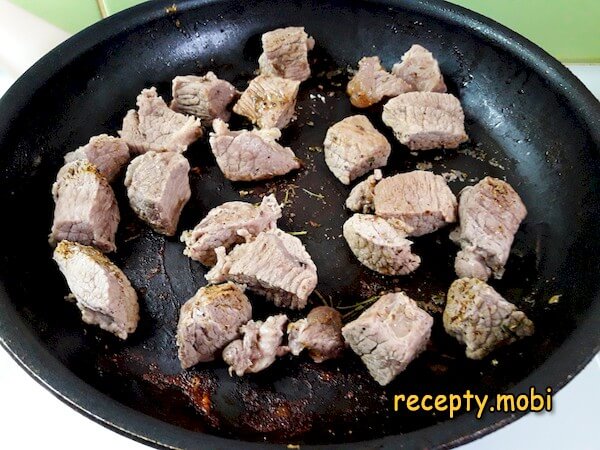
At end of stewing process: liquid should evaporate; meat pieces brown slightly. Remove rosemary sprigs (their flavor has fully infused).
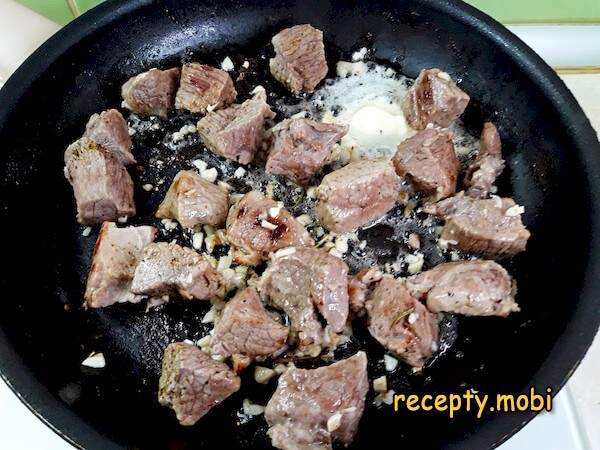
Add butter + chopped garlic to the meat (butter melts onto hot meat, garlic releases aroma).
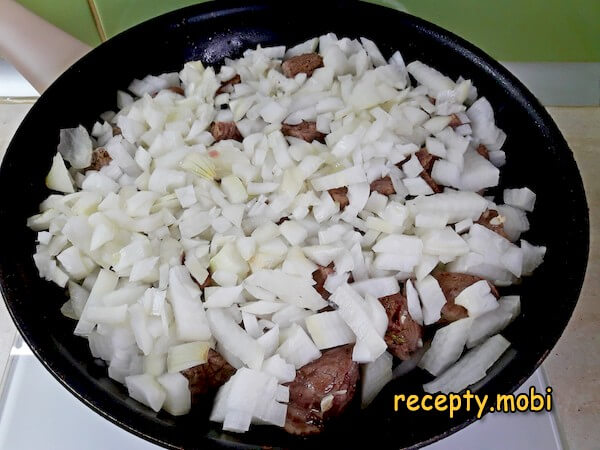
Add the onion to the meat. Add 30 ml water; cover; simmer 20 more minutes. Onion releases juice during process + further softens meat.
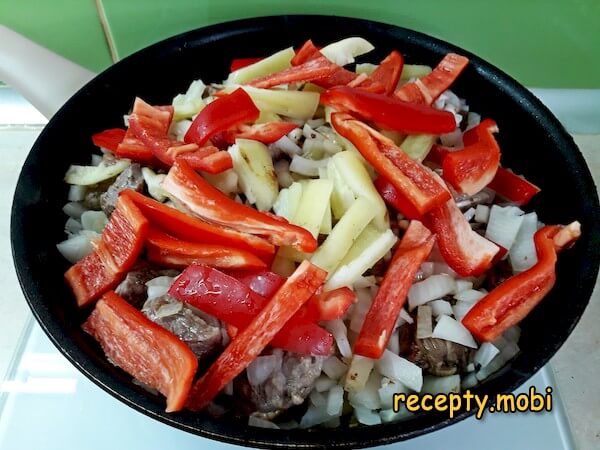
Add sweet + hot peppers. Salt to taste.
Pour in tomato juice. Close lid; continue stewing.
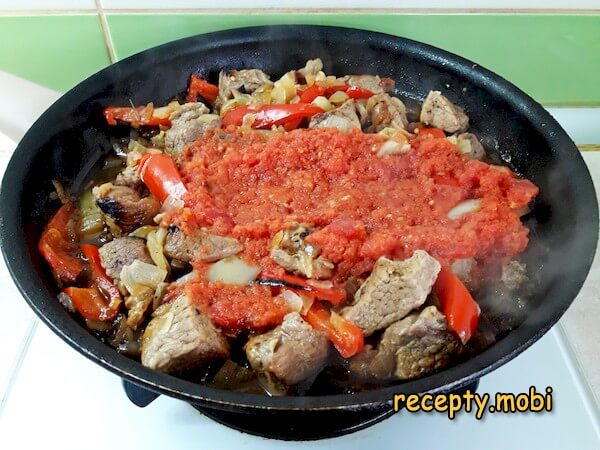
After 15 minutes, meat literally DISSOLVES in vegetable sauce. Re-check salt + adjust if needed.
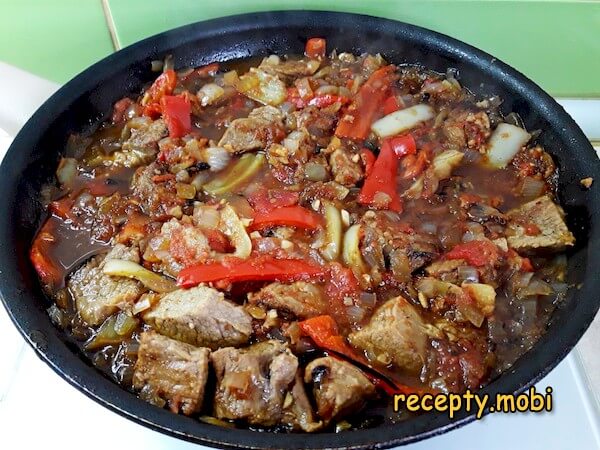
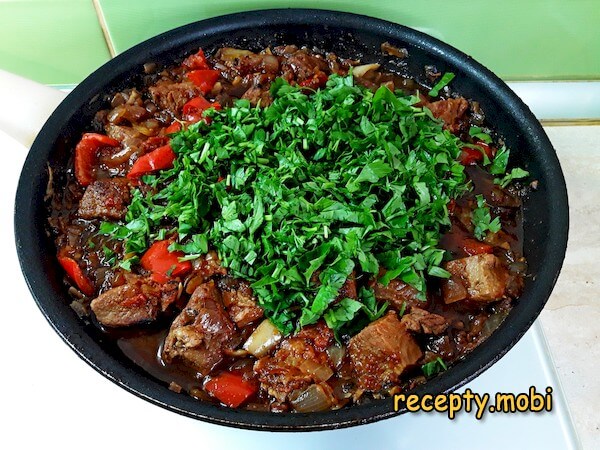
Add chopped greens; keep on heat under lid 3 minutes. Chashushuli Georgian style is ready. Serve in large plate or directly from frying pan while HOT. Traditional Georgian: no side dish needed — fresh herbs + bread cakes (tonis puri or shoti). Optional sides: potatoes, pasta, any porridge.


Tips
- 1
THE 1:1 ONION-MEAT RATIO IS GEORGIAN SECRET. Step 1's "amount of onions cannot be reduced" warning is recipe-defining. The 500 g onion (equal to meat weight) is unusually high by most cuisines' standards — but ESSENTIAL for Chashushuli's character. Onion contributes: enzymatic tenderization (releases enzymes that break down meat fibers), volume reduction (cooks down to ~150 g during stewing, blends with meat), sweetness balance (counterpoints meat richness + tomato acidity), aromatic depth. Reducing onion: dish becomes generic beef-tomato stew. Embracing the 1:1 ratio: distinctive Georgian identity. Same principle: traditional Georgian "ostri", "khinkali" filling.
- 2
THE NO-FILM-REMOVAL APPROACH. Step 2's "don't remove film or veins" is Georgian wisdom. Connective tissue (fascia, tendons): contains COLLAGEN that converts to GELATIN during long stewing — creates the dish's signature silky texture. Trimming connective tissue: meat becomes lean, less interesting, drier. Leaving it: extra body, extra flavor, extra tenderness through long-cook gelatinization. Same approach: French braising, beef bourguignon, osso buco. Don't try to "clean up" the meat — embrace the cuts as butcher delivers. For another classic Caucasian beef preparation worth comparing, see Kuchmachi Georgian Style.
- 3
THE NO-SALT-EARLY RULE. Step 9's "do not add salt yet" warning is technique-critical. Salt added at start: as liquid evaporates during 40-50 min simmer, salt concentrates 3-4x — produces oversalted final dish. Salt added LATE (step 13): adjusted for the final liquid volume + flavors. Same rule applies to all reduction-based cooking: French sauces, Italian ragù, Indian curries. The flour-thickening or vegetable-juice base also affects salt perception. Trust the recipe's timing — Georgian cooks have refined this technique over generations.
- 4
THE KHMELI-SUNELI IDENTITY. Step 9's "khmeli-suneli" specification is the recipe's Georgian-flavor signature. The blend (typically: fenugreek, coriander, dried marigold, savory, basil, dill, mint, parsley, bay leaf) provides distinctive Georgian character impossible to replicate with single herbs. WITHOUT it: dish becomes generic Mediterranean stew. WITH it: unmistakably Georgian identity. Buy authentic blend from Russian/Georgian groceries or online. Approximation: 1 tsp fenugreek + 1 tsp coriander + 1/2 tsp marjoram (rough substitute, gets ~70% of authentic flavor). For another Georgian-spice-forward dish worth trying, try Lobio Salad with Canned Beans.
FAQ
Can I use lamb instead of beef? +
Yes — lamb is equally traditional Georgian choice (originally Caucasian shepherd cuisine). Lamb shoulder or leg works best (similar fat content, similar collagen levels). Lamb cooking time: ~30 min less than beef (younger animal, more tender naturally). Adjust simmer times accordingly: 30-40 min for lamb (instead of 40-50 for beef). Mutton (older sheep): more time needed (60-70 min initial simmer). Lamb produces stronger "Caucasian" character — the more authentic version actually. For beef-lamb mix: 50/50 produces complex result. The dish accommodates all ruminant meats; not recommended for pork (different texture, wrong flavor profile).
Can I make it less spicy? +
Yes — easily adjust heat level. REDUCE hot pepper to 1/4 pod (mild heat). REPLACE with paprika 1/2 tsp (gentle warmth, no real heat). OMIT entirely (loses traditional spicy character but still excellent dish). For SPICY-LOVERS: increase to 1 whole pod, add 1 tsp red pepper flakes. KIDS-FRIENDLY version: omit hot pepper, omit khmeli-suneli (which has slight bite), serve over rice. The base recipe (1/3 pod) is moderately spicy by Western standards — Georgians might consider it mild. Calibrate to family tolerance.
How do I serve it? +
Multiple traditional + modern options. TRADITIONAL GEORGIAN: directly from frying pan to table (rustic dramatic), with shoti puri (boat-shaped Georgian bread) for sopping up sauce, fresh herbs alongside. RUSSIAN-STYLE: served over MASHED POTATOES (substantial dinner). EUROPEAN ADAPTATION: served with PASTA (rigatoni, penne — sauce coats nicely). RICE BASE: jasmine rice, basmati, or pilaf-style absorbs sauce well. POLENTA: Italian-style cornmeal porridge, traditional pairing in some regions. The thick savory sauce is the dish's main feature; pair with starches that absorb sauce. Garnish: extra fresh cilantro + lemon wedge.
How long does it keep? +
Refrigerated covered: 3-4 days at peak quality. Day 2-3: PEAK FLAVOR — meat-tomato-onion fully integrated, sauce develops complexity, signature Caucasian profile fully realized. Reheating: gentle stovetop simmer 5-10 min, OR microwave individual portions 2-3 min. Don't reheat at high temperature (sauce may separate). FREEZER: works very well (3-4 months freezer life), thaw overnight + reheat. The dish is genuinely make-ahead friendly — Sunday cook lasts most of the week, perfect for meal-prep. Pro-tip: make double batch, freeze half in serving-size containers for impromptu dinners.
- Comment
or post as a guest
Be the first to comment.