avg —
Cherry Jam with Pits for Winter

Instructions
Lay out the necessary products needed to prepare the cherry jam with pits on the work surface.
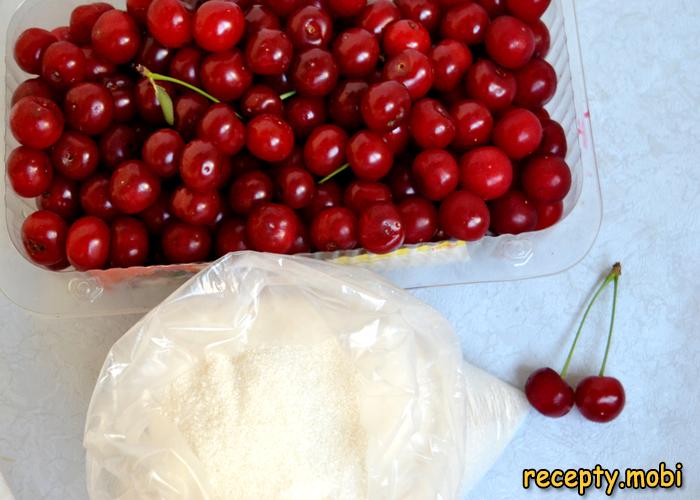
Rinse the cherries thoroughly under cold running water and remove the stems from the berries. If there is any suspicion that the cherries might be wormy, then place the cherries in a container of salty water for some time. Under the influence of the salty water, any fruit worms inside will come out of the berries, and we only need to drain the water along with the unwelcome 'uninvited guests'. After this brief procedure, rinse the cherries again with clean cold water.
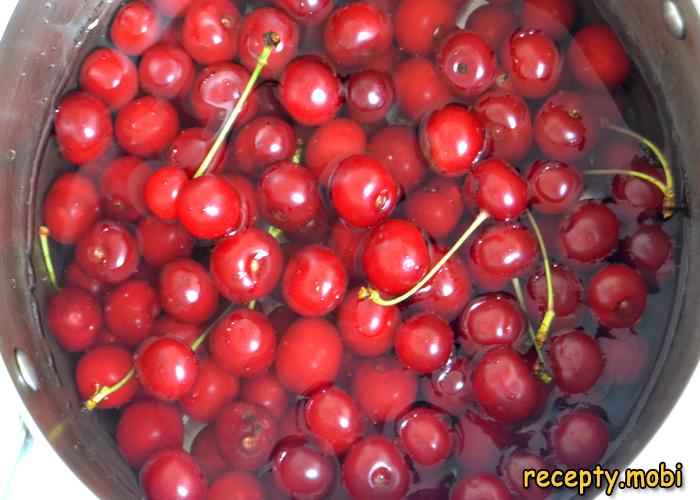
Then place the cherries in a heavy cooking bowl and sprinkle generously with sugar. Mix and leave undisturbed until the berries release their natural juice. Pour 1 cup of water into the bowl with the cherries and sugar, then place on the stove. When it boils, a thick liquid foam appears on its surface. It is not necessary to collect the foam right away. Boil for 5 minutes total. After that, remove from heat and leave for 5 hours undisturbed. Then put the jam back on the heat and bring to a boil again. Then, stirring gently, cook for another 5 minutes. During cooking, the foam thickens and usually gathers closer to the centre of the bowl. Now it will be easier to collect the foam, which we do carefully. After that, again remove from heat for another 5 hours of infusion.
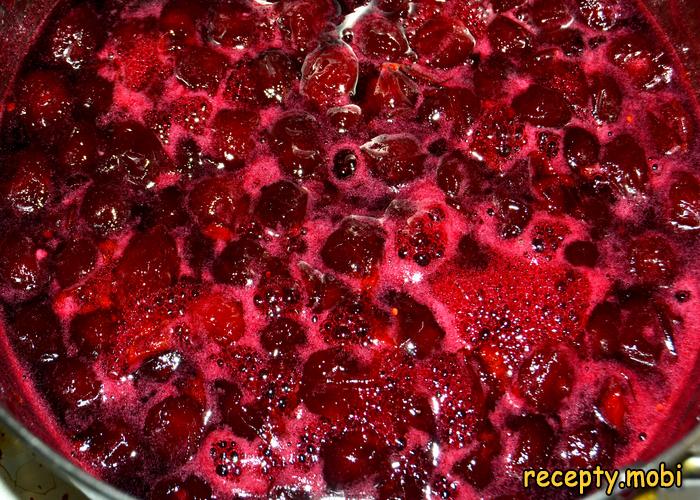
Put the jam back on the heat for the third and final time. Again, boil for 5 minutes total, removing the foam carefully. While still hot, distribute the jam into sterilized glass jars. After sealing the jars with sterilized lids, turn them upside down and leave in that position overnight. In the morning, return the jars to their normal position and put them away for proper storage.
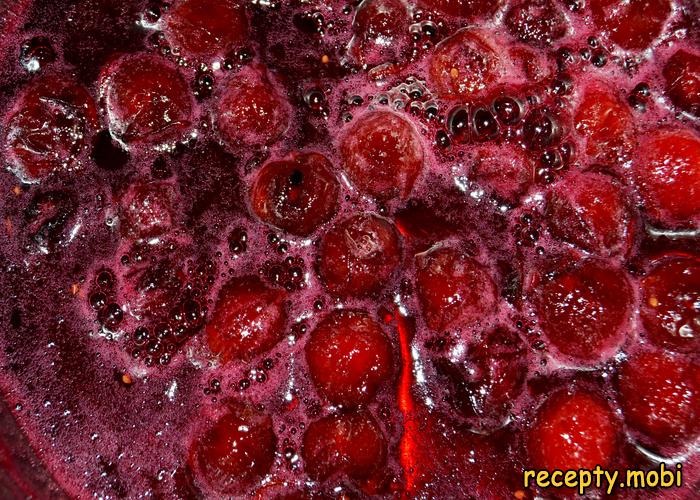
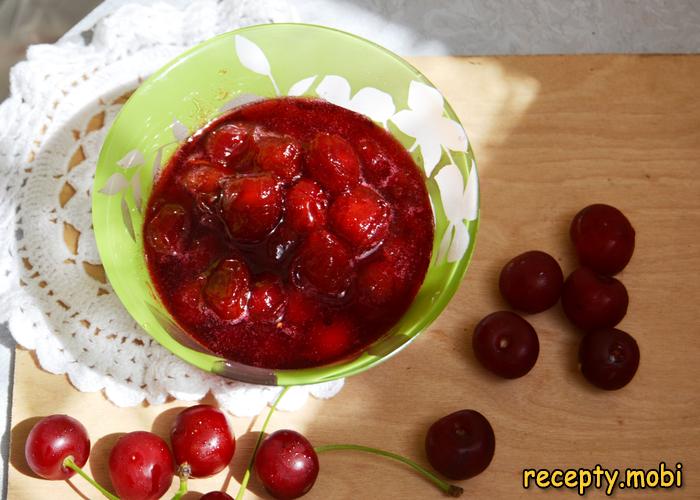
By winter, the cherry jam with pits will have properly infused in the closed jars and the syrup will become noticeably thicker and more viscous in the spoon.


Tips
- 1
Use the multiple-boil-and-rest technique rather than one continuous long boil, since the brief intermittent cooking sessions properly preserve the whole-berry shape that defines this traditional Russian-style jam. The brief patience for the multiple infusion sessions across 10+ hours genuinely matters for the most beautifully whole finished cherries every single time. Continuous long boiling would produce a noticeably different finished texture more like cherry compote.
- 2
Test for cherry worms by soaking the fresh cherries in lightly salted water for 30 minutes before use, since this brief preservation step properly removes any unwelcome insects hidden inside the fruits. To pair this beautifully classic homemade cherry jam with another properly traditional homemade berry preparation for a complete winter pantry shelf, try our beautifully bright strawberry and pitted cherry jam as a contrasting mixed-berry alternative.
- 3
Skim the foam carefully during each cooking session, since the foam contains impurities that would cloud the finished jam and reduce the storage life. The brief skimming step genuinely matters for the most beautifully clear finished result every single time. The foam can be saved separately and stirred into yoghurt or porridge for an immediate sweet treat without waste.
- 4
Store the sealed jars upside down for the first night, since the inverted position properly tests the seal and ensures any unsealed lids leak immediately rather than during long-term storage. For another properly classic homemade preserved-fruit recipe to add variety to your pantry shelves, try our beautifully fragrant rose petal jam as a contrasting floral-style alternative for properly luxurious tea-time treats.
FAQ
Why leave the pits in the cherries? +
Leaving the natural cherry pits in the jam is genuinely traditional and provides a noticeably deeper finished almond-like flavour profile thanks to the small amount of natural amygdalin in the pit kernels that infuses into the surrounding syrup. The pits also help the cherries retain their original whole shape during cooking. Just warn anyone eating the jam to spit out the pits carefully. For a pit-free version, simply pit the cherries first, but the finished flavour will be noticeably different from the traditional version.
Are cherry pits safe to leave in? +
Yes, in the small quantities used in homemade jam, cherry pits are completely safe to leave in. The amygdalin in the pits would only become problematic if you actually crushed and ate large quantities of the kernels themselves, which simply doesn't happen with whole intact pits. The finished jam can be safely stored and consumed just like any pit-free jam version. Simply remove and discard the pits when eating the jam at the table.
How long does this jam keep? +
Properly sealed and stored in a cool dark location like a cellar or pantry, the homemade cherry jam with pits will keep beautifully for up to 12 full months for the best finished flavour. After opening, store the jar in the refrigerator and consume the contents within four weeks for the best quality. The flavours actually develop and deepen significantly over the first month of storage as the natural pit oils slowly infuse into the surrounding syrup.
Can I use sour or sweet cherries? +
Both sour Morello cherries and sweet Bing cherries work absolutely brilliantly in this classic recipe with broadly similar finished results. Sour cherries produce the most properly traditional Russian-style finished jam with the brightest tangy flavour profile, while sweet cherries give a noticeably milder finished result that some cooks actually prefer. A mix of both varieties produces the most complex finished flavour profile with the best balance of sweet and tangy notes in the closed jar.
- Comment
or post as a guest
Be the first to comment.