avg —
Classic Greek Salad (Horiatiki / Xoriatiki)

Instructions
To make a classic Greek salad (Horiatiki / Xoriatiki), you need the simplest and most accessible ingredients. Wash and dry the vegetables with a paper towel for the cleanest cuts.
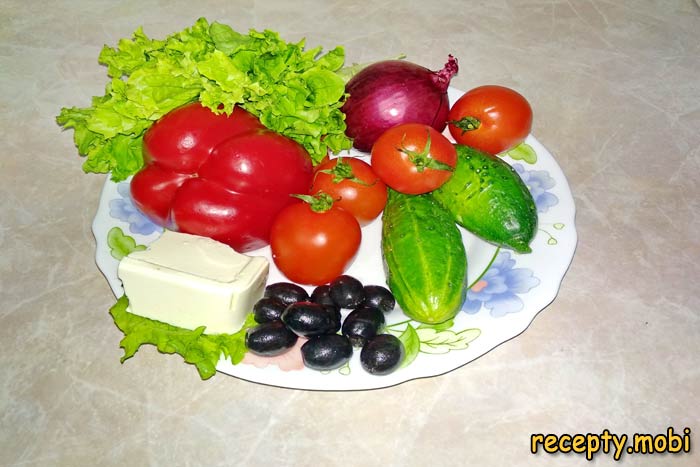
Cut the pepper into large pieces, about one and a half by one and a half centimeters, or two by two centimeters. Greek salad uses chunky cuts rather than fine dice — the rustic look is part of the dish’s identity.
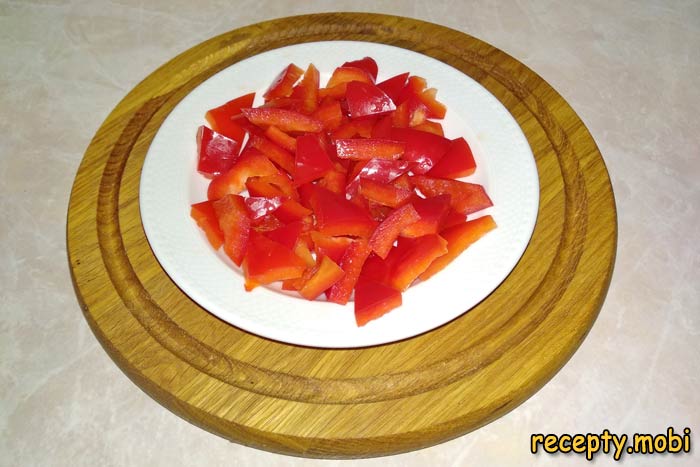
Partially remove the skin from the cucumber (optional), cut lengthwise into four parts. Each part is sliced into pieces about one centimeter wide. Striped peeling looks pretty and reduces the bitterness some cucumber varieties carry in the skin.
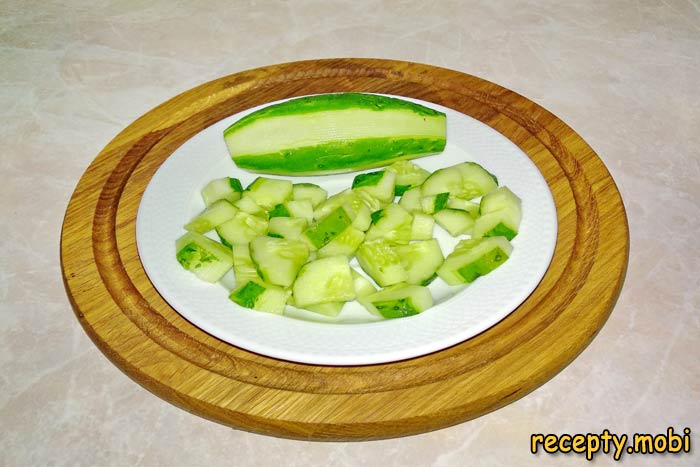
Cut cherry tomatoes into quarters; if the tomatoes are large, cut them just like the cucumbers. Quality ripe tomatoes are essential — bland out-of-season tomatoes ruin the entire salad.
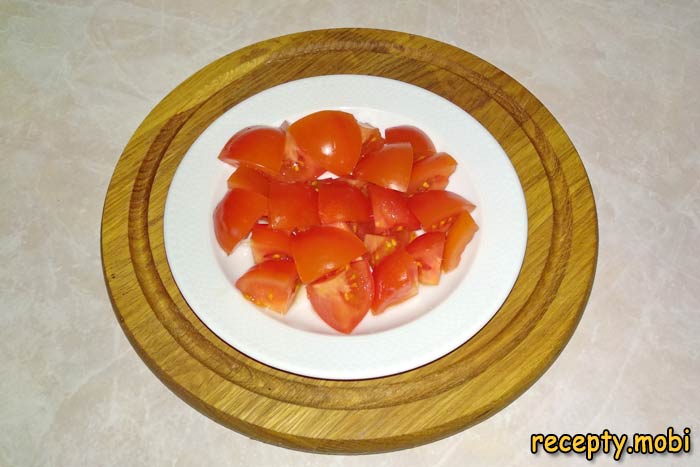
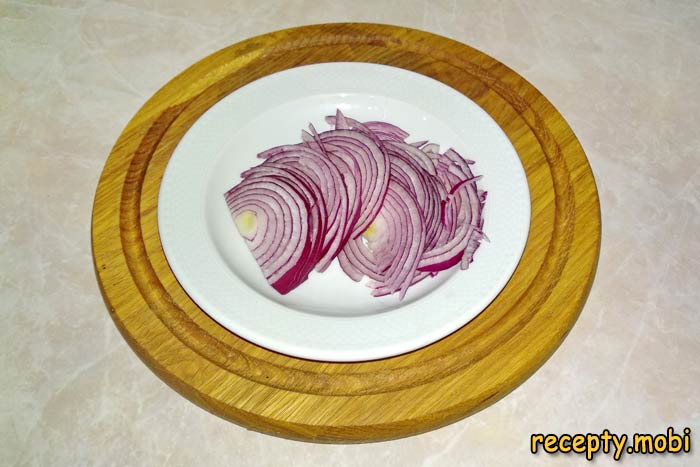
For the recipe, use red onion, which is milder than the standard yellow variety. Slice the onion into half rings about 3-4 mm thick.
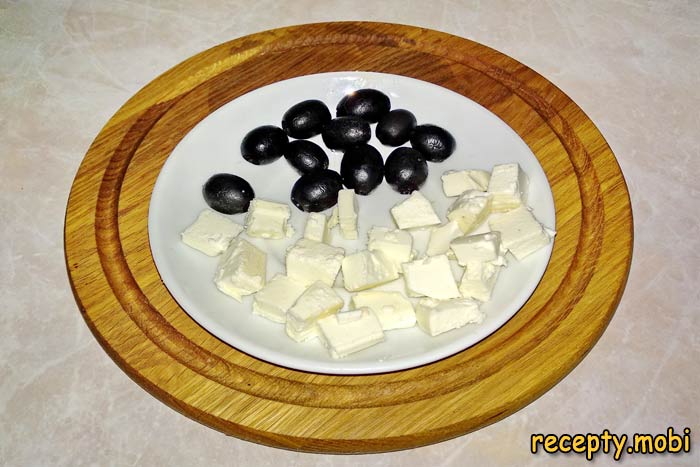
The salad requires pitted olives. Cut the Feta cheese into large cubes, approximately one centimeter by one centimeter. You can use brine cheese ("Brinza") as a substitute when authentic feta is unavailable.
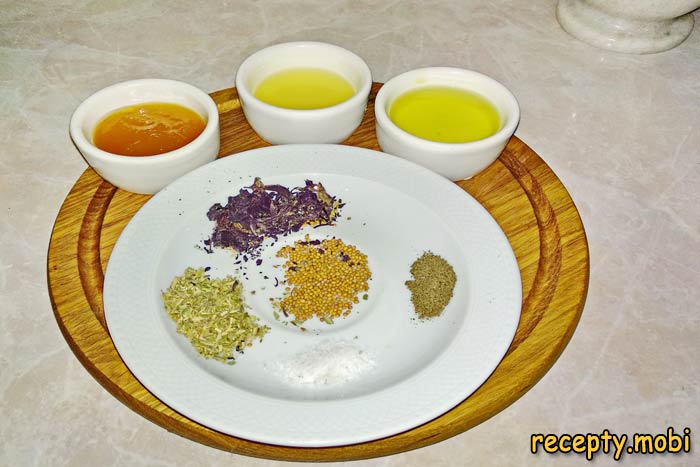
Start preparing the delicious dressing that gives simple vegetables their spicy character. Take the ingredients per recipe.
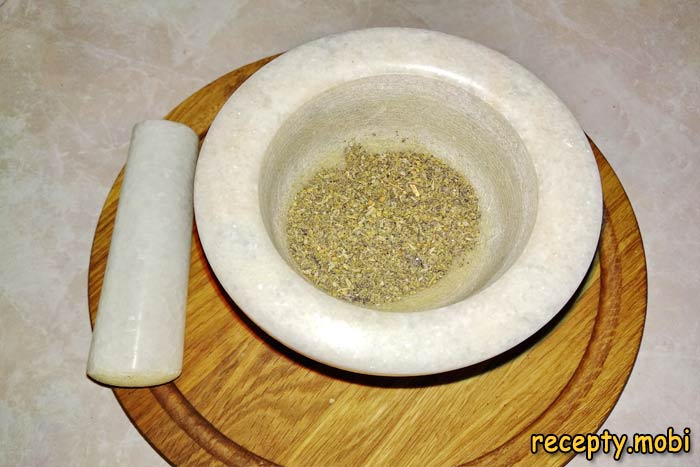
If your spices are not finely ground, transfer them to a mortar. Freshly ground spices have dramatically more aroma than pre-ground varieties.
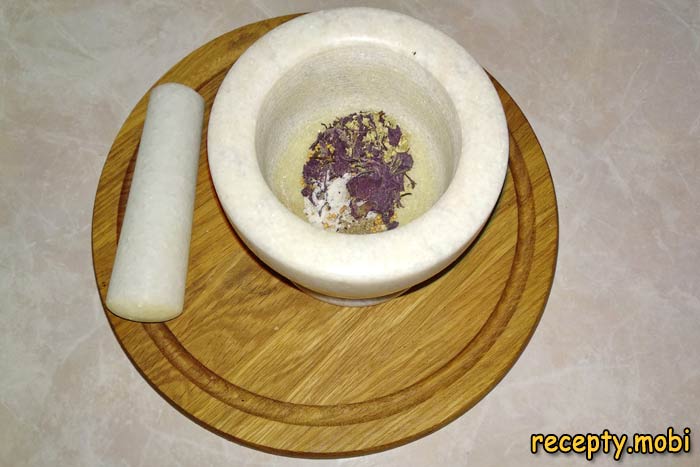
Grind dry spices thoroughly in the mortar. The few seconds of work releases essential oils that transform the dressing flavor.
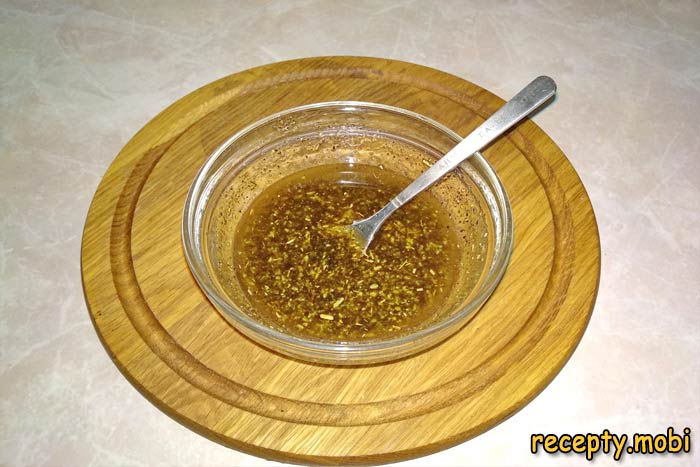
In a bowl, combine olive oil with honey and juice (lemon or lime). Add the prepared spices from the mortar. Mix everything well. The dressing is ready and can be stored in the fridge for up to a week if making ahead.
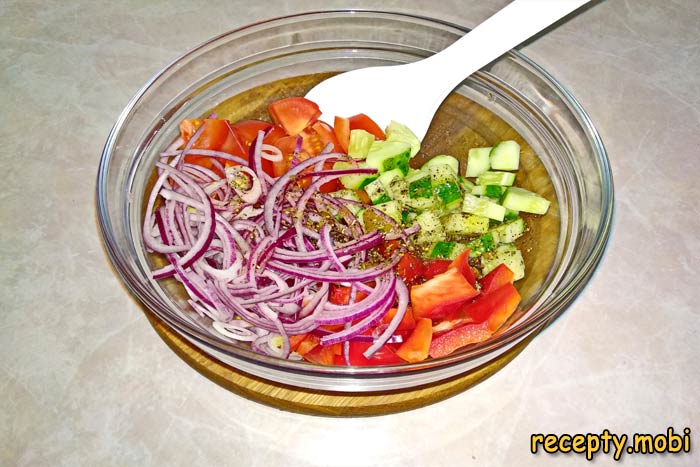
Transfer all vegetables, except for olives and cheese, to a bowl. Add the dressing and mix well. Try not to damage the vegetables — gentle folding preserves the chunky texture.
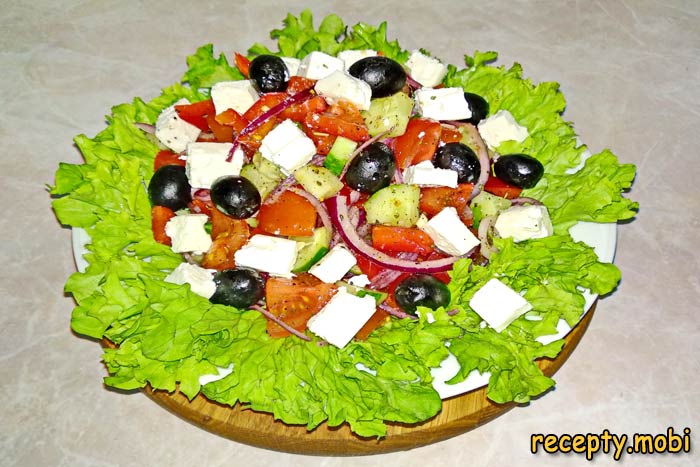
Place lettuce leaves on a flat dish and mound the vegetables in the center. Add olives and cheese cubes on top. The salad is ready to be served. Classic Greek Salad rightfully leads vegetable salads — easy to prepare, beautiful to look at, and bright with Mediterranean flavor in every bite.


Tips
- 1
Use real Greek feta made from sheep’s milk. Cow’s milk feta is a poor substitute — it lacks the tang and creamy bite that make Greek salad sing. Look for "Made in Greece" on the label and check that sheep’s milk (or sheep-and-goat blend) is the primary ingredient. The cheese is the star of the salad; the upgrade is genuinely worth the small price difference.
- 2
Use only ripe in-season tomatoes. Out-of-season tomatoes are mealy, pale, and tasteless — they ruin the salad. If good fresh tomatoes are unavailable, use cherry or grape tomatoes which tend to be more reliable year-round, or wait for tomato season to make this salad. The same seasonal-ingredient principle elevates many Mediterranean dishes including mackerel with vegetables in the oven.
- 3
Toss the vegetables with dressing 5-10 minutes before serving but add olives and feta only at the very end. Mayo-free dressings give the vegetables time to absorb flavor without becoming wilted, but olives and feta should stay separate so they remain visually distinct on the salad surface. The two-stage assembly produces both flavor depth and beautiful presentation.
- 4
Serve with crusty bread for soaking up the leftover dressing — the dressing alone is worth the bread investment. The combination of olive oil, honey, lemon juice, and herbs at the bottom of the bowl is liquid gold. A slice of warm homemade bread dipped in the dressing makes the simple salad feel like a complete Mediterranean meal.
FAQ
What can I substitute for feta cheese? +
Brinza (Romanian brined cheese) is the closest substitute and is mentioned in the original recipe. Other options include Bulgarian sirene, Turkish beyaz peynir, or Mexican queso fresco. Avoid mozzarella — it lacks the salty tang that defines Greek salad. For a cleaner option, drained ricotta with a generous pinch of salt approximates the texture though not the flavor depth of real feta.
Can I add lettuce to make this more substantial? +
The original recipe includes lettuce as a base, but traditional Greek Horiatiki contains no lettuce at all. Add chopped romaine if you want a heartier salad, or skip it for the most authentic version. Some Greek restaurants outside Greece add lettuce to stretch the salad and reduce ingredient costs — a tradition that has spread but is not strictly authentic.
How long does Greek salad keep? +
Best eaten the day it is made, ideally within 4 hours of dressing. The dressing slowly draws moisture from the vegetables and breaks down the fresh texture that makes the salad appealing. Undressed components stay fresh in separate containers for 2 days. The dressing keeps in the fridge for a week. Combine fresh just before serving for the best result every time.
What is the difference between Horiatiki and Xoriatiki? +
Both spellings refer to the same Greek "village salad" — the word means "rustic" or "from the village" in Greek. Different transliteration systems produce slightly different English spellings of the same Greek word. Horiatiki and Xoriatiki are interchangeable. The salad is the simple peasant dish of Greek summer, made with whatever vegetables are abundant from the garden alongside the feta and olives that are pantry staples in every Greek home.
- Comment
or post as a guest
Be the first to comment.