avg —
Cranberry Juice from Frozen Cranberries

Instructions
Take 400 g of frozen cranberries out of the freezer. Rinse them under cold water and wait for them to thaw, about 1–1.5 hours. Transfer the thawed cranberries to a deep container. If you are using fresh cranberries, skip the thawing step.
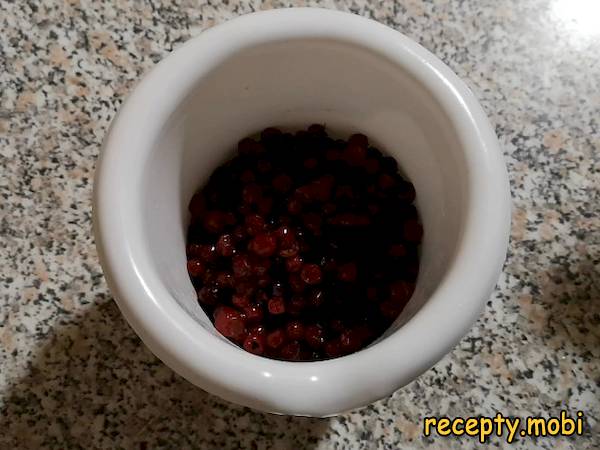
Using an immersion blender, blend the cranberries into a pulp. A blender is faster and more convenient than a meat grinder – you can work right in the container, with no need to transfer anything.
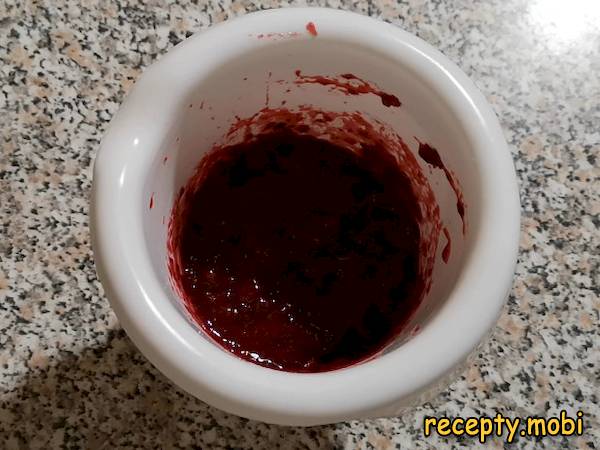
Spread a double layer of cheesecloth over a plate. Place a little of the cranberry puree on the cheesecloth. The double layer of cloth will hold back the small particles and give you clean, clear juice.
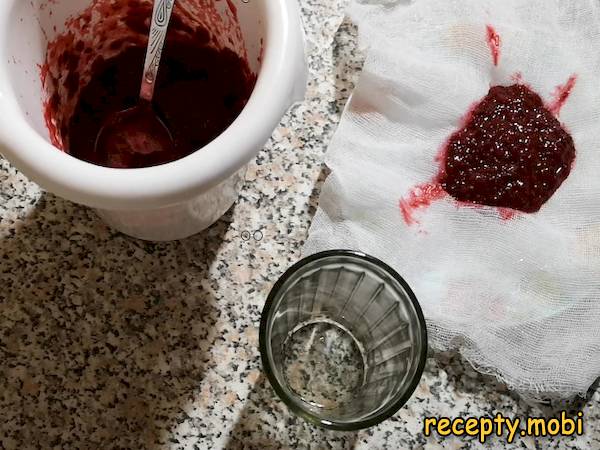
Fold the cheesecloth in a convenient way and squeeze the cranberry juice into a container. Do not throw away the pulp; set it aside in a separate dish, as it will still be useful.
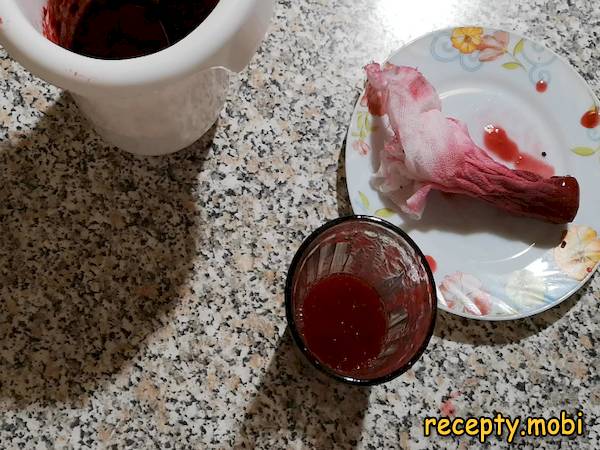
Pour a litre of water into a saucepan and bring it to the boil. Add the pulp to the water. Once it boils, cook for 10–15 minutes – this is the "secret" to getting the most goodness out of the berry.
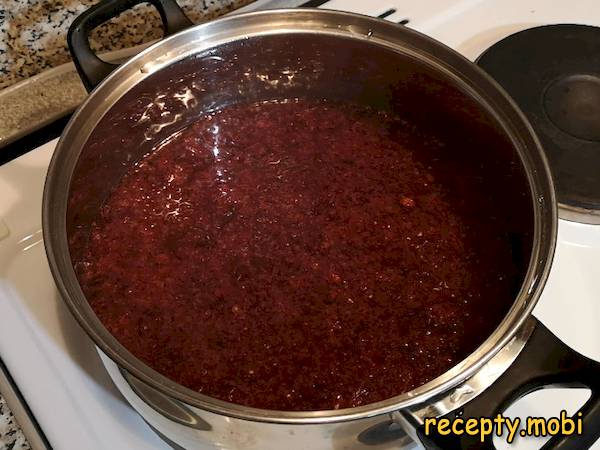
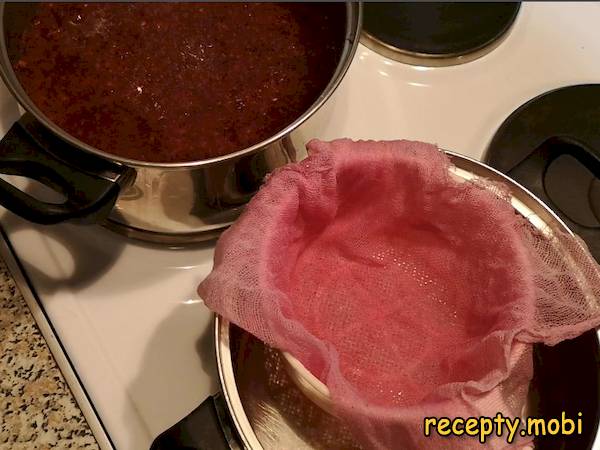
Take a colander and line it with cheesecloth. Begin pouring off the liquid, separating it from the pulp. This time the pulp can be discarded – it has given up everything of value.
Add 150 g of sugar and stir until it has completely dissolved. The sugar should go into the hot liquid – that way it dissolves faster.
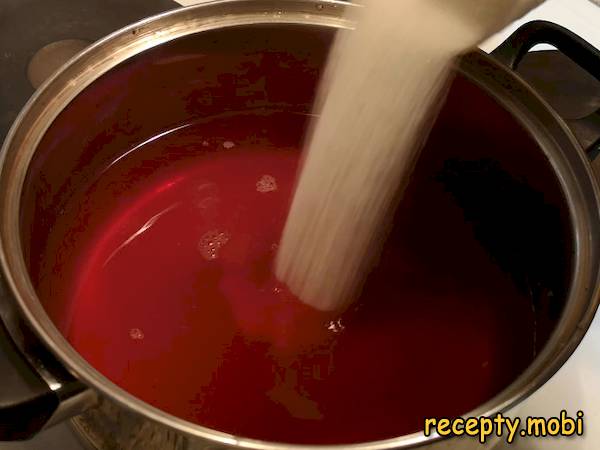
Check the liquid – once it has cooled, add the cranberry juice you squeezed earlier and stir. This is the "secret" to preserving the vitamin C: the fresh juice is not exposed to heat.
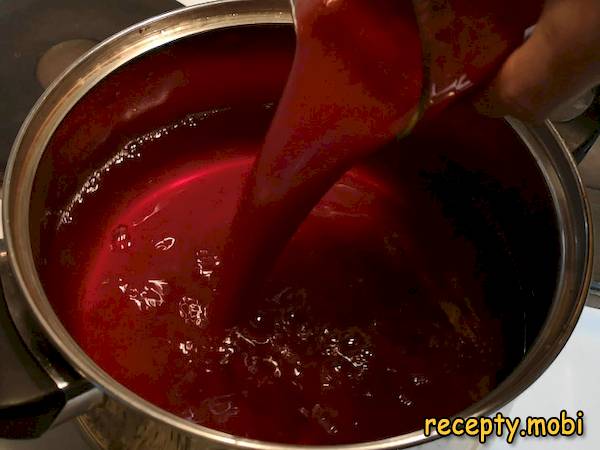
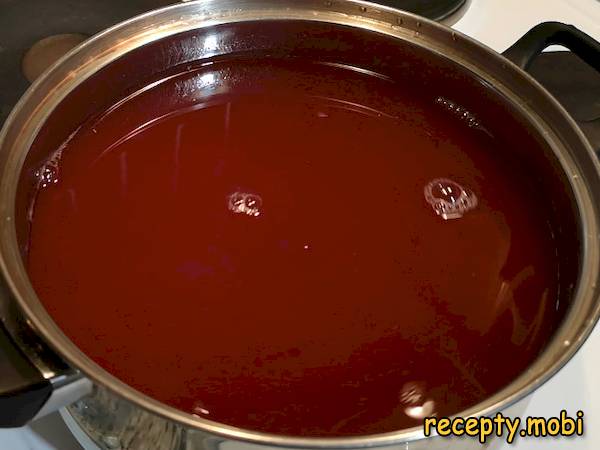
Pour in a few more glasses of boiled water and add sugar to taste. Have a taste: if the mors is too concentrated, add water; if it is not sweet enough, add sugar to taste. The cranberry juice from frozen cranberries is ready. Pour it into a glass and enjoy this fragrant, healthy drink.


Tips
- 1
Squeeze the juice while it is cold and boil the pulp separately – that way the maximum amount of vitamin C (which breaks down when heated) ends up in the finished mors.
- 2
Frozen cranberries work just as well as fresh ones – a convenient option all year round. Thaw them at room temperature, not in hot water.
- 3
Do not throw away the pulp after the first pressing – it makes a "broth" with pectins and the remaining beneficial substances. I use a similar principle in other berry mors recipes.
- 4
Add sugar to taste – cranberries are very sour, and some people need more sugar. The 150–200 g is a guideline; adjust it to your own preferences.
Video
FAQ
What are the benefits of cranberry mors? +
Cranberry is a "natural antibiotic": it contains proanthocyanidins, which prevent bacteria from attaching to the walls of the bladder (helping to prevent cystitis). It is rich in vitamin C (which strengthens the immune system), B vitamins, potassium and magnesium. Mors helps with colds, boosts immunity and has a mild diuretic effect (useful for swelling). It is recommended for high blood pressure and for preventing acute respiratory infections. It is not recommended in cases of gastritis with high acidity or ulcers, because of its high acidity.
Can I replace the cranberries with another berry? +
Yes, the same method can be used to make mors from: lingonberries (similar in taste), currants (black or red), raspberries (more "delicate"), cherries, sea buckthorn (very healthy) and blueberries. Each berry gives its own character: cranberry is tart and bright, lingonberry has a "lingonberry" note, currant is intense. You can make blends (cranberry + lingonberry, raspberry + currant). Frozen berries work just as well as fresh ones.
How long does the finished mors keep? +
In the refrigerator – 3–4 days in a sealed glass container. On the second day the taste is even better, as the ingredients have "made friends". You can freeze the finished mors (as ice cubes), but some of the vitamin C is lost on thawing. It is better to make it fresh every 2–3 days. You can make a concentrated "syrup" (thicker and sweeter) and dilute it with water as needed – that way it keeps longer.
Can children be given cranberry mors? +
Yes, it can be introduced in small amounts from the age of 1. Cranberry is very good for a child's immune system. Recommendations: for children aged 1–3 years – no more than 50 ml a day, diluted with water 1:1; aged 3–7 years – up to 100 ml; over 7 years – as much as they like. Some of the sugar can be replaced with honey (from the age of 3, if there is no allergy). If the child is prone to allergies, introduce it 1 teaspoon at a time and watch for a reaction. If the child has gastritis, do not give it until you have consulted a paediatrician.
- Comment
or post as a guest
Be the first to comment.