Write a comment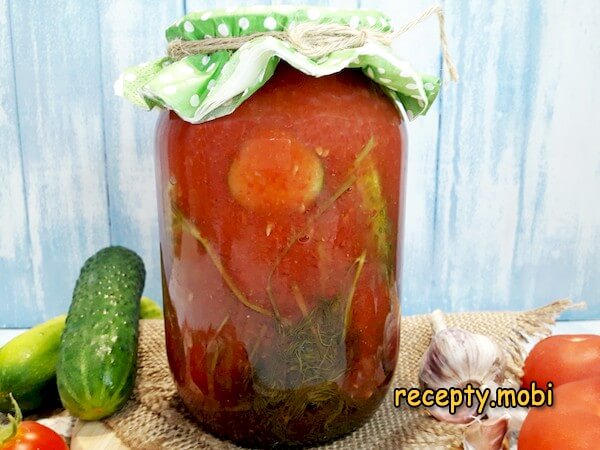
Cucumbers in Tomato Sauce for Winter
Cucumbers in tomato sauce for winter is the dual-purpose preserve that gives you both crispy cucumbers AND a flavour-rich tomato sauce in one jar. Both components have separate uses: cucumbers as zakuska or salad component, sauce as borscht starter, rassolnik base, gravy enhancer, or all-purpose tomato condiment. Whole cucumbers OR cut pieces work; jar size is flexible (this recipe gives proportions for 1 liter scaled easily). Fresh tomatoes ground into thick juice produce the best results vs. canned tomato paste alternatives.
The recipe yields 1 liter jar at 36 kcal per 100 g. Time about 60 minutes.
Ingredients
Show ingredients
- cucumbers – 500 g;
- garlic – 2 cloves;
- bay leaf – 1 piece;
- allspice – 3 berries;
- hot pepper – to taste;
- dill, parsley – a small bunch;
- 9% vinegar – 35 ml per liter jar.
For 500 ml of tomato marinade per liter jar:
- salt – 0.5 tbsp;
- white sugar – 1 tbsp;
- tomatoes – 530 g.
Preparation
- I prepare the ingredients. Jar sterilisation isn't required; thorough wash with baking soda or mustard suffices. Fresh or dried herbs both work.
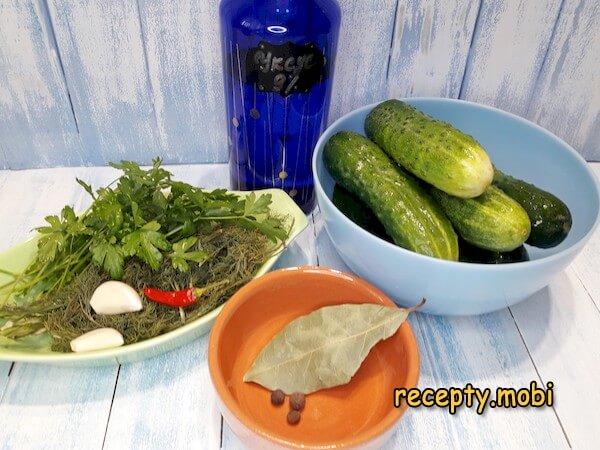
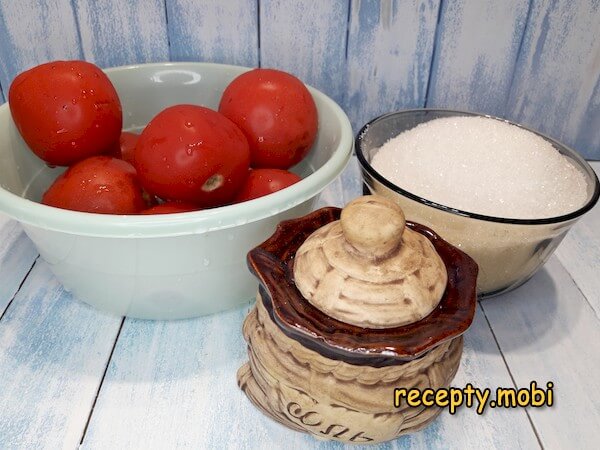
- Marinade ingredients measure ready.
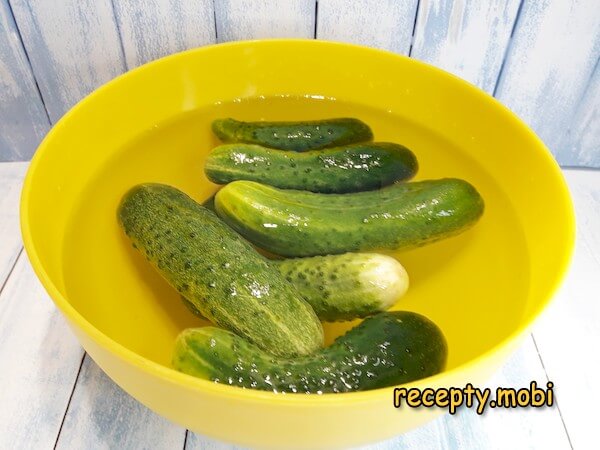
- Cucumbers soak in cold water 1-2 hours. Don't soak longer — extended soaking starts fermentation and the cucumbers turn sour.
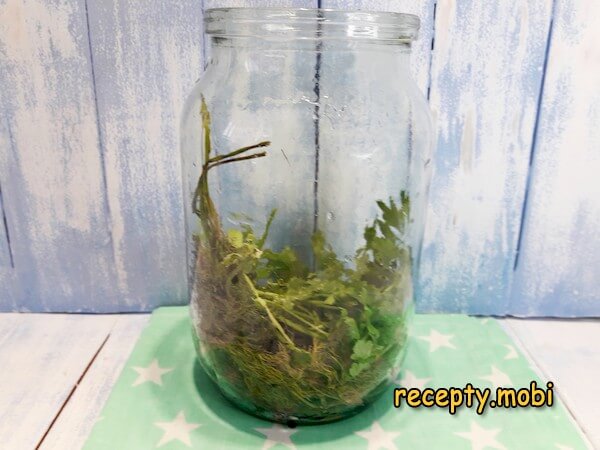
- Dill and parsley line the jar bottom.
- I rinse cucumbers, cut off both ends (helps marinade penetration), arrange whole ones around the jar perimeter, then fill the centre with cut pieces. Pack snug but not tight — leave room for tomato sauce.
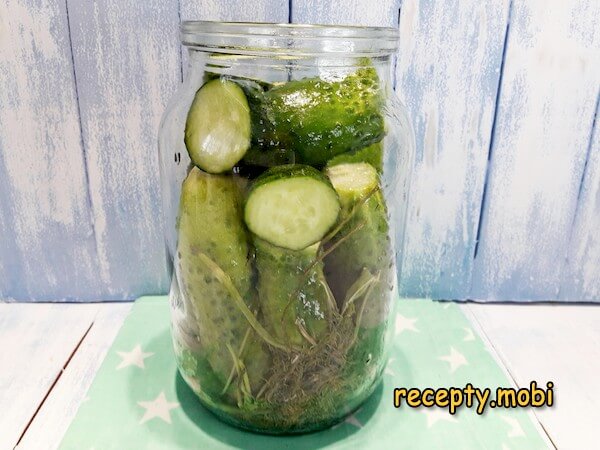
- Sliced garlic, hot pepper, allspice, and bay leaf distribute among the cucumbers.
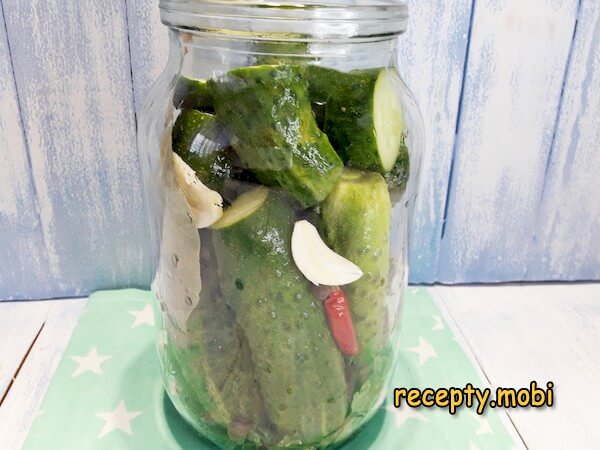
- Pour boiling water in slowly, in portions — sudden full pour can crack cold glass.
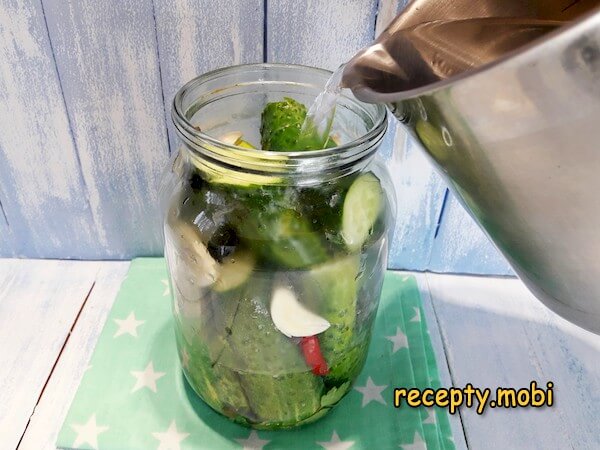
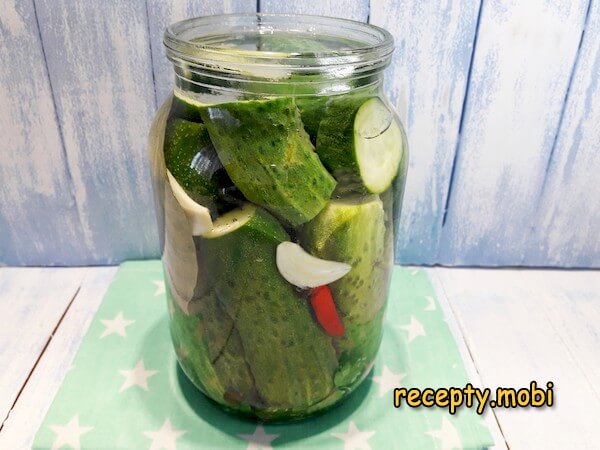
- Fill jar to top, lid loosely, wait 5 minutes for cucumbers to warm. Boil the actual lid simultaneously.
- Drain the water back into a measuring cup — this measures the marinade volume needed (typically 450-500 ml for a 1 L jar).
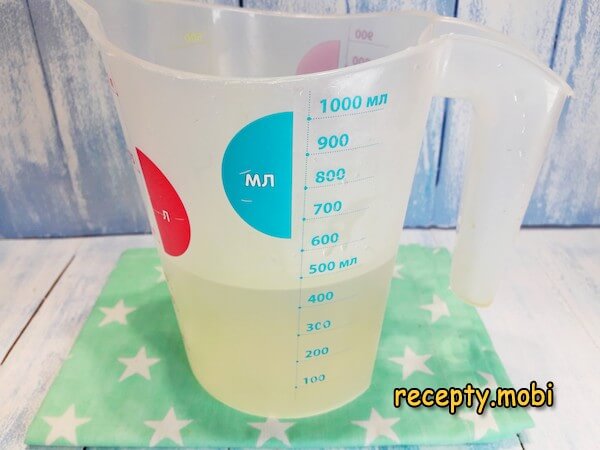
- Boil the same volume of fresh clean water, pour back over cucumbers, lid on, wait 20 minutes (this is the second pre-warm).
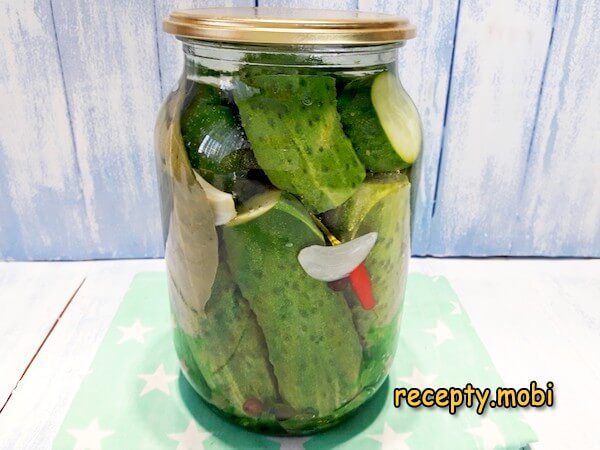
- Meanwhile prep the marinade. Tomatoes quarter (stems out), load into blender or meat grinder.
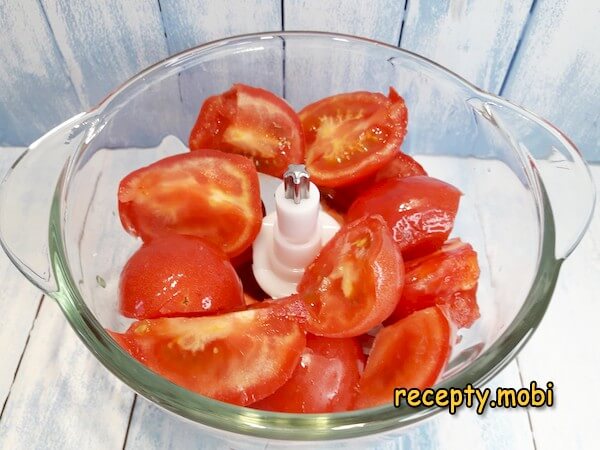
- Grind to a thick juice with visible pulp — meatier texture than smooth purée.
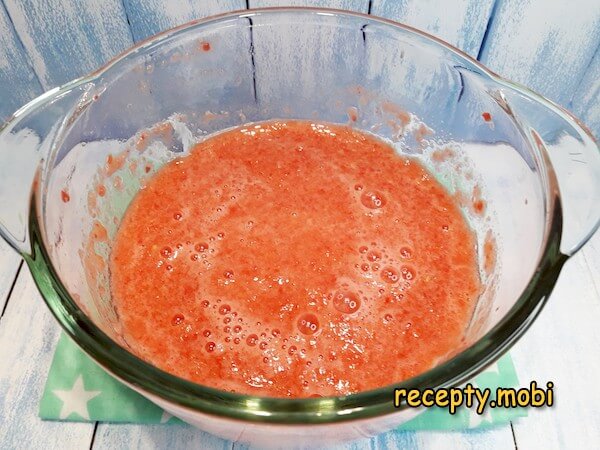
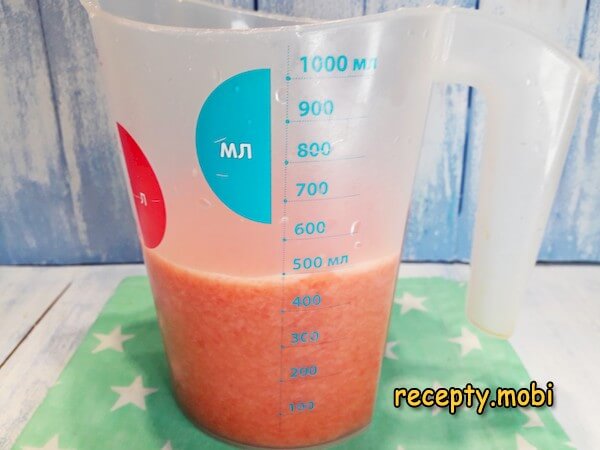
- Measure resulting volume — should be about 500 ml from 530 g tomatoes.
- Tomato juice pours into a saucepan with sugar.
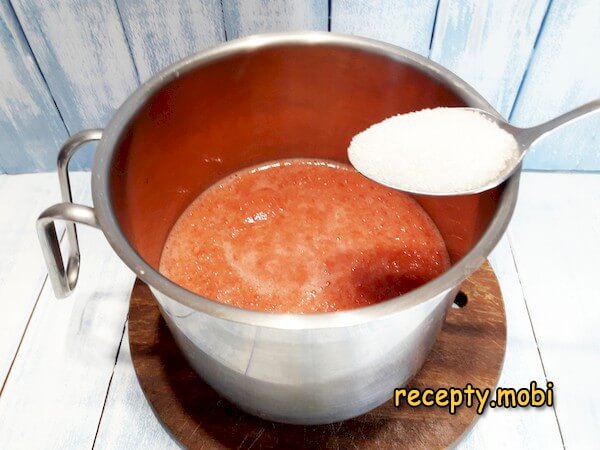
- Salt joins.
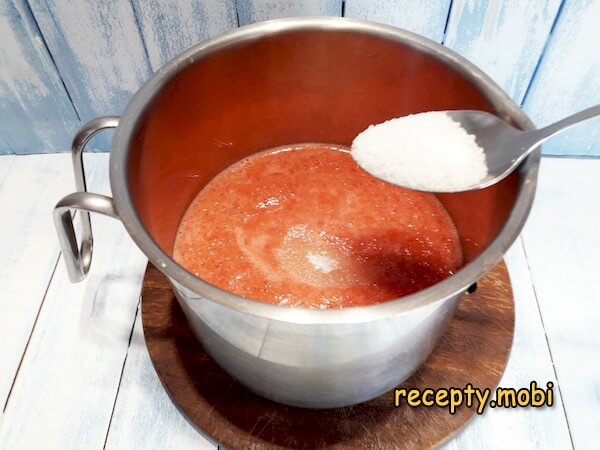
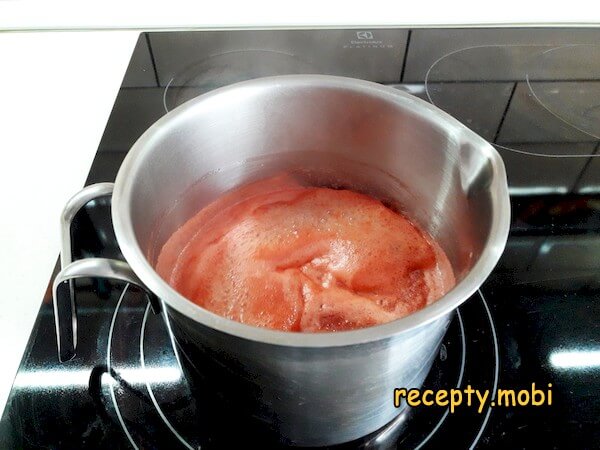
- Stir and bring to boil. After boiling, cook 5 minutes.
- After draining the second pre-warm water, I pour about half the hot tomato sauce into the jar.
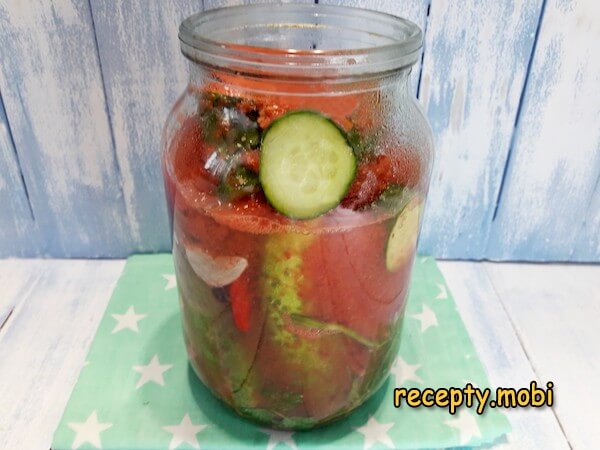
- Vinegar adds in next.
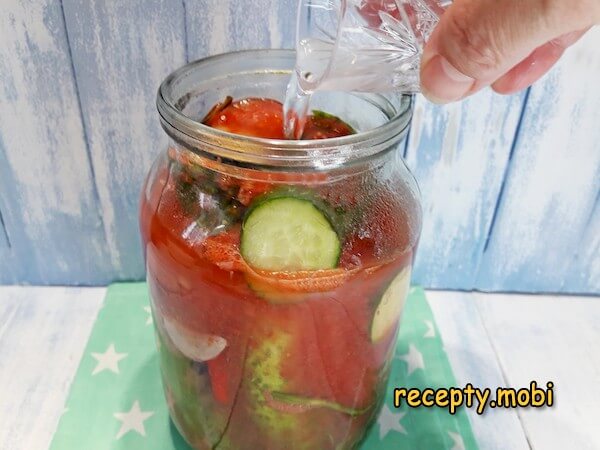
- Remaining tomato sauce pours in to fill the jar to the very top.
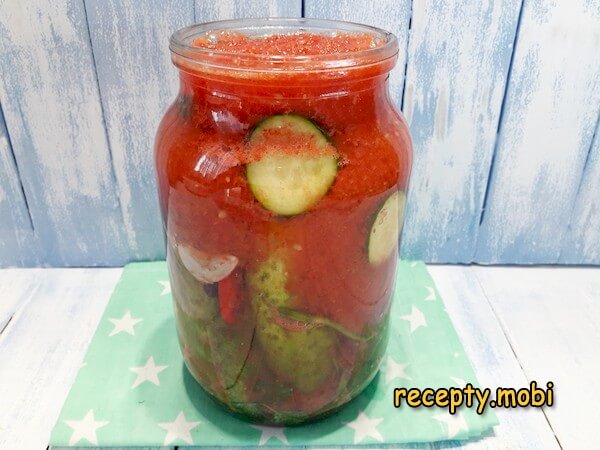
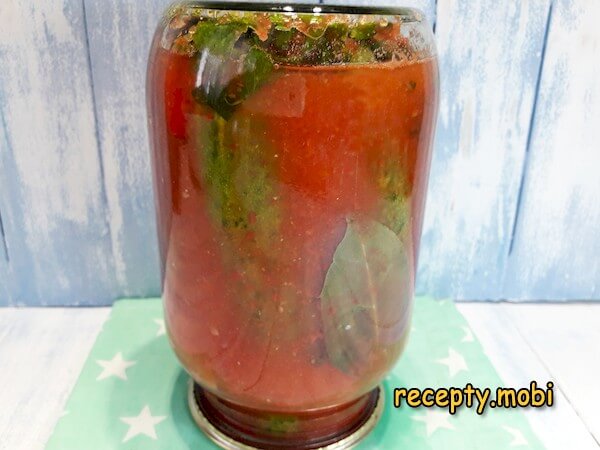
- Lid screws on, jar inverts, sit 2 hours. NO blanket-wrap — wrapping over-softens cucumbers in this preserve. After 2 hours, return upright. Once fully cool, transfer to permanent storage.
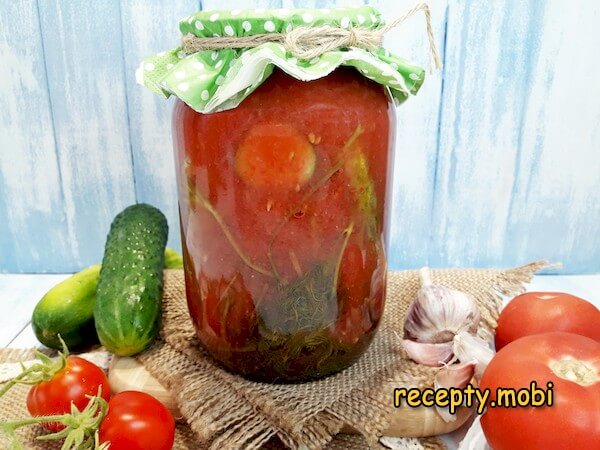
Cool storage is best — the preserve keeps over a year. The cucumbers stay crispy and firm with pleasant tomato acidity. The sauce is genuinely useful: borscht starter, rassolnik base, pasta sauce, gravy thickener, or simple condiment for grilled meat.
Tips and Tricks
Tip 1. THE PRE-SOAK MAKES CRISPY CUCUMBERS. Step 3's cold-water soak rehydrates cucumbers that may have lost moisture during transport — fully-hydrated cucumbers stay crisper through preservation. The 1-2 hour window is precise: less doesn't fully rehydrate, more starts fermentation. Don't skip this step; the texture difference is noticeable months later when you open the jar.
Tip 2. NO BLANKET-WRAP HERE. Step 20 specifically says no blanket-wrap (unlike most other no-sterilisation winter preserves). The reason: extended slow cooling at high temperature over-softens cucumbers in the acidic tomato environment. Quick-cool gives crisper cucumbers. The 2-hour inverted-cool is enough for proper seal formation. This is a tomato-cucumber-preserve-specific exception to the standard blanket-wrap rule. For another tomato-cucumber winter preserve worth comparing, see Crispy Cucumbers in Tomato for Winter.
Tip 3. THE TWO-FOR-ONE PRESERVE. Most home cooks treat this preserve as just "cucumbers in tomato sauce" — but the sauce is genuinely 50% of the value. The cooked tomato-cucumber-vinegar-spice sauce is excellent for: borscht (skip the tomato paste, use this instead), rassolnik (perfect base — already has cucumber notes), pasta sauce (instant Italian-Russian fusion), Bloody Mary cocktails (skip celery salt, the cucumber-spice profile is built in). Plan to use the sauce; don't pour it down the drain.
Tip 4. TOMATO QUALITY DRIVES THE RESULT. The 530 g of tomatoes is the recipe's defining ingredient. Best: meaty Roma/Plum (less water, more flavour). Beefsteak (juicier but flavourful). Cherry tomatoes (sweet, less acidic — adjust salt down). Avoid: green-shouldered tomatoes (under-ripe, off-flavour). Canned crushed tomatoes (San Marzano) work as substitute when fresh aren't in season — use 500 g of canned. The recipe is forgiving of tomato variety; just maximise quality. For another tomato-garlic sauce worth trying, try Tomato and Garlic Sauce for Winter.
Frequently Asked Questions
What cucumbers work best?
Pickling cucumbers (small, dense, low water content) — gold standard for any preserve. Common varieties: Cornichon, Kirby, National Pickling. Slicing cucumbers (English cucumbers, regular salad cucumbers) work but produce slightly softer results. Garden cucumbers between 5-12 cm long are ideal. Avoid: very large mature cucumbers (seedy, watery) or wax-coated supermarket cucumbers (the wax interferes with marinade penetration). Any cucumber with thick visible bumps on skin (sign of pickling variety) is the right choice.
How long does the preserve keep?
Properly sealed jars at room temperature in a dark cupboard keep 12+ months — until next year's cucumber harvest. Cool basement extends to 18 months. Once opened, transfer to fridge and use within 2-3 weeks. The cucumber crispness stays good for 6 months, softens gradually after. The tomato sauce stays excellent for the full 12 months. If you spot mould, fizzing, or bulging lids, discard the entire jar.
Can I use tomato paste instead of fresh tomatoes?
Yes, with adjustments. Use 100 g tomato paste + 400 ml water + an extra 1 tbsp sugar (compensates for the missing tomato sweetness). The result is acceptable but slightly less flavour-complex than fresh-tomato versions. Canned crushed tomatoes (500 g, drained briefly) are the better substitute when fresh aren't available. The intro mentions all three options; fresh tomatoes are best, canned second, paste third.
Why pour vinegar between tomato sauce additions?
Step 17-19's "half tomato + vinegar + remaining tomato" sequence ensures even vinegar distribution through the jar. Adding all vinegar at once concentrates it at one point; adding it after tomato sauce concentrates it on top. The split-addition technique gets the acid distributed throughout the preserve. This sequencing matters for both safety (uniform pH) and flavour (no overly-vinegar-tasting spots).