avg —
Dough for Manti

Instructions
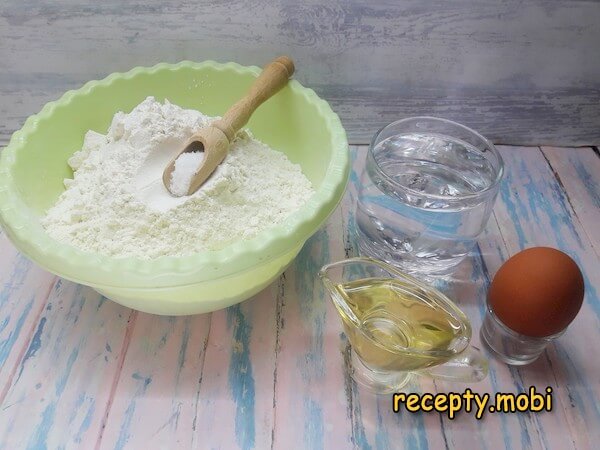
I prepare the ingredients for manti dough. Water should be VERY HOT — even brought to BOIL. Flour MUST be sifted (saturates with oxygen for faster gluten formation, removes lumps).
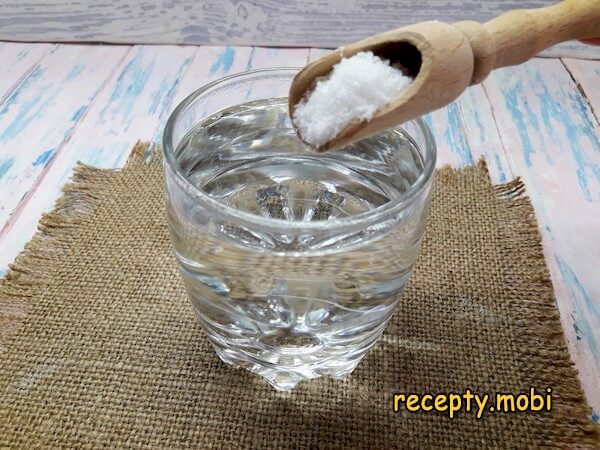
Dissolve salt in the hot water (heat enables full salt dissolution).
For initial kneading: take only 2/3 of total flour (400 g); place in kneading bowl. Pour in salted hot water.
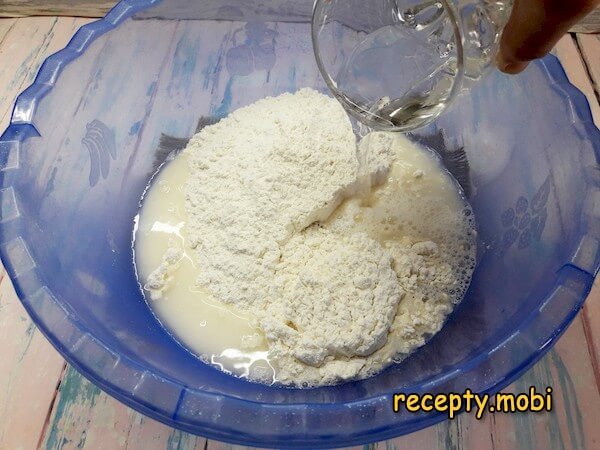
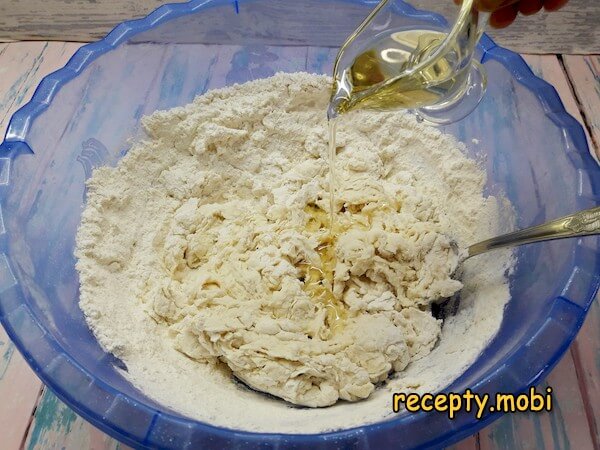
Mix mixture with spoon; add oil; mix again.
WAIT for the boiling-water-treated dough to cool to WARM. Then break in the egg (raw egg added to too-hot dough = scrambled egg in dough, ruined batch).
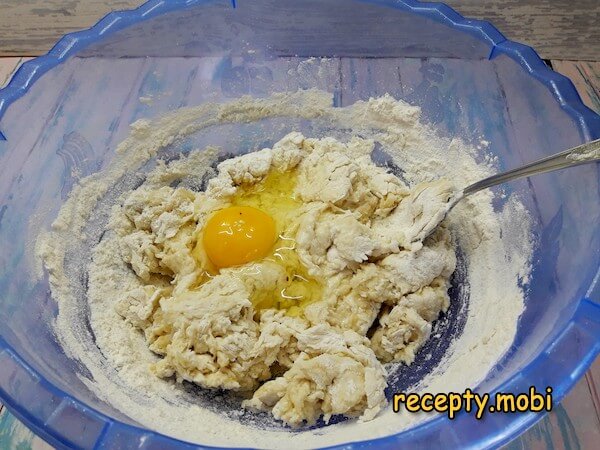
After mixing in egg: add REMAINING 200 g flour in several batches. All will be used regardless of flour quality. May need extra spoon of flour to achieve desired consistency.
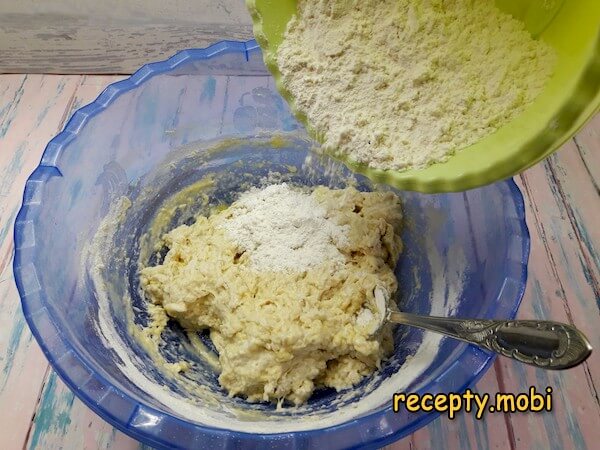
Knead with hand IN THE BOWL first — lift edges from bottom, incorporate into middle.
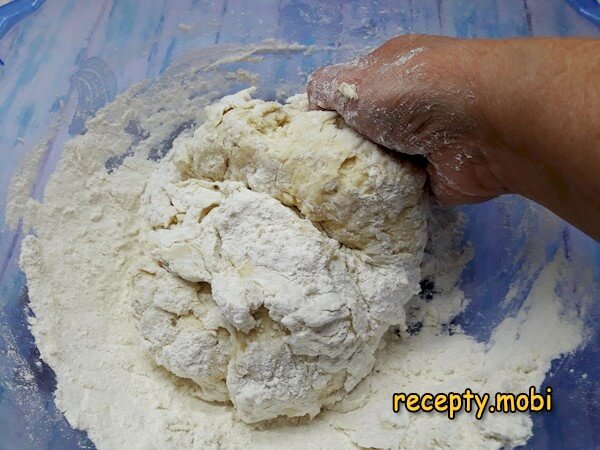
When no dry flour remains and dough gathers into single lump: pour onto WORKING SURFACE. Continue kneading by hand. KNEAD WELL — longer kneading = softer + more elastic structure. Boiling-water-treated flour reduces kneading time to ~5 minutes (vs 10-15 for cold-water doughs). Dough is NOT TOUGH but SOFT + PLIABLE.
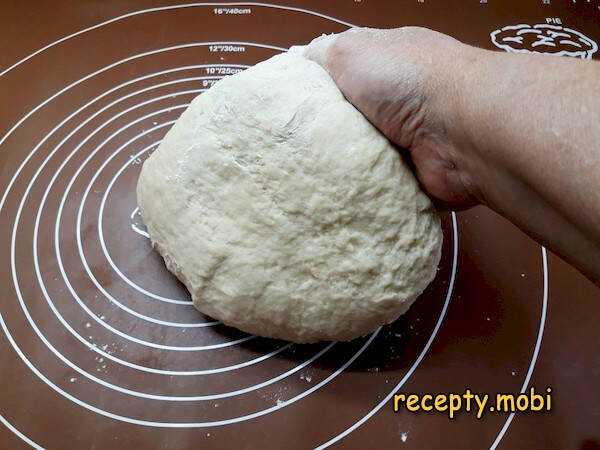
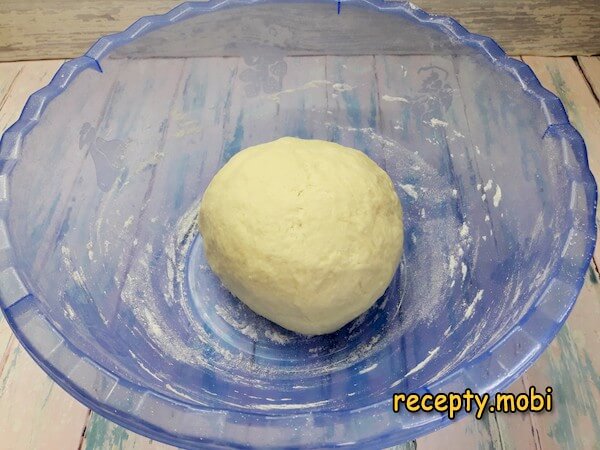
Form smooth ball; place in bowl under lid; rest 10 minutes (gluten relaxation). Then knead lightly + proceed to shape manti with meat filling. The dough holds meat filling reliably; after steaming acquires GLOSSY shine. Storage: if can't shape immediately, refrigerate up to 6 hours wrapped in bag. Before working: dust generously with flour on all sides + knead briefly to eliminate stickiness that develops during refrigeration. Bon appétit!


Tips
- 1
THE BOILING-WATER SCALD TECHNIQUE. Step 1's "very hot water, even boiling" is the recipe's secret. Cold-water flour kneading: requires 15-20 minutes for proper gluten development. Hot-water scalded technique (Russian "zavarnoye testo"): boiling water PARTIALLY COOKS the flour starches in initial portion, creating pre-gelatinized base that needs only 5 minutes additional kneading. Result: SAME DOUGH QUALITY in HALF THE TIME. Same technique used in: Chinese hand-pulled noodles, Russian pelmeni dough, Italian fresh pasta variants. Don't try cold-water shortcut — produces inferior result. The hot-water step is non-negotiable.
- 2
THE 2/3 + 1/3 FLOUR DIVISION. Steps 3 + 6's two-stage flour addition is calibrated technique. INITIAL 2/3 (400 g): mixed with hot water + oil = forms scalded base, develops initial gluten. SECOND 1/3 (200 g): added during kneading = enriches dough without re-shocking the gluten structure. All-at-once flour addition: produces uneven scalding, lumpy texture. Two-stage approach: smooth uniform dough every time. Same two-stage principle: French choux pastry (boiled water-flour first, eggs second), Asian noodle doughs. For another scalded-dough preparation worth comparing, see Pelmeni Dough Classic.
- 3
THE WAIT-FOR-WARM RULE BEFORE EGG. Step 5's "wait for dough to cool to warm" is critical for egg incorporation. HOT dough (above 60 °C) + raw egg: egg whites COAGULATE on contact, create scrambled-egg pieces in the dough (visible white specks, ruined texture). WARM dough (40-50 °C): egg integrates smoothly, contributes its proteins to dough structure without coagulating. Test temperature by hand: comfortable to hold without burning. The egg's role: adds protein for stronger gluten matrix + tenderness via fat content + slight color. Don't skip the egg — it's what makes manti dough silky.
- 4
THE 6-HOUR REFRIGERATOR STORAGE. Step 10's "wrap in bag, refrigerate up to 6 hours" is genuine practical advice. The dough WILL keep refrigerated (cold slows gluten development), useful for: prep-ahead workflow (make dough in afternoon, shape manti in evening), batch-cooking efficiency (one dough-batch produces multiple meal sessions), making dough during downtime + shaping when family is present. The "knead lightly + dust with flour before working" instruction handles the stickiness developed during refrigeration. Don't refrigerate longer than 6 hours — gluten over-develops, dough becomes tough. For another make-ahead dumpling-dough worth trying, try Pierogi Dough Polish.
FAQ
Can I make this dough with cold water? +
Yes — but produces traditional cold-water dumpling dough (different identity). COLD-WATER METHOD: combine all flour + cold water + salt + oil + egg; knead 15-20 minutes by hand or 10 min in stand mixer. Result: still good dough but takes longer + slightly less pliable. The HOT-WATER (scalded) method is recipe-canonical for manti specifically because: (a) traditional Uzbek/Central Asian technique, (b) faster prep, (c) more elastic for thin-rolling. For pelmeni, vareniki, ravioli: cold-water method is more typical. Each cuisine + dish has preferred dough technique; matching technique-to-dish produces best results.
Can I freeze the dough? +
Yes — works adequately. METHOD: complete dough; divide into portion-sized balls; wrap each in plastic; freeze. Storage: 1 month (longer = quality degradation). Thaw overnight in refrigerator (slow thaw preserves structure better than counter-thaw). Bring to room temperature 30 min before using; knead briefly + dust with flour. Frozen-thawed dough produces ~10% less elastic result than fresh. For BEST RESULTS: freeze SHAPED FILLED MANTI (uncooked) instead of dough alone. Frozen filled manti steam directly from freezer (just add 5 min to steam time). The recipe accommodates multiple storage strategies for batch-cooking workflows.
How thin should I roll for manti? +
Manti dough rolls THIN (1-2 mm) but THICKER than ravioli/wonton. Why: manti are LARGE (3-4 cm filled diameter typical) — too-thin dough tears during folding + steaming; too-thick dough becomes chewy bread-like wrapper. The recipe's high-elasticity dough handles 1.5 mm beautifully. For SMALLER manti (Asian-style 2 cm): thinner dough OK (1 mm). For LARGE Central-Asian manti (5+ cm): keep dough at 2 mm for structural support. Test by holding piece up to light: should be slightly translucent but not see-through. Practice with one piece before committing to batch.
Can I use this dough for other dumplings? +
Yes — versatile across many dumpling traditions. PELMENI (Russian small dumplings): works perfectly. VARENIKI (Ukrainian larger filled dumplings): works perfectly. PIEROGI (Polish): works perfectly. CHINESE BAOZI (steamed): works (different filling style but same dough function). KOREAN MANDU: works. The 5-ingredient recipe is universal across Asian-Slavic dumpling traditions. Some recipes specify slight variations (more oil for Italian, no egg for vegan versions); the base technique is largely shared. Master this recipe → adaptable to any dumpling tradition. The boiling-water + 2-stage flour technique is the foundation skill.
- Comment
or post as a guest
Be the first to comment.