avg —
Dumlyama in Uzbek Style

Instructions
I prepare the ingredients. Beef can be replaced with lamb or beef on bone (more flavorful broth from bones).
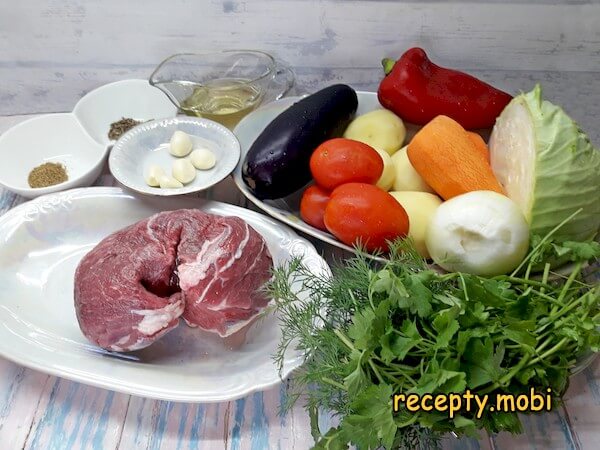
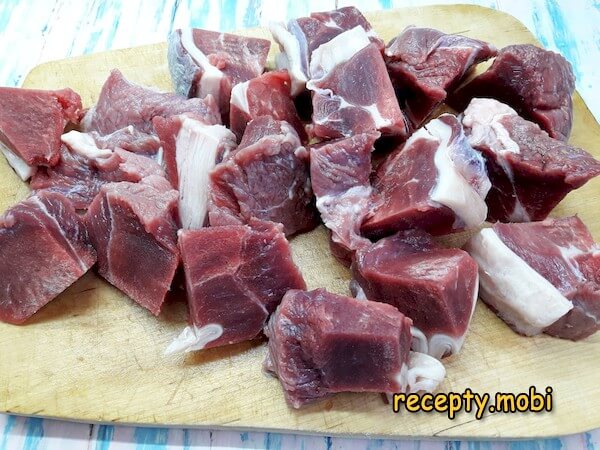
Volume calibrated for 3-liter pot. Cut meat into NOT-SMALL pieces. DON'T cut out tendons + veins — they tenderize beautifully + add complex flavor.
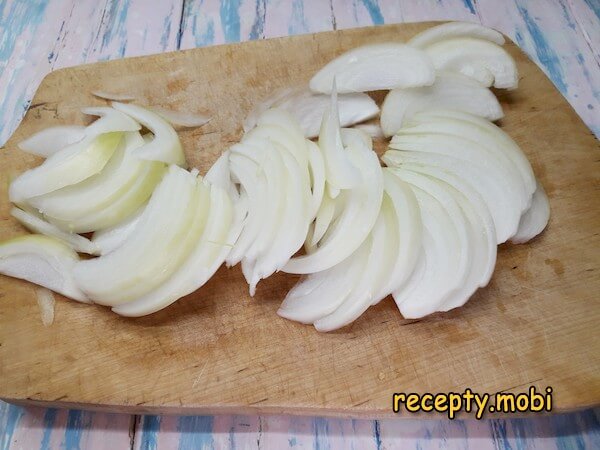
Cut onion into half-rings.
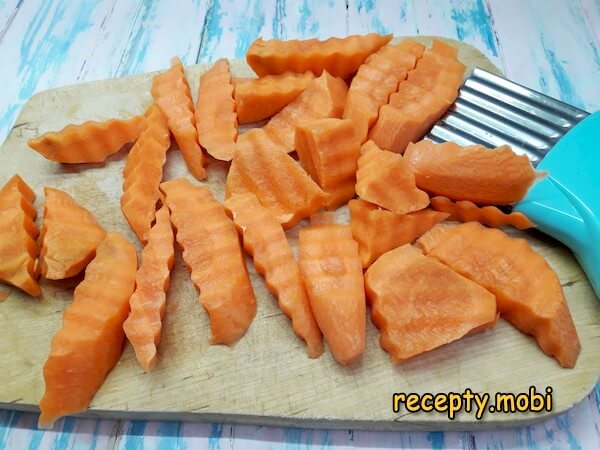
Cut carrot into LARGE pieces matching meat-piece size. Decorative knife adds visual flair.
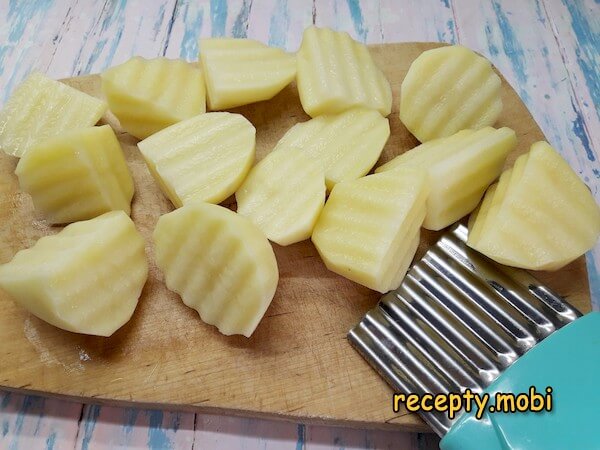
Cut potatoes similarly to carrot (matched size for even cooking).
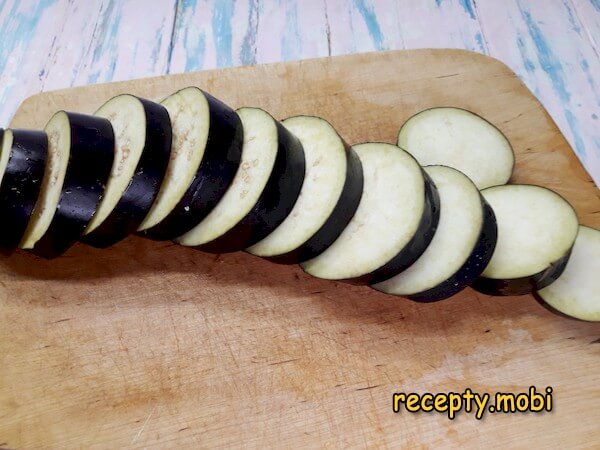
Slice eggplants into ~1.5 cm circles (NOT thin — preserves shape during long stewing).
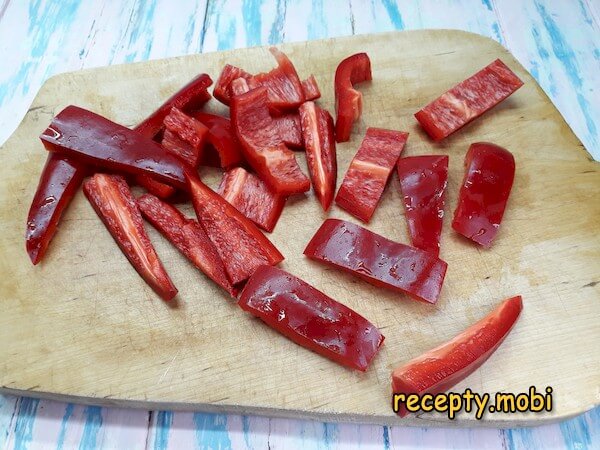
Remove pepper seeds; cut into wide strips.
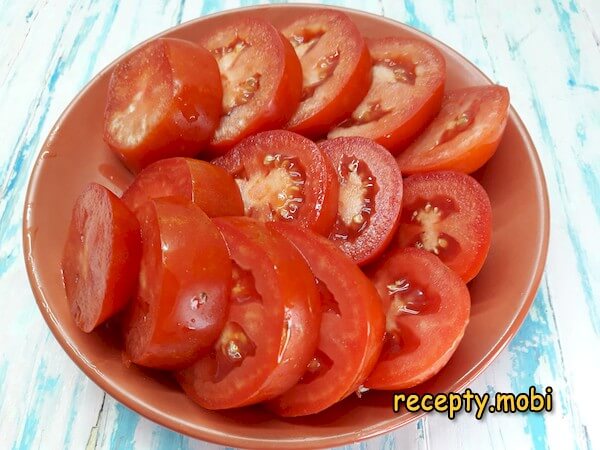
Cut tomatoes into 1 cm slices.
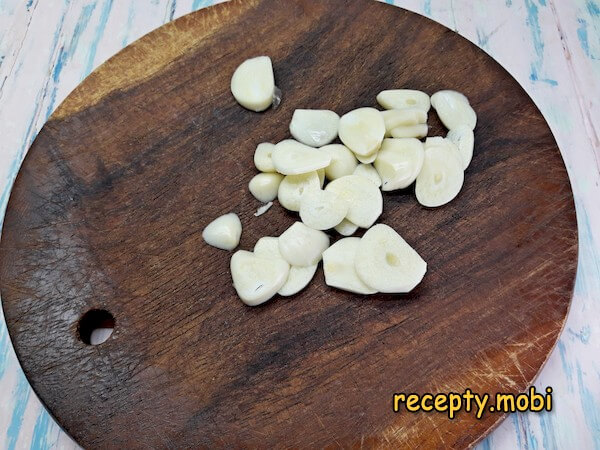
Cut garlic into slices.
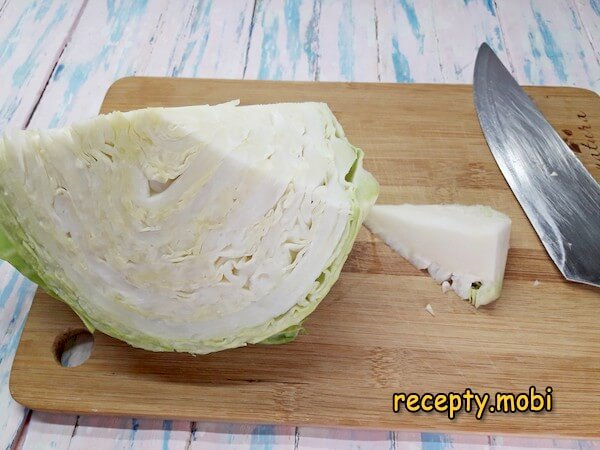
Remove cabbage core first.
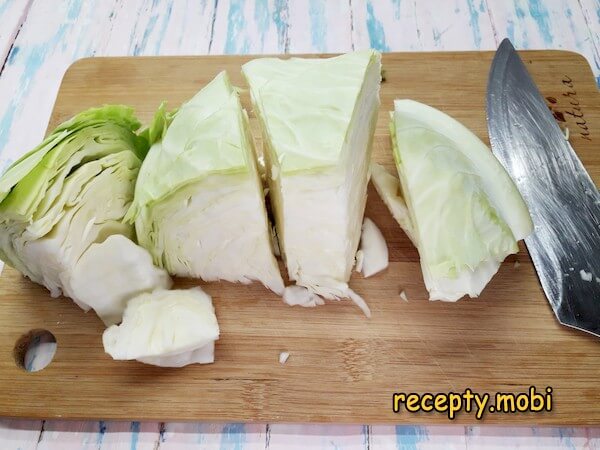
Divide cabbage into several large segments. Cut off thick veins; separate leaves.
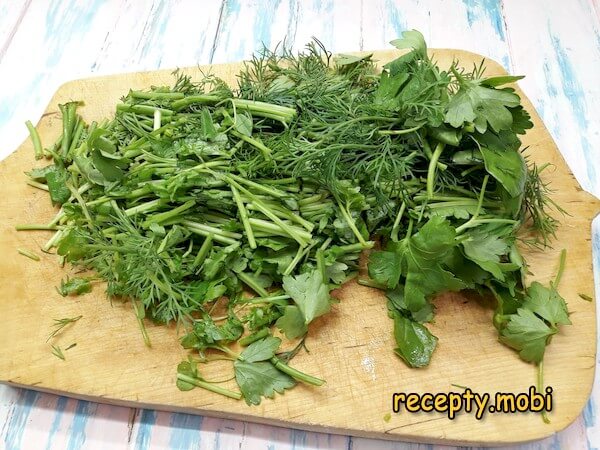
Cut bunch of herbs into 5-6 pieces — USE EVEN LOWER STEMS (very aromatic).
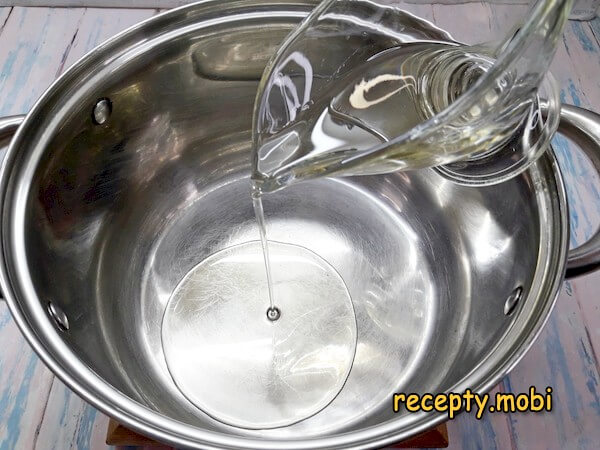
Pour oil into pot.
Distribute meat pieces along bottom (LAYER 1).
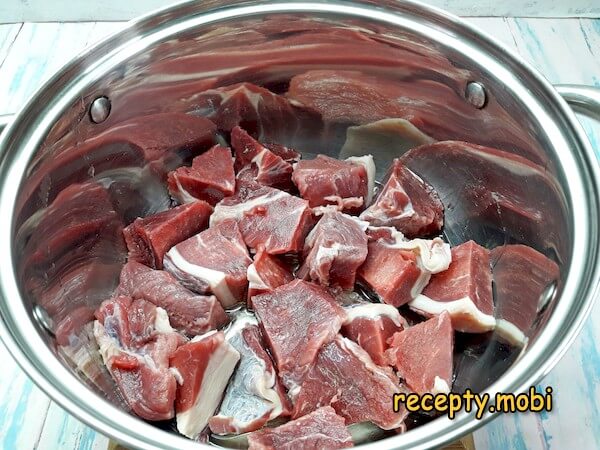
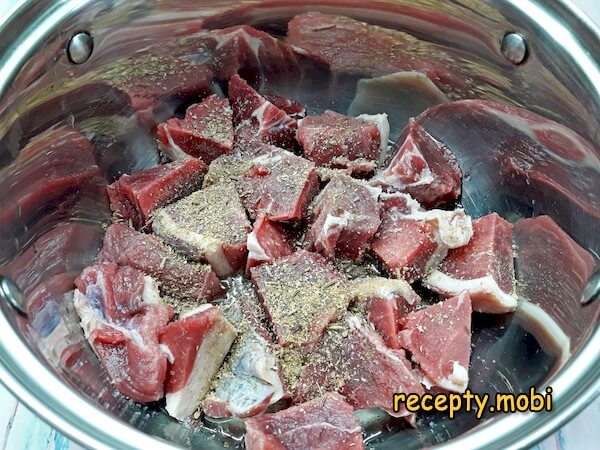
Salt meat; season with dried coriander + cumin (CRUSH cumin seeds between palms or in mortar — releases aroma).
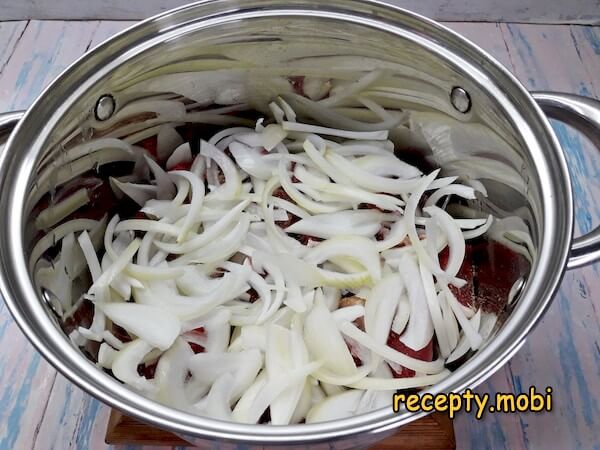
LAYER 2: cover meat with onion, pressing slightly to release juice.
LAYER 3: potatoes. Salt them.
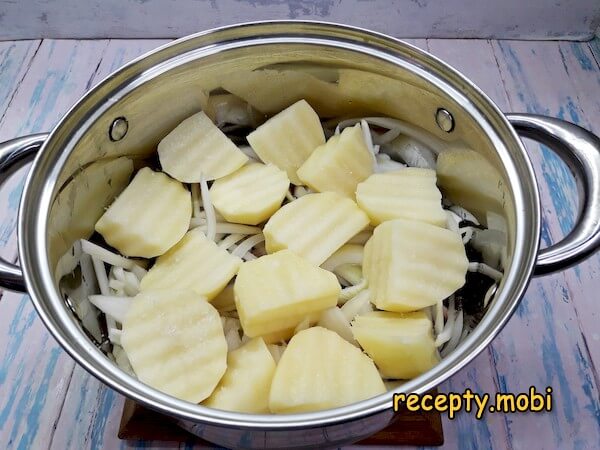
LAYER 4: carrots on top of potatoes.
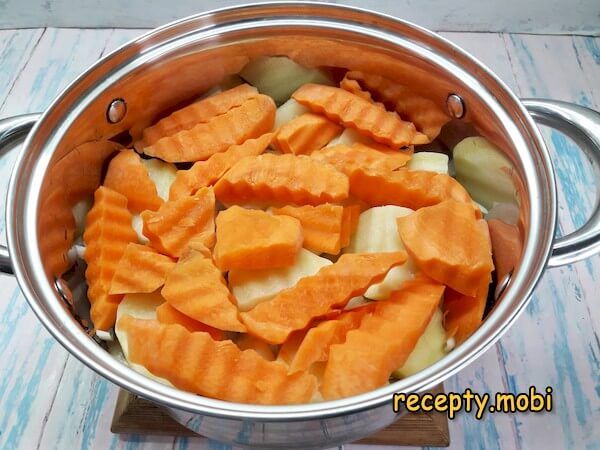
LAYER 5: eggplants. Sprinkle with salt.
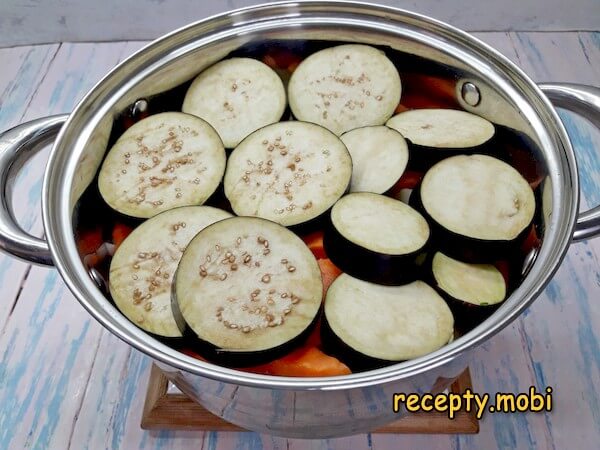
LAYER 6: sweet pepper.
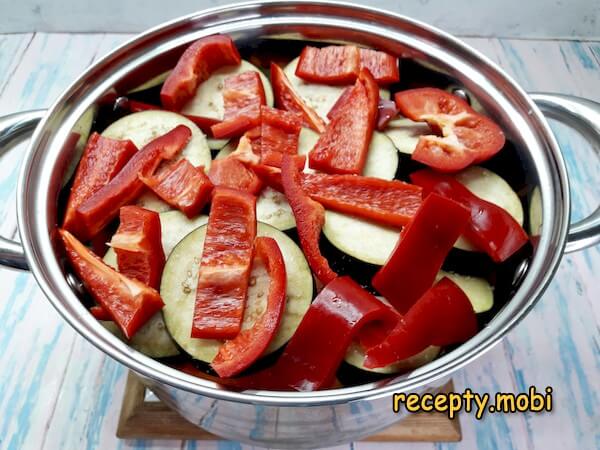
LAYER 7: tomato slices. Salt them.
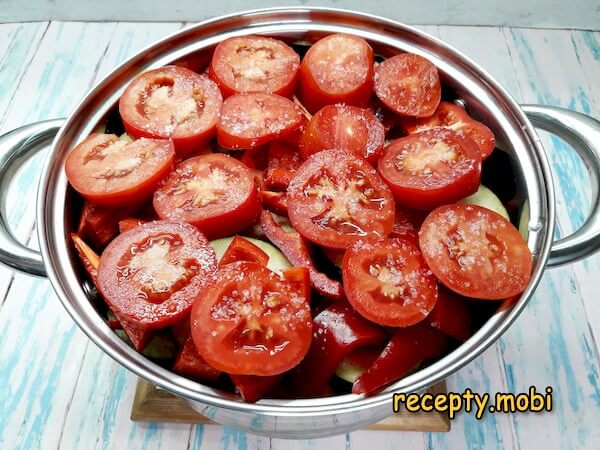
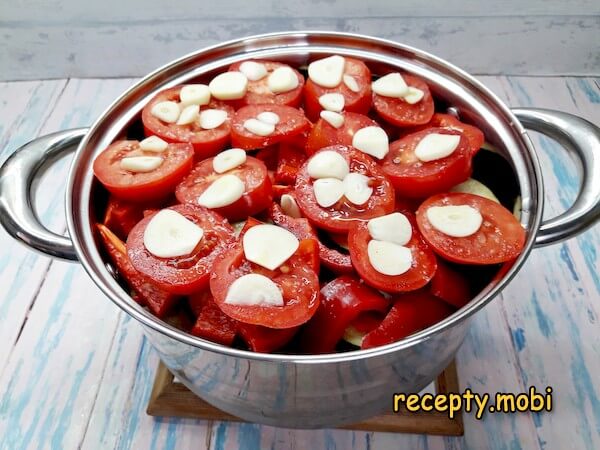
Distribute garlic on top of tomatoes.
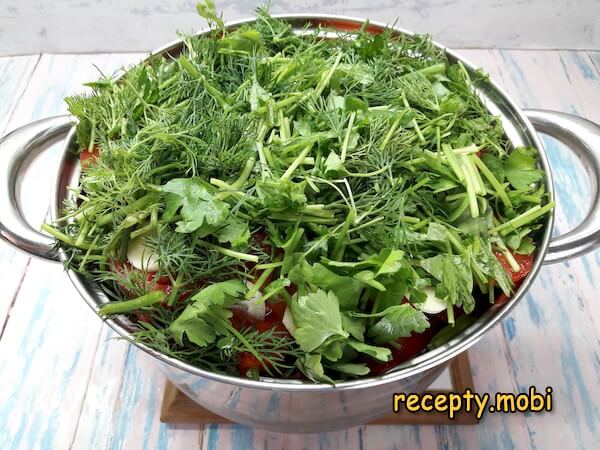
Close everything with herb bundle. Place bay leaf on top.
Pot seems full — but still arrange CABBAGE LEAVES around edges WITHOUT pressing down lower vegetables.
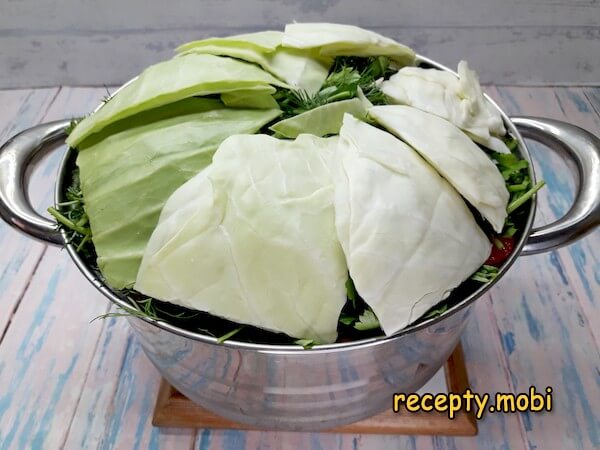
Pile remaining cabbage chunks on top. Salt them. NO WATER ADDED — stew cooks EXCLUSIVELY in own juice (the dumlyama defining technique).
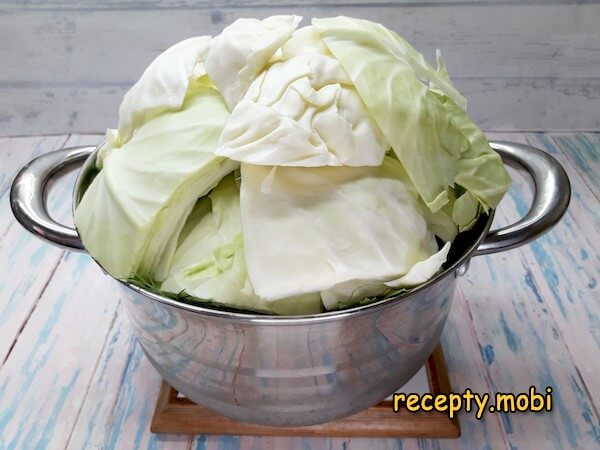
Cover formed mound with DEEP BOWL of suitable diameter (creates dome space for steam circulation). Place pot on medium heat.
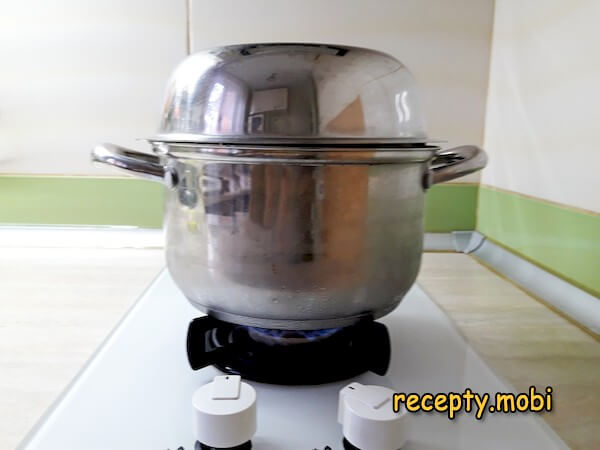
After 15 minutes cabbage settles slightly. Continue stewing; reduce heat to LOWEST setting.
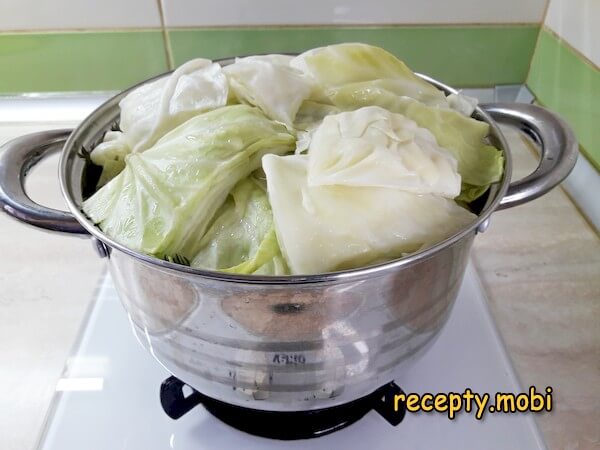
When upper layer settles to pot edge, replace bowl with regular lid. Stew at LEAST 1.5 hours.
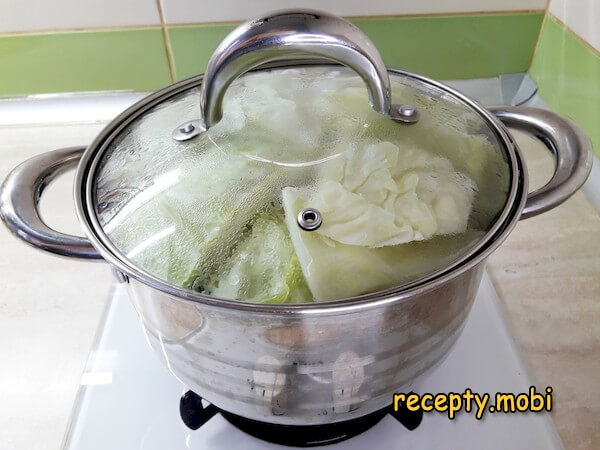
Check readiness via cabbage — leaves SOFT + don't crunch = ready. Turn off heat; let sit under lid 10 more minutes.
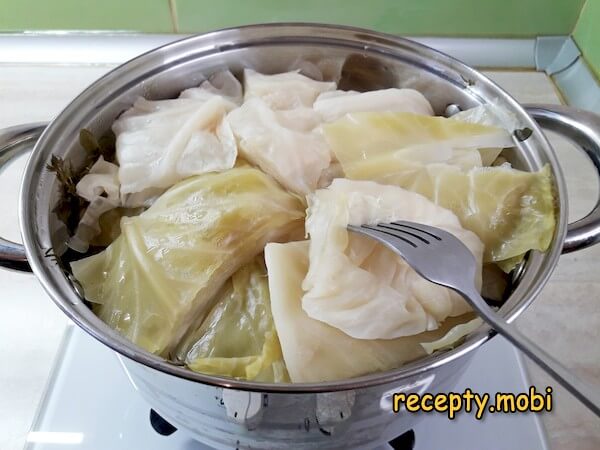
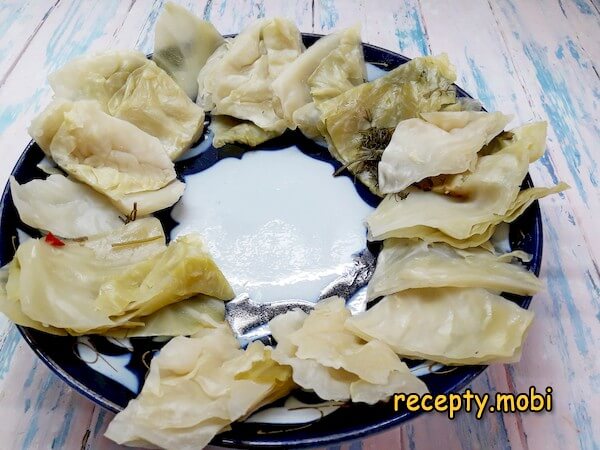
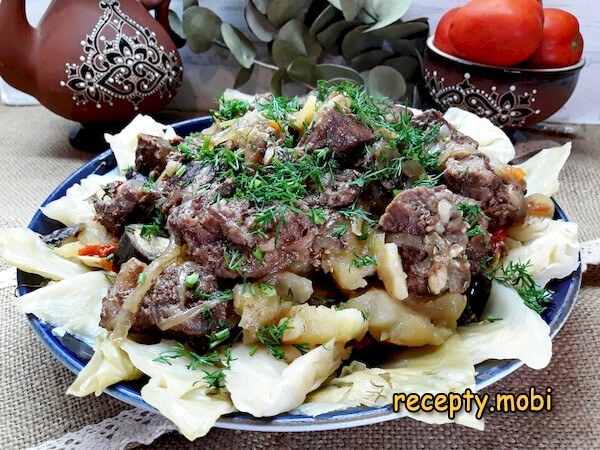
For festive table: lay dumlyama on wide dish in REVERSE order. First arrange cabbage leaves in circle.
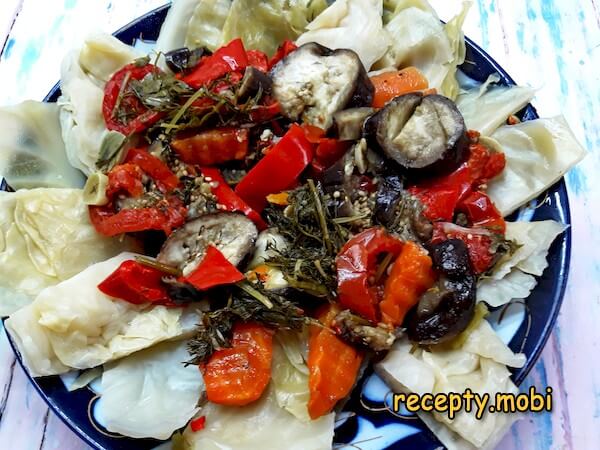
Next: tomatoes, peppers, eggplants.
Then: potatoes.
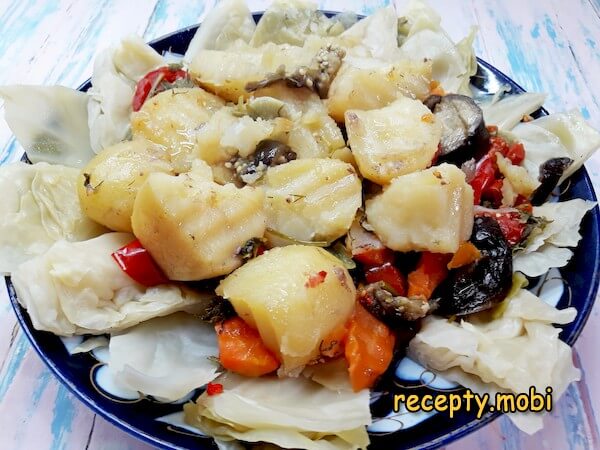
At very top: the languid meat. Liquid that formed during stewing can be poured over layers.
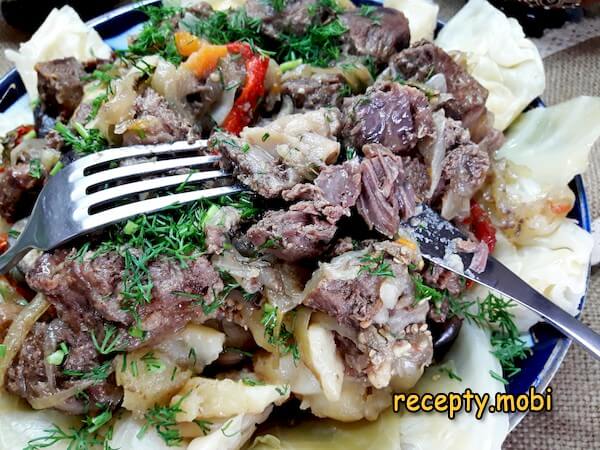
The meat has softened to "swallow without chewing" tenderness — dissolves in mouth. For everyday family lunch: just mix dumlyama in pot + serve in individual plates. Bon appétit!


Tips
- 1
THE NO-WATER STEAMING TECHNIQUE. The recipe's "no water added" rule is the dish's defining feature. Vegetables release ~70% of their water content during the 2-hour low-heat cook (cabbage alone releases significant moisture). Result: concentrated vegetable juices + meat juices = rich natural broth. Adding water dilutes these juices, weakens flavors, ruins the "dumlyama" identity (becomes generic stew). The thick-bottomed pot is essential: distributes heat evenly without burning bottom layer. Same waterless-cooking principle: French daube, Indian dum biryani, Korean galbi-jjim.
- 2
THE LAYERING ORDER IS COOKING-TIME LOGIC. Steps 14-25's specific layer sequence is calibrated by cooking-time requirements. MEAT (slowest, longest cook): bottom — gets most heat, longest cooking. ONIONS, POTATOES, CARROTS (medium cook): mid-layers — moderate heat. EGGPLANT, PEPPER, TOMATO (fast cook): upper layers — gentlest heat. CABBAGE (steamer + insulator): top — protects everything beneath, traps steam. Reversing order: meat undercooks while vegetables overcook. The recipe's layering is professional Uzbek technique — preserve it. For another classic Caucasian/Central Asian stew worth comparing, see Lagman Uzbek Noodle Soup.
- 3
THE DOMED-BOWL COVERING. Step 26's "cover with deep bowl" instead of standard lid is non-obvious technique. Standard lid: sits flat on pot — restricts steam circulation, may compress upper cabbage layers. Domed bowl: creates SPACE above cabbage, allows steam to rise + circulate + drip back down (creates condensation cycle that returns moisture to dish). Same principle: tagine cooking (dome shape preserves moisture), bain-marie steaming. After cabbage settles (step 28): standard lid works fine. The 2-step covering is unusual but cooking-effective.
- 4
THE SERVING-CEREMONY VS QUICK-LUNCH OPTIONS. Steps 30-34 describe FESTIVE serving (reverse-layer arrangement on wide platter). Steps 34's note describes EVERYDAY serving (just mix in pot, ladle to plates). Both are authentic Uzbek tradition. Festive version: dramatic visual presentation, suits gatherings + holidays. Quick version: efficient everyday family meal. Same dish, different serving rituals. Choose based on context. For another celebratory Central Asian preparation worth trying, try Uzbek Pilaf with Lamb.
FAQ
Can I use lamb instead of beef? +
Yes — lamb is actually MORE traditional Uzbek choice. Lamb shoulder or lamb leg work best (similar fat content to beef, similar cooking time). Lamb advantage: more pronounced "Central Asian" flavor character, natural fat dissolves into sauce. Lamb disadvantage: stronger "lamb-y" character may not appeal to all family members. Cooking time stays same (1.5 hours minimum). For mixed flavor: 50/50 beef + lamb produces complex result. Younger lamb (under 1 year): cooks faster (60-90 min). Mutton (older sheep): may need 2+ hours. The recipe accommodates all variations.
What can I substitute for cabbage? +
Cabbage serves dual purpose: flavor + steam-trapping. Substitutes work but produce different results. SAVOY CABBAGE: more tender, similar function. NAPA CABBAGE (Beijing): too tender, breaks down too much. BANANA LEAVES (tropical option): traditional in some Central Asian dishes. PARCHMENT PAPER cover: works for steam-trap function but no flavor contribution. SKIPPING entirely: lose the steam-trap effect — must add 100 ml water to compensate (changes "dumlyama" to "stew"). White green cabbage is recipe-canonical for both reasons.
How long does it keep? +
Refrigerated covered: 4-5 days at peak quality. Day 2-3: PEAK FLAVOR — vegetables fully integrate flavors, meat dissolved into sauce, dish becomes more cohesive. Day 4-5: still good but some vegetables soften further. Reheating: gentle stovetop in pot 15 minutes, OR microwave individual servings 3-4 minutes. Don't reheat at high temperature (vegetables continue breaking down). FREEZER: works adequately (3 months), thaw overnight + reheat. The dish is genuinely make-ahead friendly — Sunday cook lasts most of week. For best texture preservation: don't reheat the same portion twice.
Can I add other vegetables? +
Yes — variations exist. ZUCCHINI (200 g): adds summery freshness, layer with other fast-cooking vegetables. GREEN BEANS (150 g, blanched): adds color + texture variety. PUMPKIN (200 g, cubed): adds sweetness, traditional autumn variation. CHICKPEAS (canned, 200 g): adds protein, Caucasian fusion variation. QUINCE (1, sliced): adds sweet-tart fruit dimension, traditional autumn variation. Maintain proportions — total vegetable weight should not exceed double the meat weight. Each addition extends cook time slightly. The base recipe is excellent foundation for endless seasonal variations.
- Comment
or post as a guest
Be the first to comment.