avg —
Easter Bread with Cottage Cheese and Candied Fruits

Instructions
Before cooking, prepare all ingredients according to the recipe. One hour before mixing, leave the ingredients on the table to come to room temperature. The butter should remain in the refrigerator until the moment it is needed cold.
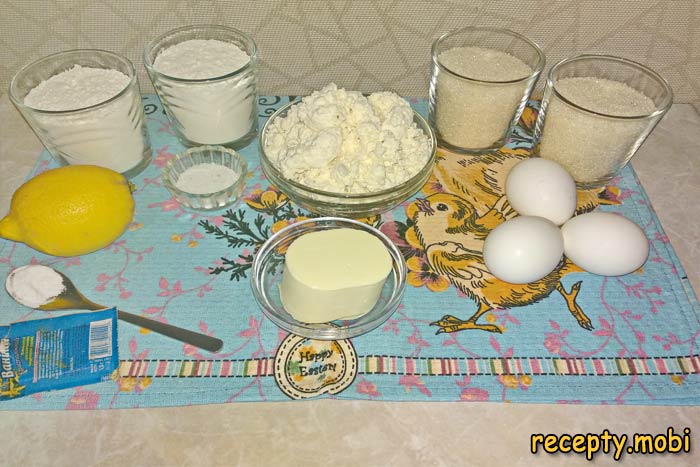
In a large bowl, place the cottage cheese and mash it with sugar. You can do this with a spoon, or use a blender for a uniform mixture without lumps. The smoother the cottage cheese base, the more refined the cake’s final crumb structure.
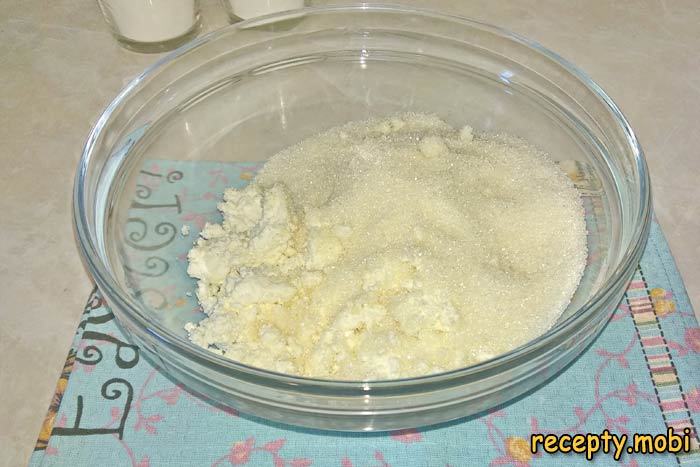
Add the eggs to the cottage cheese mixture. Use room-temperature eggs — they incorporate more easily and produce a smoother batter than cold eggs straight from the fridge.
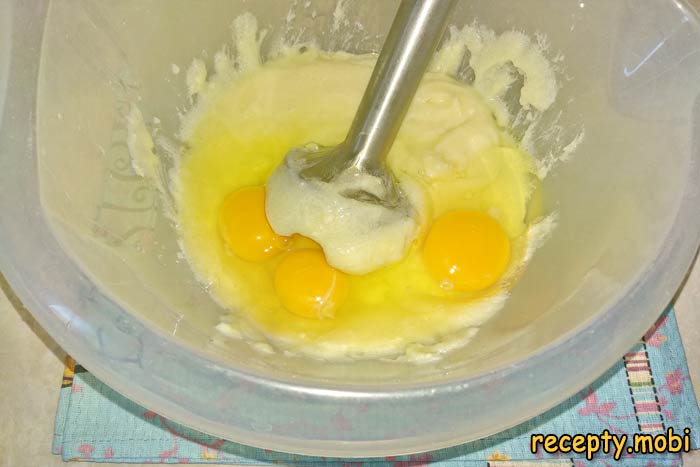
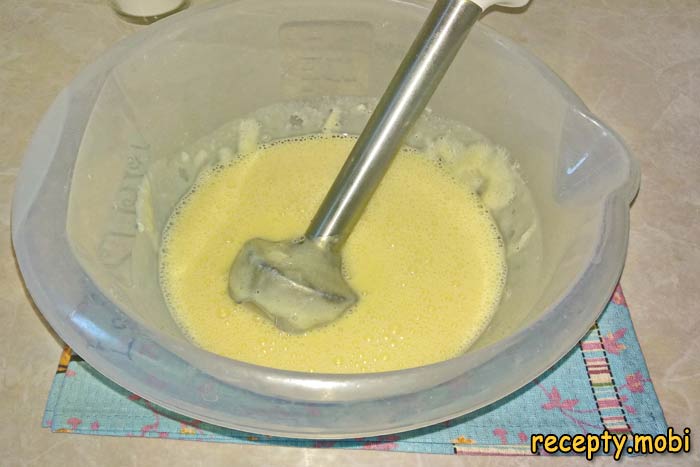
Beat the mixture until homogeneous. The combination should be thoroughly blended with no streaks of unmixed egg or curd. A hand mixer or whisk works well at this stage.
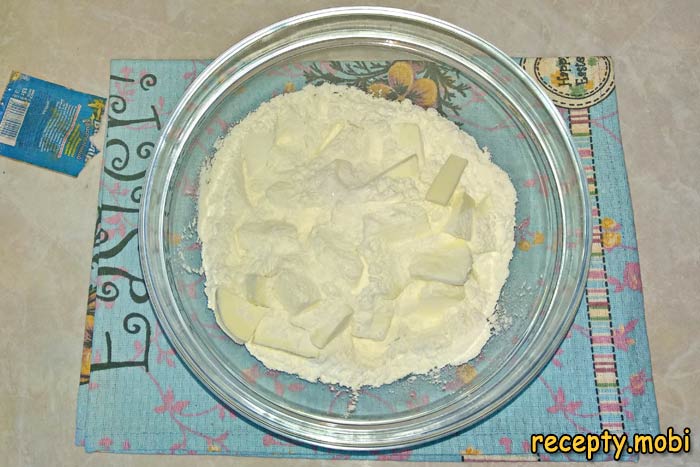
In a dry bowl, place the flour and salt. Cut the cold butter into small pieces and add it to the flour. Cold butter is essential for the proper crumb — warm butter merges with the flour and produces a tougher, denser cake.
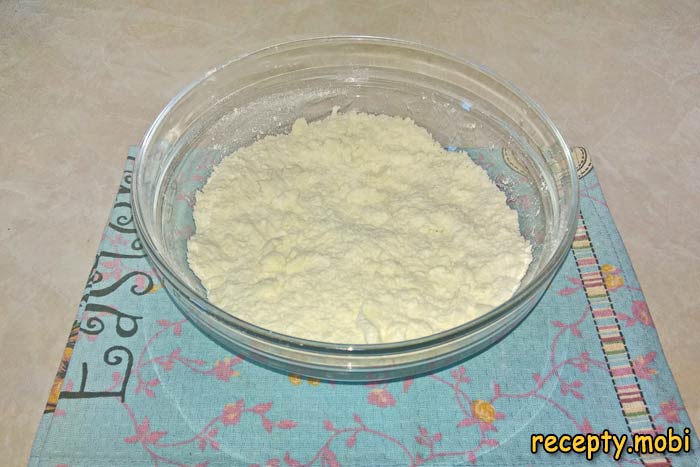
Quickly rub the flour with the butter into a uniform crumb so the butter does not warm up from the heat of your hands. If small lumps remain, do not worry — they create pockets of fat that melt during baking and add tenderness to the finished cake.
Add the flour crumb to the cottage cheese mixture. Sprinkle the baking soda on top of the flour and quench it with lemon juice. Cottage cheese and lemon pair beautifully — the cake will have a subtle but unmistakable lemon aftertaste that lifts the whole flavor profile.
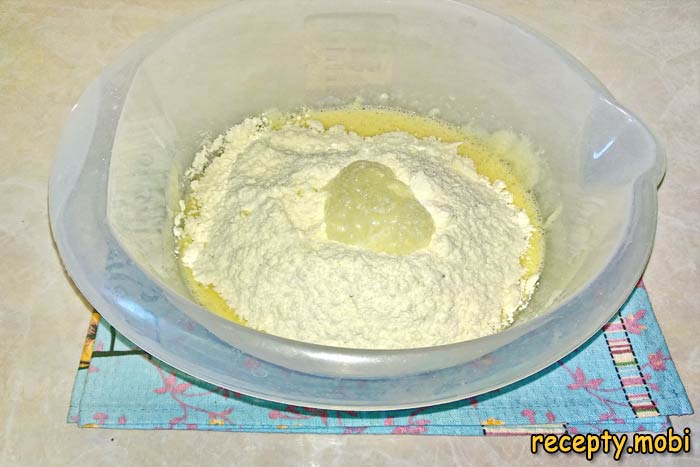
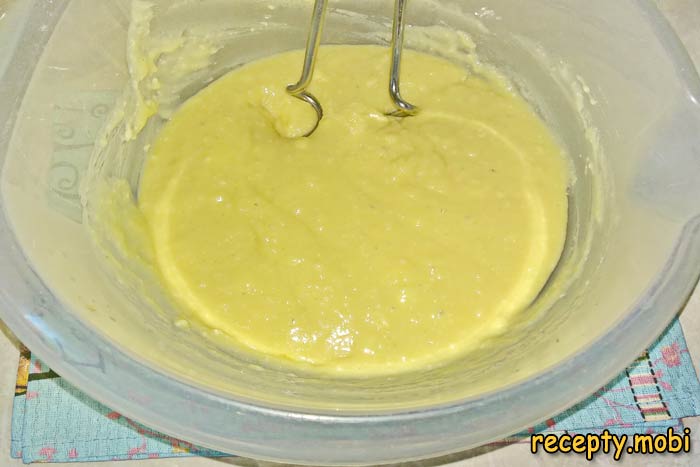
Beat the mixture well with a hand mixer until homogeneous. The batter should be thick but spoonable, similar to a soft cake batter rather than a stiff dough.
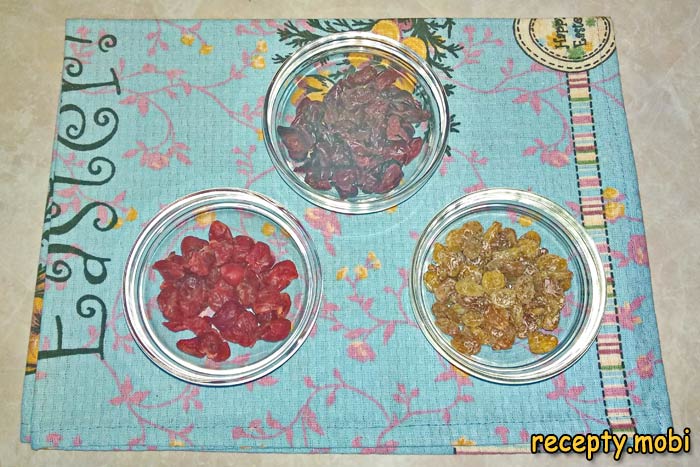
Prepare the raisins and candied fruits. Soak the berries in hot water for five to ten minutes. Then dry them with a paper towel, and while still slightly damp, dust them with flour. The flour coating prevents the heavy fruit from sinking to the bottom of the cake during baking.
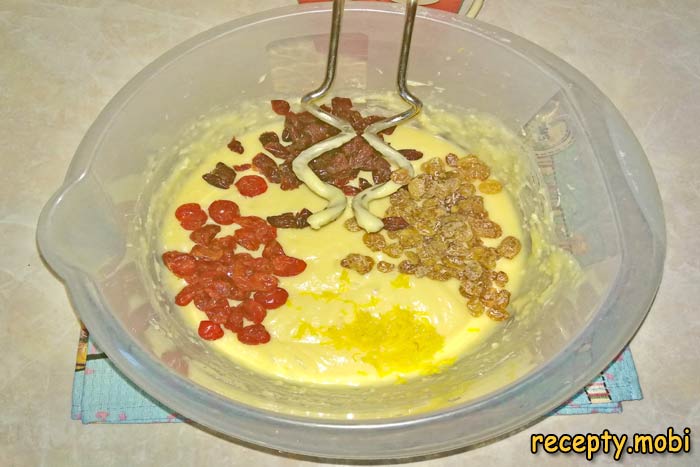
Add the candied fruits to the cottage cheese mixture along with the zest of one lemon. Mix everything well again to distribute the additions evenly throughout the batter.
This amount of ingredients is calculated for four molds with a diameter of nine centimeters and a height of eight centimeters. Grease the inside of each mold with vegetable oil so the baked cakes release cleanly without sticking.
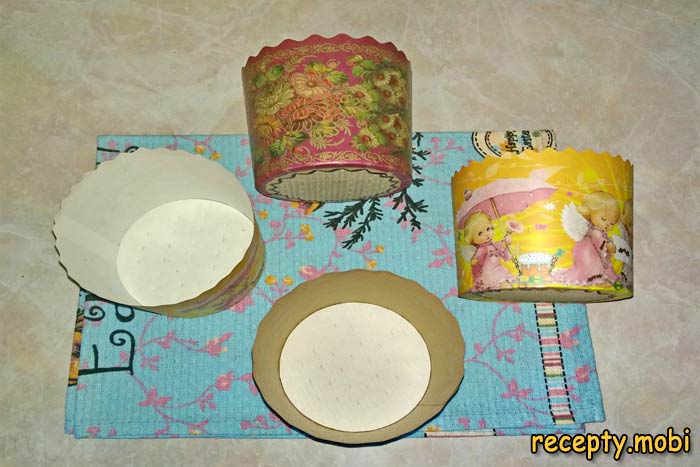
Evenly distribute the dough among all the molds. Each mold should be filled a little over half — during baking, the volume increases significantly, so leaving room is essential to avoid overflow.
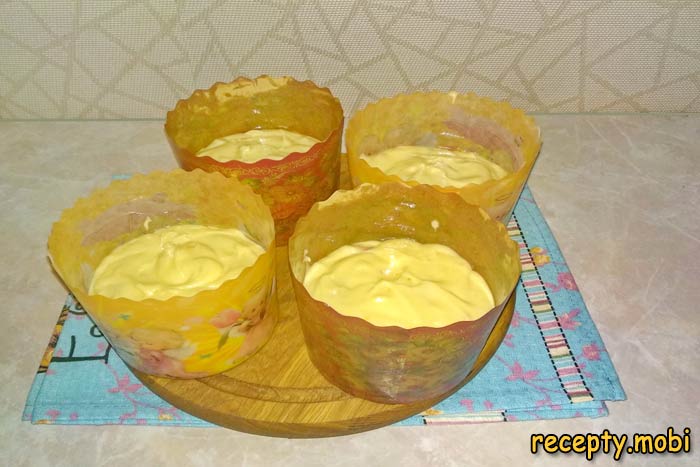
Bake the cakes for forty-five to fifty minutes, depending on your oven, at 180°C. Check doneness with a wooden skewer — it should come out clean from the center of a cake when fully baked.
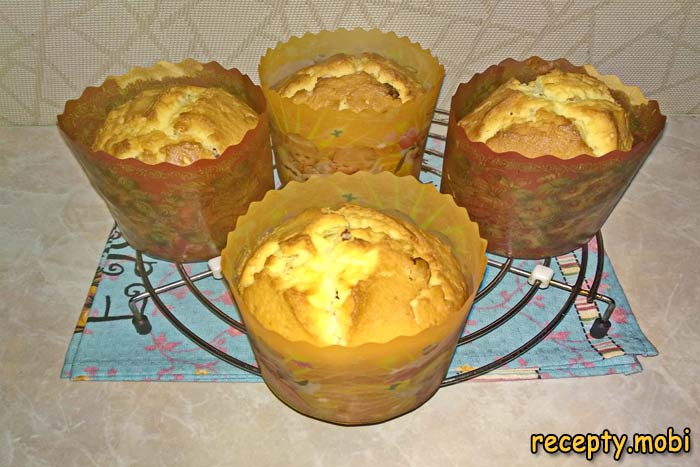
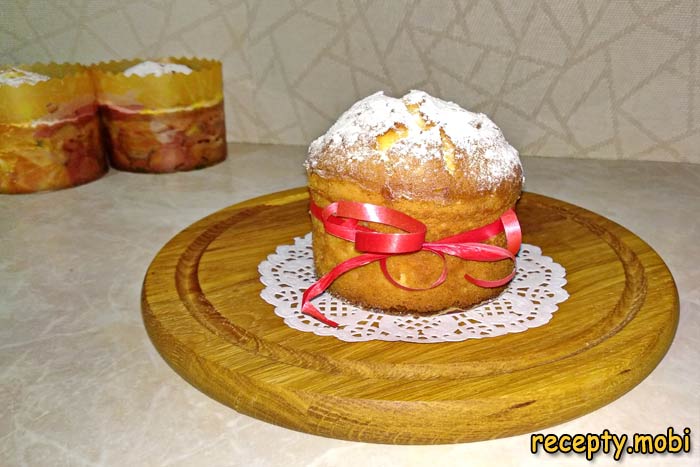
The cottage cheese cakes are ready. Decorate them with icing and sprinkles, or simply with powdered sugar — whichever style you prefer. Make the cakes with cottage cheese and candied fruits according to this recipe and add a beautiful new tradition to your Easter table. Happy Easter!


Tips
- 1
Use dry, fresh cottage cheese for the best result. Wet curd unbalances the flour-to-liquid ratio and produces flat, dense cakes. If your cottage cheese seems wet, drain it in cheesecloth for an hour before mixing. Russian-style farmer’s cheese (tvorog) is the gold standard. The dryness of the curd is the single most important quality factor in this recipe.
- 2
Toss the raisins and candied fruits in flour before adding to the dough. The flour coating provides friction that suspends the heavy fruit throughout the batter rather than letting it sink to the bottom. Skip this step and your cakes have all the fruit clustered at the base. The same trick works wonderfully for Easter cake with orange zest and other studded baked goods.
- 3
Bake at the correct temperature for the full time. Lower oven temperatures fail to set the crust before the inside cooks, resulting in collapsed cakes. Higher temperatures burn the outside before the inside finishes. 180°C for 45-50 minutes is the sweet spot. Use an oven thermometer to verify your oven runs true — many home ovens are 10-20 degrees off without anyone realizing it.
- 4
Cool the cakes on their sides on a folded towel for the first 30 minutes, rotating periodically. This prevents the tall cakes from sinking under their own weight while still warm. Once cool, they hold their shape upright and can be glazed and decorated. Pair finished slices with hot tea and slices of homemade bread for the complete Easter spread.
FAQ
Why is this Easter cake non-yeasted? +
The recipe uses baking soda activated by lemon juice as the leavening agent instead of yeast. This makes the cake faster to prepare (no rising time required) and more forgiving for beginners. The cottage cheese provides additional structure and tenderness. The texture differs from yeasted kulich — this version is denser, more pound-cake-like, with a fine crumb. Both styles are traditional in Russian Easter baking; the choice is personal preference.
Can I use Greek yogurt instead of cottage cheese? +
Yes, but with adjustments. Strain Greek yogurt through cheesecloth overnight to remove most of the whey, then use the strained yogurt in equal weight to the cottage cheese. The flavor will be slightly tangier than traditional curd-based cake, and the texture marginally lighter. The result is excellent though different. Avoid regular yogurt — too watery to produce proper cake structure without the straining step.
How long do these Easter cakes keep? +
Wrapped in clean cotton or stored in an airtight container, the cakes keep for 5-7 days at room temperature. The flavor improves slightly over the first 1-2 days as the lemon and vanilla flavors develop. Refrigeration extends the life to about 10 days but slightly dries the crumb. For longer storage, freeze individual cakes wrapped in foil for up to 2 months. Thaw overnight on the counter before serving.
Can I bake this in a regular cake pan instead of small molds? +
Yes. Use a single 23cm round cake pan or a loaf pan instead of four small molds. Baking time increases to about 60-70 minutes for the larger format. Check with a skewer for doneness. The presentation differs from traditional small kulich shape but the flavor stays identical. Slice the larger cake into wedges or rectangles for serving. Both formats are equally delicious; small molds just look more festive on the Easter table.
- Comment
or post as a guest
Be the first to comment.