avg —
Flounder in the Oven in Foil

Instructions
I prepare the ingredients. Flounder is usually sold gutted; if not, remove the head first and gut through the resulting opening. Lemon juice can be store-bought or freshly squeezed from 1/3 of a lemon — fresh tastes brighter.
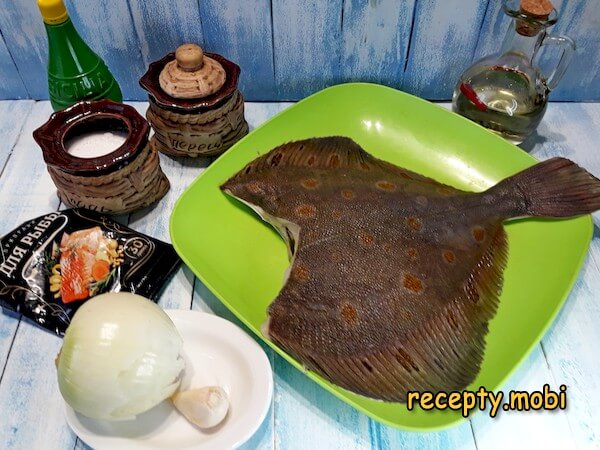
I trim the fins (including the tail) with kitchen scissors. The dark side of the carcass gets gentle scraping with a sharp knife to remove any residual scales, then a wipe with a paper towel.
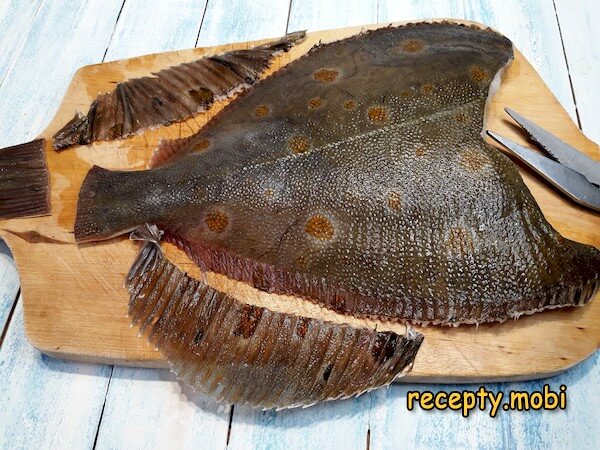
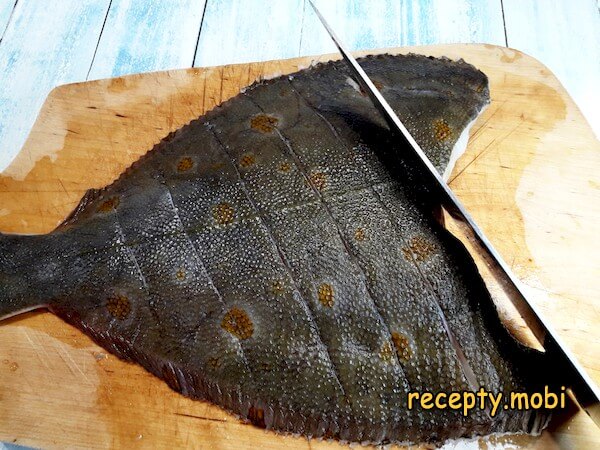
The dark-side skin is thicker than the white-side skin. I make diagonal incisions every 2.5-3 cm — these channels let the marinade penetrate to the flesh below.
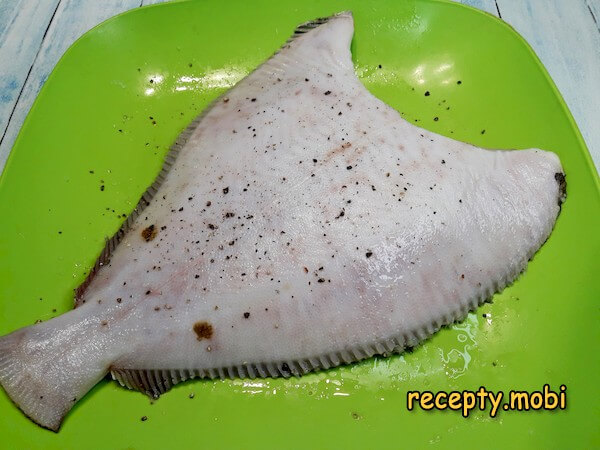
I salt and pepper the carcass on both sides.
For the marinade, I pour the vegetable oil into a small bowl and add the fish seasoning.

I add the lemon juice.

I press the garlic clove through a press into the marinade.

I whisk the marinade thoroughly until uniform — the oil and lemon juice should emulsify into a thick dressing-like consistency.

I coat the flounder with marinade on all surfaces, including inside the gut cavity. Then I leave it to marinate for about 15 minutes — long enough for the flavours to penetrate the diagonal cuts.
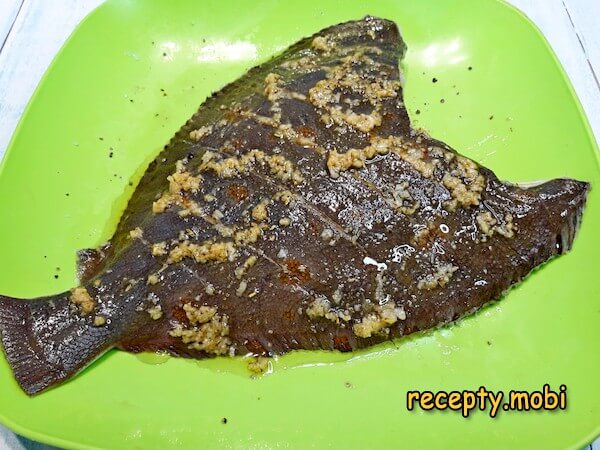
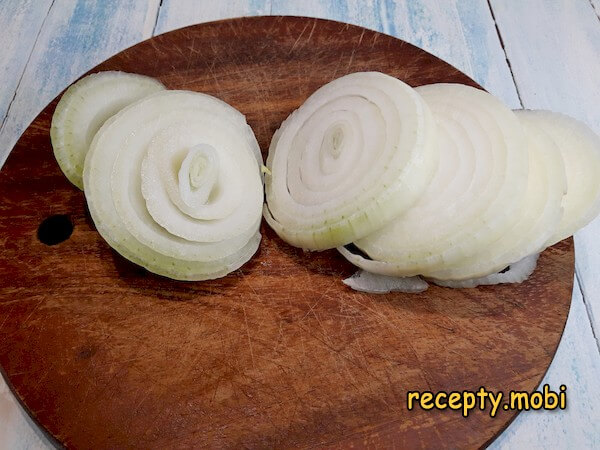
I cut the onion into wide rings (5-7 mm thick) and preheat the oven to 200 °C without convection — convection dries the fish too quickly.
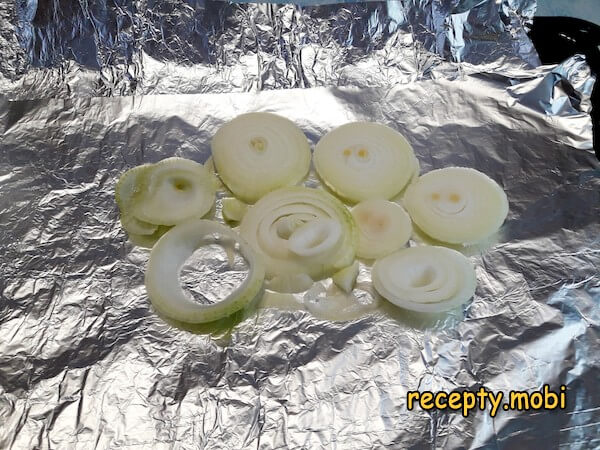
I lay two layers of foil on the baking sheet. No oil needed — the marinade's oil is enough to prevent sticking, and the onion bed below the fish protects the bottom skin from direct contact with the foil. I arrange the onion rings in the rough shape of the fish.
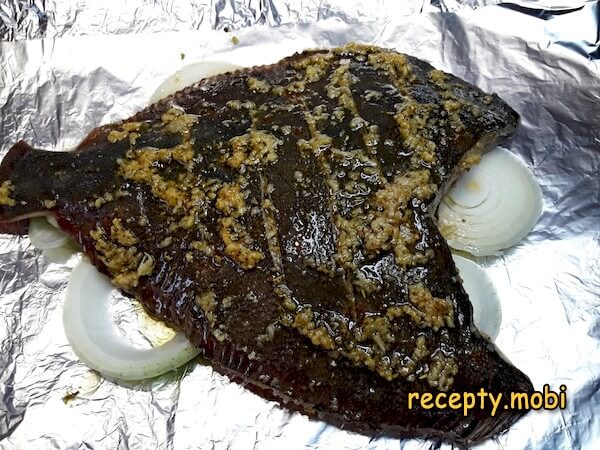
The marinated flounder goes on top of the onion ring bed.
I fold the edges of the foil upward to form a shallow bowl around the fish — this contains the juices that will release during baking.
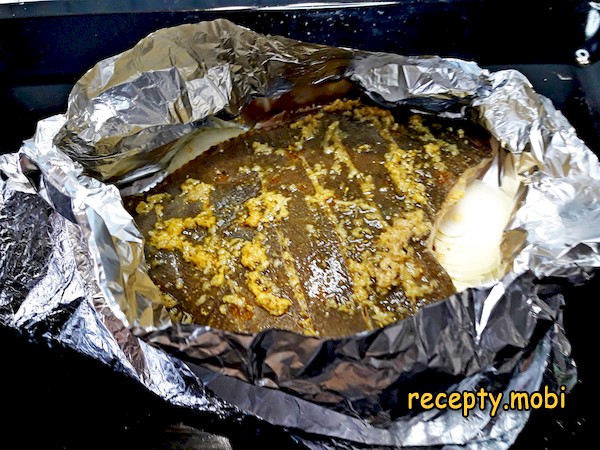
I cover with a separate piece of foil as a lid, leaving air space between it and the fish surface. Into the preheated oven on the middle rack.
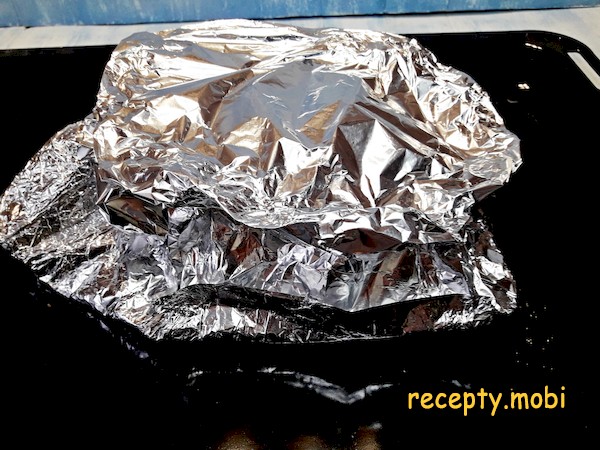
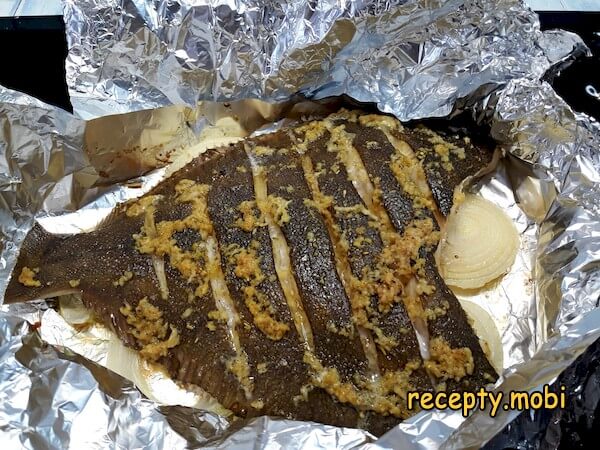
After 20 minutes, I turn off the oven, remove the foil lid, and leave the fish in the residual oven heat for another 5 minutes to slightly dry the surface.The flounder comes out juicy with melt-in-the-mouth flesh, and the onion has absorbed all the marinade aromatics — equally good as a side or chopped over the fish at serving. The kitchen smells of lemon and garlic rather than fish — the citrus and aromatics neutralise the typical fish-cooking smell. Serve hot with lemon wedges.


Tips
- 1
THE DIAGONAL CUTS ARE NON-NEGOTIABLE. The dark-side skin of flounder is thick and acts as a moisture barrier — without the cuts, the marinade only flavours the surface. The 2.5-3 cm spacing gives even penetration without weakening the structure. Cut just through the skin, not deep into the flesh.
- 2
THE ONION BED HAS THREE FUNCTIONS. It elevates the fish off the foil (preventing sticking and burning), absorbs the released juices into a savoury onion confit, and infuses the fish with mild onion sweetness from below. Don't skip it — direct fish-on-foil contact gives a less tender result and a charred skin patch on the underside. For another foil-baked fish to compare techniques, see Dorado in foil in the oven.
- 3
NO CONVECTION FOR FOIL-BAKED FISH. Convection ovens dry the fish too quickly even inside the foil — the circulating air pulls moisture out through the foil seams. Conventional bake (top + bottom heat) is the right setting. If your oven is convection-only, lower the temperature 10 °C and reduce the time by 3-5 minutes.
- 4
SERVE WITH BRIGHT SIDES. Flounder's delicate flavour pairs best with simple bright sides: boiled new potatoes with butter and dill, steamed asparagus with lemon, fresh green salad with vinaigrette. Heavy starches or rich sauces overwhelm the fish. For another foil-baked fish recipe to compare, try Salmon Baked in the Oven in Foil.
FAQ
Can I use frozen flounder? +
Yes, frozen flounder works perfectly. Thaw fully in the refrigerator overnight (or in cold running water for faster thawing — about 30 minutes for a 360 g fish), pat dry thoroughly with paper towels, and proceed as the recipe directs. Frozen flounder can be slightly drier than fresh after baking; consider extending the marinade time to 25 minutes (vs the 15 in step 9) to compensate. Don't bake from frozen — the centre stays cold while the surface overcooks.
What's a good substitute for fish seasoning? +
Pre-mixed fish seasoning (typically containing dill, parsley, lemon zest, paprika, white pepper, garlic, sometimes coriander) is the convenient choice but easy to substitute. Mix your own: 0.5 tsp dried dill + 0.5 tsp dried parsley + 0.25 tsp lemon zest + 0.25 tsp paprika + a pinch of white pepper per 1.5 tsp called for. Or simplify to: 0.5 tsp dried herbes de Provence + 0.5 tsp dried dill. Italian seasoning works in a pinch but pushes the dish toward Mediterranean rather than the recipe's neutral flavour profile.
Can I use other fish instead of flounder? +
Yes, with timing adjustments. Other flat fish (sole, plaice, halibut) work identically. Round fish like cod, sea bass, or trout work but cook differently — cod takes 18 minutes (drier flesh), sea bass takes 22 minutes (thicker), trout takes 20 minutes (oilier, more forgiving). For thicker fish steaks (salmon, tuna), increase the bake time to 25-30 minutes. The principle stays: foil-wrap, onion bed, marinade — adapt the timing to the specific fish thickness.
How do I know when flounder is fully cooked? +
Flounder is done when the flesh flakes easily with a fork along the natural muscle lines and is opaque (not translucent) all the way through. The thickest part of the fish should reach 60-63 °C internal temperature for ideal moistness. Beyond 65 °C the flesh starts drying out. The 20-minute timing in this recipe is calibrated for a 360 g flounder; smaller fish need 15 minutes, larger ones up to 25 minutes. Open the foil at the 15-minute mark to check if uncertain — better undercooked-and-needs-5-more than dry.
- Comment
or post as a guest
Be the first to comment.