avg —
French meringue at home

Instructions
The first rule is to carefully separate the egg whites from the yolks. The yolk is fat; it will complicate the rise of the egg whites, so not a single drop of yolk should get into the whites. Another very important point is that the eggs must be properly fresh. Ideally purchased one or three days before preparation. The egg whites need to be weighed accurately.
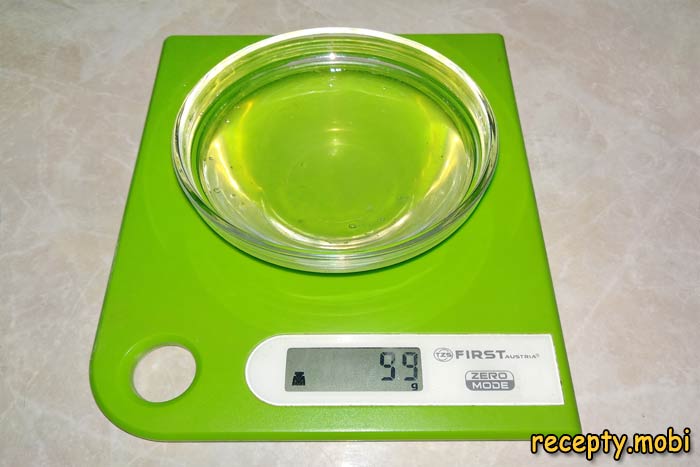
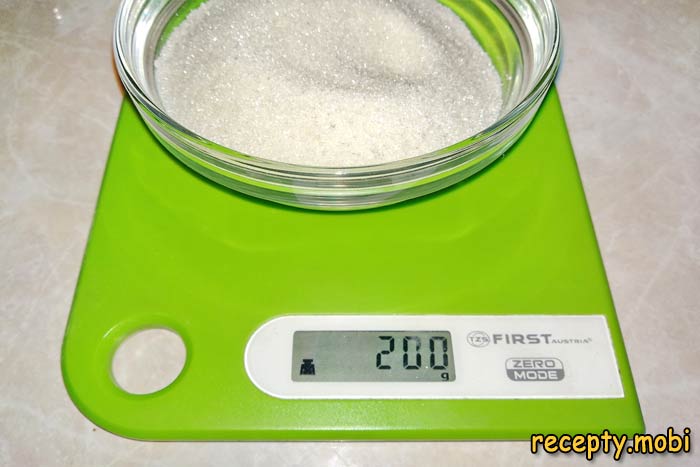
The second rule is to take twice as much sugar by weight as egg whites.
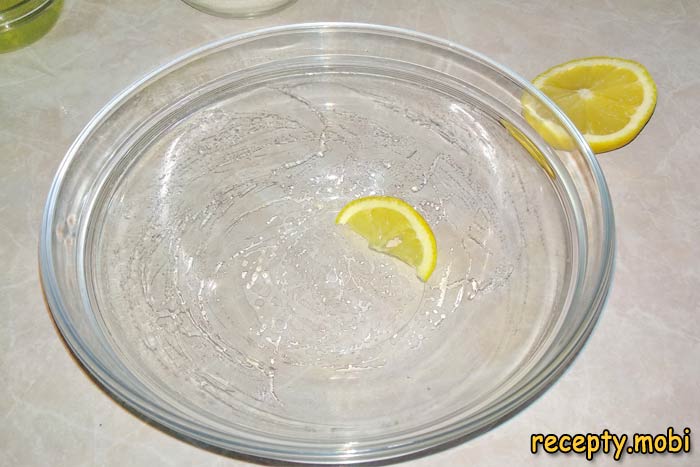
The bowl in which we will whip the French meringue must be completely clean and dry. To be safe, you can degrease the bowl with lemon juice. Cut a small slice from the lemon and wipe the inside surface of the bowl thoroughly.
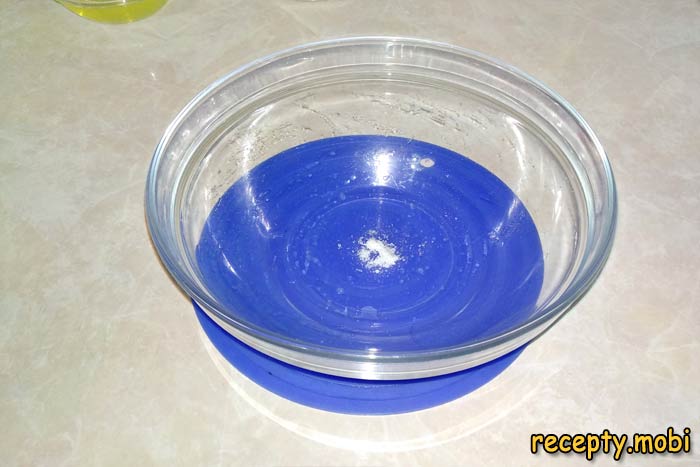
Add a pinch of salt to the bottom of the bowl. We will whip the egg whites together with the salt; it will properly stabilize the whites.
Place room-temperature egg whites in the bowl. There is no point in cooling them in the refrigerator; warm whites will whip into a denser foam than cold ones. The bowl and the whisk of the mixer should also be at proper room temperature. Start whipping the egg whites at low speed.
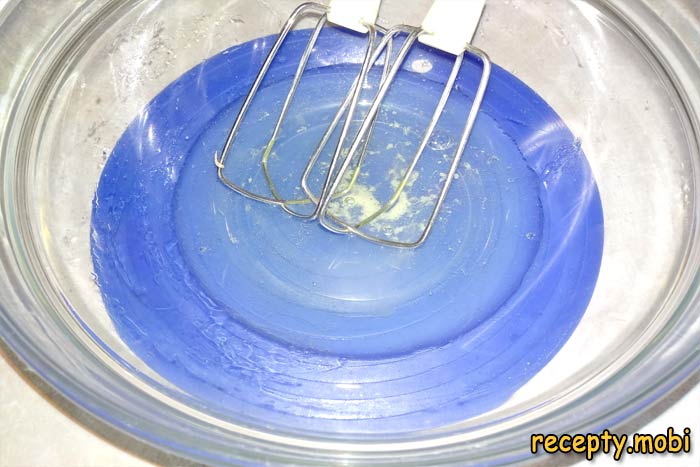
Whip the egg whites for one to two minutes total until the mixture acquires the texture of "sea foam".
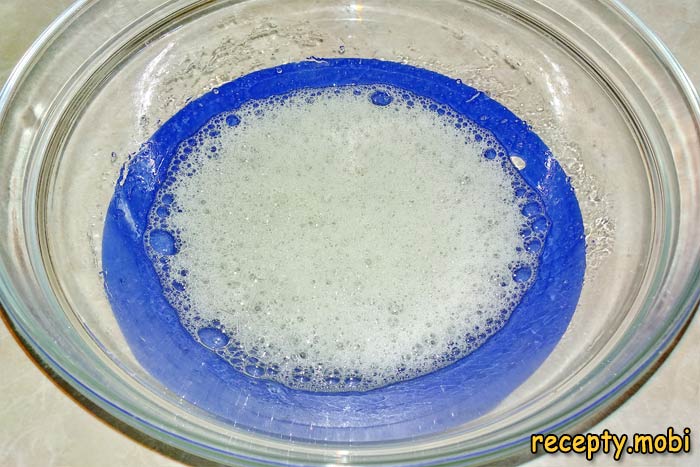
Now switch the mixer to maximum speed. Continue whipping for another two to three minutes total. By now, it is already visible that the mass has increased in volume several times and has properly thickened. Soft peaks have formed.
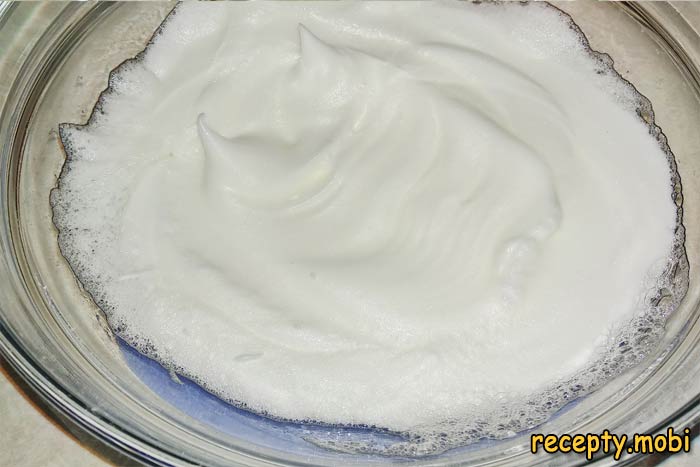
Without stopping to whip the egg whites at maximum speed, you can gradually add the sugar in a "rain" manner. Do not add all the sugar at once; this will deflate the egg whites, and it will be practically impossible to whip them back up. Only add the sugar in parts and in a thin steady stream.
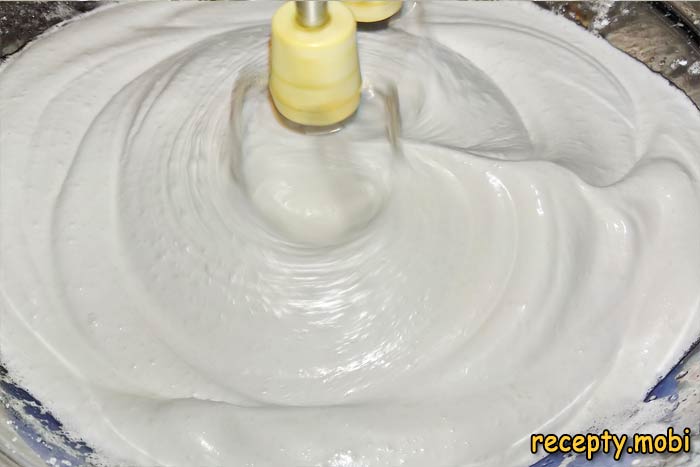
If desired, for a glossy texture, you can add a few drops of fresh lemon juice to the egg whites. Continue whipping for another couple of minutes.
After adding the sugar, the egg mixture should be whipped for no more than five minutes total.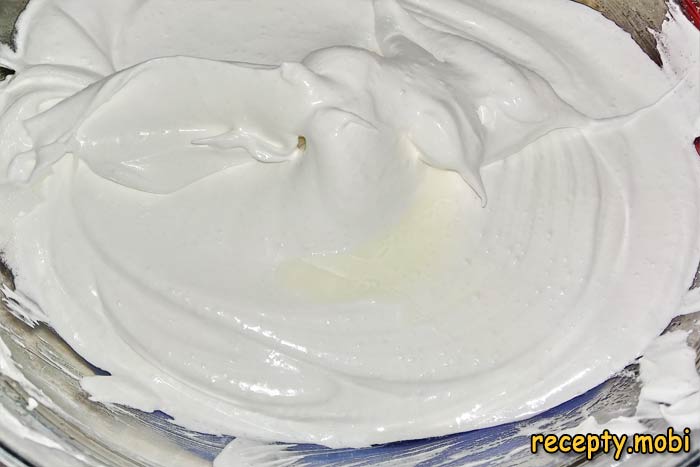
The readiness of the meringue is genuinely very easy to check. Take a small amount of the mixture and rub it between your fingers; if the sugar has properly dissolved and is not felt, then it is ready.
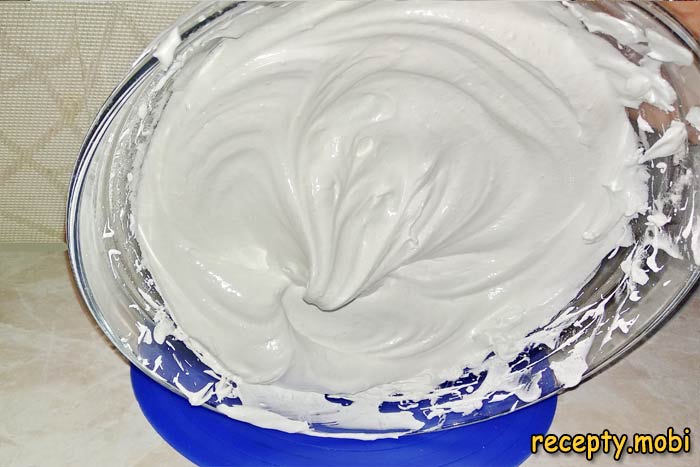
The egg white mixture should also have stable peaks and should remain in the bowl even if turned over. The meringue is now properly ready. You can continue to work with it as you wish. We will dry the meringue for decoration.
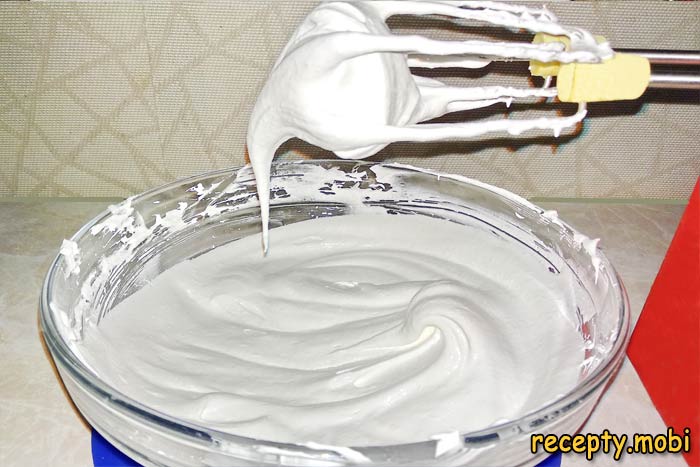
You can divide the meringue into several parts and colour it using gel-based food colouring.
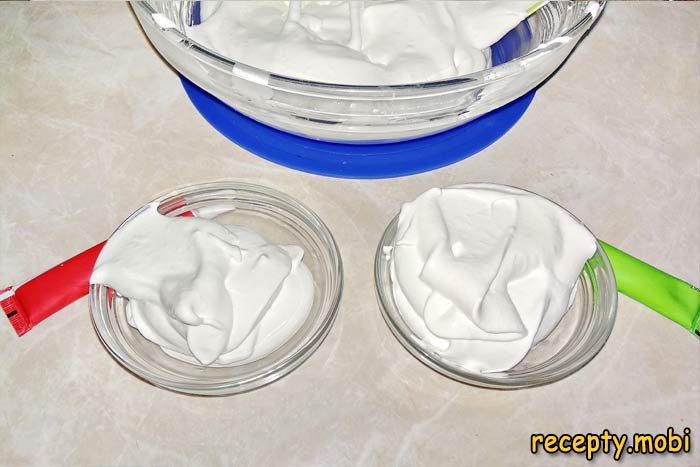
Add a few drops of food colouring to the egg white mixture. Adjust the colour saturation to your personal liking.
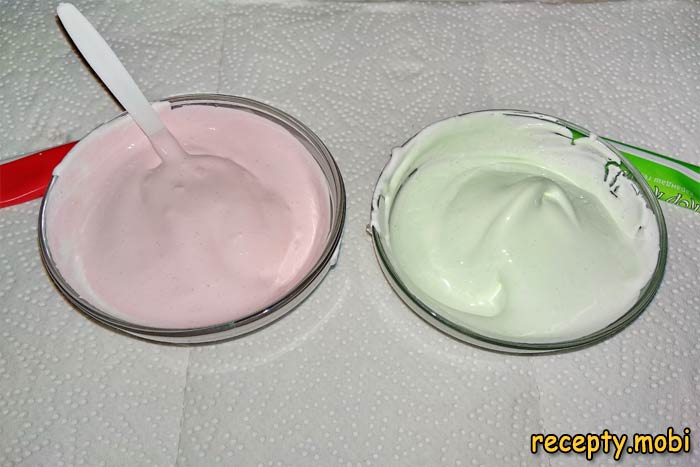
Transfer the coloured meringue to a pastry bag fitted with a star nozzle.
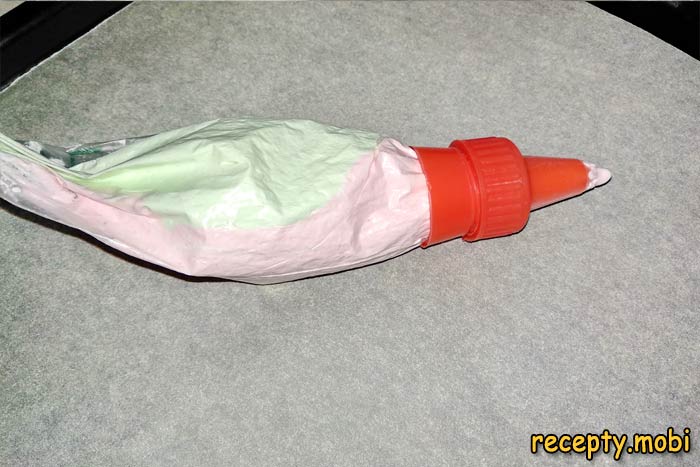
Pipe onto parchment paper at a distance from each other, since the meringue will "grow" slightly during baking.
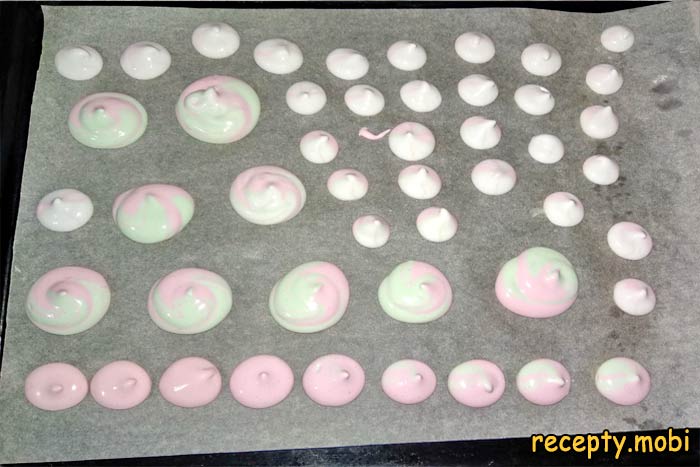
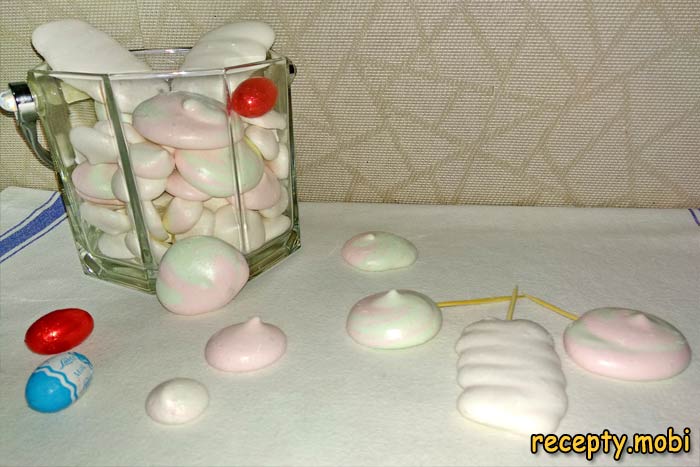
Preheat the oven to 80 degrees Celsius, place the baking sheet with the meringue inside to dry. While the meringue is in the oven, the door must not be opened. The dessert should bake for two and a half to three hours total, depending on the size. Sometimes the temperature in the oven can be set higher, thus reducing the baking time. But in this case, there is a greater likelihood that the dessert will crack.The French meringue at home is now properly ready. Ours turned out beautifully smooth, without cracks, with a glossy surface. On such a base, a large number of various desserts can be prepared. The main thing is to follow all the cooking rules carefully.


Tips
- 1
Make absolutely sure not even a tiny drop of egg yolk gets into the whites, since the fat from the yolk completely prevents the whites from whipping to proper stiff peaks. The brief patience for proper egg separation genuinely matters for the most beautifully whipped finished meringue every single time at home. Separate each egg over a small bowl first before adding to the main mixing bowl.
- 2
Use the proper 1:2 ratio of egg whites to sugar by weight (e.g., 100 g whites to 200 g sugar), since less sugar produces noticeably less stable finished meringue that collapses easily. To pair this beautifully classic French meringue with another properly classic homemade dessert from the same baking tradition, try our beautifully delicate panna cotta classic recipe as a contrasting Italian-style cream dessert alternative.
- 3
Bake at the very low 80 degrees Celsius rather than higher temperatures, since gentle low heat properly dries and lightly crisps the meringue without browning it or causing cracks. The brief patience for proper low-heat drying genuinely matters for the most beautifully smooth finished meringue every single time. Never open the oven door during baking — the temperature drop causes immediate cracking.
- 4
Use the finished dried meringues as decorations for cakes, as the base for Pavlova dessert, as toppings for ice cream sundaes, or simply enjoy them on their own with hot tea or coffee. For another properly classic homemade dessert recipe to add variety to your weekly menu, try our beautifully tender French meringue at home as a contrasting decoration for layered cakes.
FAQ
Why won't my meringue stiffen? +
Meringue that won't stiffen usually means either yolk contaminated the whites (try again with a clean separation), the bowl had any trace of grease or fat (degrease with lemon juice and dry thoroughly), the whites were too cold, or you added the sugar too quickly all at once. Use room-temperature whites, a properly clean dry bowl, and add the sugar gradually in a thin stream while whipping continuously for the most beautifully stiff finished peaks every single time.
Can I use the leftover yolks? +
Absolutely. The egg yolks can be used to make custard cream, lemon curd, hollandaise sauce, mayonnaise, ice cream, crème brûlée, or even brushed onto pastries before baking for a beautifully glossy golden finish. Store leftover egg yolks covered tightly in a small bowl with a thin layer of water on top to prevent skin formation in the refrigerator for up to two days. Each yolk can also be frozen individually in ice cube trays for up to two months.
How long do dried meringues keep? +
Store the cooled dried meringues in an airtight container at room temperature for up to two weeks for best results. Properly dried meringues should remain crispy throughout — if they become soft or chewy in storage, that means they weren't dried long enough in the oven. Briefly re-dry softened meringues in a 80-degree oven for another 30 minutes to restore the proper crispness. Avoid refrigerator storage entirely, since the moisture inside the fridge softens the meringues quickly.
Can I add flavours to the meringue? +
Absolutely. Try adding a teaspoon of pure vanilla extract, a tablespoon of finely grated lemon or orange zest, a pinch of cinnamon, a few drops of almond extract, or even a tablespoon of cocoa powder for properly varied finished flavour profiles. Add the flavouring at the very end of whipping after the sugar is fully incorporated. Each addition brings its own character to the meringue. Avoid adding any liquid flavourings in large quantities, since excess liquid deflates the carefully whipped foam structure.
- Comment
or post as a guest
Be the first to comment.