avg —
French-style meat from minced meat in the oven

Instructions
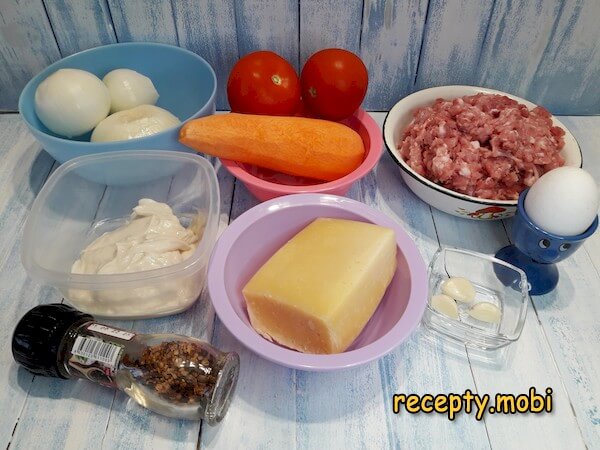
I prepare the ingredients for French-style meat from minced meat. Any minced meat works — pork (most authentic), beef-pork mix (typical Russian standard), or pure beef + 10-15% pork fat (lean beef alone produces dry patties). Avoid: very lean turkey/chicken mince (dry, low flavour), commercially-made "ready-mix" minced meat (often watery, low quality).
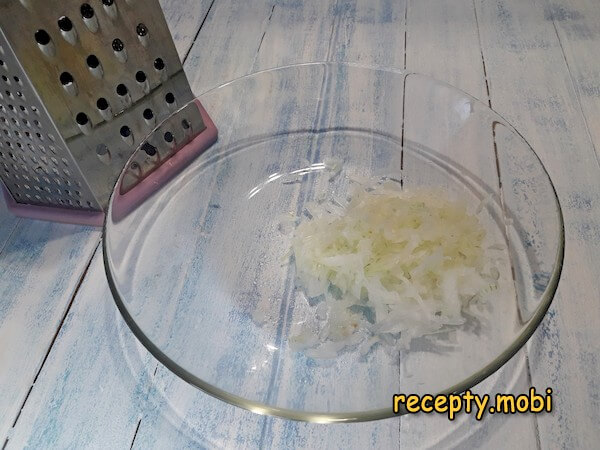
For maximum patty juiciness, grated onion incorporates into the mince. The fine grate releases onion juice that hydrates the mince — produces tender succulent patties versus dry chopped-onion versions.
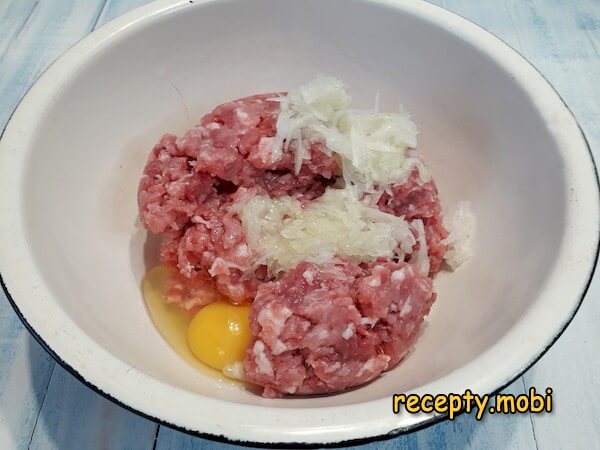
Combine minced meat, grated onion, and egg in a mixing bowl.
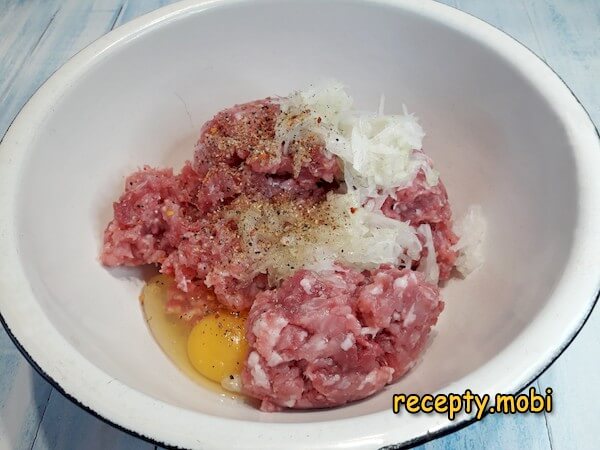
Add salt and freshly ground black pepper. Mix thoroughly with hands or a fork until uniform.
To prevent cracking during baking, BEAT the minced meat — lift handfuls and forcefully throw them back into the bowl 10-15 times. This kneads the mince protein, developing structure that holds the patty shape during heat. Then rest 5 minutes for the salt to draw moisture and firm the texture.
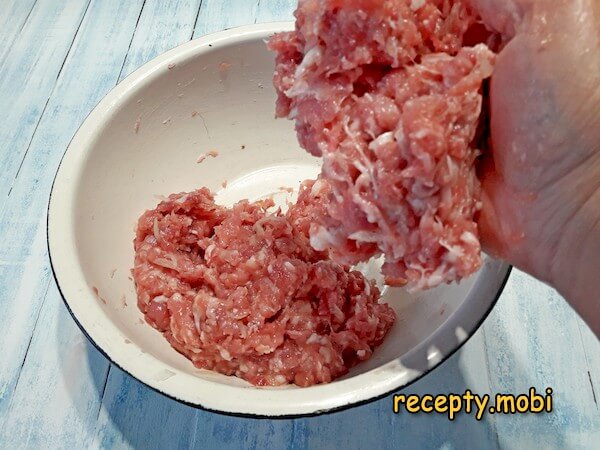
Preheat oven to 200 °C. Grate the cheese coarsely.
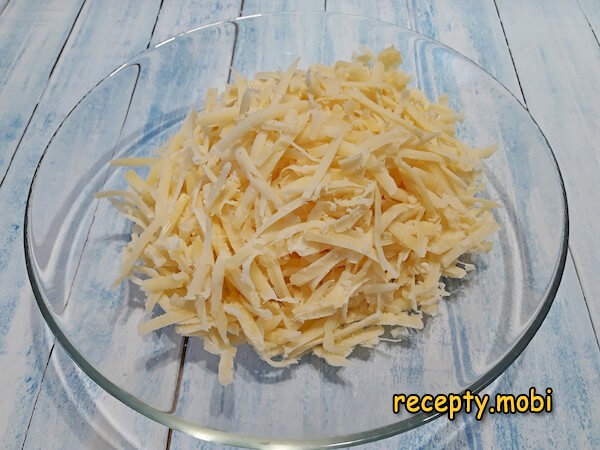
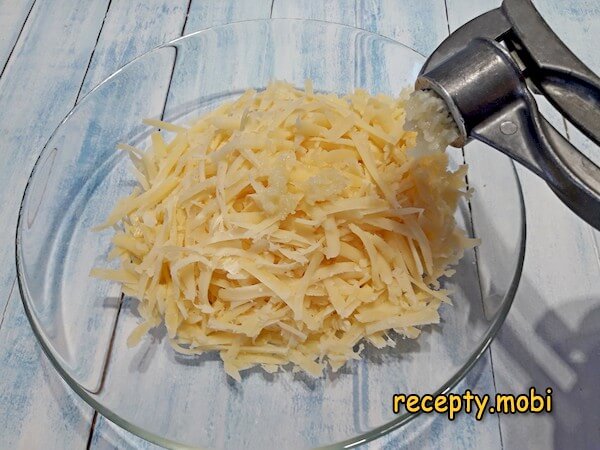
Crush garlic through a press; add to the grated cheese.
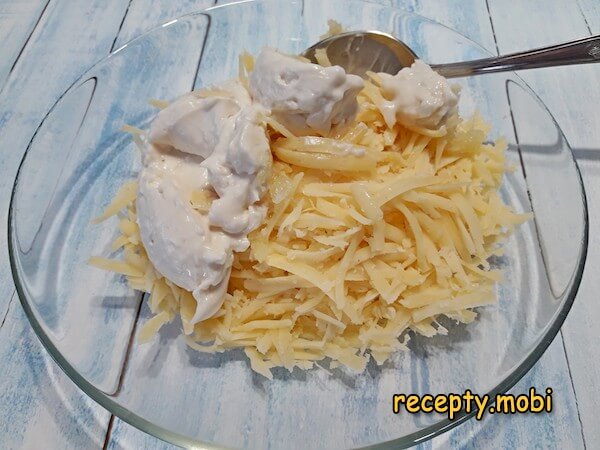
Mix the cheese-garlic with mayonnaise. The mayo coats the cheese particles, preventing them from burning during oven exposure — produces beautiful golden crust instead of black charred crust.
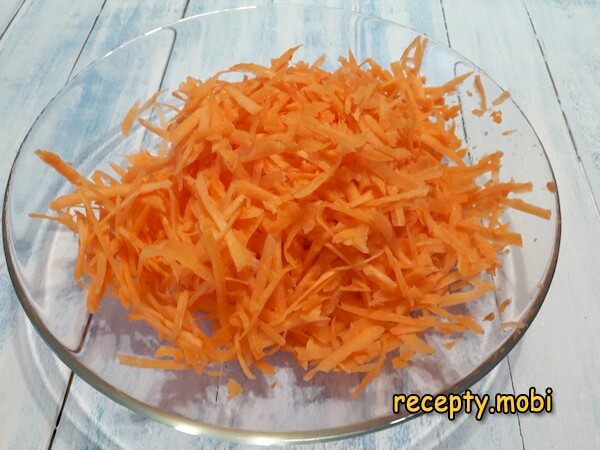
Grate carrot coarsely (large grater holes).
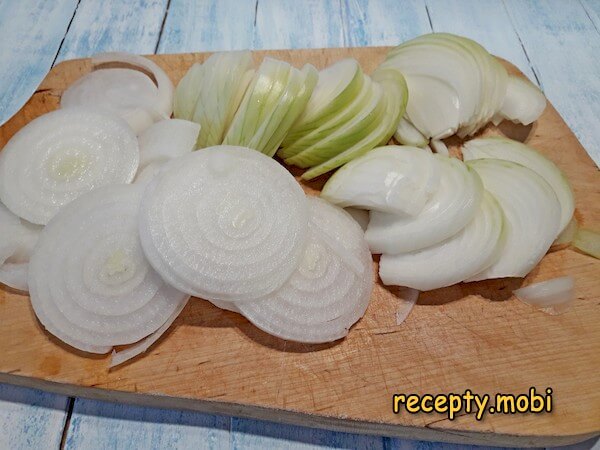
Cut large onions into half-rings; medium and small onions into full rings. The full rings are needed for the topping (intact circles look professional).
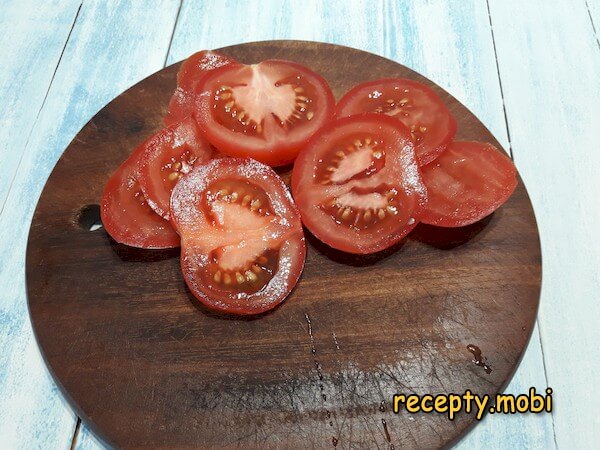
Cut tomatoes into thin slices (3-4 mm thickness).
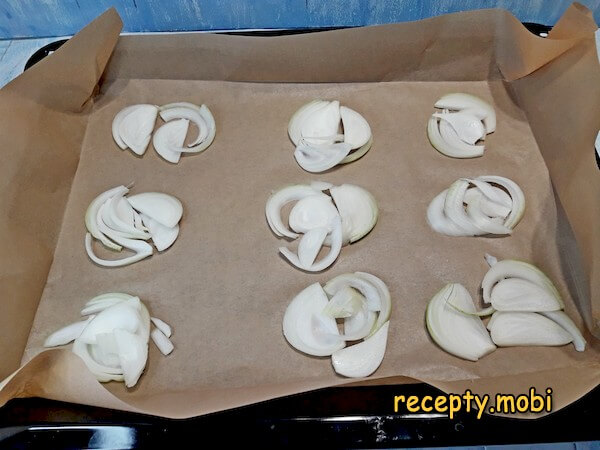
Line baking sheet with parchment paper. Begin building the dish: arrange onion half-rings/rings on the parchment with adequate spacing between each portion (these will be 7 individual patty bases).
Distribute grated carrot on top of each onion base. The vegetables form a flavourful cushion under each patty.
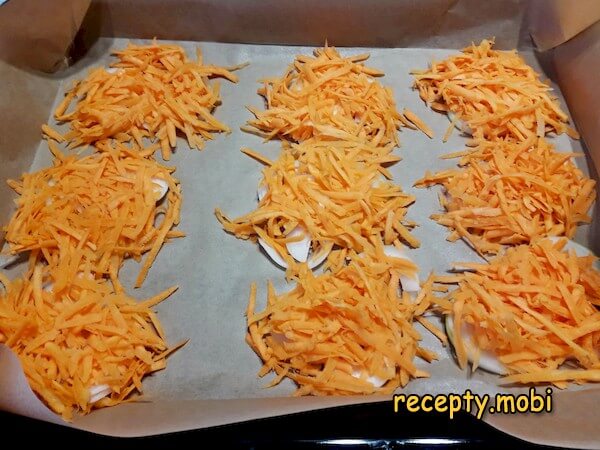
For uniform patties, use a small bowl or salad bowl as a mould. Lightly oil the inside; pack with about 110 g minced meat per patty (compress firmly).
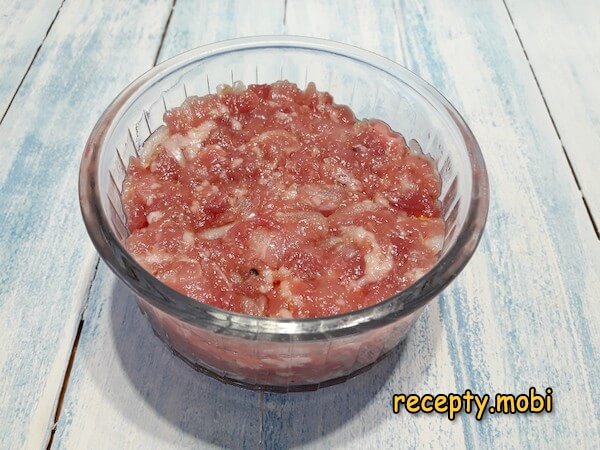
Invert the bowl over the carrot base — the patty slides out cleanly, sitting perfectly centered on the vegetables.
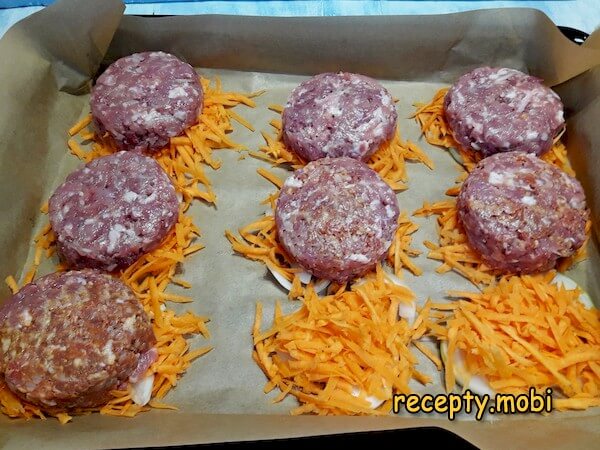
Place an intact onion ring on top of the patty (centered).
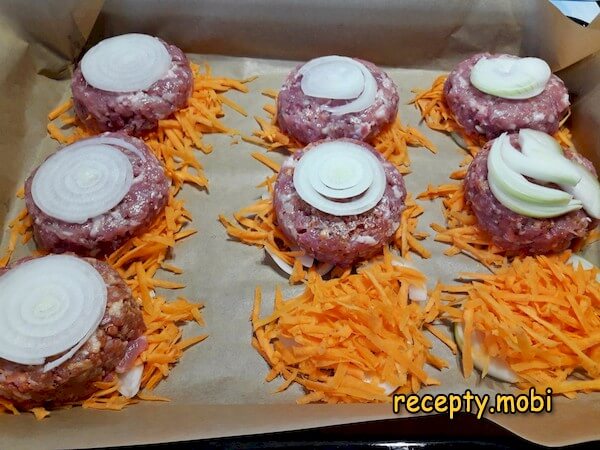
Add a tomato slice on top of the onion ring.
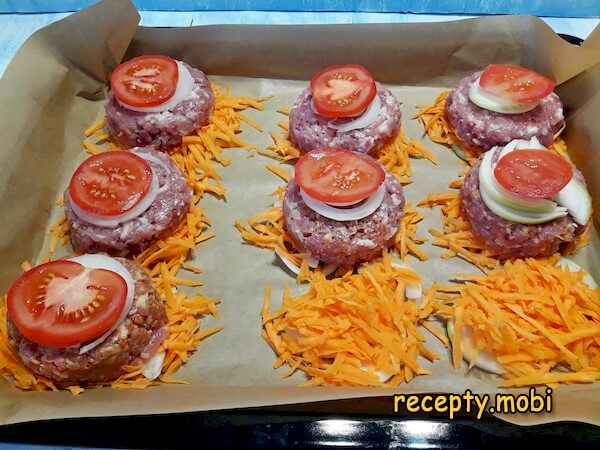
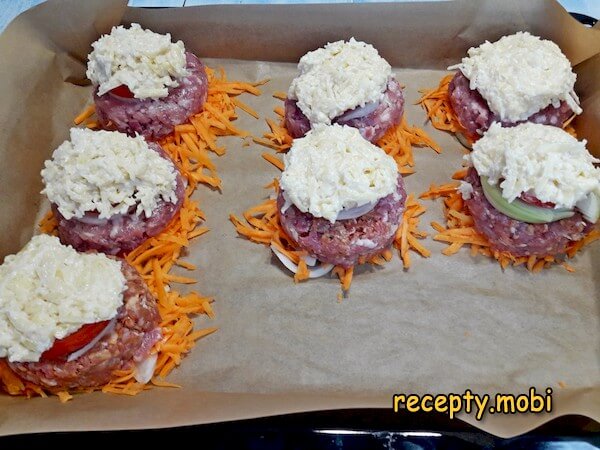
Top with the cheese-garlic-mayo mixture (1-2 tbsp per patty). Send the baking sheet to the middle oven rack.
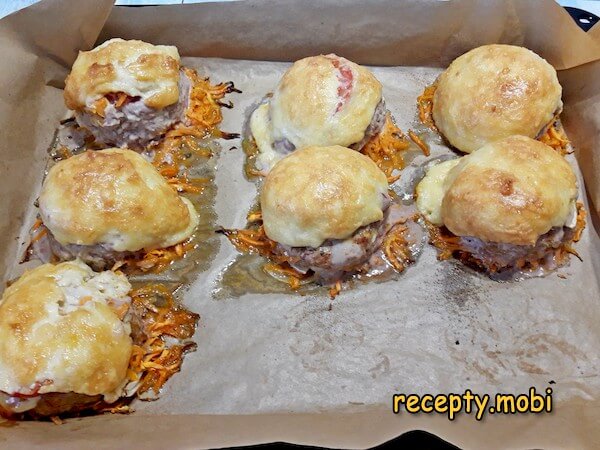
After 35 minutes, the patties are fully cooked and covered with golden bubbling cheese crust.The finished French-style minced meat in the oven exudes a wonderful warm garlic-cheese aroma. Serve hot with fresh herbs and crisp vegetables. Optional side dishes: mashed potato, plain rice, buckwheat, or simple roasted vegetables — anything mild that doesn't compete with the rich main.Try it, bon appétit!


Tips
- 1
THE BEAT-THE-MINCE STEP IS STRUCTURAL ENGINEERING. Step 5's "lift and throw" technique kneads the meat protein, developing the gluten-like structure that holds the patty shape under oven heat. Skipped versions: patties crack during baking, juices leak, dry texture. Beaten versions: structurally sound, juicy, properly formed. Same technique applies to all minced-meat patty recipes (cutlets, kotlety, hamburger patties). 10-15 firm throws is sufficient.
- 2
THE BOWL-MOULD TECHNIQUE PRODUCES UNIFORM PATTIES. Step 14's bowl-as-mould trick is the difference between rustic-looking and restaurant-presentation. Hand-formed patties have inconsistent shapes/sizes; bowl-moulded patties are perfectly uniform. The 110 g portion size is calibrated for proper patty proportions (matches onion ring + tomato slice + cheese topping). For another French-style oven version (without potatoes), see Meat French-style without potatoes in the oven.
- 3
THE MAYO-CHEESE COATING PREVENTS BURNING. Step 8's cheese-pre-mixed-with-mayonnaise serves a critical thermal role: the mayo emulsion coats each cheese particle, slowing the heat penetration that would otherwise cause cheese to char black. Result with mayo: golden bubbling beautiful crust. Result without mayo: black charred uneven crust. The mayo also adds richness and the slight tang that complements the meat. Don't substitute sour cream — it weeps water during baking, dilutes the cheese, and produces watery topping.
- 4
THE INDIVIDUAL-PORTION PRESENTATION. Unlike traditional French-style meat (large baking dish, sliced into rectangles for serving), this version creates 7 individual portion-sized circles. The presentation impact is significant — every guest receives a complete identical "tower" of vegetables + meat + topping. Easier to serve, easier to plate, looks more elegant. The same individual-portion approach works well for other oven-baked layered dishes. For a chicken-fillet variation worth trying, try French-style meat from chicken fillet in the oven.
FAQ
Why is it called "French-style"? +
The name is misleading — this dish is NOT actually French. It originates from Russian and Soviet cuisine, where "po-frantsuzski" (French-style) was a marketing label suggesting elegance and sophistication. The technique (layered meat with cheese and mayonnaise) has no historical or culinary connection to France. Authentic French gratin or casserole dishes are quite different. The name has stuck in Russian-speaking cuisine for decades and remains the recognised label, despite the geographical inaccuracy. Think of it as a culturally-Russian dish with an aspirational French name — delicious regardless of the etymology question.
Can I make it with chicken or turkey? +
Yes — this version is naturally adaptable. Best alternatives: ground chicken thigh (rather than breast — thigh meat has fat for moisture), ground turkey thigh, or beef-pork mix. Pure ground chicken breast or turkey breast will produce dry tough patties — too lean to bake well. If using lean poultry: add 50 g grated cold butter to the mince, plus extra grated onion juice. The 110 g portion size and baking time stay the same regardless of meat type. Lamb mince also works (Caucasian-style adaptation, slightly stronger flavour, very juicy).
Can I prepare components ahead? +
Yes — most components prep well ahead. Day-before preparation: form patties (refrigerate covered with plastic wrap), grate carrots and cheese (refrigerate separately), slice tomatoes (refrigerate covered to prevent drying). Assembly + baking should be same-day for best texture. Don't pre-assemble the entire dish overnight — the tomato juices and onion liquid leach into the patty, producing soggy texture. The cheese-mayo topping can also be made up to 2 days ahead and refrigerated. The overall make-ahead approach saves 15 minutes on serving day.
Why use both grated and chopped onion? +
Different onion preparations serve different roles. Grated onion (in the mince) — releases juice that moisturises and tenderises the meat; texture disappears into the patty. Half-rings (under patty) — caramelise during baking, providing a sweet aromatic base layer. Whole rings (on top of patty) — visual presentation element, slightly cooked but mostly intact, pretty under the cheese cap. Each form contributes different qualities; mixing them all into one preparation would lose the distinct functional and aesthetic benefits. The 70/180/100 g division is calibrated for proper proportions.
- Comment
or post as a guest
Be the first to comment.