avg —
Fried Lagman Uzbek Style

Instructions
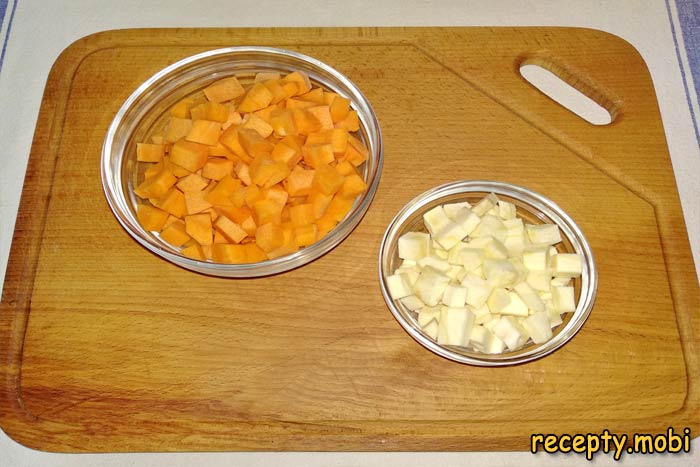
Prepare all the ingredients on the work surface. Wash the vegetables and peel them where necessary. Uzbek lagman has no "strict" set of vegetables – every family cooks it with its own mix, but the set shown here is the "classic" one. You can add potatoes, lentils or turnip to taste.
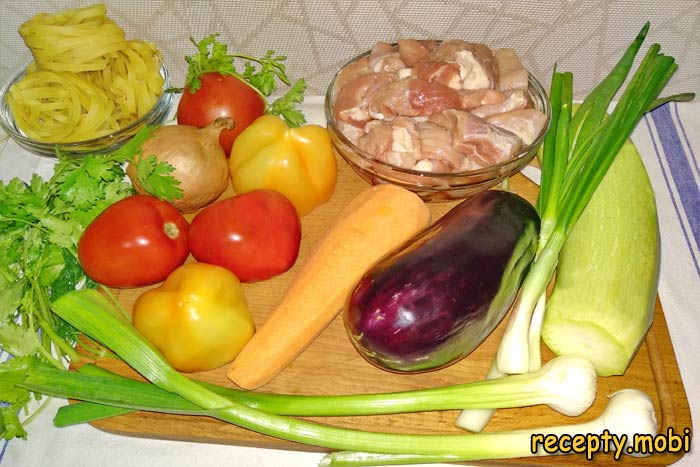
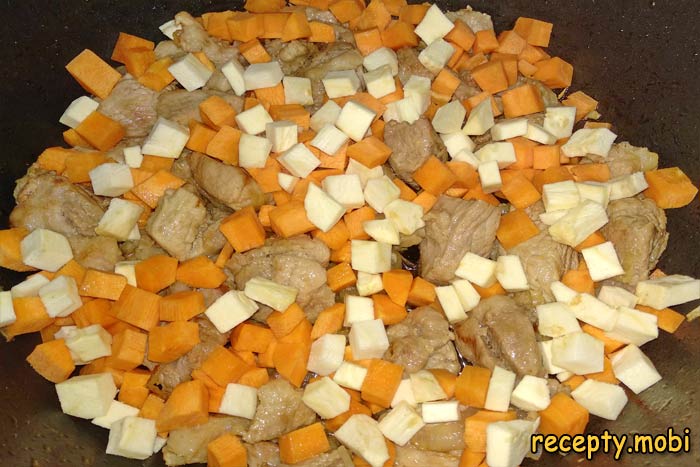
Peel the daikon radish and carrot and cut them into medium 1 cm cubes – these vegetables take longer to cook, so they go in first after the meat. A 1 cm cube ensures even cooking and helps them keep their shape while stewing; cut too small, they would turn to mush.
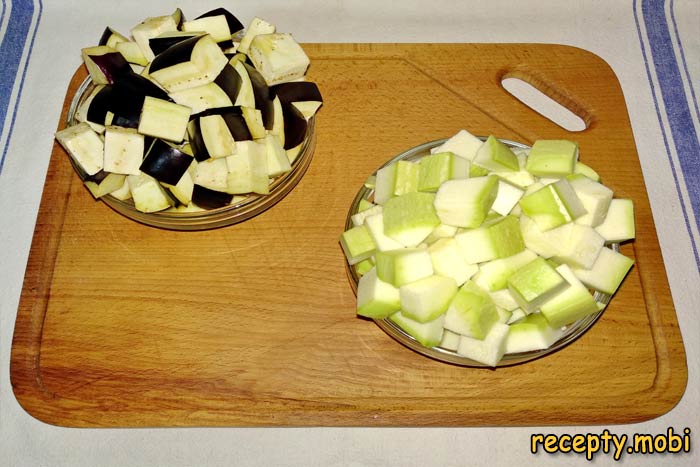
Do NOT peel the eggplant and zucchini – the skin holds their shape while stewing and adds "texture" to the dish. Cut them into large 1.5 cm cubes – they cook faster, so they are added later than the radish and carrot. If the eggplant is bitter, salt it and leave for 15 minutes, then rinse.
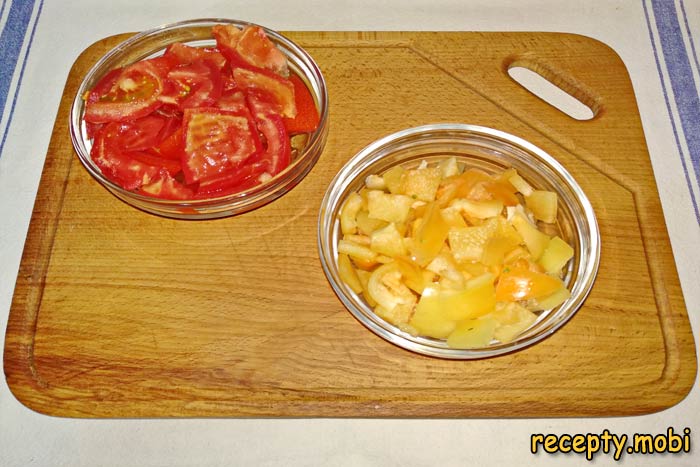
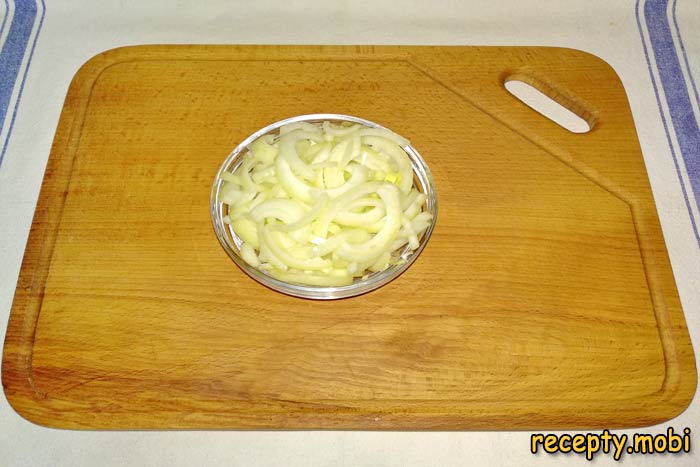
Cut the bell pepper and tomatoes into large 2 cm pieces, roughly. If you like, remove the skin from the tomatoes – blanch them for 30 seconds in boiling water and drop them into iced water. Cut the onion into thin 3–5 mm half-rings – it fries faster and "melts" into the sauce.
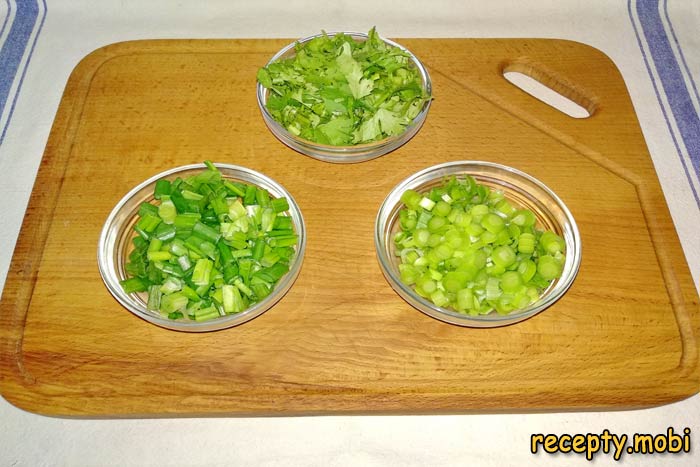
Finely chop the garlic greens, cilantro and spring onion with a knife. The greens are added right at the end for freshness and aroma – they are not cooked, otherwise they lose their colour and vitamins. These three greens are the "right" Uzbek accent for lagman.
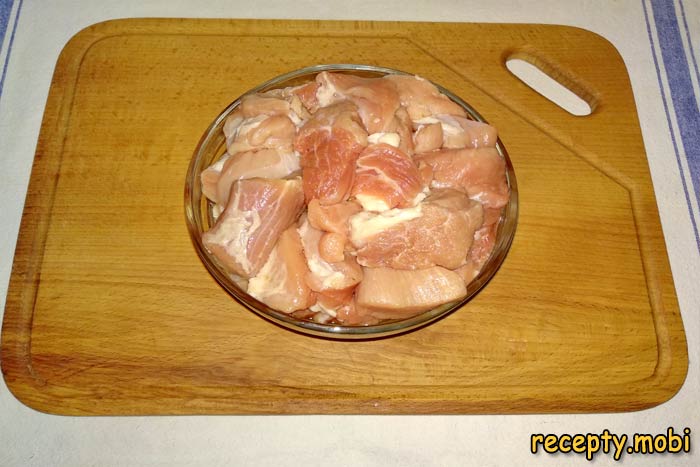
In the classic version lagman is made from lamb, but beef or veal is an excellent alternative. Cut the meat into large 3–4 cm cubes – "hearty" Uzbek-style pieces, so they stand out in the finished dish. There is no need to cut it small – the meat would get "lost" among the vegetables.
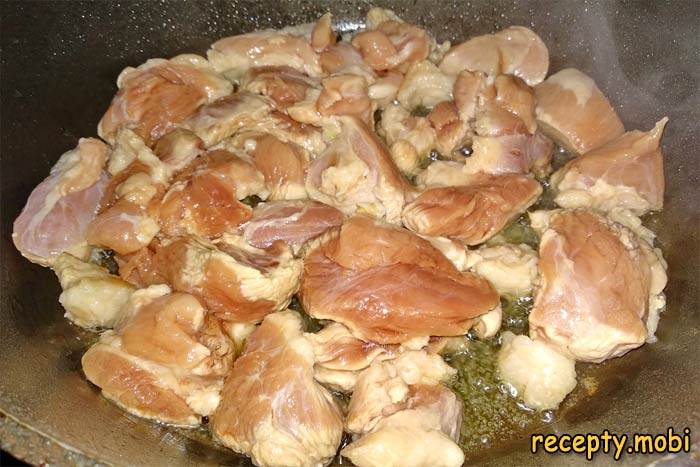
Take a thick-walled cauldron or sauté pan of 3–4 litres. Heat the vegetable oil (4 tbsp) well over maximum heat – the oil temperature is critical for forming a crust on the meat. Add the pieces of meat and fry for 5–7 minutes until golden brown on all sides, without reducing the heat.
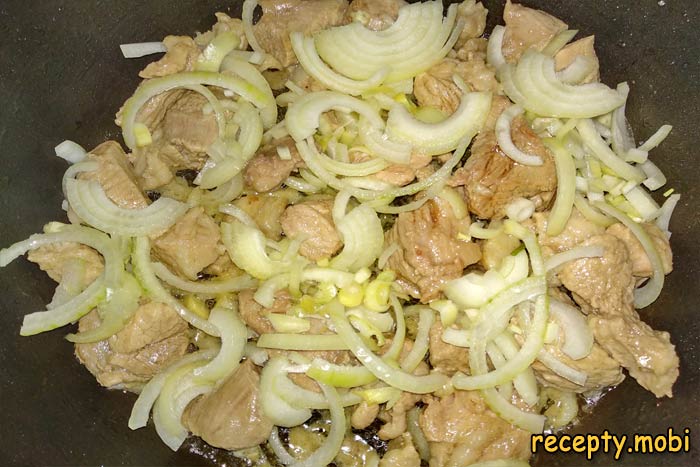
Add the chopped onion to the fried meat and fry for 2–3 minutes until translucent, stirring constantly. Then add the carrot and radish – the slow-cooking vegetables. Stew everything together for 5 minutes without lowering the high heat – the vegetables will "open up" in the hot oil and give the dish its orange colour.
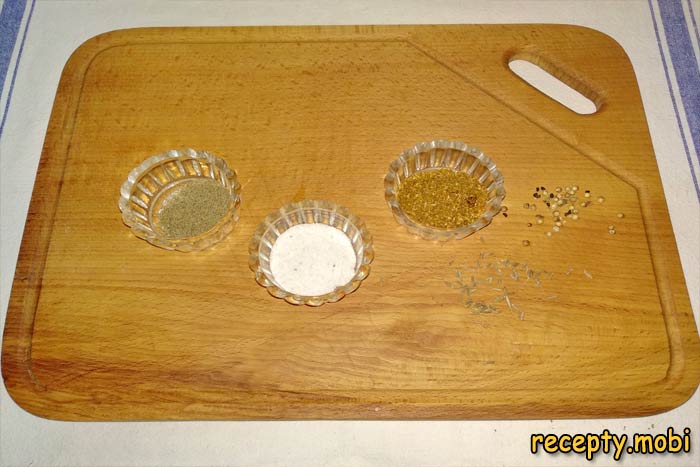
Add the tomatoes and stew for 5 minutes until they release their juice – the tomatoes "melt" into the sauce. Add half of the spices (½ tsp cumin, ½ tsp paprika, a pinch of pepper flakes) and salt to taste. Stir thoroughly – the spices should open up in the hot oil and give that "Uzbek" aroma.
Pour in boiling water (200 ml of fast-boiling water – not cold water, otherwise the meat will turn tough). Reduce the heat to low and stew under the lid for 30 minutes until the meat is half-cooked. Meanwhile, the noodles are cooked separately in a large pot of salted water – according to the instructions on the package (3–5 minutes for fresh, 8–10 for dried).
After 30 minutes, increase the heat to high and add the eggplant and zucchini (which cook quickly) – stew for 5 minutes over high heat. Add the bell pepper and the remaining spices and stew for another 5 minutes until all the vegetables are done.
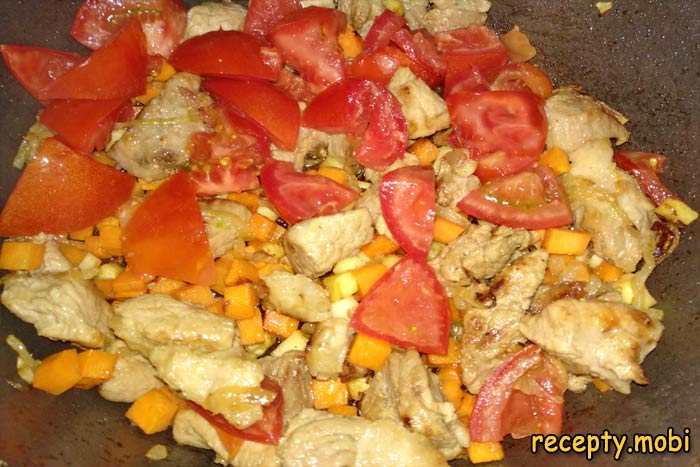
Right at the end, add all the prepared greens and pour in fast-boiling water (adjust the amount as you like: more = a first course, less = a second course). Bring to the boil, taste for salt and adjust to taste. Stew under the lid for another 5 minutes until the flavours come together. The fried lagman Uzbek-style is ready! I serve it in a deep bowl: the noodles first, then the vegetables with meat and sauce on top, sprinkled with fresh greens and garlic for the full "Uzbek" effect.


Tips
- 1
Cumin (zira) is MANDATORY – without it you get an ordinary stew, not Uzbek lagman. It is the "secret" spice of the dish.
- 2
Fry the meat over MAXIMUM heat for 5–7 minutes – it gives a browned crust and "seals in" the juices.
- 3
Pour in only FAST-BOILING WATER – cold water makes the meat tough and "rubbery". I use a similar approach for Uzbek plov.
- 4
Adjust the thickness with liquid: for a "first course" add more broth, for a "second course" keep a thick sauce. Versatile.
FAQ
Can lagman be made without radish? +
Yes, radish (daikon) is not a "mandatory" ingredient – it can be replaced or left out. Alternatives: turnip (a more "Russian" character), swede (an old-fashioned vegetable), parsnip (a more "European" note), celeriac (lighter in flavour), or simply increase the carrot to 3 pieces. Without radish the lagman will be lighter, without its characteristic "sharp" note. Radish in Uzbek cooking gives a unique "earthy" flavour and useful bitterness. Daikon is a modern replacement for ordinary black radish, milder in taste.
Which noodles should I use? +
The original uses homemade hand-pulled "chuzma" noodles from a dough of water, flour and egg. They take 30–40 minutes to make – long and not easy. Alternatives: dried lagman noodles (sold in Asian shops), dried egg noodles (instant brands such as Rollton or Doshirak will do), spaghetti cooked al dente (a European substitute), udon or soba (a Japanese substitute), rice noodles (for a lighter version), or vermicelli (for a simplified supper). The main thing is that the noodles should be firm and not boil down into mush. They are cooked separately and placed in the bowl first.
How long does the finished lagman keep? +
The finished sauce with meat and vegetables keeps in the refrigerator for up to 3 days in a tightly closed container. On the second day the flavour is even richer – all the ingredients soak up the spices and come together. Store the noodles SEPARATELY from the sauce (otherwise they soak and turn to mush) and reheat them before serving in boiling water for 30 seconds. Freezing is not recommended – the eggplant and zucchini lose their structure when thawed. It is best to cook it in portions for 1–2 days. You can prepare just the sauce without the noodles ahead of time – it freezes for up to 2 months.
What to serve lagman with? +
Lagman is a self-sufficient, hearty dish that needs no side. It is served with Uzbek flatbread (churek flatbreads, lavash, Uzbek non) to mop up the sauce from the plate, with pickled vegetables (cucumbers, tomatoes, Korean-style carrot), with a garlic sauce (matsoni with garlic and herbs), and with the classic Uzbek "achik-chuchuk" salad (tomatoes with onion and basil). For drinks – green or black tea (an Uzbek tradition), ayran, tan, pomegranate juice, or dry red wine. Good for a family dinner or for a gathering with guests. Ideal for a cool autumn or winter evening.
- Comment
or post as a guest
Be the first to comment.