avg —
Honey Cake with Prunes

Instructions
Place the ingredients on the table. Having everything in sight at room temperature makes the dough come together smoothly, with no last-minute scrambling for missing components.
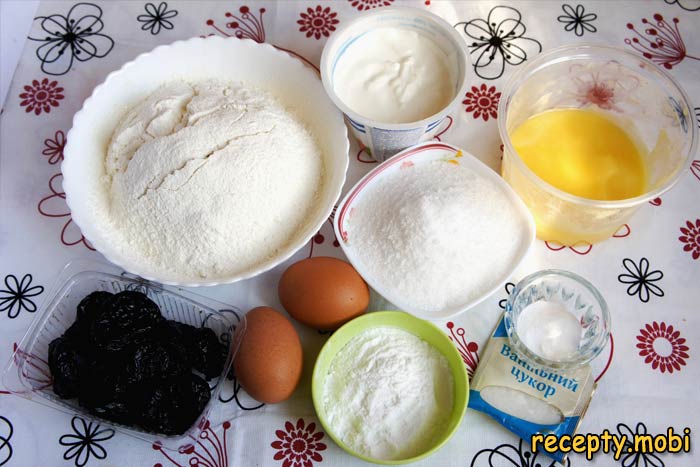
Break the eggs into a prepared bowl. Use room-temperature eggs — they incorporate more easily and produce a smoother batter than cold eggs straight from the fridge.
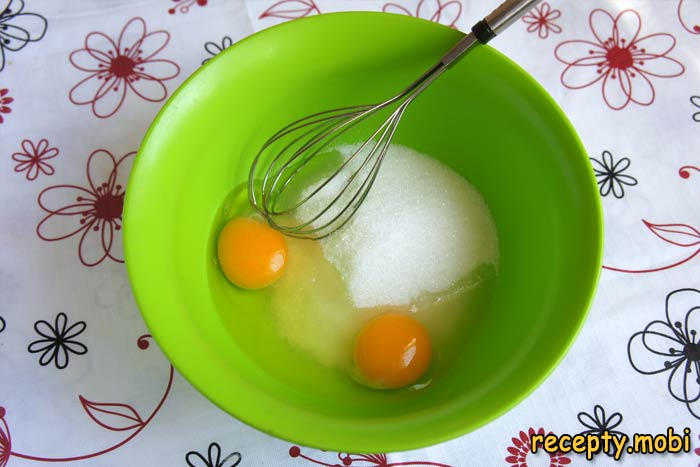
Whip the eggs. The whisking should incorporate enough air to lighten the eggs without forming stiff peaks — aim for an even pale-yellow color throughout the mixture.
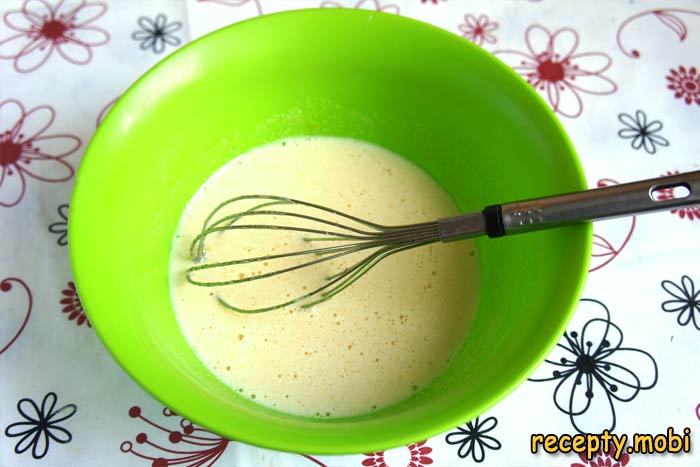
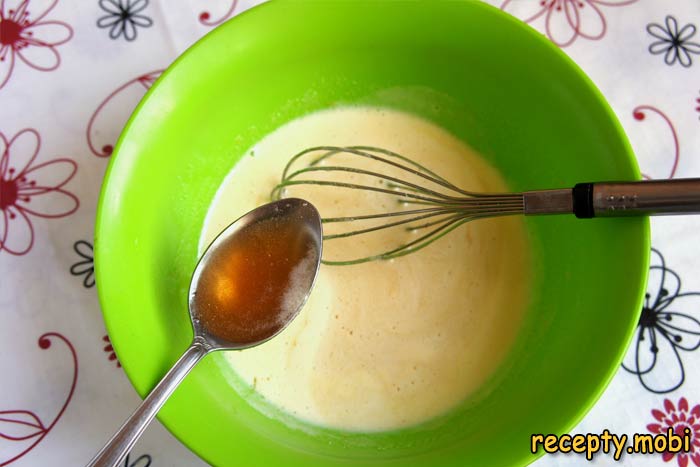
Add 1 tablespoon of honey to the egg foam. Mix gently so the foam stays light and airy. The honey contributes both flavor and moisture that helps the cake stay tender for days after baking.
Sift the flour to aerate it and remove any possible inclusions. Sifting also ensures the baking soda will distribute evenly when added in the next step.
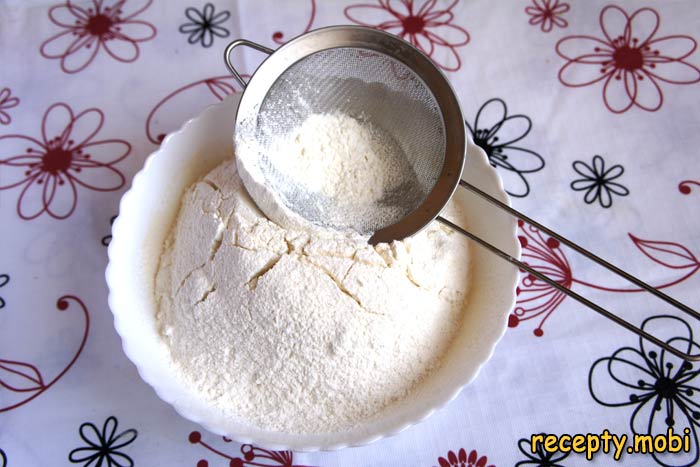
Add baking soda to the flour. The soda will react with the honey’s natural acidity during baking, lifting the layers to their signature airy structure without needing any other leavening agent.
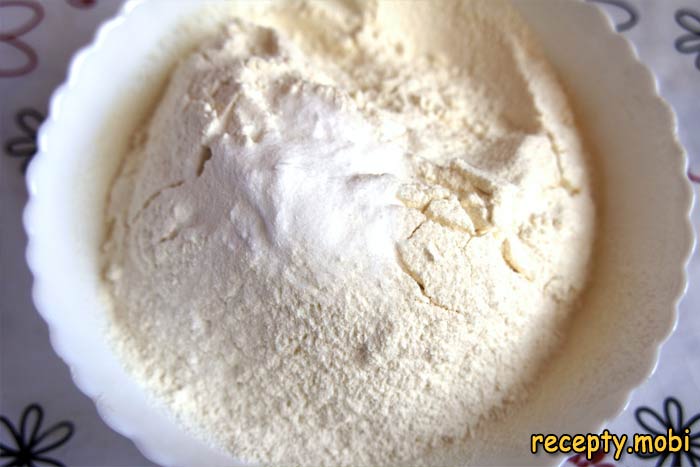
Add the flour to the bowl with the liquid ingredients, kneading the dough for the honey cake. Add the flour in portions so the dough stays tender and not packed with flour. Mix the first portions with a whisk for the smoothest consistency.
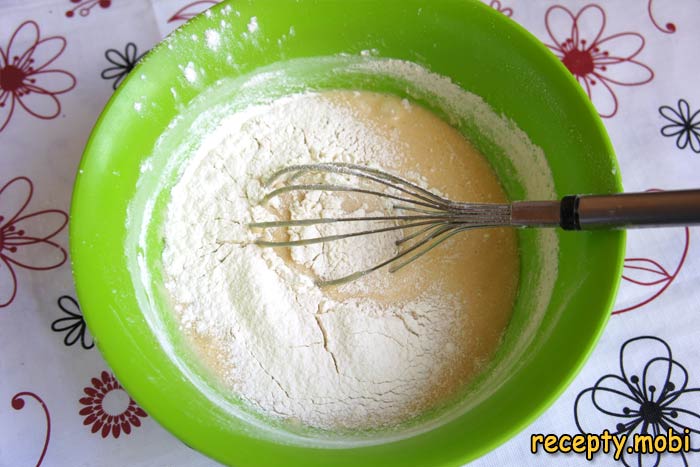
Add the last portion of flour, kneading the dough no longer with a whisk but with a spoon or wet hands. The dough will be thick and sticky. Cover the prepared dough and leave for 30 minutes. Wrap in cling film and place in the refrigerator for about 1-2 hours.
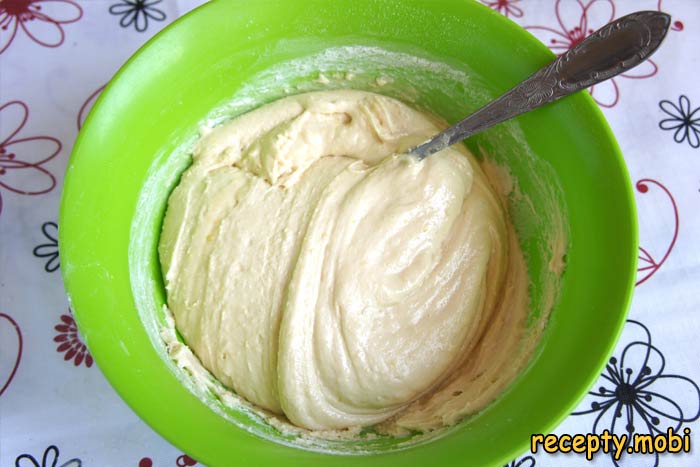
Divide the dough into 6 equal parts. A kitchen scale ensures even portions, which means evenly sized cake layers that stack neatly when assembled.
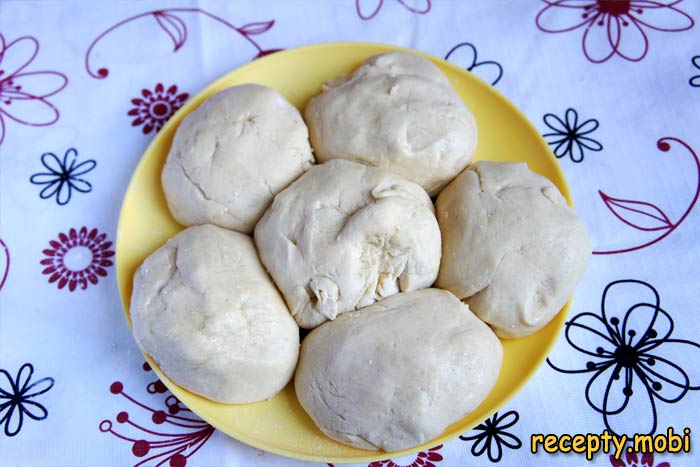
Now bake the layers. Roll out a portion of the dough to fit the baking forms. Roll on a surface sprinkled with flour to prevent sticking. Line the mold with parchment paper greased with vegetable oil and lightly sprinkled with flour. Place the rolled layer of dough, pricking it in several places with a fork so it does not puff up. Bake the cake layer at 180°C for about 5-7 minutes until golden brown.
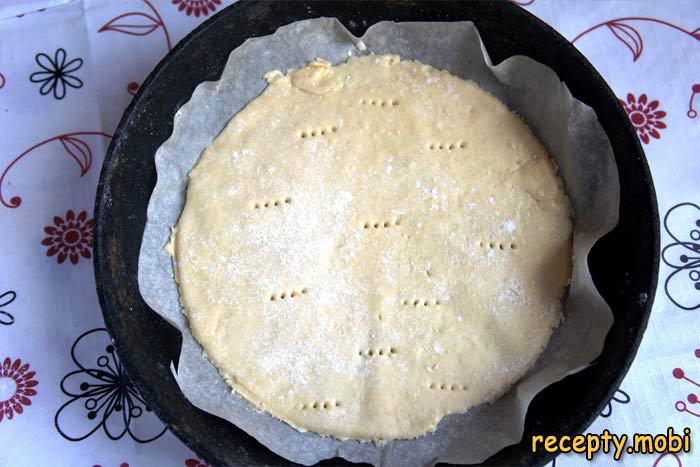
Bake all 6 layers for the cake in the same way. The layers should be uniformly golden but not browned at the edges; over-baking dries them out and makes the finished cake crumbly rather than soft.
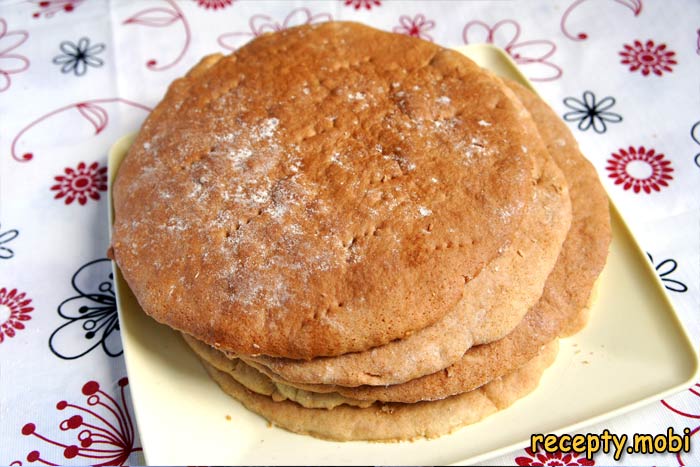
Crush one baked layer for sprinkling the finished cake, while leaving the others to cool. The crushed crumbs make the elegant rustic topping that gives this honey cake its distinctive appearance.

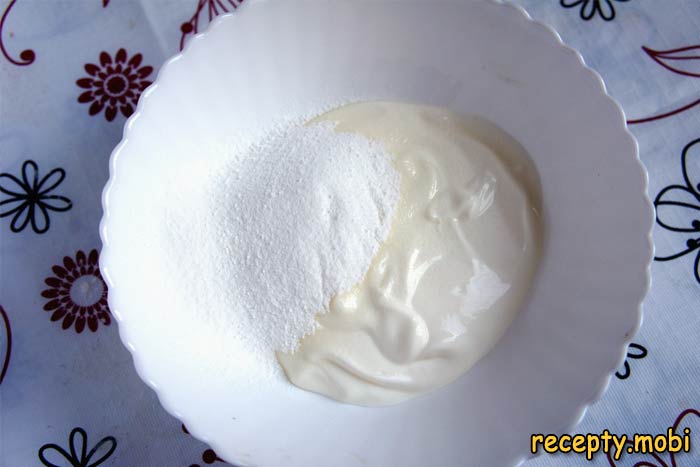
Prepare the cream for the honey cake. Combine the sour cream with powdered sugar and whip with a mixer until fluffy. The cream should hold its shape on the whisk but still be soft and spreadable rather than stiff.
For the cake, take soft pitted prunes. First wash the prunes, then finely chop them. If the prunes are very dry, soak them in warm water for 10 minutes before chopping to soften them up.
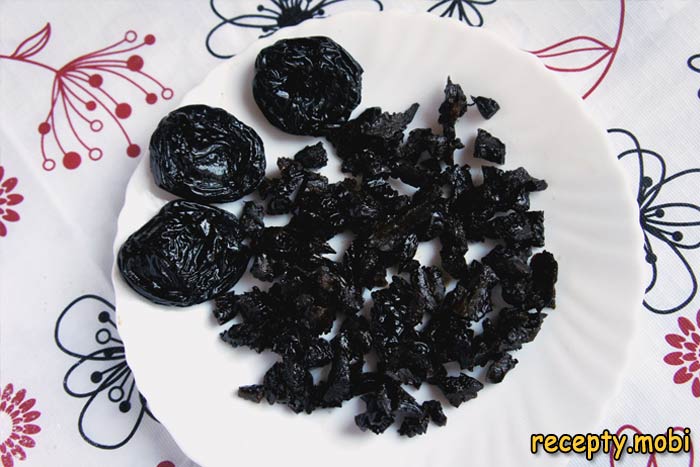
Assemble the cake. Cover the cooled bottom layer with whipped cream. Calculate so that enough cream remains for all the layers including the top and sides.
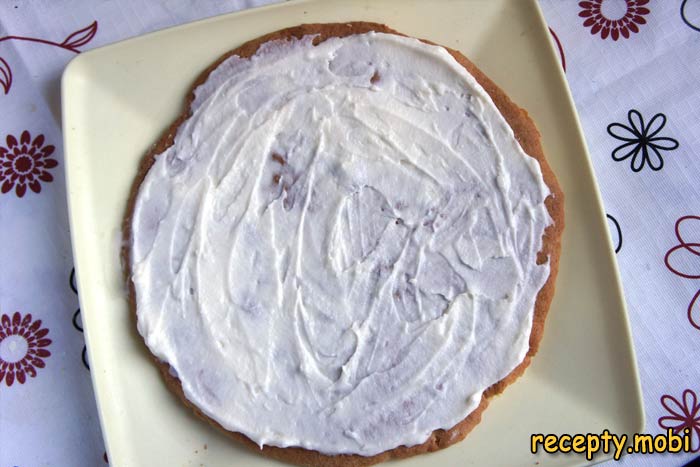
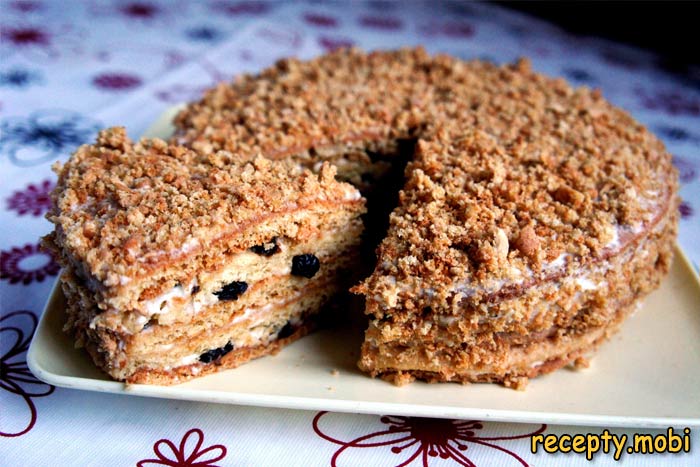
On the cream-coated layer, place some of the chopped prunes. Then cover with the next layer, which is also greased with cream and topped with another portion of prunes. Continue building the cake one prune-laden layer at a time.
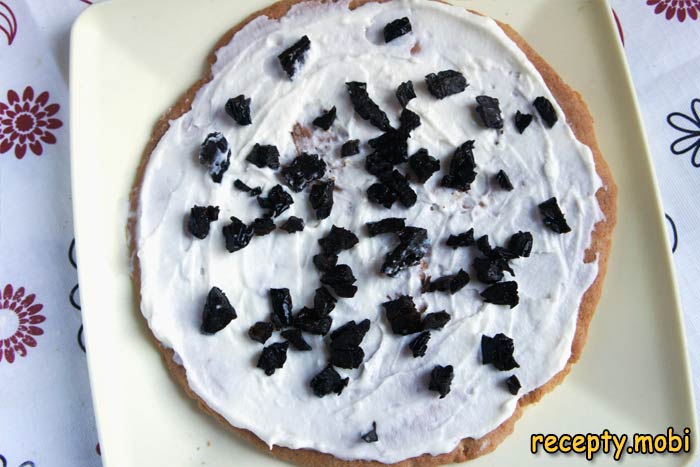
Do this with all 5 layers. On top of the cake also place cream. Spread the cream over the entire surface of the layer and on the sides of the cake for complete coverage.
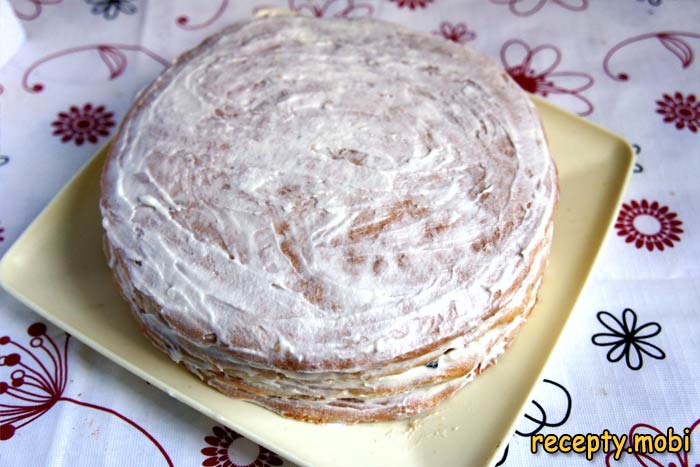
Sprinkle the top and sides of the layered cake with the prepared crumbs. Send the honey cake to the refrigerator for 5-6 hours. This rest is critical — the cream soaks into the layers, transforming them from crisp wafers into tender, moist cake.
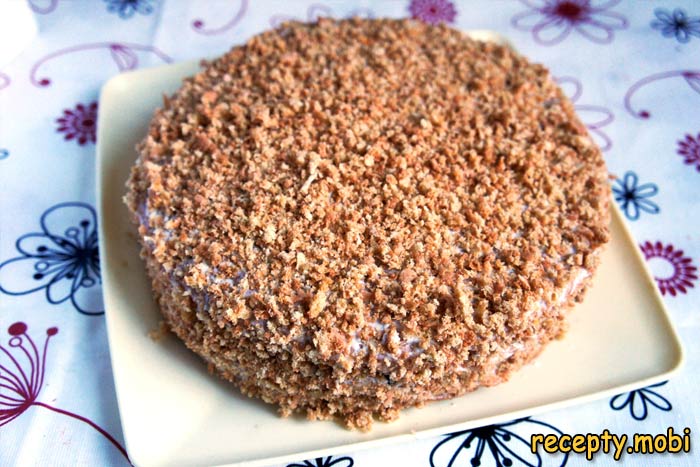
After taking the cake out of the refrigerator, leave it on the table for 30 minutes. Then cut into pieces. Honey Cake with Prunes is ready to enjoy. The cake actually tastes even better the next day, so leftovers are something to look forward to rather than worry about.


Tips
- 1
Use real liquid honey, not the cheap pasteurized supermarket kind. The honey is the dominant flavor of the cake, so quality matters enormously. Buckwheat honey adds dark malty depth, acacia honey stays light and floral, wildflower honey brings complexity. Crystallized honey works too; gently warm it until liquid before using. Save your best honey for this cake — it deserves the upgrade.
- 2
Soak the prunes in warm water or weak tea for 15 minutes before chopping. Dry prunes are leathery and chew unpleasantly in the soft cream layers. Properly hydrated prunes integrate smoothly into the cake’s texture and release their fruity sweetness into the sour cream. The same softening technique works wonders for any dried fruit in cake fillings, including in cottage cheese Easter cake.
- 3
Wait the full 5-6 hours of refrigeration before slicing. The dramatic textural transformation from crisp layers to soft cake happens entirely during this rest. Cutting too early reveals dry, crunchy layers that have not absorbed the cream yet. Patience here is the most important "ingredient" in the recipe — even an overnight rest improves the final result further.
- 4
Use 30% sour cream, not lighter versions. Low-fat sour cream produces watery cream that does not hold its shape or properly moisten the cake layers. Full-fat thick sour cream is the only kind that works. If you cannot find proper 30% sour cream, drain Greek yogurt in cheesecloth for several hours and combine with a tablespoon of heavy cream. Serve a slice with a cup of tea or strong coffee and crusty homemade bread on the side for an afternoon snack worthy of celebration.
FAQ
Why is my cake dry? +
Three possibilities: the layers baked too long, you used too much flour, or the cake did not rest long enough in the fridge. Bake layers until just golden, not deeply browned. Measure flour by weight if possible, since cup measurements vary significantly. Let the assembled cake rest at least 5 hours, preferably overnight, before serving. The cream needs full contact time to soak into the layers and create the signature soft, moist texture.
Can I use a different filling instead of prunes? +
Yes. Dried apricots, raisins, dates, or chopped nuts all work beautifully. Fresh berries like raspberries or strawberries add a bright tang. Apple compote or lemon curd offer different flavor profiles entirely. Each variation produces a different cake; the technique stays the same. Prunes are traditional and pair especially well with honey, but the recipe is flexible enough to accommodate experimentation.
How long does the cake keep? +
Properly covered in the refrigerator, the assembled cake keeps for 3-4 days. The flavor and texture actually improve for the first 24-36 hours, then plateau. After day three the cream begins to separate slightly but the cake remains delicious. Do not freeze the finished cake — the cream texture suffers significantly. Individual unfrosted layers can be frozen for up to a month and assembled fresh.
Can I make this cake without baking 6 separate layers? +
Traditionally, the thin-layer technique gives the honey cake its signature texture — many cream-soaked layers stacked together. However, you can bake the dough as 2-3 thicker layers and torte them after baking. The texture will be slightly different, more like a regular layer cake, but still delicious. Some modern variations bake the dough as one large sheet, cut into layers, and assemble. All approaches work; the thin-layer method just produces the most authentic result.
- Comment
or post as a guest
Be the first to comment.