avg —
How to dye eggs with beetroot

Instructions
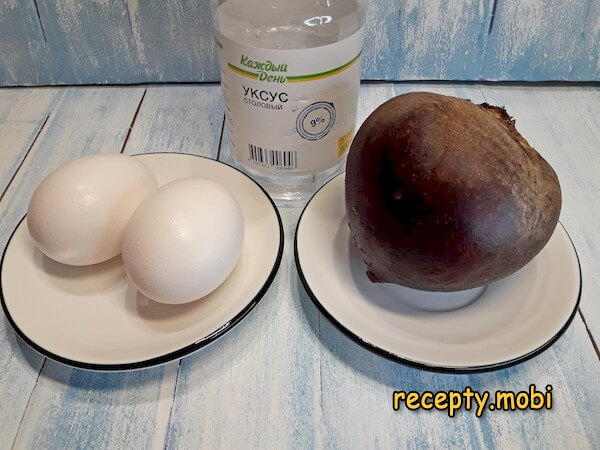
I prepare the ingredients. CRITICAL: eggs MUST be CLEAN and WHITE — pink shade requires white shells (brown shells produce muddy unattractive results). Take eggs out of fridge 10 minutes ahead to bring to room temperature (prevents cracking when added to boiling water).
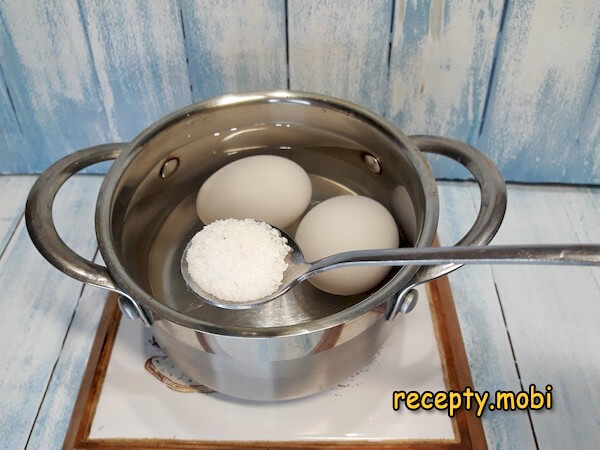
Place eggs in a pot, cover with water. Bring to boil; add salt; reduce heat to minimum sustaining boil. Cook 8-10 minutes for hard-boiled, then turn off heat.
While eggs cook, prepare natural dye: peel raw beetroot, grate finely.

Add vinegar to the grated beet mash; mix to integrate. The acid + pigment combination is what produces strong colour transfer to the shells.
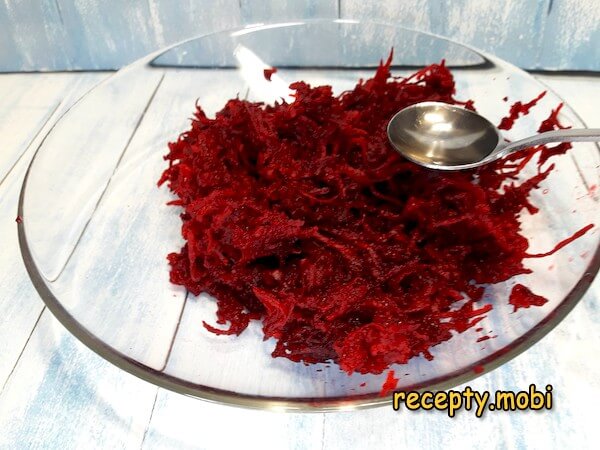
When eggs are done, remove from boiling water immediately — DON'T cool them. Transfer hot eggs directly onto a layer of beet shavings; surround each egg completely with more shavings on all sides.
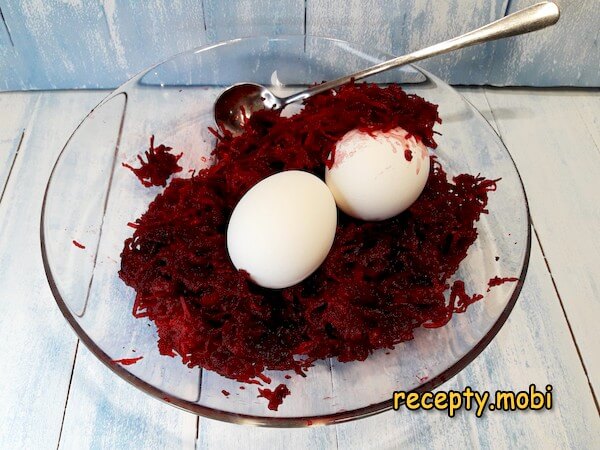
Press the shavings TIGHTLY against each egg with your palm — close contact ensures strong dye adhesion. Transfer the whole arrangement to the refrigerator. Leave 8 hours (overnight is ideal).
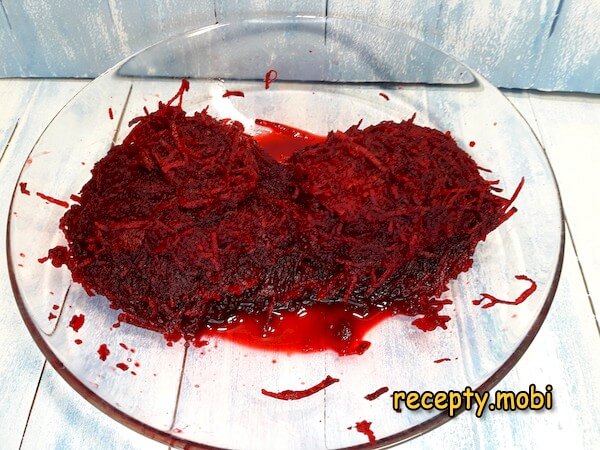
After 8 hours, retrieve eggs from the beet shavings. Check colour intensity — if too pale, return to refrigerator another 2-4 hours.
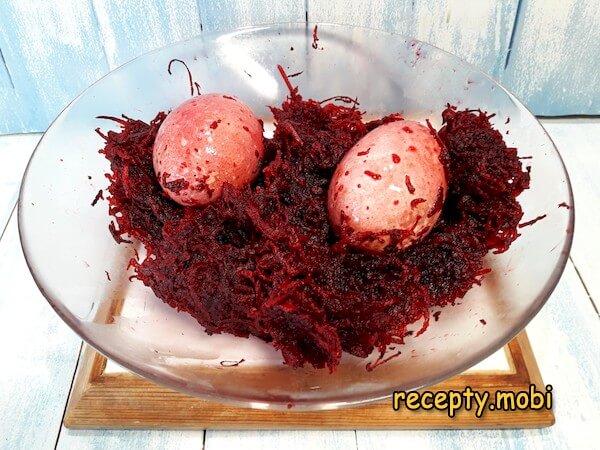
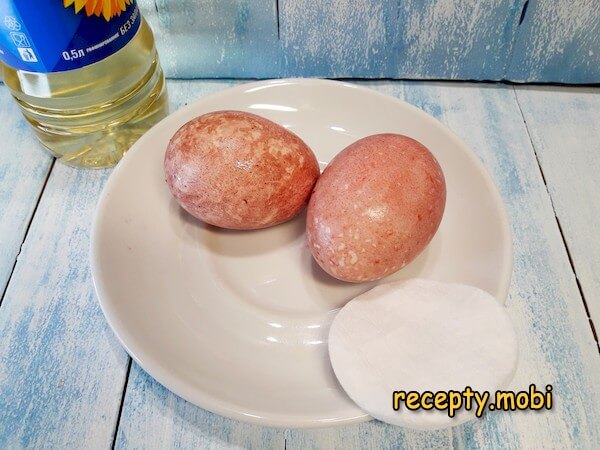
Wipe eggs clean with paper napkin (removes residual beet bits without removing pigment).

Optional finishing: rub with cotton cloth soaked in vegetable oil — produces glossy finish + deepens the apparent colour.Beautiful pink Easter eggs from one root vegetable — completely safe, hands stay clean during peeling, festive presentation. The natural-dye approach is suitable for households with allergies, children, or those preferring chemical-free Easter traditions.


Tips
- 1
THE HOT-EGG-COLD-DYE TECHNIQUE IS DYE SCIENCE. Step 5's "transfer hot eggs into cold beet shavings" approach maximises pigment absorption. Hot eggs have slightly expanded shells (heat expansion); the eggs cool while in contact with the dye, contracting back to original size — and pulling pigment INTO the shell pores during this contraction. Cooled eggs then dye-soaked: weaker pigment adhesion. Same hot-then-cool principle works in many natural-dye applications. Don't reverse the order.
- 2
THE VINEGAR ACID IS PIGMENT MORDANT. Step 4's vinegar addition isn't optional. Beetroot's pigment (betalain) anchors to the shell's calcium carbonate via the acid environment — vinegar lowers pH, stabilising the binding. Without vinegar: pigment washes off easily, weak colour. With vinegar: pigment adheres firmly, doesn't transfer to hands or surfaces. Same principle applies to most natural dyes (turmeric, hibiscus, onion peels — all benefit from acid mordant). For another red-pigment egg-dyeing technique worth comparing, see Marinated Eggs in Soy Sauce.
- 3
THE COLOUR-INTENSITY ADJUSTMENT. The 8-hour soak produces moderate pink colour. For DEEPER pink/magenta: extend soak to 12-16 hours. For PALE pastel pink: reduce soak to 4-6 hours. The grating fineness also affects intensity (finer grate = more juice released, stronger pigment available). For variation: combine beetroot soak with brief turmeric pre-dip (5 minutes) for two-tone orange-pink egg surfaces. Each beet variety produces slightly different shades — common red beets produce magenta; "candy stripe" beets produce more orange-pink.
- 4
THE WHITE-SHELL REQUIREMENT. The recipe's "white eggs only" instruction has chemistry basis. Brown eggshells contain protoporphyrin pigment (the source of brown colour) — adding pink dye produces muddy purple-brown rather than clean pink. White shells provide clean canvas for the beet pigment to display its true colour. If white eggs aren't available: a brief pre-bleach in mild peroxide (3% solution, 5 minutes) lightens brown shells, but this is fussy work — easier to source white eggs from a specialty store. For another red-wine egg-dyeing variation worth trying, try How to Dye Eggs with Red Wine.
FAQ
Will the colour fade over time? +
Beetroot dye on eggshells is reasonably stable — keeps colour 5-7 days at refrigerator temperature without significant fading. The vinegar-mordanted bond is durable. After 7+ days, slight fading begins as the pigment slowly oxidises. For longest colour retention: refrigerate the dyed eggs in airtight container; don't expose to direct sunlight (UV accelerates pigment degradation). For Easter celebration: dye 1-2 days before Easter Sunday; the eggs are at peak colour through the celebration week. Don't dye more than a week ahead.
Are these safe to eat? +
Yes — completely safe. Beetroot is a common food (people eat it daily); vinegar is a food-safe condiment; the eggshell is porous but the pigment doesn't penetrate to reach the egg meat. Once peeled, the egg interior is identical to plain hard-boiled eggs (perhaps with very faint pink tinge near the shell — visually negligible, completely safe). Children safely consume these eggs without exposure to any synthetic chemicals. The natural-dye approach is preferred for households with concerns about commercial egg dye safety, particularly for very young children.
Can I use beet juice instead of grated beet? +
Yes — pure beet juice works as alternative. Method: replace grated beet with 250 ml fresh beet juice (or store-bought, unsweetened). Place hot eggs in beet juice + 20 ml vinegar + 1 tsp salt; soak 8 hours. Result: similar colour but slightly different texture — juice produces uniform colour while grated beet produces slight marbling effect (where the shavings contact at different intensities). Choose based on desired aesthetic. Cooked beet broth (water leftover from boiling beets): also works as juice substitute, ready-made convenient.
What other natural ingredients work for pink shades? +
Several alternatives produce similar pink-to-magenta colours. Best options: red cabbage juice (produces blue, but with vinegar shifts to pink — fascinating chemistry experiment), fresh raspberry juice (deep pink, less stable), pomegranate juice (subtle pink), red onion peels (pink-red colour with similar technique to yellow onion peels). Combinations: beet + red onion peels = deeper magenta. Beet + turmeric = peach-coral colour (mixing red + yellow). Each adds slight character variation. Beet remains the most reliable + accessible option for pink Easter eggs.
- Comment
or post as a guest
Be the first to comment.