avg —
Jerky at Home

Instructions
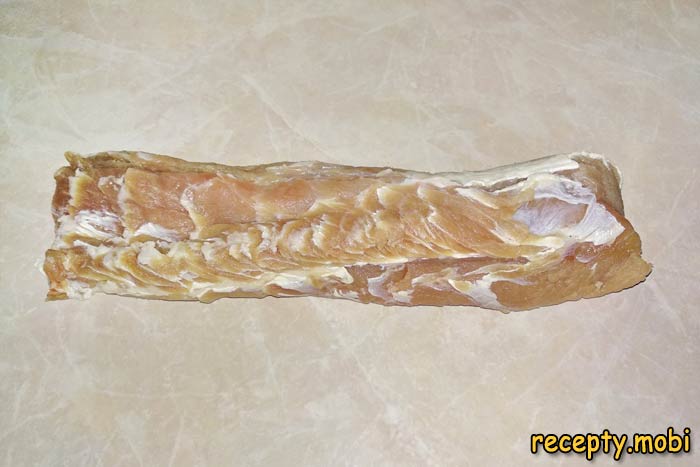
Any tenderloin works for this recipe according to your taste preference. Beef, pork, turkey, or even chicken tenderloin all produce excellent jerky. This version uses pork tenderloin. The meat needs washing, cleaning from excess fat, membranes, and tendons. Shape the meat evenly. Pat with a paper towel to remove excess moisture before salting.
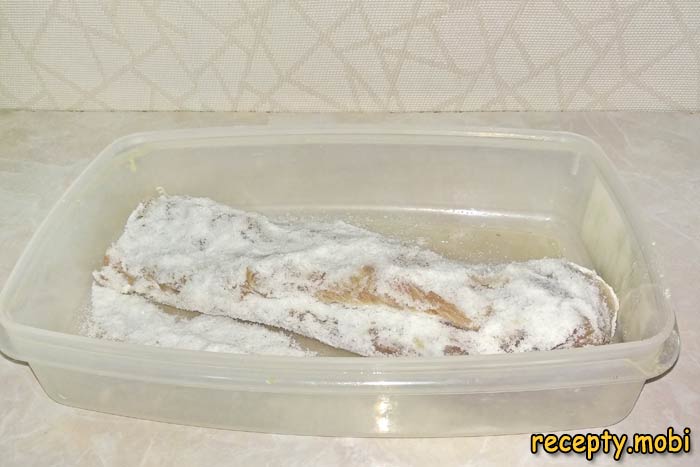
The next step is to salt the meat well. Pour salt into the bottom of a flat dish and lay the meat on it. Roll the meat thoroughly in the salt; add more salt as needed to fully coat. Do not worry that the meat will turn out too salty — the soaking step adjusts the salt level later. Cover and refrigerate.
After 24 hours, rinse the meat under running water and remove all salt. Place the salted tenderloin in a clean dish and cover with cold water. Change the water every thirty minutes. After two hours, cut a small slice and taste. If still too salty, soak another half hour. When the salt level satisfies you, prepare the spices and seasonings for the coating: black pepper, fenugreek, Provencal herbs, and sweet paprika. Add favorite spices to taste.
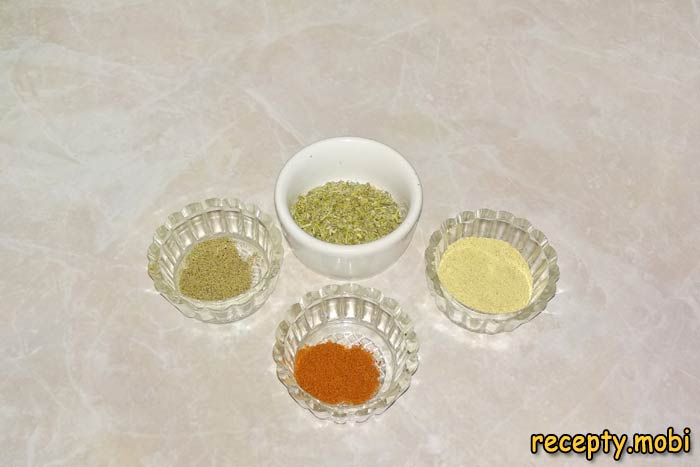
Mix all the spices and spread them on an even surface. Place the slightly damp tenderloin on the spices and generously roll it in the mixture. There should be no gaps on the meat — the entire surface should be well coated with the fragrant spice blend.
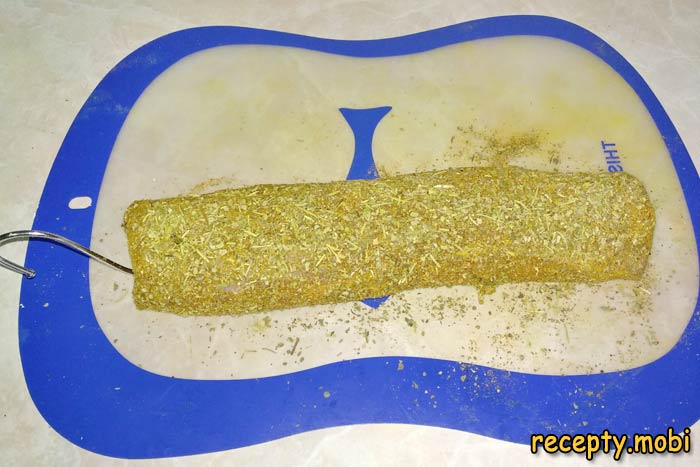
Leaving a little space from the edge, make a through hole in the meat and thread a twine or hook through it. Hang the meat in a well-ventilated area. Do not hang in direct sun — the top dries out while the middle stays raw. The tenderloin can hang in the kitchen under the range hood with the fan running periodically for air circulation.
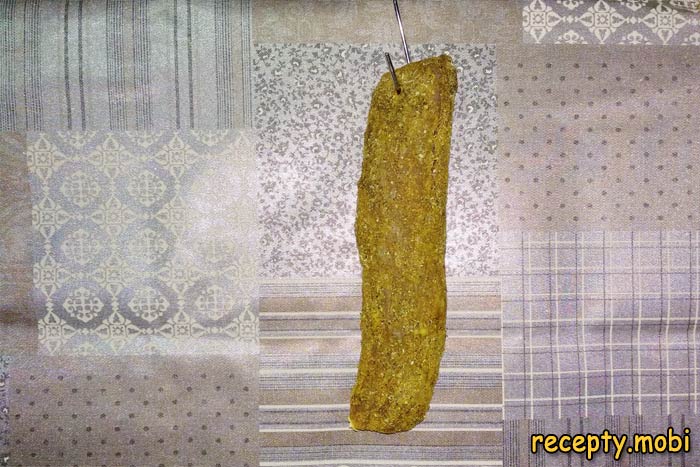
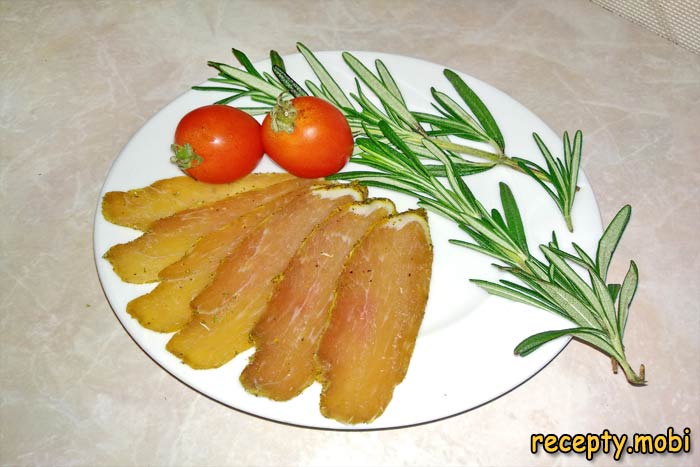
After 4-5 days, the jerky at home is ready. Slice thinly and serve. The meat keeps well in a paper bag in the refrigerator. Prepare jerky with fragrant herbs at home yourself, and you will never buy commercial varieties again. The pure flavor and absence of preservatives make a dramatic difference in eating experience.


Tips
- 1
Use only the freshest tenderloin from a trusted butcher. Dry-curing means the meat is never cooked; food safety depends entirely on starting with high-quality, fresh, contamination-free meat. Vacuum-packed supermarket pork from unknown sources is risky for this technique. Inspect for any off smells or sliminess before starting; healthy fresh meat smells almost neutral with a slight clean meat scent.
- 2
Hang in a cool, dry, well-ventilated spot — ideally 8-15°C with low humidity. A screened porch in fall or a cool pantry are perfect. Bathrooms (humid) and warm kitchens are bad choices. The same conditions matter for proper aging of homemade pork basturma and other dry-cured meats.
- 3
Skip the salt soak step if you prefer salty jerky. Some traditional cured meats are intentionally salty to act as a strong preservative. The 2-hour soak in fresh water is purely for taste preference. If you plan to slice the jerky thin and serve as a salty snack with cold beer, the brief soak (or none at all) suits the dish well. Adjust to your family’s taste.
- 4
Slice paper-thin for serving. The intense flavor and dense texture work best in delicate sheets, not thick chunks. Use a very sharp knife or partially-frozen meat with a slicing machine for the cleanest cuts. Serve on a wooden board with bread, sharp cheese, olives, and a glass of red wine for a classic charcuterie spread. Slices of crusty homemade bread alongside complete the experience.
FAQ
Is it safe to eat dry-cured pork without cooking? +
Yes, when properly prepared. The salt cure plus drying together create an environment where harmful bacteria cannot survive. Modern home curing follows the same principles humans have used for thousands of years to preserve meat without refrigeration. Use only the freshest pork, follow salt-cure times exactly, and dry in proper conditions. If you ever see mold during drying, wipe with vinegar; black or green mold means discard the entire batch immediately.
How can I tell when the jerky is done? +
The meat should feel firm to the touch with no soft spots, but still bend slightly without cracking. Press with your fingers in several places — uniform firmness across the entire piece means done. If the center still feels soft or squishy, hang another day or two. Cutting open a piece is the surest test — the interior should look uniformly dark and dry, not pink or moist.
Can I use beef or chicken instead of pork? +
Yes, both work well. Beef tenderloin produces classic jerky with deep meat flavor and chewier texture. Chicken breast makes lighter jerky with a milder taste, popular among those avoiding red meat. Turkey also works similarly to chicken. The salt-cure times stay roughly the same for similar-sized cuts, though chicken benefits from slightly shorter brine time (20 hours instead of 24) since it absorbs salt faster.
How long does homemade jerky keep? +
Wrapped in paper or stored in a paper bag in the fridge, jerky keeps for 3-4 weeks. The spice crust acts as a natural preservative. For longer storage, vacuum-seal portions and freeze for up to 6 months. The dried meat continues aging slightly during storage, becoming firmer and more concentrated in flavor — this is desirable up to about 6 weeks. After that, it can become unpleasantly hard and salty.
- Comment
or post as a guest
Be the first to comment.