avg —
Kumyk Khinkal

Instructions
I prepare the ingredients for kumyk khinkal. Pre-ground mince works fine; for a more traditional flavour I grind lamb or beef shoulder myself. Tomato paste can be replaced with about 250 g of fresh tomatoes, finely chopped — the gravy will be slightly less concentrated. The dough water amount is approximate (varies with flour absorbency), so I add the last 20 ml only if needed. No oil or fat is used anywhere in this recipe.
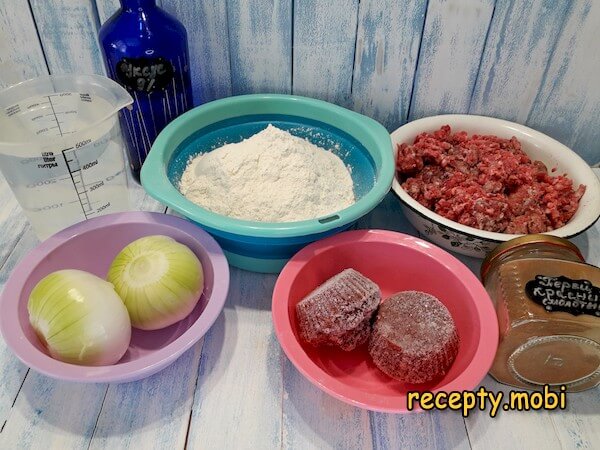
I start with the gravy. I finely chop the onion — small dice gives the gravy a smooth body without obvious pieces.
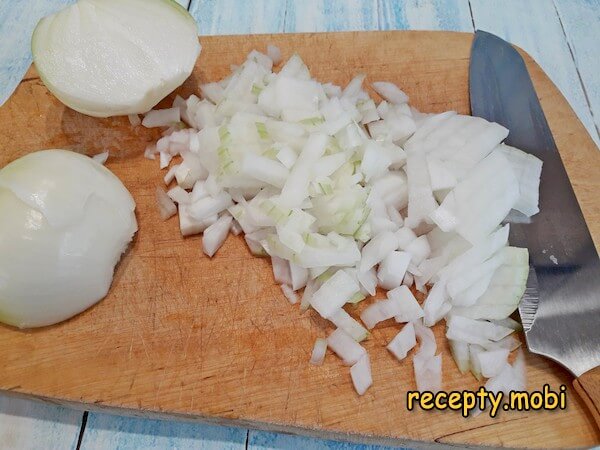
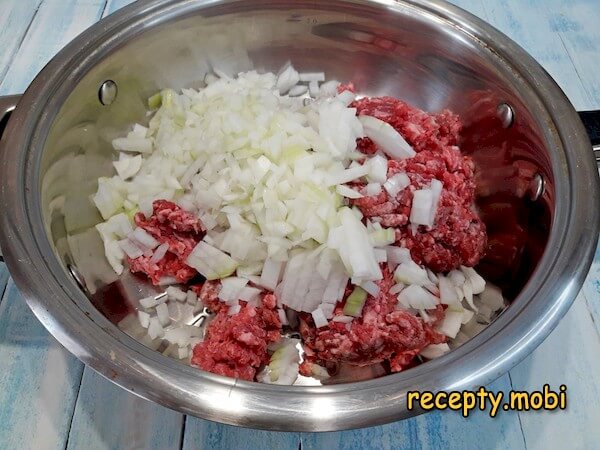
I transfer the beef mince and chopped onion to a deep frying pan or wide-bottomed pot. The wide bottom matters because the gravy will reduce, and a wide vessel evaporates faster.
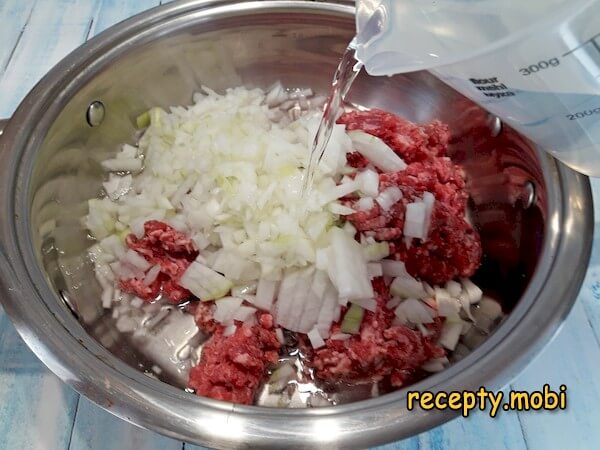
I pour in 500 ml of room-temperature water. Cold water start (rather than dropping mince into already-hot fat) keeps the meat soft and gravy-friendly rather than browning into hard crumbs.
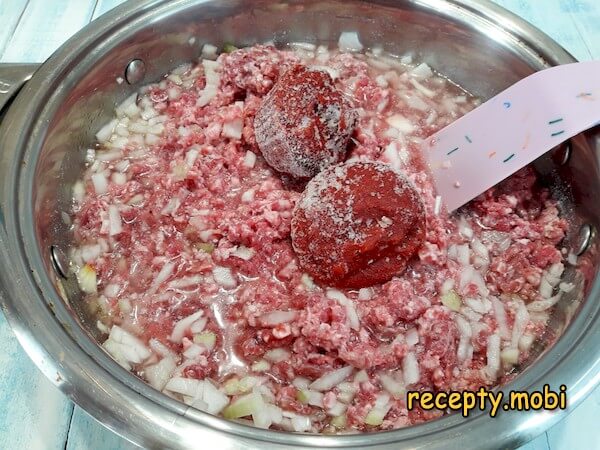
I add the tomato paste. If using fresh tomatoes, they go in finely chopped at this stage — the lower water content of paste vs fresh affects timing slightly.
I place the pan over medium heat, salt the contents, and bring to a boil. From the boil, I cook for 20 minutes, stirring occasionally to prevent scorching at the bottom. The gravy reduces and thickens noticeably during this window.
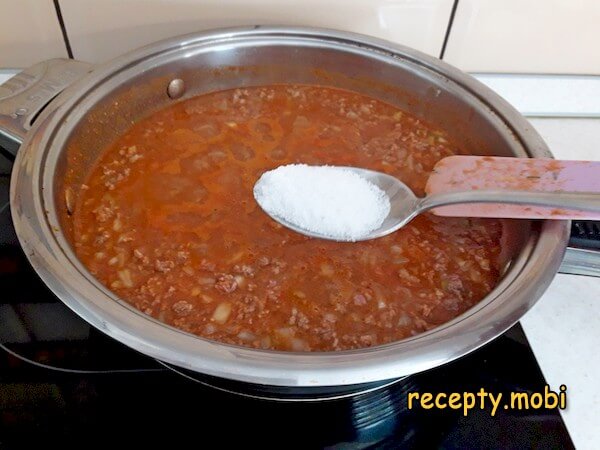
At the end of the 20 minutes, I add the hot red pepper. Late addition keeps the heat sharp and bright; pepper added at the start would dull from extended cooking.
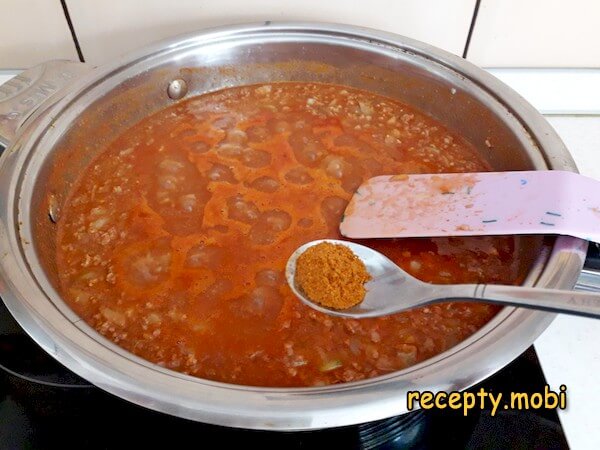
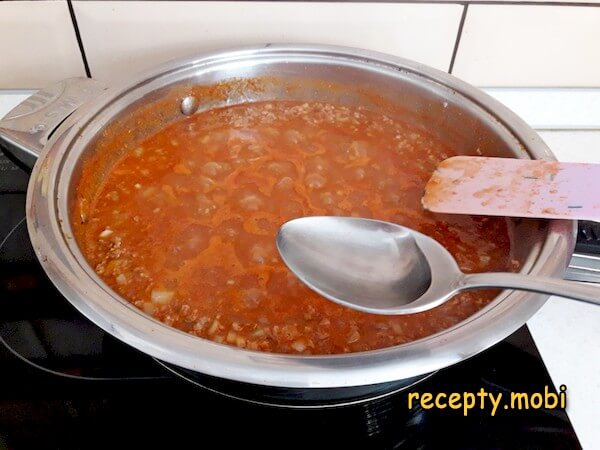
Immediately after the pepper, I add a tablespoon of vinegar. This is the signature acid lift that defines Caucasian-style meat gravies. I taste the sauce and add a second spoonful if it needs more sourness.
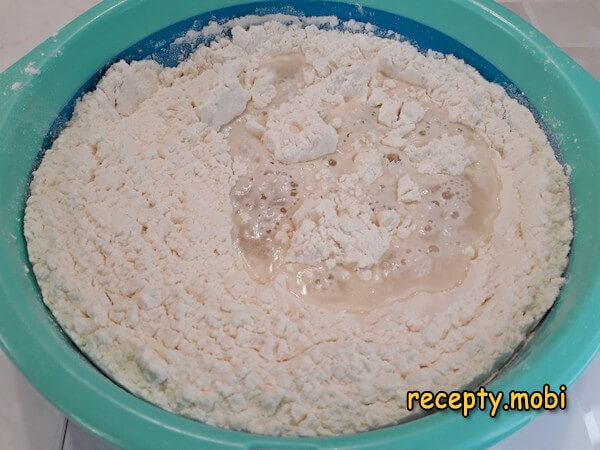
While the gravy simmers, I make the dough. I sift the flour with the salt into a large bowl, make a well in the centre, and pour in about 180-190 ml of the water. I start kneading right in the bowl with one hand.
I transfer the dough to the work surface and continue kneading, adding the remaining water only if needed. The dough should be moderately firm — softer than bread dough, firmer than pasta dough. I form a ball, cover with a clean towel, and let it rest 20 minutes. The rest is non-negotiable; freshly kneaded dough is too elastic to roll thin without snapping back.
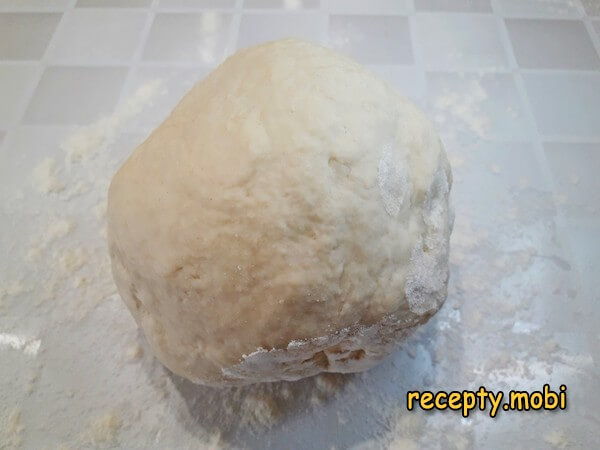
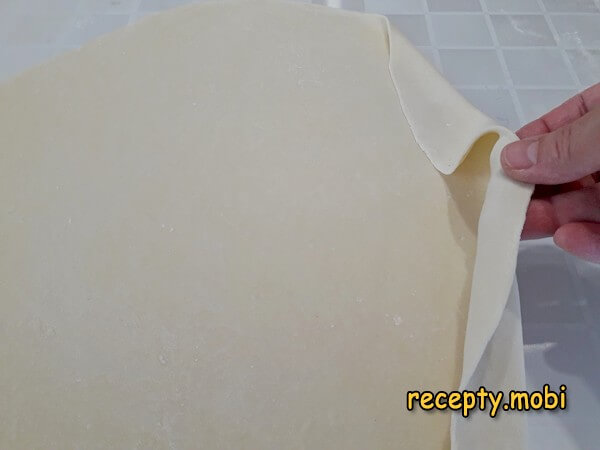
After the rest, the dough rolls out smoothly. I divide it into 2 portions (easier to manage one at a time) and roll each to about 3 mm thick — not paper-thin like pasta, but thinner than dumpling dough.
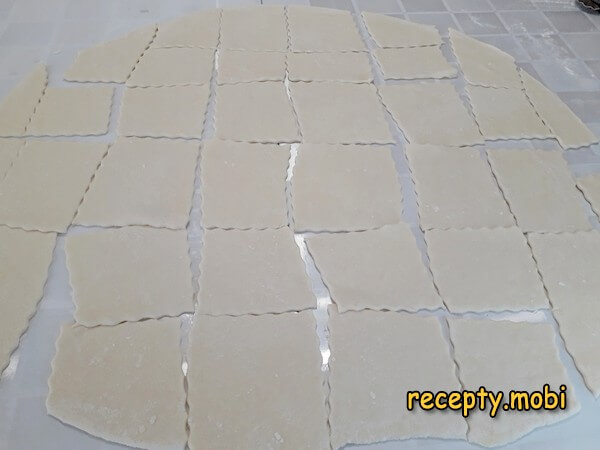
I cut the rolled dough into 4 cm squares — a pizza cutter is faster than a knife for the parallel cuts.
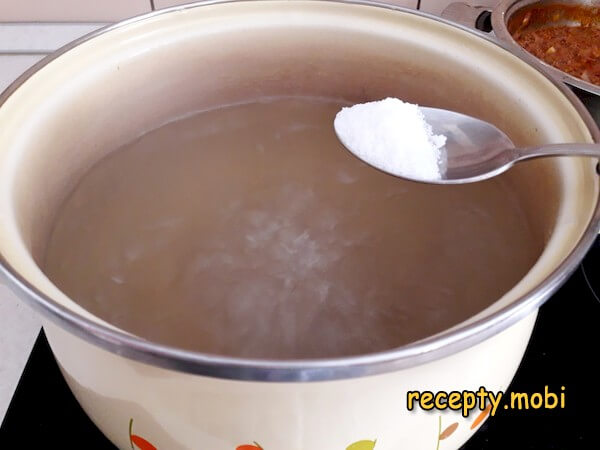
I bring 3 litres of water to a hard boil in a large pot, then add 0.5 tbsp salt. Plenty of water and aggressive boiling keeps the dough squares from sticking together.
I drop all the squares into the boiling water at once and use a slotted spoon to lift the ones that sink to the bottom. Once they all float and the water returns to a boil, I cook them for just 1-1.5 minutes — they finish fast at 3 mm thick.
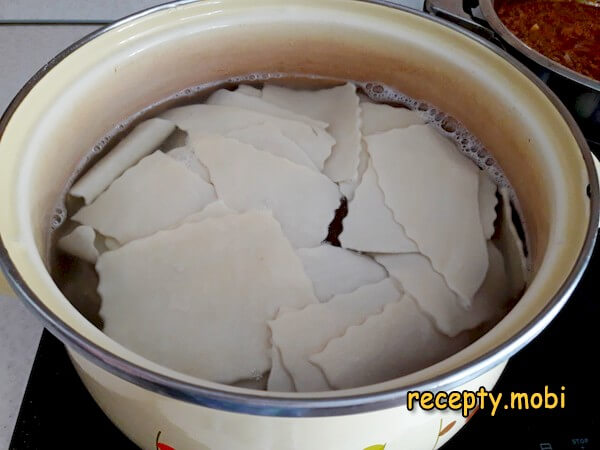
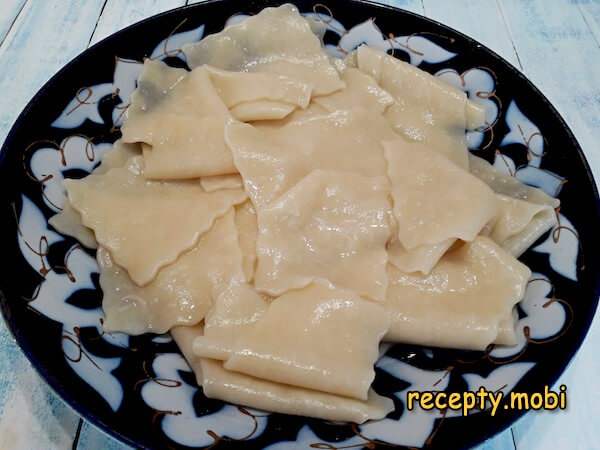
I lift the cooked squares with a slotted spoon and arrange the first layer on a large serving plate.
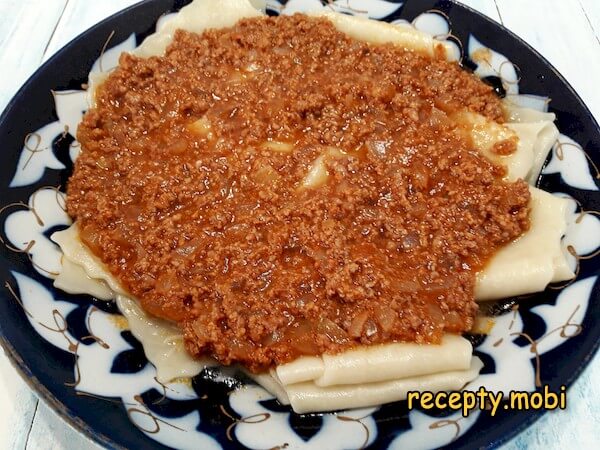
I spoon a portion of the meat gravy generously over the dough layer.
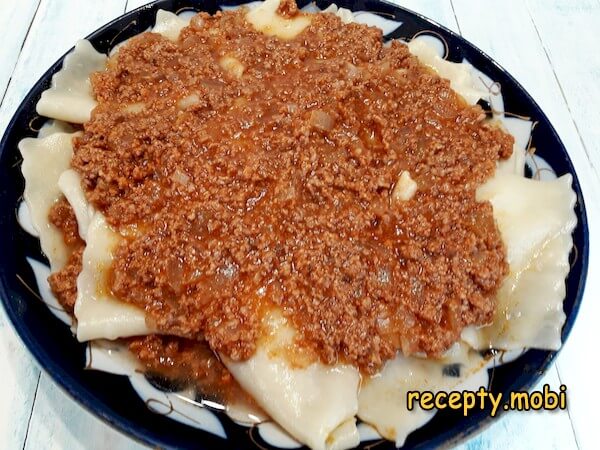
I repeat the dough-then-gravy layering 2-3 times, finishing with a top layer of gravy. The stack should be substantial — kumyk khinkal is a generous portion meant to feed several people from a single plate.Kumyk khinkal is served straight to the table while still hot — the warmth integrates the gravy into the dough as you eat. The juicy seasoned meat and tender pasta-like dough have a comfort-food quality reminiscent of Russian pelmeni or Italian pasta al ragù. The traditional way to eat it is with both fork and spoon — fork for the dough squares, spoon for capturing the gravy that pools at the bottom.


Tips
- 1
THE DOUGH RESTS — DON'T SKIP. Twenty minutes of rest after kneading is the difference between dough that rolls smoothly to 3 mm and dough that snaps back into a thicker, uneven sheet. The rest lets the gluten network relax. If pressed for time, you can knead the dough first (before the gravy) so it has the gravy-cooking time to rest — that's actually the more efficient sequencing for the whole recipe.
- 2
LAMB IS THE TRADITIONAL CHOICE. Beef mince is what's specified here for accessibility, but Dagestani families traditionally use lamb shoulder mince — its richer fat profile gives the gravy a deeper, more characteristic flavour. Mixed lamb-beef (50/50) is the best of both worlds: traditional flavour with the wider availability of beef. Avoid pork — it's not used in Caucasian Muslim cuisine and the flavour profile doesn't fit. For another rich Caucasian beef preparation, see Beef Stroganoff with Mushrooms.
- 3
THE VINEGAR IS THE FLAVOUR SECRET. Don't skip or reduce the vinegar — Caucasian-style meat gravies almost always include a sour element (vinegar, pomegranate molasses, sour plum sauce) that brightens the meat's richness. If 9% vinegar is too sharp, substitute apple cider vinegar (gentler, slightly sweet) or fresh lemon juice (1.5 tbsp instead of 1 tbsp vinegar). The brightness lifts the dish from heavy to balanced.
- 4
SERVE WITH A GARLIC-AND-HERB CONDIMENT. Traditional kumyk khinkal often comes with a small bowl of crushed garlic mixed with vinegar, salt, and chopped herbs (cilantro, dill, basil) on the side — diners spoon a little onto each bite for an extra hit of brightness. To make: 4 garlic cloves crushed + 2 tbsp vinegar + 1 tsp salt + a small handful of mixed fresh herbs, mashed together with a fork. For another Central Asian beef preparation in a similar warming style, try Dumlyama in Uzbek Style.
FAQ
What's the difference between Kumyk khinkal and Georgian khinkali? +
They share a name root but are completely different dishes. Georgian khinkali are pleated dumplings — a meat-and-broth filling sealed inside a hand-twisted dough purse, eaten by hand. Kumyk khinkal is layered: separate sheets of boiled dough alternated with meat gravy on a communal plate, eaten with fork and spoon. The Kumyk version comes from Dagestan; the Georgian version from across the Caucasus. Both are excellent but you can't substitute one technique for the other — they're as different as ravioli and lasagna.
Can I make the dough ahead of time? +
Yes, with planning. The dough can be made up to 24 hours ahead, wrapped tightly in cling film, and refrigerated. Bring back to room temperature for 30 minutes before rolling — cold dough resists rolling and can crack at the edges. The 20-minute rest after kneading still applies for fresh same-day dough. Cooked dough squares should be used within 2-3 hours and don't reheat well; the assembly happens just before serving.
Why is my gravy too thin? +
Three usual causes. First, you reduced the cooking time below 20 minutes — extending to 25-30 minutes evaporates more water and concentrates the gravy. Second, you used fresh tomatoes instead of paste without adjusting — fresh tomatoes carry much more water (substitute 250 g fresh for the 160 g paste, but also reduce the added water from 500 ml to 350 ml). Third, you used over-aged tomato paste that lost flavour and forced you to add more water for body — fresh tomato paste is more concentrated and uses less water for the same result.
How do I store and reheat leftover khinkal? +
Store the dough squares and gravy separately in airtight containers in the fridge for up to 2 days. Reheat the gravy gently on the stovetop with a splash of water; warm the dough squares briefly in boiling water (30 seconds) or microwave covered for 60 seconds. Reassemble fresh on the plate. Don't store the assembled dish — the dough absorbs the gravy and turns mushy overnight. The components separately keep texture and flavour for proper second-day eating.
- Comment
or post as a guest
Be the first to comment.