avg —
Lecho with Eggplants and Peppers for Winter without Sterilization

Instructions
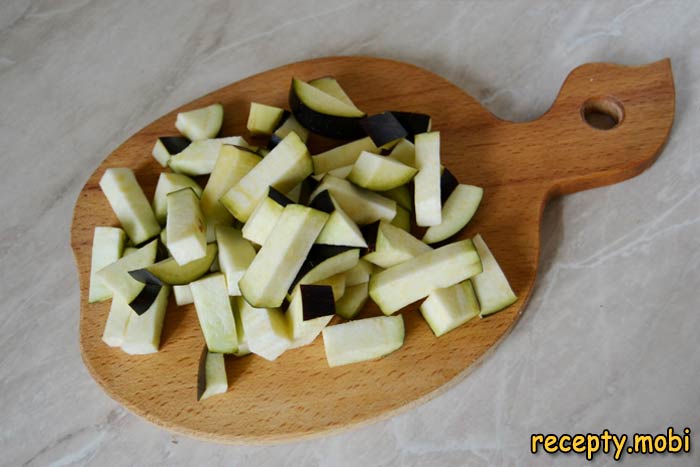
Wash the eggplants and cut off the tails. Cut a few centimeters off the hard tip along with the tail. Without peeling, cut the vegetables into small sticks. Do this quickly, as cut eggplants darken from oxidation.
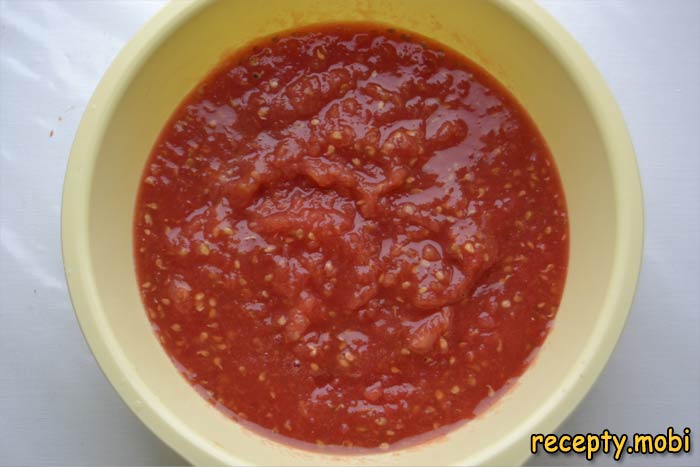
Take firm meaty tomatoes to make a thick tomato paste. The "Slivka" variety is excellent for this. After washing, pass them through a meat grinder. From this amount of tomatoes about 1 liter of tomato mass is obtained.
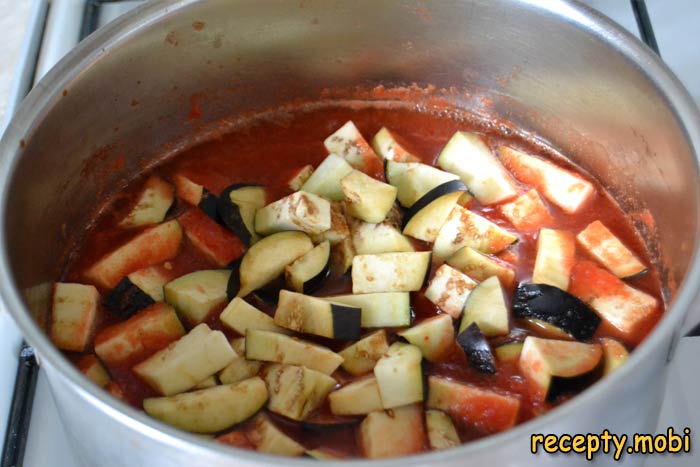
Pour the tomato mass into a cooking pot. Add sugar, salt, vegetable oil, and vinegar. Pour the chopped eggplants into the pot with tomatoes. Cover with a lid and cook the eggplants in tomato for 10 minutes over low heat.
Peel the onions from the skin. Better to take small onions. Cut them into half rings. From small onions you get thin neat strips that integrate beautifully into the sauce.
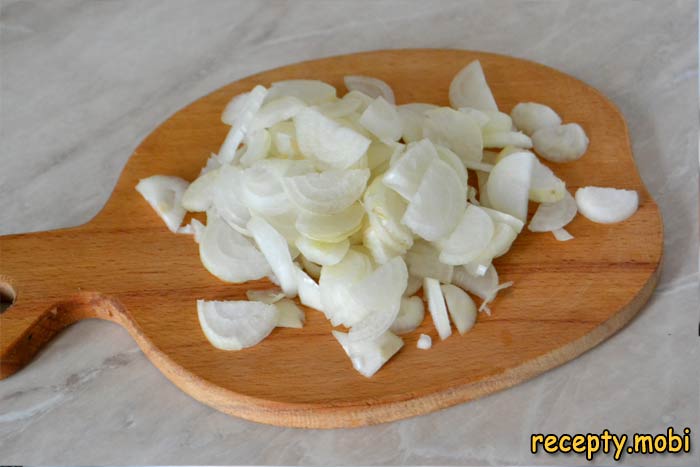
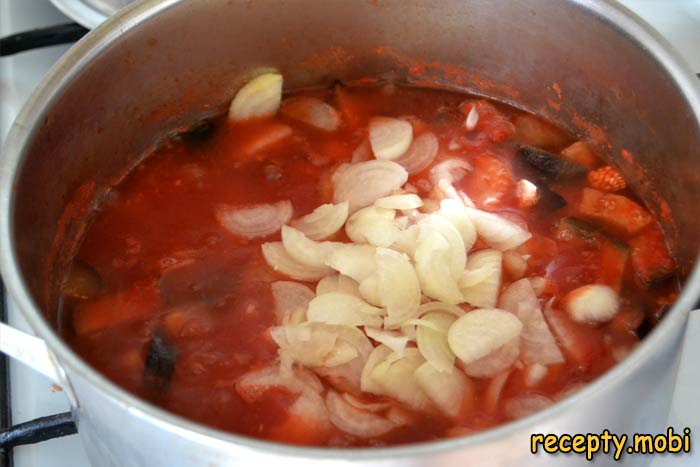
Add the onion to the tomato mass with the eggplants. Cook together for 10 minutes.
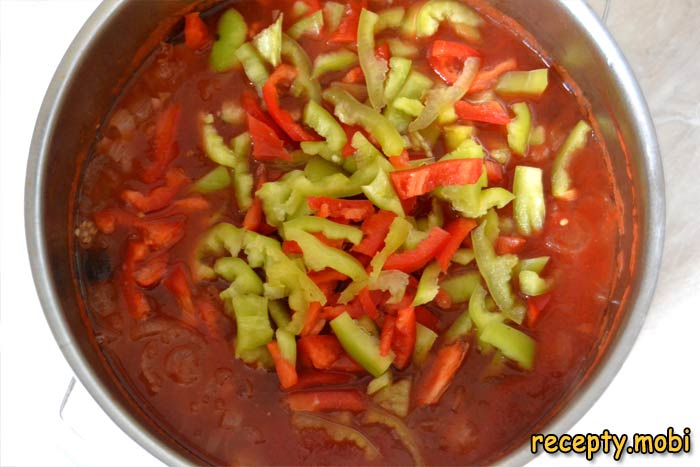
Wash the bell pepper, remove the seeds, cut off the stem and partitions inside the pod. Many believe only red pepper is suitable for lecho. This is not true — you can take peppers of any color. The pepper can be cut into cubes or strips. Strips give lecho a more attractive look. Cut into thin medium-sized strips. Add them to the pot with other ingredients.
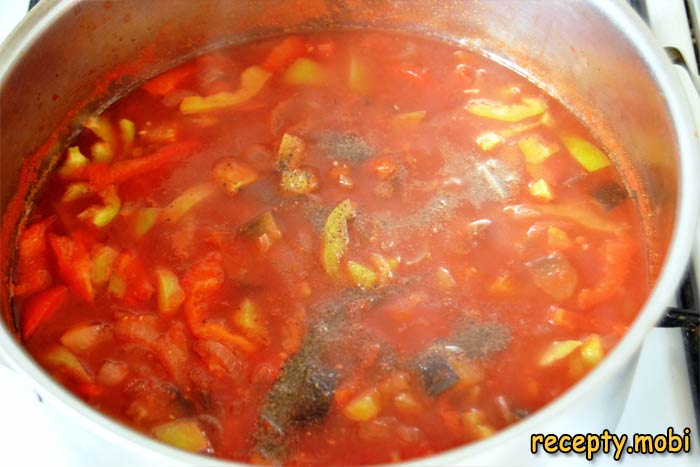
Add bay leaf, ground pepper, and finely chopped garlic. Continue cooking the lecho for another 10 minutes. The aromatics infuse the sauce in the final cook stage.
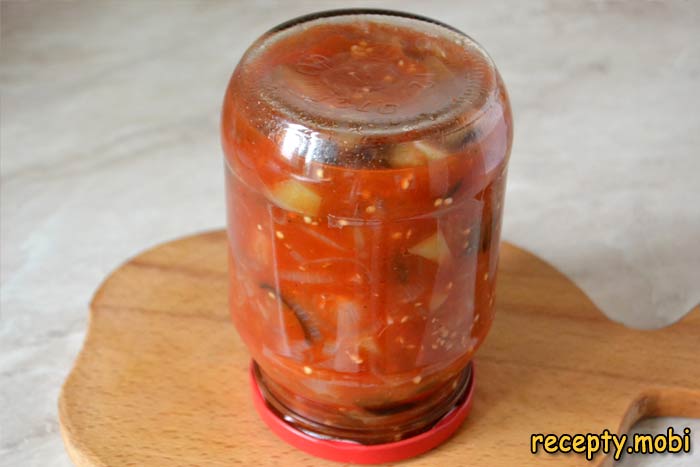
Prepare the jars for canning the lecho for the winter in advance. Sterilize the jars for a few minutes over steam or in a preheated oven for 10-15 minutes. Distribute the boiling lecho into the hot jars. After sealing tightly, turn upside down, cover with a blanket, and leave in warmth overnight. Lecho with eggplants and peppers for the winter without sterilization can be stored in an apartment in a dark and cool place.


Tips
- 1
Use Slivka or Roma-type tomatoes for the thickest sauce. These plum varieties have less water and more pulp than salad tomatoes, producing concentrated lecho without long reduction times. Standard salad tomatoes work but produce thinner sauce. The right tomato variety dramatically simplifies the cooking process and improves results.
- 2
Sterilize jars properly even for "without sterilization" recipes. The recipe name refers to skipping the post-sealing sterilization, but pre-sealing jar sterilization remains essential for safe long-term storage. The same sterilization rigor applies to many home preserves including lecho from bell peppers and tomatoes with garlic and onions and similar canned vegetable preparations.
- 3
Cut eggplants quickly and use immediately to prevent darkening. The cut surfaces oxidize rapidly and turn brown if left exposed to air. Either work fast or place cut pieces in salt water briefly. The cooking process eventually masks any darkening but the prevention produces prettier finished jars.
- 4
Wait at least 1 month before opening for full flavor development. Fresh-made lecho tastes good but the flavors marry and develop dramatically during storage. Pair the finished preserve with crusty homemade bread for a simple winter snack, or use as a side dish with grilled meats and roasted vegetables for the complete cold-weather meal.
FAQ
How long does this lecho keep? +
Properly sealed and stored in a cool dark place (under 18°C), lecho keeps for 12 months. Check seals before opening — the lid should be slightly concave and not move when pressed. Any jar with popped lid, bulging cap, or off smell should be discarded immediately, never tasted. Refrigerate after opening and consume within 2-3 weeks.
Can I add other vegetables? +
Yes — zucchini, summer squash, mushrooms, or carrots all integrate beautifully with the basic eggplant-pepper-tomato base. Adjust cooking times based on vegetable density. The basic technique — simmer vegetables in tomato sauce with vinegar, jar — adapts to many summer harvests. Mix and match based on what is plentiful in your garden or market.
Why is my lecho watery? +
Insufficient cooking time or tomatoes too watery. Continue simmering until the sauce coats the back of a spoon. Adding a tablespoon of tomato paste during the simmer accelerates thickening dramatically. Strain off excess liquid before jarring if needed. Properly thick lecho coats the vegetables beautifully and stays in the jar without separating into liquid layers.
Can I skip the vinegar? +
Only for short-term refrigerated storage. The vinegar provides essential acidity that prevents bacterial growth during long-term ambient storage. Without vinegar, the preserve is unsafe for winter storage and must be refrigerated and consumed within 1 week. For shelf-stable preserves, follow the vinegar quantity precisely for safe results that last through the cold months.
- Comment
or post as a guest
Be the first to comment.