avg —
Lightly Salted Trout at Home

Instructions
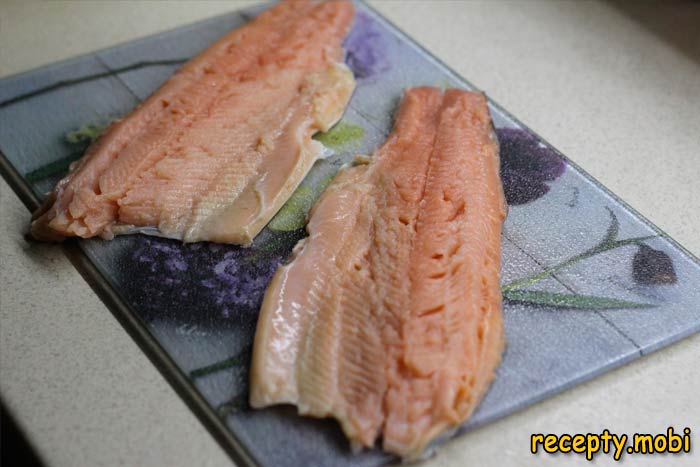
Fillet the fish using a sharp knife. If the fillet is cut correctly, there will be minimal bones. All small bones can be removed with kitchen tweezers. Pat the prepared trout fillet dry with kitchen towels. Minimum moisture is essential! This way the fish retains its structure and stays fresh longer during the cure.
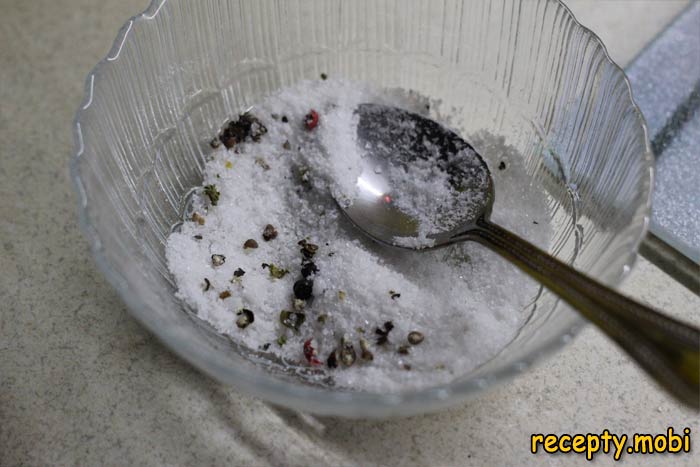
Mix sugar and salt in a separate container. Crush the peppercorns with a knife or mortar and add to the curing mixture. Do not use ground pepper and do not grind the spices too finely — coarse texture works best for this curing method.
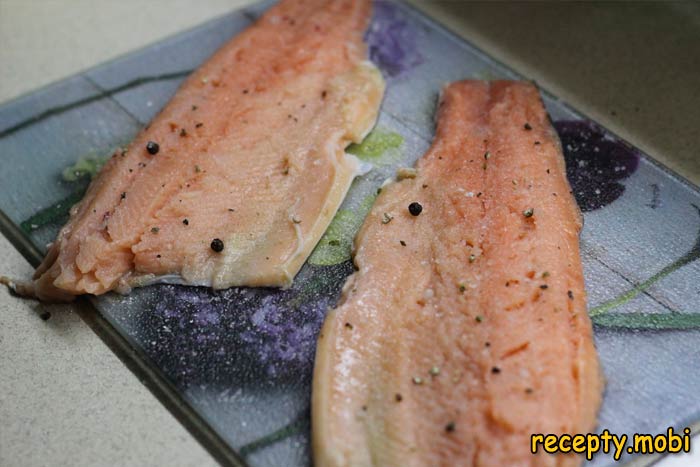
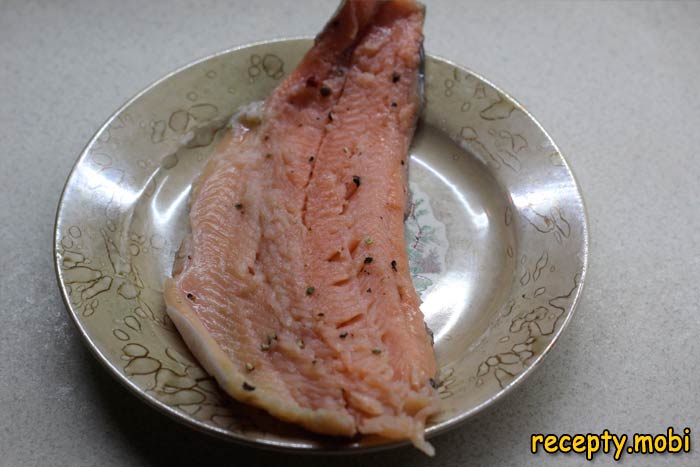
Rub the fish with spices on both sides. Leave the fillet at room temperature for a quarter of an hour so the salt and sugar crystals begin to dissolve and penetrate the flesh.
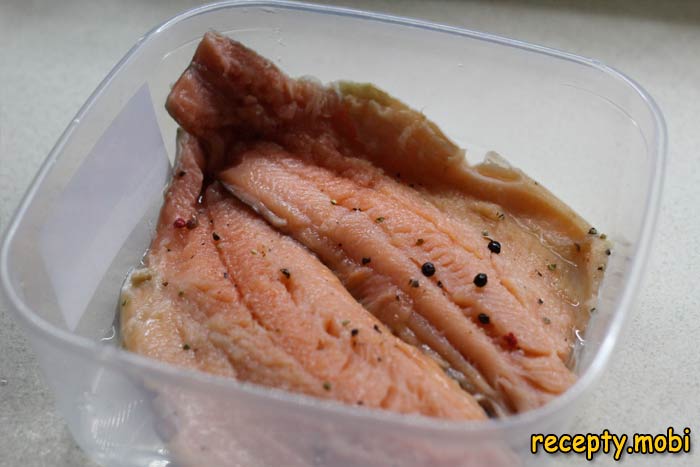
Place the fillet of red fish in a container greased with olive oil. Cover with parchment paper to allow the paper to absorb excess moisture. Send the fish to the refrigerator for 24 hours for a mild cure, or for 36 hours for a pronounced salty taste.
After just one day the lightly salted trout is ready to serve! Cut the fillet from the skin and serve in thin slices. Enjoy your meal!


Tips
- 1
Buy the freshest trout available for best curing results. Older fish develops off-flavors that the curing process amplifies rather than hides. Look for bright clear eyes, red gills, firm flesh, and a clean ocean smell — never anything fishy or ammonia-tinged. Whole fish gives you the most freshness verification points; pre-filleted fish must be inspected by smell and color alone.
- 2
Use kosher salt or coarse sea salt rather than fine table salt. The larger crystals draw moisture more gently and produce a better-textured cure than fine salt. Iodized salt can produce metallic off-flavors during the curing process. The same coarse-salt principle elevates many cured-fish preparations including tomato paste uses for marinades and other condiment-based fish dishes.
- 3
Use a 2:1 salt-to-sugar ratio for balanced cure flavor. Too much sugar produces overly sweet results that taste artificial; too little sugar produces harsh, one-dimensional saltiness. The 2:1 ratio (2 teaspoons salt to 1 teaspoon sugar in this recipe) hits the sweet spot enjoyed by most palates. Adjust slightly to personal taste once you have made the basic version successfully.
- 4
Add fresh dill to the cure for traditional Scandinavian gravlax-style flavor. Layer fresh dill sprigs above and below the cured fillet for the entire 24-36 hour cure. The herbal notes integrate beautifully with the salt-cured salmon flavor and produce restaurant-quality results. Pair finished slices with crusty homemade bread and sour cream for the complete classic appetizer presentation.
FAQ
How long does cured trout keep? +
Stored covered in the refrigerator with a thin layer of vegetable oil to prevent drying, lightly salted trout keeps for 7 days at peak quality. After that the texture begins to break down and the cured flavor intensifies past pleasant. For longer storage, freeze the cured fillet wrapped tightly in plastic and foil — the frozen cured fish keeps for 3 months without significant quality loss. Thaw overnight in the fridge before serving.
Can I use frozen trout for curing? +
Yes, and it’s actually recommended for safety. Freezing for at least 24 hours at -20°C kills any parasites that fresh fish might harbor. Sushi-grade fresh fish is also safe but harder to verify in home settings. Thaw frozen fish completely in the fridge before curing for best texture results. The cure works identically on previously-frozen and never-frozen fish.
What other fish work for this method? +
Salmon, char, sea bass, mackerel, and herring all cure beautifully with this technique. Adjust salt amount based on fish thickness — thicker fillets need slightly more salt. Cure time also adjusts with thickness: thin fillets in 12 hours, medium in 24 hours, thick in 36-48 hours. Oily fish like salmon and mackerel particularly suit this preparation; lean white fish work but produce milder results.
Is it safe to eat cured raw fish? +
Properly cured fish is safe when made from quality ingredients with proper sanitation. The salt cure inhibits bacterial growth and partially “cooks” the fish proteins. For maximum safety: use freshly-frozen fish (parasites killed by freezing), maintain refrigerator temperatures below 4°C throughout the cure, and consume within 7 days. Pregnant women, immunocompromised individuals, and very young children should avoid raw or cured fish entirely.
- Comment
or post as a guest
Be the first to comment.