avg —
Odjakhuri in Georgian style

Instructions
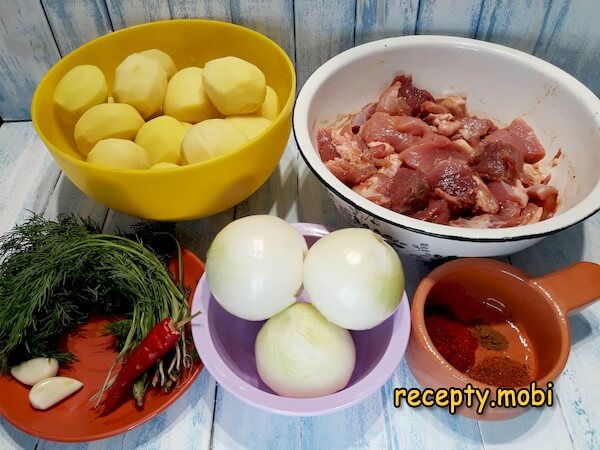
I prepare the marinating ingredients — pork chunks plus Georgian/Abkhazian adjika. Marinate covered in fridge 6-8 hours minimum (overnight is best).
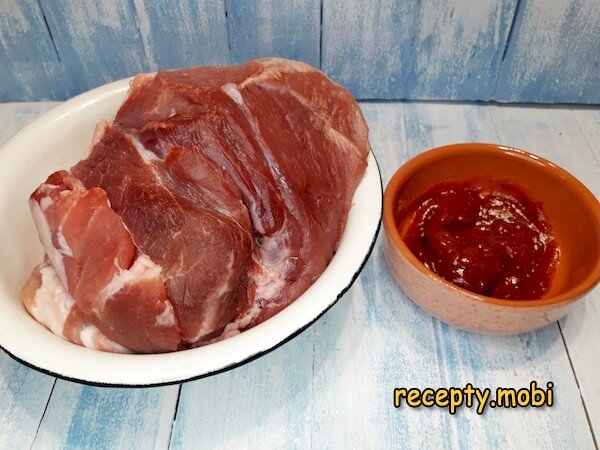
The remaining ingredients gather for the cooking phase.
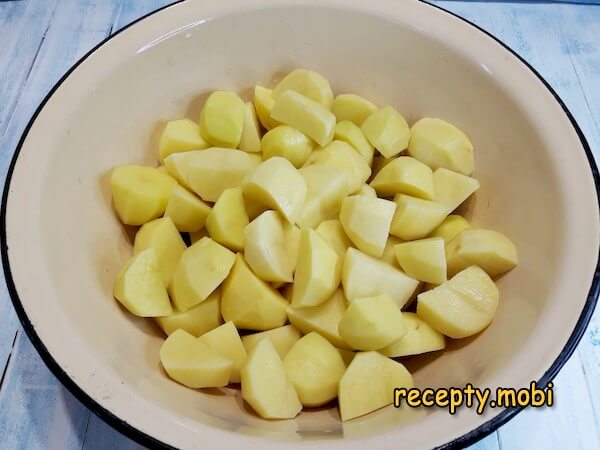
Potatoes need longer cooking, so they start first. I cut the tubers into equal cubes — uniform size means uniform cooking.
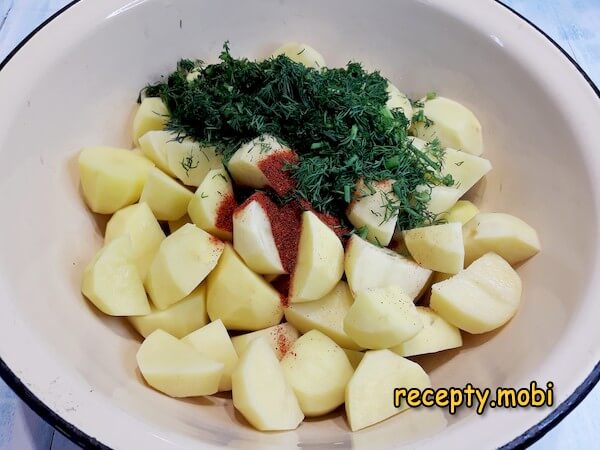
All the dry spices (khmeli-suneli, ground cilantro, paprika, ground hot pepper) and finely chopped fresh herbs go in. Optional: finely chopped chili pepper for extra heat.
Salt joins, then vegetable oil pours in.
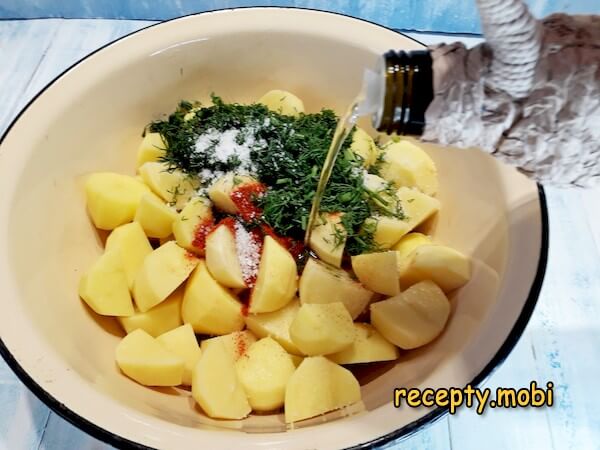
I mix everything thoroughly so each potato cube is coated with oil and spices.
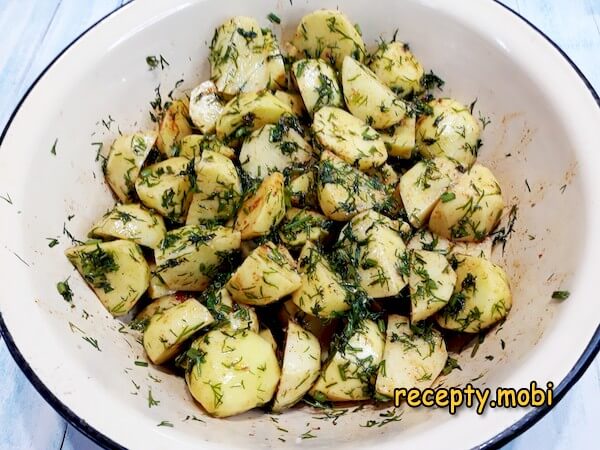
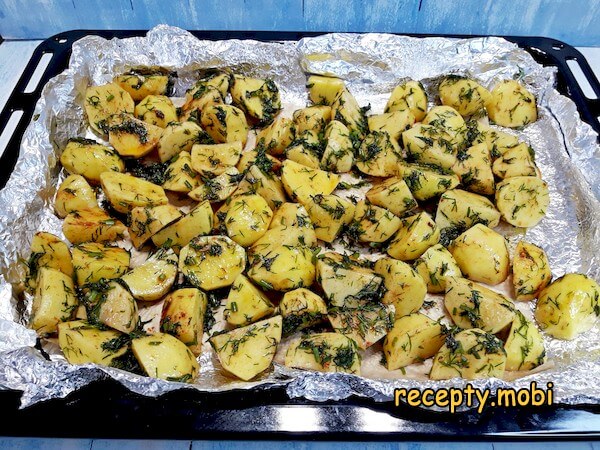
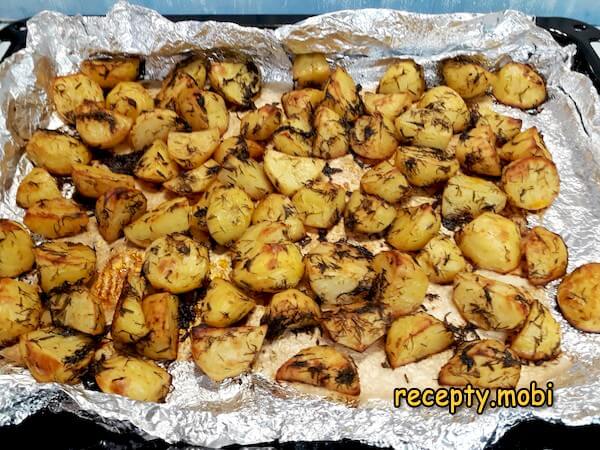
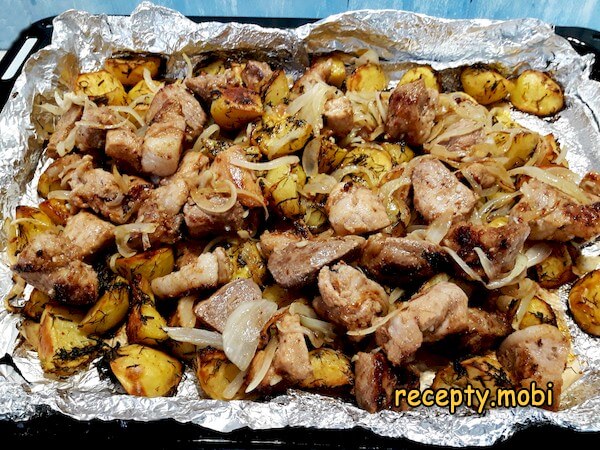
Oven preheats to 190 °C. Baking tray gets foil + parchment lining. The seasoned potatoes spread on the tray, leftover oil from the bowl pours over. Bake about 1 hour — check with a fork (should pierce easily).
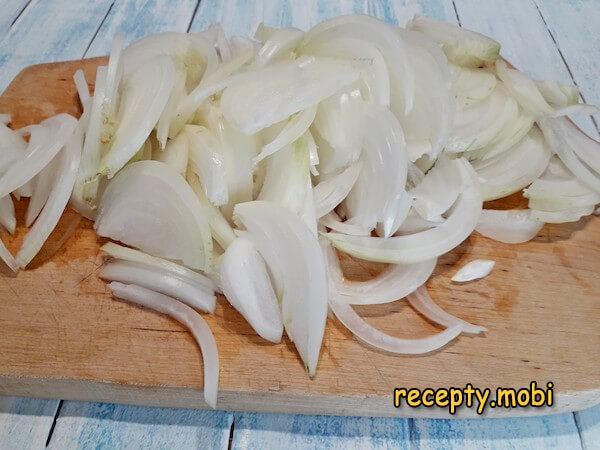
About 30 minutes into the potato bake, I start the meat preparation. Onion thinly slices into half-rings.
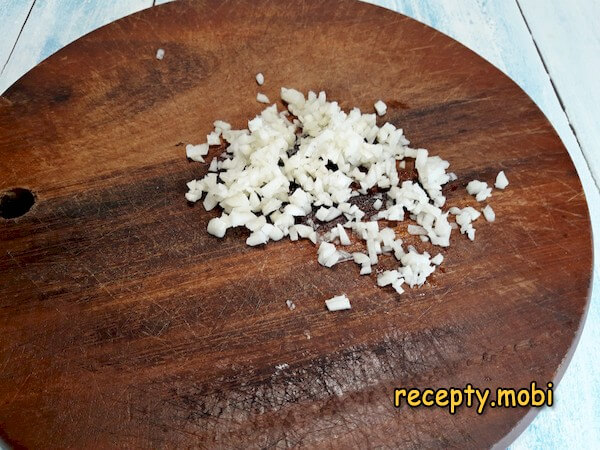
Garlic finely chops with a knife.
In preheated oil with a small pinch of salt (prevents meat splattering juice), the marinated pork pieces fry over medium heat until golden crust forms — about 8-10 minutes total.
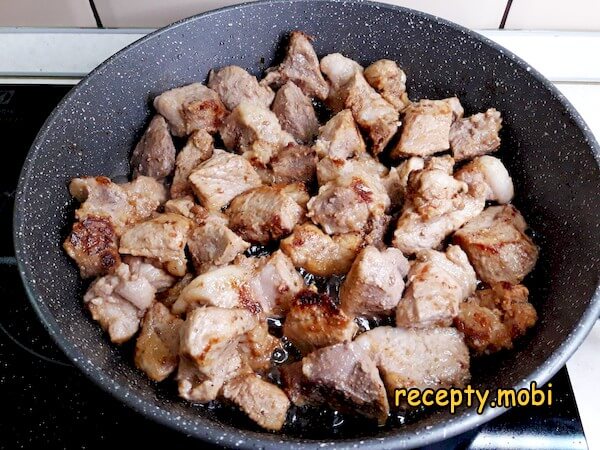
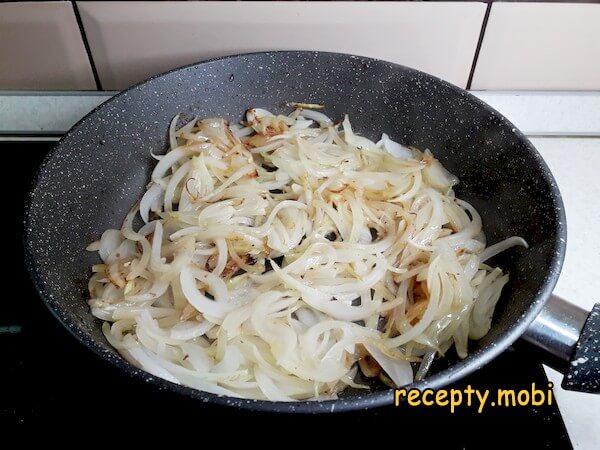
Pork transfers to a plate. In the same fat, the onion fries until just changing colour — about 4 minutes. I reserve some onion raw for serving garnish.
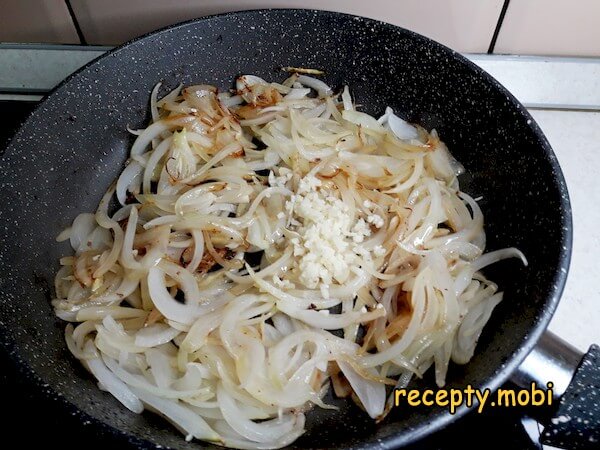
Garlic joins the cooked onion. Sauté together 2 minutes until warm garlic aroma develops, then off heat.
The potatoes should be ready by this point — fork-test confirms doneness.
Potatoes mix with the pork and onion-garlic — gentle folding to keep pieces intact.For serving odjakhuri Georgian style, transfer to a heated clay "keci" dish (the traditional Caucasian thick-walled clay vessel that holds heat exceptionally well). No keci? A heated thick-walled cast-iron skillet substitutes acceptably. Sprinkle reserved raw onion strips and chopped fresh herbs over the top. Hearty, full of flavour, festive enough for celebration tables and homey enough for family dinners.Try it, enjoy your meal!


Tips
- 1
ADJIKA-MARINADE IS THE FLAVOUR FOUNDATION. Adjika is the proprietary Georgian/Abkhazian hot pepper-garlic-herb paste — its complex flavour is what gives odjakhuri its identity. Don't substitute with generic hot sauce. Available in Russian-Eastern European stores; DIY is possible but requires fermenting fresh peppers (4-day process). 6-8 hours of marinating allows the adjika to fully penetrate the pork; longer (overnight) is even better.
- 2
THE PARALLEL COOKING IS THE TIME-SAVER. Step 7-12's parallel processing — potatoes baking while pork fries — cuts total cook time roughly in half. Sequential cooking (potatoes done, then pork) takes 90 minutes; parallel takes 60 minutes. The timing requires attention: start potatoes first, set a 30-minute timer to start the meat. Both finish around the same time. For another classic Georgian beef stew worth comparing, see Chashushuli Georgian Style.
- 3
THE KECI IS THE PRESENTATION SECRET. Georgian "keci" — heavy clay dishes that retain heat for 30+ minutes — are designed for hot serving. Most home cooks don't have keci; substitutes: heated cast-iron skillet (best alternative), enamel-coated cast-iron Dutch oven (works well), thick stoneware. Avoid: thin metal pans (cool too fast), glass dishes (don't retain heat). The hot serving extends the eating window and keeps the dish warm even at extended dinner conversations — typical Caucasian hospitality.
- 4
THE RAW-ONION GARNISH IS NON-NEGOTIABLE. Georgian tradition always includes raw onion sprinkle on top of finished odjakhuri. The sharp fresh onion bite contrasts with the cooked sweetness of the meat-potatoes underneath. Reserve some sliced onion raw at step 11. Without this garnish, the dish loses its layered flavour identity. The raw herbs (dill + parsley + cilantro) similarly are essential, not decorative. For another Georgian poultry classic worth trying, try Chkmeruli Georgian Style.
FAQ
What is "odjakhuri"? +
Odjakhuri (ოჯახური in Georgian script, literally "family meal" or "home-style") is a Georgian peasant-origin dish that became a celebrated classic of Georgian cuisine. The defining elements: marinated meat + potatoes + onion + garlic + Georgian spices, cooked in a specific way (frying, baking, or both) and served in a clay keci. Variations exist across Georgia — some recipes use beef or lamb instead of pork, some include tomatoes or pomegranate seeds. The pork-and-potato version (this recipe) is the most common modern Russian-Caucasian rendition.
Can I use beef or chicken instead of pork? +
Beef works well — use chuck or short rib (cubed) for richness, marinate the same 6-8 hours, fry to similar golden colour. Slightly longer cook time for beef (15 minutes vs 8-10 for pork) due to denser muscle structure. Chicken thighs (boneless, skinless) work for a lighter version — reduce marinade time to 2 hours (chicken absorbs faster) and cook time to 6-8 minutes. Lamb is the most authentic Caucasian meat substitute. The cooking technique stays identical regardless of meat choice.
What is khmeli-suneli? +
Khmeli-suneli (ხმელი სუნელი, "dried spices") is the Georgian proprietary spice blend used in many Caucasian dishes. Typical ingredients: ground coriander, fenugreek, marigold, dried basil, dill, bay leaf, sometimes saffron. Available in Russian-Eastern European markets and online; DIY substitute (less authentic): equal parts ground coriander + dried basil + dried fenugreek + a pinch of saffron. Without khmeli-suneli, odjakhuri loses some of its Georgian character — substitute is acceptable but the genuine blend is preferable.
What's the best side or accompaniment? +
Georgian tradition pairs odjakhuri with: fresh khachapuri (Georgian cheese-bread), young red wine (Saperavi or Mukuzani), tkemali sauce (Georgian sour-plum sauce) on the side, additional fresh herbs and vegetables (sliced cucumber, tomato, radish), and chacha or vodka for stronger drinks. The dish is rich and substantial — keep accompaniments simple and bright. Avoid: heavy starches (the dish already has potatoes), cream sauces (clash with the Georgian flavour profile), or competing main proteins.
- Comment
or post as a guest
Be the first to comment.