avg —
Olivier Salad with Pork, Chicken, and Sausage

Instructions
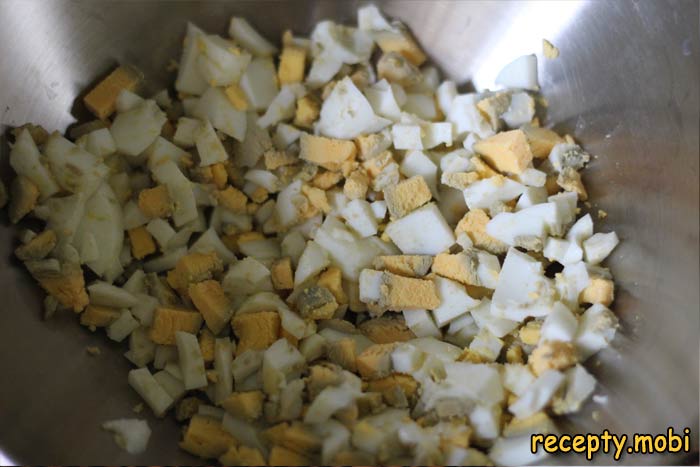
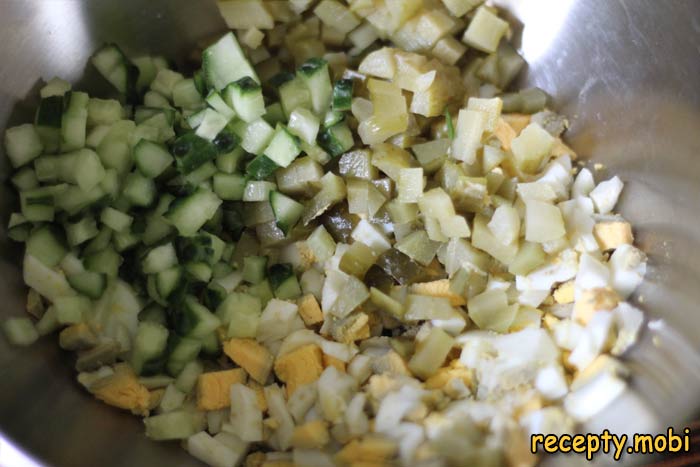
First peel the boiled eggs and chop them into small cubes. The egg cubes form the protein-rich foundation that defines Olivier salad texture.
Cut fresh and pickled cucumbers into similar-sized cubes. The dual-cucumber approach (fresh + pickled) provides the contrasting crunch and tang that distinguishes proper Olivier from inferior versions.
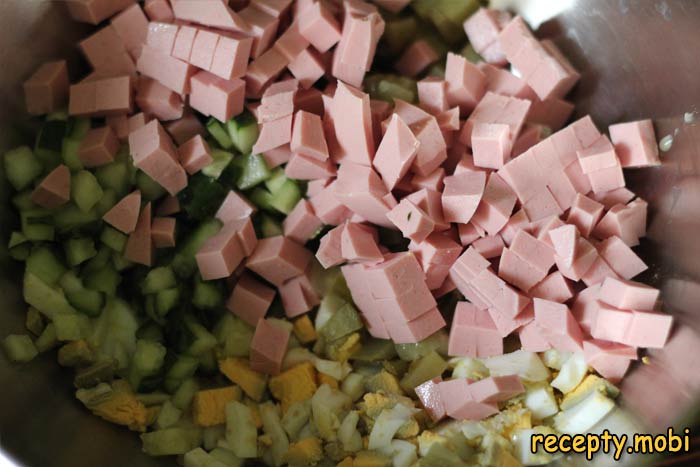
Chop the boiled sausage into cubes. Maintain consistent cube sizing throughout for the cleanest finished appearance.
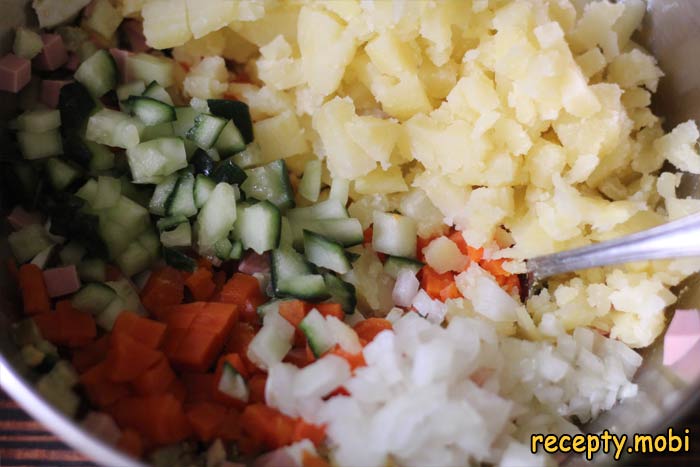
Finely chop the boiled carrots and fresh onion. Cut the peeled potatoes into small cubes. The fine-chop on onion ensures it integrates without producing unpleasant raw-onion bites.
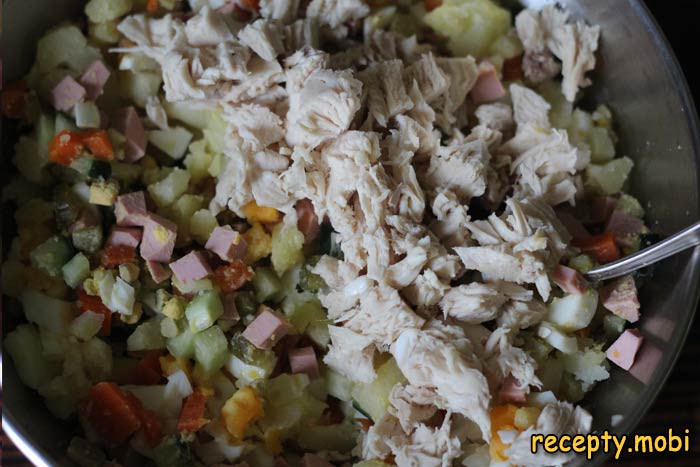
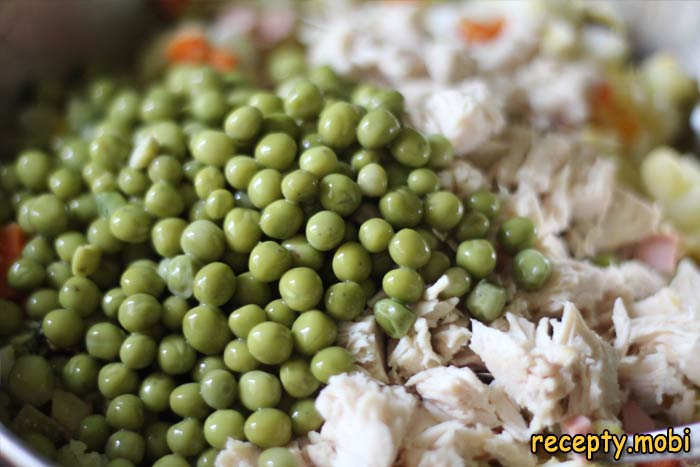
Add the cooled boiled meat, cut into cubes. The triple-meat combination (pork, chicken, sausage) is what makes this version particularly luxurious compared to single-protein Olivier variations.
Add the green peas. Mix all the chopped components, add homemade mayonnaise and spices to taste. Place the salad in the refrigerator to steep for several hours. The chilling time lets all the flavors fully meld together.
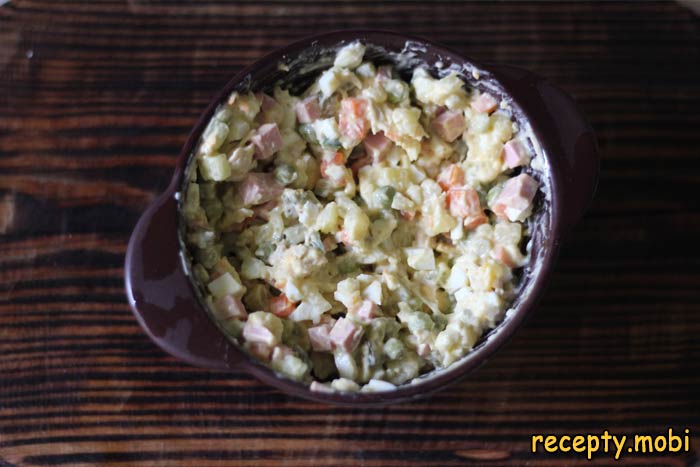
Serve the salad in portions in bowls. Before serving, you can sprinkle the Olivier with chopped herbs for fresh color and aroma. Enjoy your meal!


Tips
- 1
Boil all components separately to preserve individual flavors and colors. Boiling potatoes with carrots, for example, transfers carrot color to the potatoes and produces visually muddy salad. Each component cooks in its own pot for cleanest results. The slight extra dish-washing pays back in dramatically prettier finished salad.
- 2
Cut all ingredients into uniform 5-7 mm cubes for the cleanest presentation. Mixed-size cubes produce visually chaotic salad; uniform cubing makes the salad look professional. Take the time to maintain consistent sizing across all components. The same uniform-cubing principle elevates many composed salads including boiled pork tongue salads and other festive Russian-cuisine appetizers.
- 3
Use homemade or high-quality mayonnaise for best flavor. Cheap commercial mayonnaise can dominate the salad with sharp vinegar notes that mask the careful component preparation. Quality mayonnaise integrates as a unifying element rather than a dominant taste. Make your own for special occasions; reserve the high-quality store-bought versions for everyday cooking.
- 4
Let the salad rest in the fridge for 2-4 hours before serving. The rest allows the mayonnaise to fully coat all components and the flavors to develop into the harmonious whole that defines proper Olivier. Serving immediately produces a salad where individual ingredients still feel separate. Pair with crusty homemade bread and pickled vegetables for the complete traditional Russian holiday spread.
FAQ
How long does Olivier salad keep? +
Stored covered in the refrigerator, Olivier keeps for 2-3 days at peak quality. The flavor improves overnight as components meld but starts declining after 48 hours. The mayonnaise weeps moisture over time, producing increasingly wet salad. For meal prep, store undressed components separately and combine fresh each day. The dressed salad is best within 24 hours of preparation.
Can I substitute the meats? +
Absolutely — classic Russian Olivier was historically made with all sorts of meats based on availability. Beef, lamb, turkey, or even smoked fish work as substitutes. Pure-vegetarian versions skip meat entirely and use extra vegetables (mushrooms, additional cucumber, beets). The basic technique — cubed proteins + cubed vegetables + peas + mayonnaise — adapts to virtually any protein direction.
Why is my Olivier watery? +
Insufficient draining of canned peas and pickled cucumbers, or overly wet boiled vegetables. Drain canned peas in a colander for 10 minutes; pat pickled cucumbers dry with paper towels. Let boiled potatoes and carrots cool completely (and dry slightly) before chopping. The moisture-control steps prevent the watery results that disappoint many home cooks attempting Olivier.
What other dressings work besides mayonnaise? +
Greek yogurt mixed with mustard produces a lighter version. Sour cream blended with mayonnaise creates a creamier texture. Pure crème fraîche produces an elegant version. Olive oil + lemon + Dijon mustard makes a vinaigrette-style Olivier. The classic mayonnaise version remains the most traditional, but variations work for different dietary preferences and modern palates.
- Comment
or post as a guest
Be the first to comment.