avg —
Omurice (Japanese omelet)

Instructions
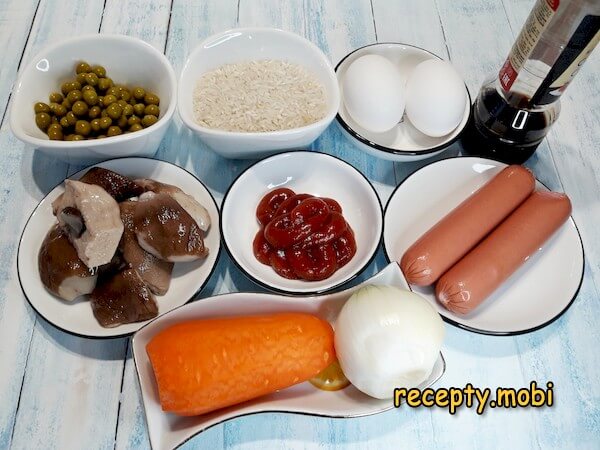
I prepare the ingredients. Sausages can be replaced with ham or chicken fillet — chicken needs slightly longer pan time to cook through. Raw champignons substitute for boiled white mushrooms.
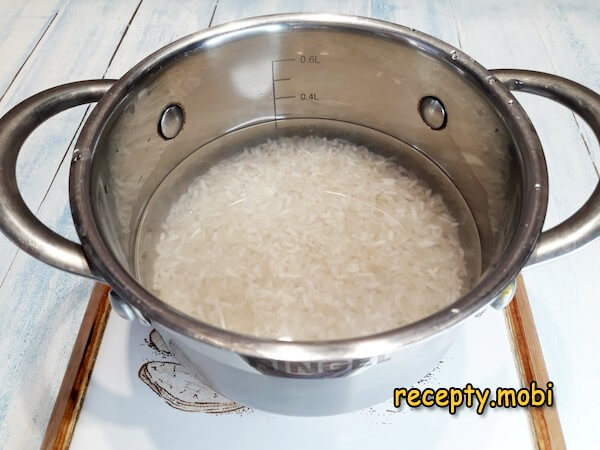
Rice rinses several times until water runs clear. Cook with water level 2× the rice height.
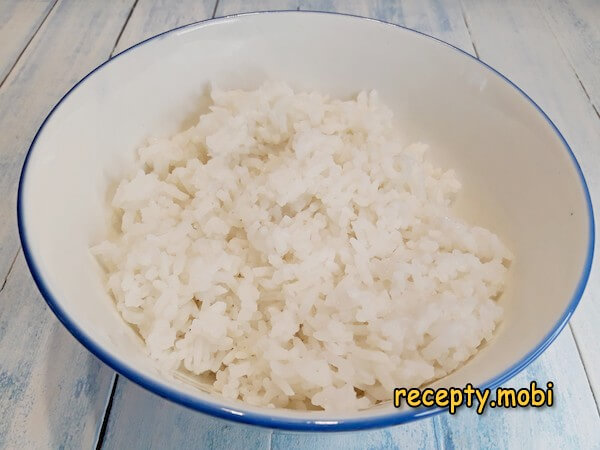
Cook the rice over medium heat without salt until water evaporates. Lid on, rest 3-5 minutes for finishing. Transfer to a bowl.
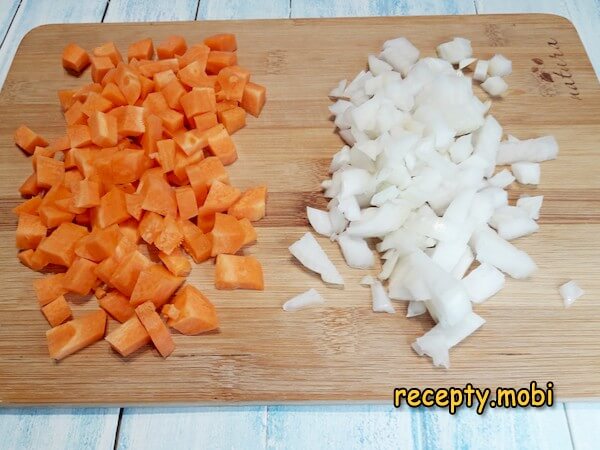
Onion and carrot finely chop.
Sausages cut slightly larger.
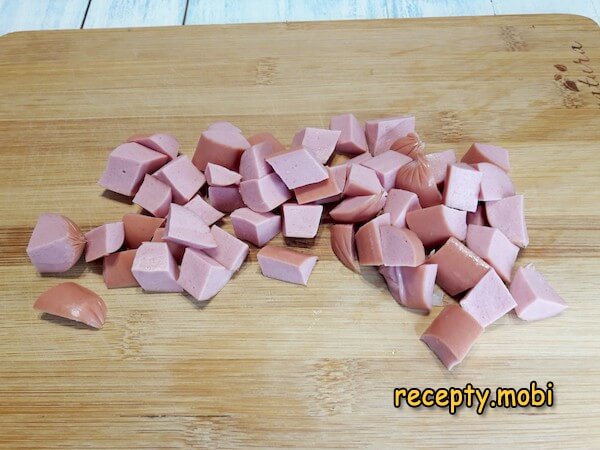
Mushrooms prepare same size as sausages.
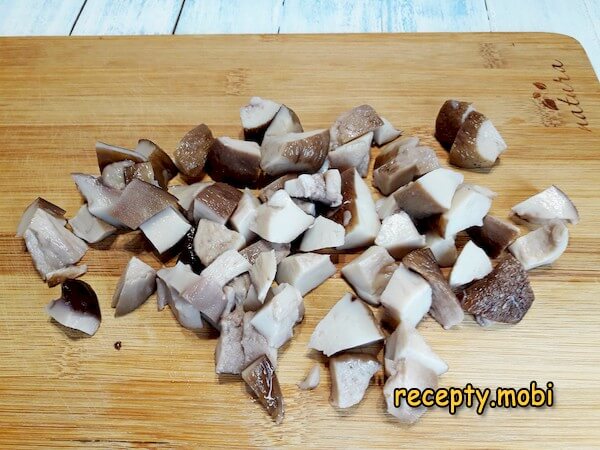
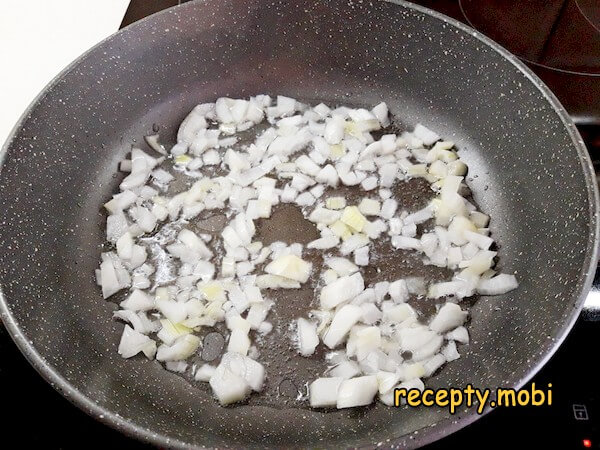
In heated oil, onion lightly fries first.
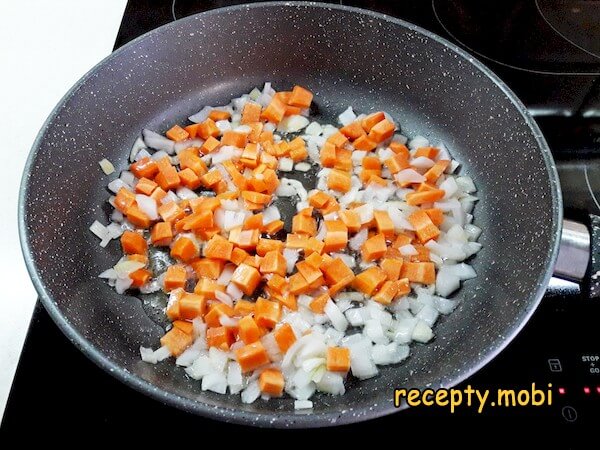
Carrot adds in next. Soften through.
Mushrooms join. Raw champignons need full cook (5-7 min); pre-boiled mushrooms just brown lightly (1-2 min).
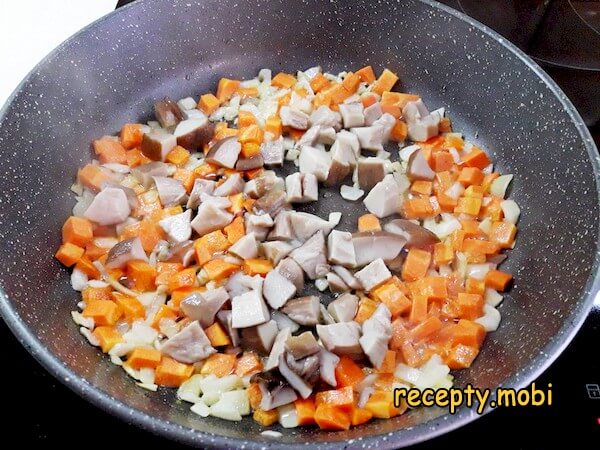
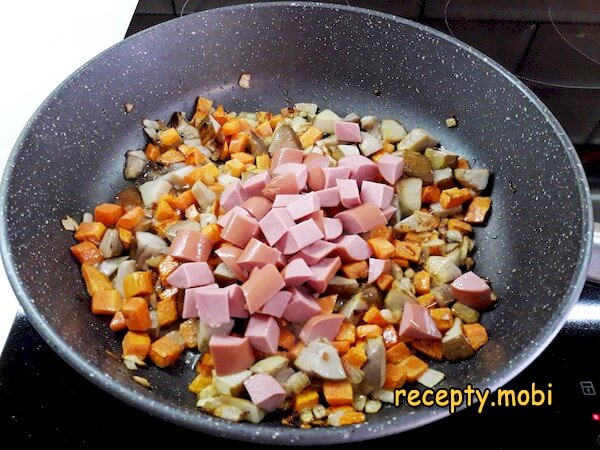
Sausages add. Fry 1 minute just to heat through.
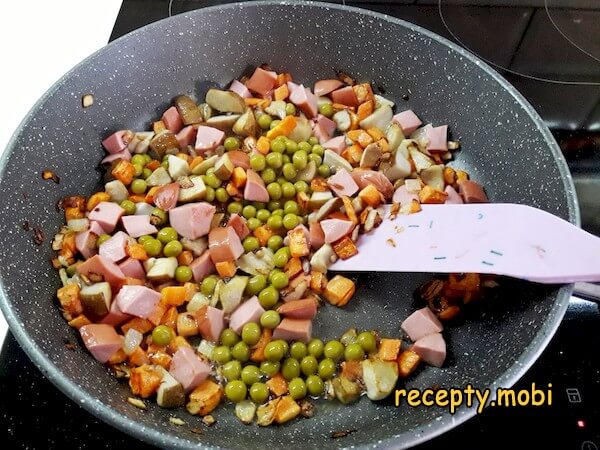
Green peas add in.
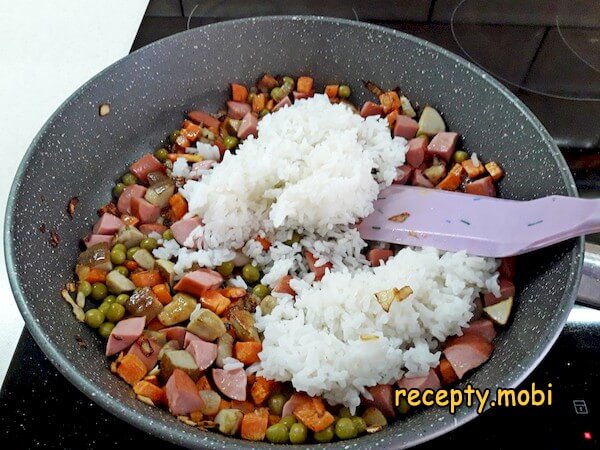
Cooked rice goes in. Mash with spatula to eliminate clumps. Fry together 2 minutes.
Soy sauce pours in.
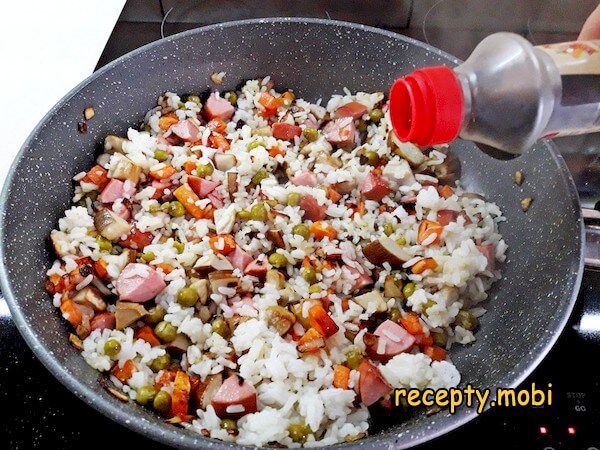
Ketchup follows. Mix, taste, add salt if needed.
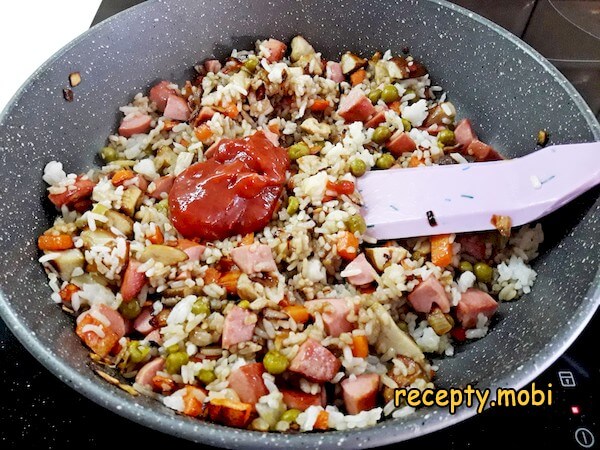
Filling cooks 1 more minute. Transfer to a plate. Wash and dry the skillet for the omelette.

Eggs whisk with a pinch of salt.

Beaten eggs pour into the heated oil. Tilt skillet to spread eggs across entire surface. Stir liquid pockets with fork to ensure even cooking.
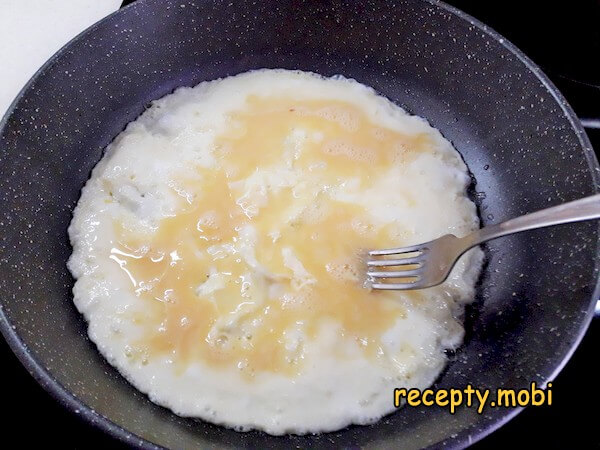
When omelette is 80% done (slight wet shine in centre), place all the filling in the middle.
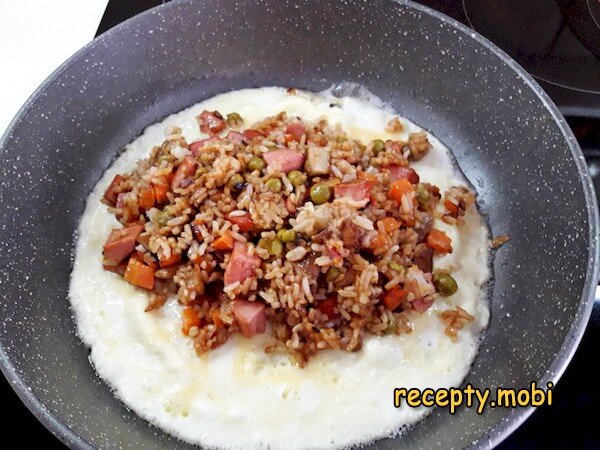
Fold both edges of the egg pancake up over the filling.
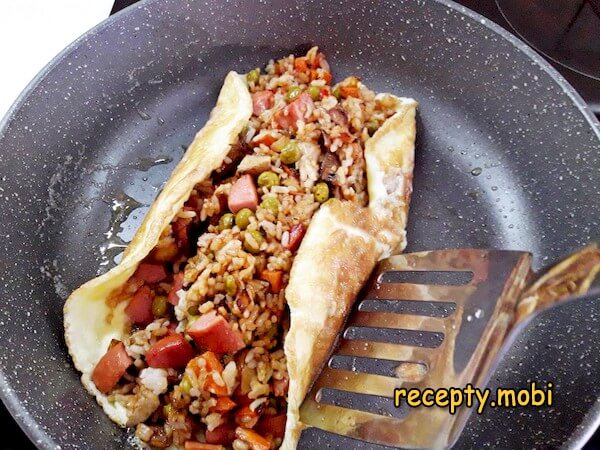
Cover with a plate, flip the skillet so the seam ends up on the bottom.

Use paper towel to adjust the outline if needed (smooth out the egg shell shape).
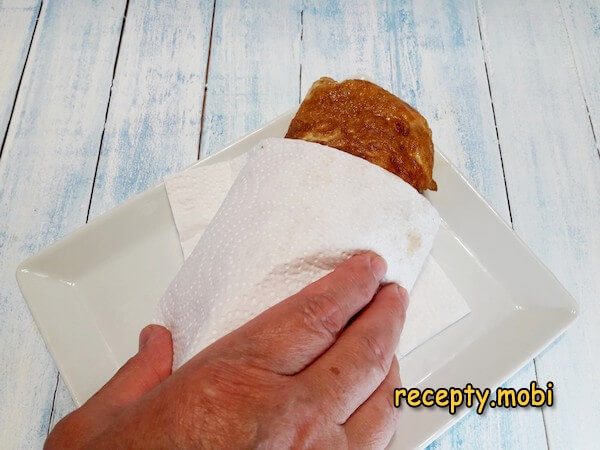
Serve omurice hot, drizzled with extra ketchup on top (the canonical Japanese presentation — sometimes drawn into smiley faces or words for kids). The fluffy egg wrap holds substantial savoury fried rice — single-serve complete meal that satisfies for hours. Once tried, this dish becomes a regular request.



Tips
- 1
THE 80%-DONE EGG IS THE TIMING SECRET. Step 18's "80% done" target is the precise moment for filling placement. Too early (50% done) = liquid egg mixed with filling. Too late (100% done) = stiff egg breaks during folding. The 80% sweet spot has set egg surface but slightly wet centre — folds beautifully, finishes cooking from residual heat. Watch the surface: when no visible liquid pools but slight matte sheen remains, that's 80%.
- 2
THE PLATE-FLIP TECHNIQUE. Step 20's plate-flip is what gives omurice its iconic perfect ovoid shape. Without flipping, the seam-side-up presentation looks messy. The flip technique: cover skillet with plate, hold both, invert quickly, lift skillet. Practice on smaller portions first; the move clicks after 2-3 attempts. Restaurant Japanese omurice often uses specialised "tamagoyaki" pans (rectangular) for this — at home, a regular round skillet works fine. For another egg-related preparation worth comparing, see Marinated Eggs in Soy Sauce.
- 3
THE KETCHUP DECORATION IS PART OF THE DISH. Japanese tradition draws ketchup hearts, smiley faces, or words like "Welcome" on the omurice top before serving. This isn't kitsch — it's part of omurice's identity in Japanese family restaurants. Children's omurice often has elaborate decorations. For adult presentations, simple zigzag drizzle or grid pattern works. The ketchup contributes both visual appeal AND extra tomato flavour (omurice has ketchup-flavoured rice underneath, so additional ketchup on top doubles down on that profile).
- 4
COLD RICE IS BEST. The recipe shows fresh-cooked rice, but pre-cooked-and-chilled rice produces noticeably better texture. Cooked rice from yesterday's dinner, refrigerated overnight, gives drier grains that fry without clumping. The professional Japanese-restaurant approach uses day-old rice for omurice and other fried-rice dishes. Plan ahead: cook rice the day before, refrigerate, use for omurice the next day. Fresh rice works but is wetter and slightly clumpy. For another Halloween-themed egg-snack worth trying, try Halloween Snack Vampire Eyes.
FAQ
What's the origin of omurice? +
Omurice (オムライス, "omu-raisu" — Japanese contraction of "omelette" + "rice") emerged in early 20th-century Tokyo as part of "yōshoku" — Western-influenced Japanese cuisine. Early-1900s Japanese restaurants began adapting Western dishes for local tastes; omurice combined French-influenced omelette technique with Japanese fried rice tradition. Multiple Tokyo restaurants (Hokyoken, Renga-tei) claim the dish's origin. By the 1950s omurice was a "yōshoku" staple; by 1990s it appeared in anime/manga, gaining global recognition. Today omurice is a beloved Japanese family-restaurant standard with countless regional variations.
Can I use other proteins? +
Yes — omurice's flexibility is part of its charm. Best alternatives: chicken thigh diced (more flavour than breast), bacon (smokier profile), shrimp (lighter version), tofu (vegetarian option), ground pork (heartier), leftover roast chicken (excellent use). Adjust pre-cook time per protein: raw chicken needs 5-6 min, ham/bacon needs 1-2 min, pre-cooked proteins need just heating. The base technique stays universal.
Why ketchup? +
Ketchup in omurice traces to early-1900s when ketchup was a novelty in Japan — symbol of Western-influenced "modern" food. The tomato-sweet-tangy profile complements eggs and rice beautifully. Japanese tradition has solidified ketchup as the omurice standard; without ketchup, the dish loses its identity. Modern variations: replace ketchup with demi-glace sauce (more sophisticated French-influenced version), with curry sauce (Japanese curry omurice), or with tomato-based pasta sauce. The classic ketchup version remains the most beloved.
How do I get the iconic "tornado" egg cover? +
The advanced "tornado omurice" technique uses an even less-cooked egg (60% done) and a chopstick swirl to create a vortex pattern before deflating onto the rice. This creates a dramatic split-and-reveal presentation when cut open. The classic recipe (this version) uses 80%-done egg with traditional fold — simpler and more reliable for home cooks. The tornado technique requires practice; start with the classic before attempting it.
- Comment
or post as a guest
Be the first to comment.