avg —
Oven-Roasted Vegetables on a Baking Sheet

Instructions
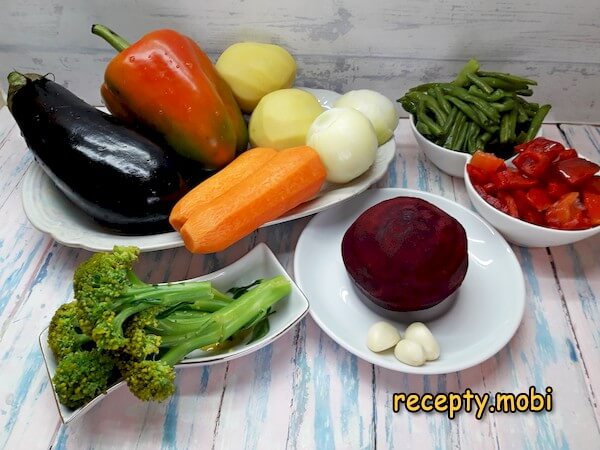
I prepare the ingredients for oven-baked vegetables. NO restrictions on quantity or assortment — substitute or omit per availability. Green beans + broccoli need PRE-BLANCHING 1 minute (no salt) before oven (otherwise they undercook by the time root vegetables finish). Frozen vegetables (sweet red pepper here): use small portion mainly for COLOR contrast (won't add much flavor).
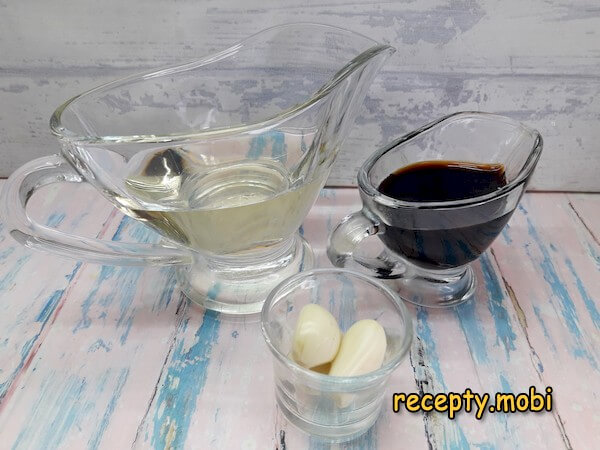
Prepare dressing ingredients (oil + soy sauce + garlic). Turn on oven to 190 °C (preheats while you cut vegetables).
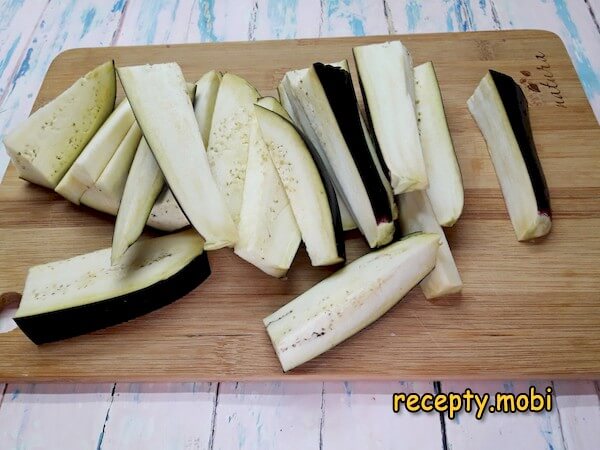
Vegetables require different cooking times — cut to similar SHAPES but slightly different THICKNESSES for even baking. First: cut eggplant in HALF crosswise, then slice into long sticks (1.5-2 cm thick).
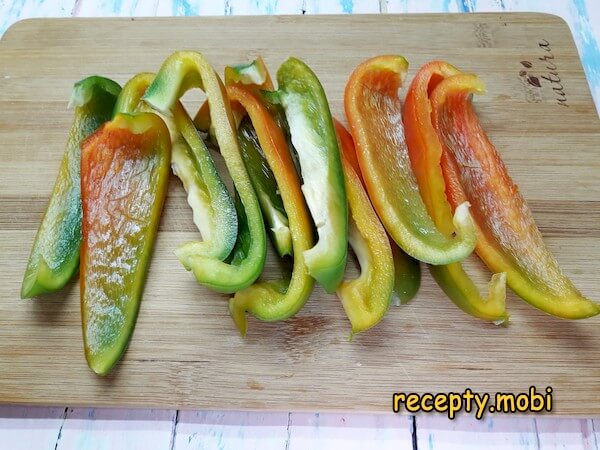
Clean bell pepper (remove seeds + membranes); cut into elongated strips 2-2.5 cm wide.
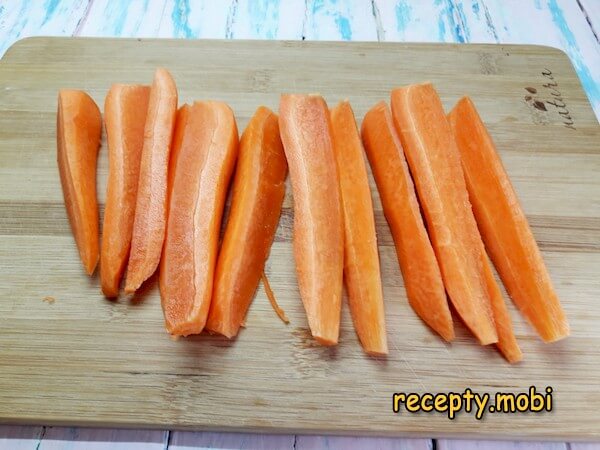
Cut carrot into long sticks NARROWER than eggplant + bell pepper (carrots cook slower, smaller pieces compensate).
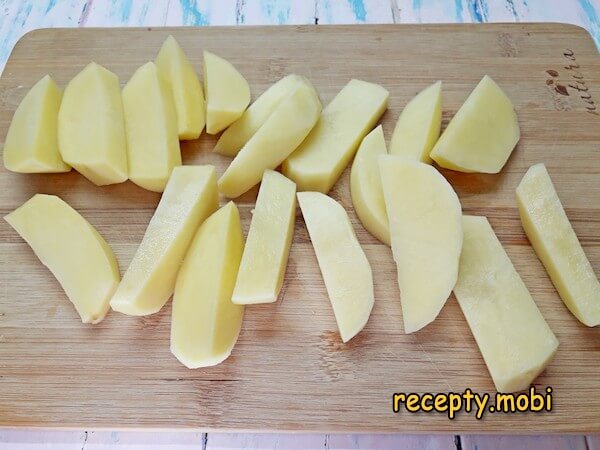
Cut potatoes to similar narrow-stick thickness as carrots.
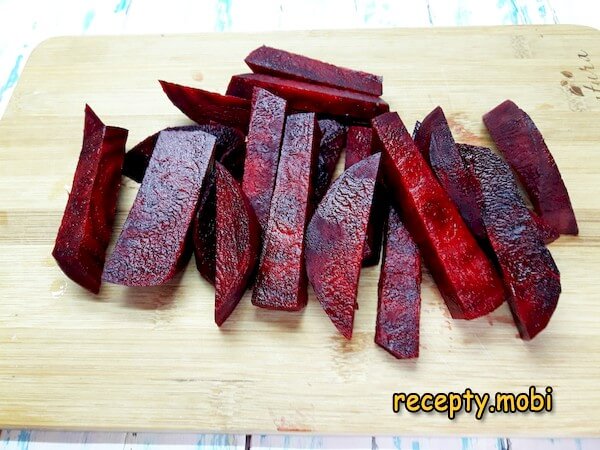
Cut beetroot to same narrow-stick thickness (cooks similarly to carrot/potato).
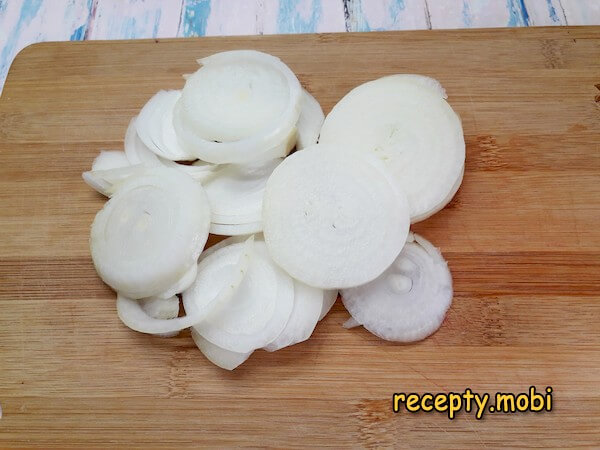
Slice onion into rings of any thickness (onion is forgiving).
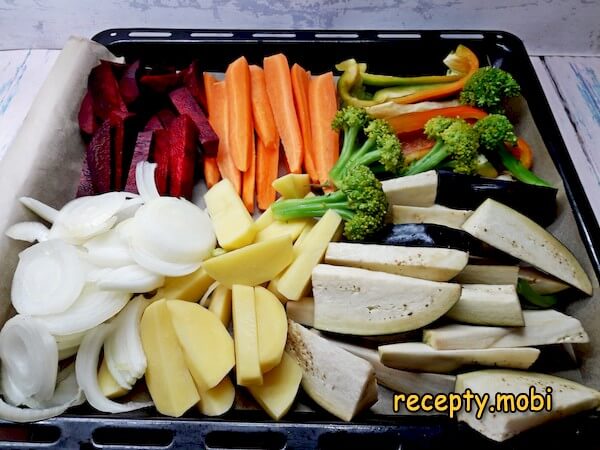
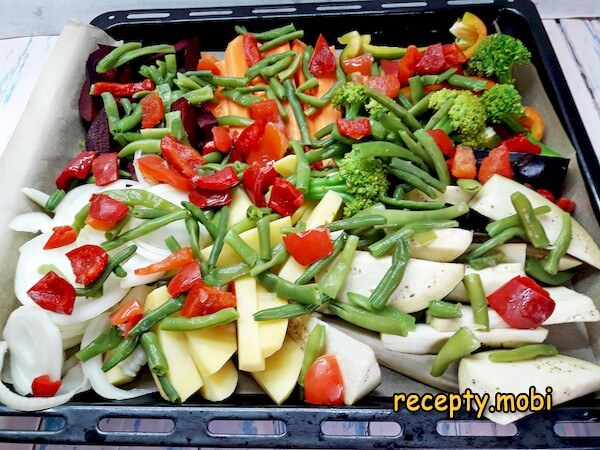
Line baking sheet with high-quality parchment paper (silicone-coated preferred; otherwise brush parchment with vegetable oil). Lay out all vegetable groups SEPARATELY (don't mix) — preserves vegetable shape AND prevents beetroot juice from staining adjacent cuts.
Distribute pre-blanched green beans on top of arranged vegetables.
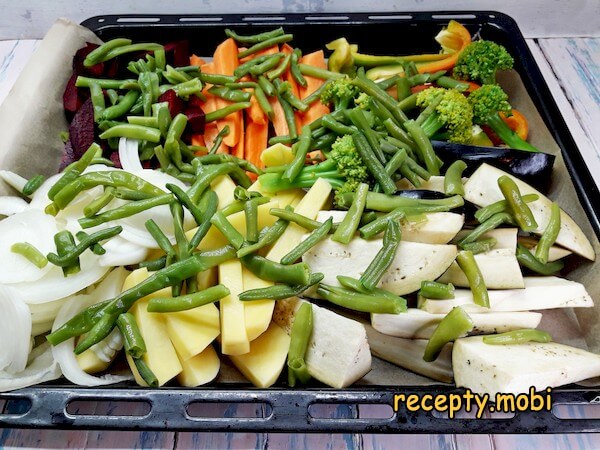
Add thawed red pepper. Place baking sheet on MIDDLE rack of preheated oven. NO COVERING — uncovered baking is what produces the pleasant outer crust + soft centre.
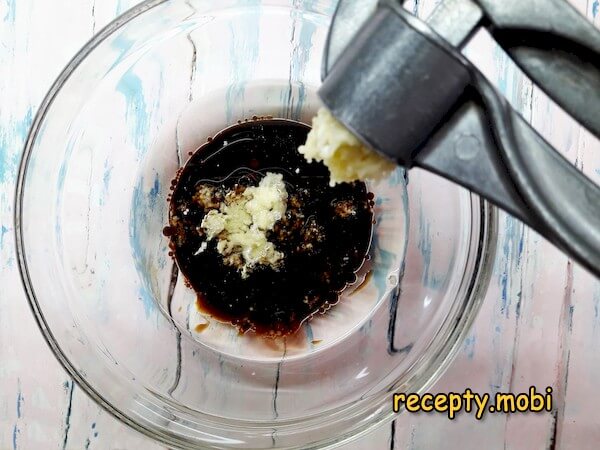
Meanwhile, prepare dressing: combine vegetable oil + soy sauce; squeeze in garlic.
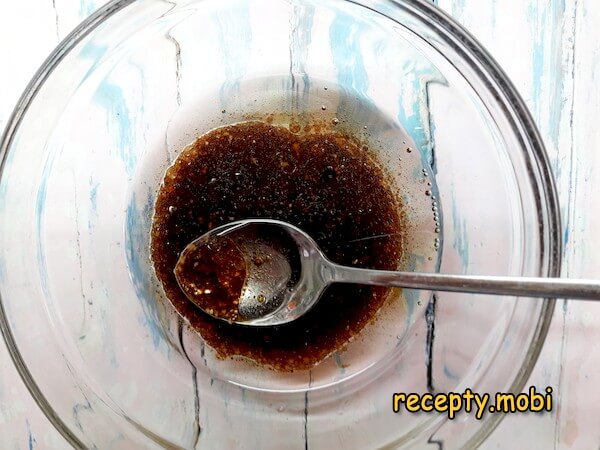
Mash dressing mixture with spoon (creates uniform suspension — garlic distributed in oil-soy emulsion).
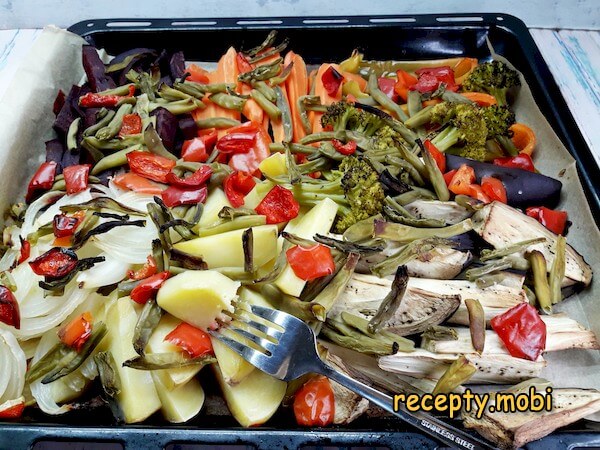
After 50 minutes, all vegetables are ready — verify by piercing the HARDEST vegetables (potatoes + beetroot) with fork. Should slip in easily.
WITHOUT WAITING for it to cool, transfer entire vegetable mix to deep salad bowl. Drizzle dressing over everything — the residual heat IMMEDIATELY releases pleasant garlic + soy aroma.
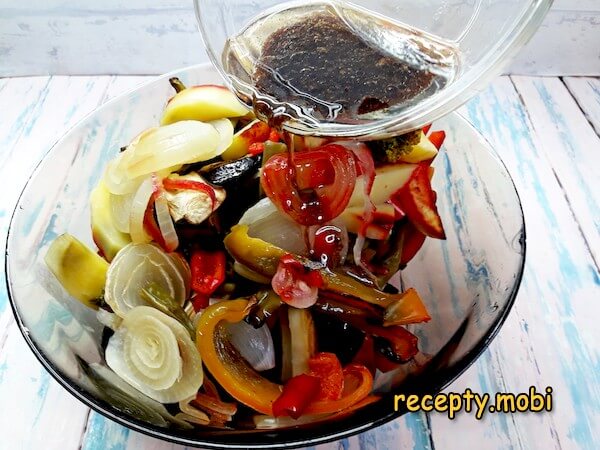
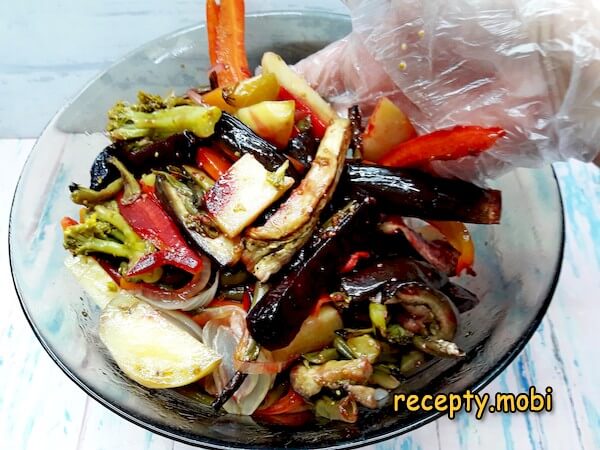
Gently mix vegetables to coat each piece with the oily-soy mixture. BEST DONE BY HAND (gentle action prevents breaking up softened vegetables).
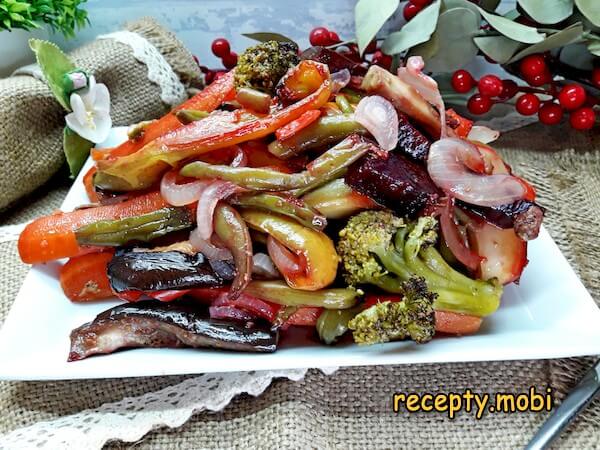
Transfer the oven-baked vegetables to a flat serving dish. All components have baked perfectly — whole, not turning into mush. The dressing (the dish's main highlight) gives vegetables a "grilled-style" flavour. Wonderful addition to any side, meat, fish; with bread = true delight!


Tips
- 1
THE FLAT-SHEET-NOT-DISH RULE. The intro emphasizes baking sheet (FLAT, low-sided) NOT roasting dish (high-sided). Why critical: high sides trap moisture, vegetables steam-cook (boiled flavour, soft mushy texture). Flat sheet allows moisture to evaporate freely, vegetables develop ROAST flavour (concentrated sweetness, golden crust). Same principle: roasting potatoes/carrots requires single layer on rimmed sheet, not crowded in casserole. The "grilled flavour" the recipe achieves is fundamentally a result of proper moisture evaporation.
- 2
THE NO-SALT-DURING-BAKING IS COUNTER-INTUITIVE. Most recipes add salt before roasting; this one specifically says DON'T. Why: salt's hygroscopic property draws water from vegetables during baking, creating wet vegetables that steam-cook rather than roast. Salt added AFTER cooking (via the soy-sauce dressing): vegetables stay structurally firm during roasting, then absorb seasoning during the post-bake mixing. Same anti-salt-while-roasting principle applies to mushrooms, eggplant, zucchini specifically. Steak and meat: opposite rule (salt before high-heat sears). For another technique-driven vegetable preparation worth comparing, see Grilled Vegetables Classic.
- 3
THE PRE-BLANCH GREEN BEANS + BROCCOLI. Step 1's "blanch 1 min before oven" instruction is timing-coordination science. These two vegetables cook MUCH faster than root vegetables. Without pre-blanching: would burn before potatoes/beets are done. With pre-blanching: 1-min hot-water cook starts the green beans + broccoli; then 50 minutes oven brings them to perfect tenderness while root vegetables also finish. Same coordination technique works for any mixed-vegetable roast. Skip blanching if you're cooking ONLY fast vegetables (no root vegetables).
- 4
THE BEETROOT SEPARATION SAVES VISUAL APPEAL. Step 9's "lay out groups SEPARATELY" instruction has functional reason beyond aesthetics. Beetroot juice STAINS everything magenta during baking. Mixed-together: white potatoes become pink-streaked, carrots become purple, ugly result. Separated groups: each vegetable retains its true color. Final mix in serving bowl is brief (5-10 seconds) — minimal staining occurs at this point. For visual presentation: keep beetroot in its own corner even after dressing-mix, scatter on top as final garnish. For another colorful vegetable side worth trying, try Ratatouille French Classic.
FAQ
Can I substitute the soy sauce? +
Yes — multiple alternatives work. TAMARI: gluten-free version, similar flavour. COCONUT AMINOS: less salty, slightly sweeter, soy-free option. WORCESTERSHIRE SAUCE: more complex, anchovy depth, less Asian character. FISH SAUCE: stronger umami, much saltier (use less). MUSHROOM SOY SAUCE: deeper umami, more concentrated. For low-sodium needs: low-sodium soy sauce works well; reduces salt by 40%. Mix-it-yourself: 2 tbsp regular salt + 1 tbsp molasses + 1 tbsp vinegar (rough approximation if you have nothing soy-related). The soy-garlic-oil combination is the dish's flavor signature; substitutions tilt character.
What other vegetables work? +
Almost everything. SUMMER OPTIONS: zucchini, summer squash, tomatoes (added last 15 min only), corn on cob (cut into rounds). AUTUMN OPTIONS: butternut squash, sweet potato, parsnip, brussels sprouts. WINTER OPTIONS: parsnip, turnips, rutabaga. UMAMI BOOSTERS: mushrooms (separate-tray due to moisture release), asparagus (last 15 min only). AVOID: leafy greens (wilt to nothing), watery cucumber, melons. Different vegetables produce different cooking times — adjust accordingly. The recipe's 50-min cook works for most root + mid-density vegetables; quick-cooking vegetables added later, slow-cooking added early.
Can I make it ahead? +
Yes — actually improves with brief rest. Cook vegetables fully; combine with dressing per recipe; let cool to room temperature; refrigerate covered. Day 2: vegetables have absorbed dressing, flavour is fully integrated, slightly softer texture but still good. Up to 3 days refrigerated. Reheating: 160 °C oven 10-15 min (re-crisps somewhat), OR serve cold (excellent as cold salad). The cold version is genuinely a different dish — Mediterranean-style vegetable salad with garlic-soy dressing. Same recipe, two presentations. Don't freeze (vegetables become watery on thaw).
What sides go best? +
Excellent versatility — pairs with most main dishes. PROTEIN PAIRINGS: grilled meats (steak, chicken, lamb chops), pan-seared fish, baked salmon, roasted whole chicken. CARBOHYDRATE PAIRINGS: rice (white, brown, pilaf), couscous, quinoa, polenta. CRUSTY BREAD: country sourdough, baguette (for sopping up the soy-garlic juices). For complete vegetarian meal: serve over rice with crumbled feta cheese on top. The dish works as: side dish, vegetarian main, salad component, sandwich filling (chopped finer). The flavour profile is universal-friendly across cuisines.
- Comment
or post as a guest
Be the first to comment.