avg —
Pickled Onions for Salads and Snacks

Instructions
Chop the onions into thin half-rings. It is best to take two types of onions — yellow and purple. The latter will give the white onion a nice rosy hue.
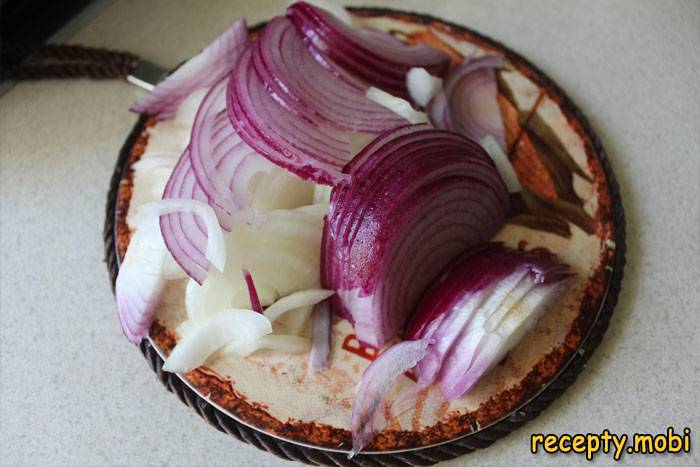
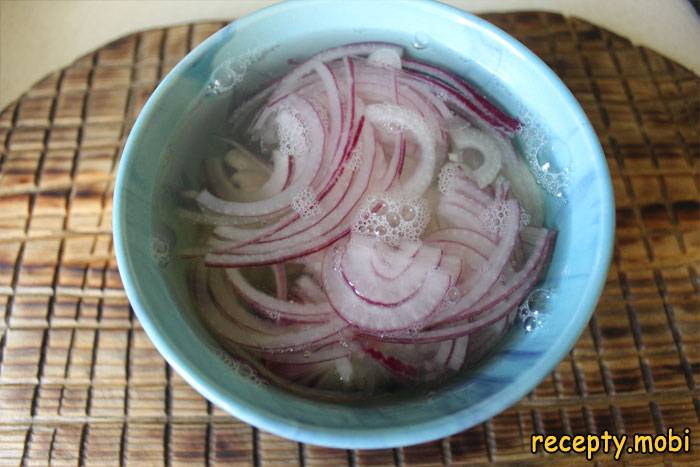
Place the chopped onions in a deep container. Pour boiling water over the onions so the water fully covers the vegetable. Leave the onions in boiling water until the water cools down completely.
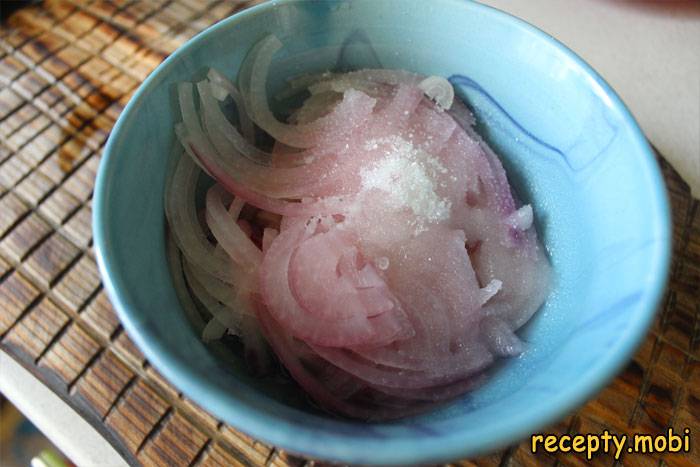
Drain most of the water from the onions. Add sugar and salt to the chopped vegetable for proper flavor balance.
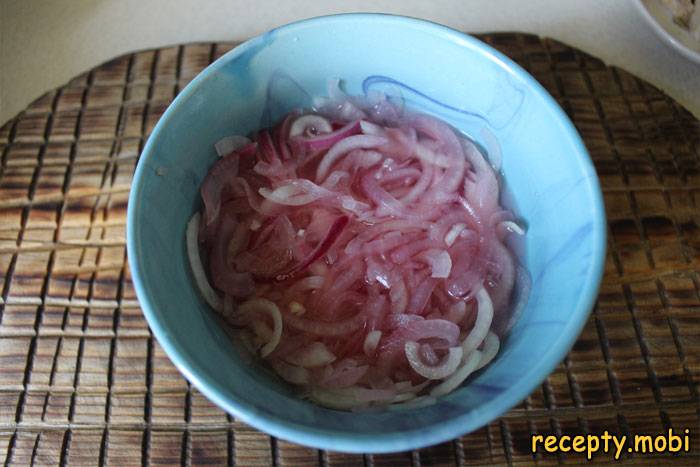
Pour in the required amount of vinegar. Mix all components of the appetizer and let it sit for another half an hour for proper pickling penetration.
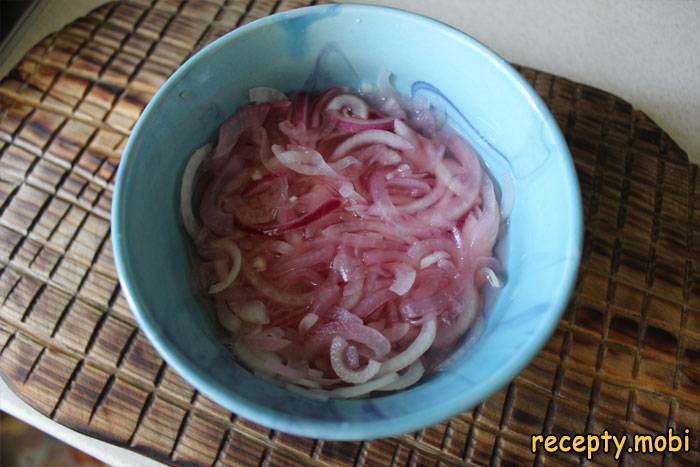
The pickled onions are ready to be served! Before adding to salads, it is worth draining the appetizer in a colander to remove the marinade. This helps preserve the salad structure. Pickled onions can be served with shashlik or other meat dishes. Enjoy your meal!Sweet and sour pickled onions perfectly complement meat dishes, diversify salads, appetizers, and bruschetta. Their crunchy texture highlights the taste of salted herring, harmoniously pairs with salmon and shashlik. The appetizer is incredibly simple to prepare. This dish is very budget-friendly, versatile in serving, and unusual in taste.


Tips
- 1
Use both red and white onions for color variety. Red onions add visual appeal alongside flavor; white onions add milder sharper character. The combination produces more complex finished pickled onions than single-color versions. The visual contrast also makes finished dishes more appealing when these onions are added to salads or other compositions throughout the meal preparation.
- 2
Use apple cider vinegar for the mildest most pleasant flavor. White distilled vinegar is too sharp for delicate pickled onions; apple cider vinegar adds gentle fruity character that complements rather than dominates. The same vinegar-quality principle elevates many pickling preparations including chicken salad with pickled onions and similar pickled-onion applications across various salad presentations and dishes.
- 3
Pour boiling water over onions first for proper softening. The hot water tames the sharpness more thoroughly than cold-water marinades; the brief hot soak essentially blanches the onions for the perfect crisp-tender texture. Skip this step at your peril — it makes a significant difference in finished onion quality and the marinade absorption rate throughout the batch.
- 4
Use within 3-5 days for peak crispness. Older pickled onions soften progressively, losing the signature crunch. Pair finished pickled onions with crusty homemade bread for sandwich toppings, grilled meats, smoked fish, hearty salads, or as a tangy garnish for hot soups for the complete satisfying experience.
FAQ
What vinegar works best for pickling onions? +
Apple cider vinegar produces the mildest most pleasant flavor profile. Wine vinegar is also excellent for sophisticated applications. Balsamic vinegar adds deeper richness for special presentations. Regular table vinegar works in a pinch but produces sharper less complex results. Each vinegar type produces slightly different character; experiment to find your favorite for various meal occasions and salad combinations across the year.
Can I pickle onions without sugar? +
Yes — substitute with honey for natural sweetness, or simply omit the sweetener entirely for tart-only pickled onions. The sweetness balances the acidity nicely but is not absolutely essential. Sugar-free versions suit dietary restrictions and produce different flavor character that some prefer. Adjust the salt slightly upward when omitting sugar for better balance in the finished pickled onions across batches.
How long do pickled onions keep? +
Stored in an airtight container in the refrigerator, pickled onions keep for 3-5 days at peak crispness. The flavor continues developing throughout this period. After 5 days the texture softens noticeably and the brightness fades. Best within the first 2-3 days for the proper crunchy texture that defines great pickled onions in salads and as garnishes for various dishes throughout the week.
What other spices work in the marinade? +
Bay leaves, black peppercorns, mustard seeds, coriander seeds, juniper berries, garlic cloves, fresh herbs (dill, thyme), or chili flakes all integrate beautifully into the basic marinade. Each addition produces distinct character. Match spices to your intended meal use: bay and pepper for European-style, mustard and coriander for Indian-influenced, garlic and dill for Russian-style preparations across various culinary traditions and personal preferences.
- Comment
or post as a guest
Be the first to comment.