avg 5.0
Pilaf with Chicken in a Multicooker

Instructions
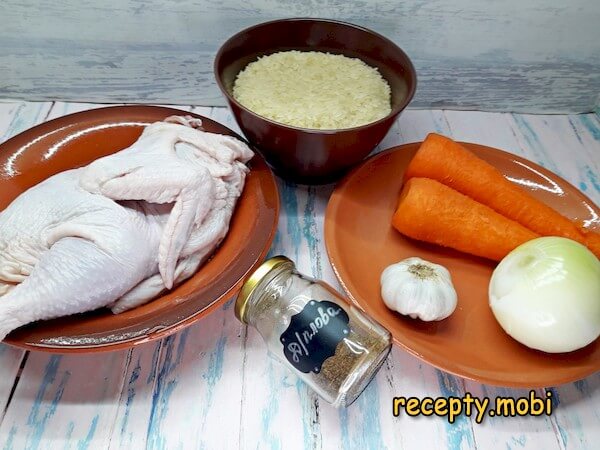
I prepare specified ingredients for chicken pilaf in multicooker.
Finely chop onion. Cut carrot into ELEGANT STICKS (not grated — preserves orange-piece visibility + structure). Bright orange pieces visible in finished pilaf create signature color.
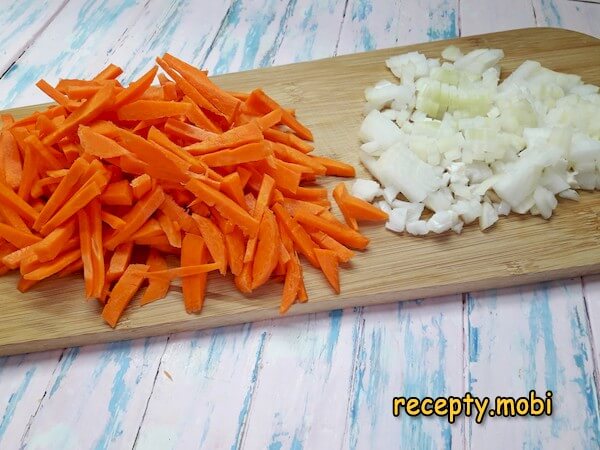
Cover multicooker bottom with oil. Zirvak (Central Asian name for pilaf-base) loves GENEROUS oil — quality oil with olive component preferred.
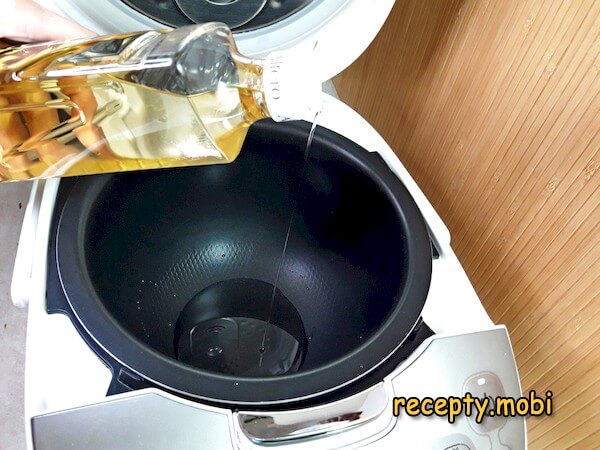
Heat oil — DON'T close lid yet. Set: MODE = "Fry"; PRODUCT = "Vegetables"; TIME = 5 minutes.
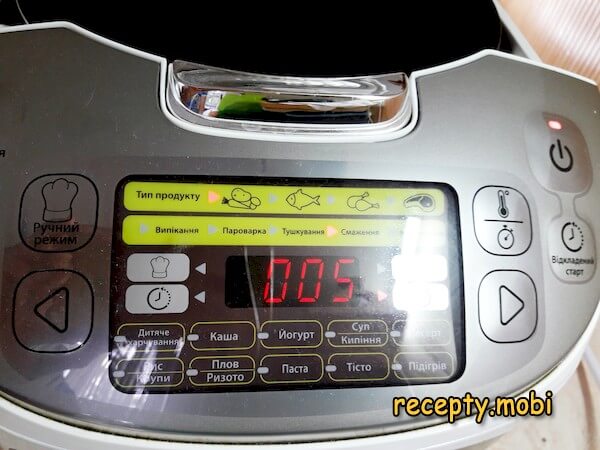
Meanwhile: cut chicken into portions.
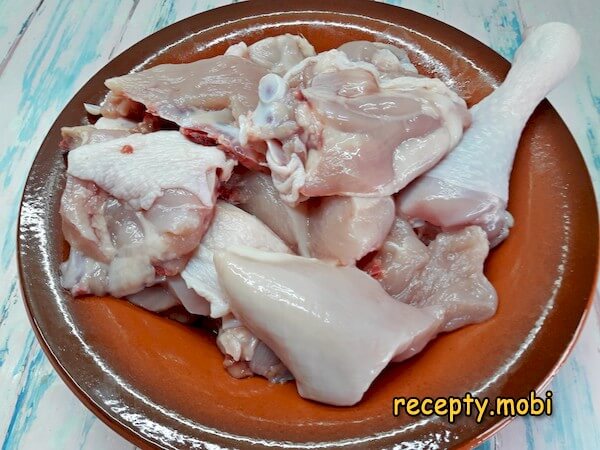
Rinse rice several times until WATER RUNS CLEAR (removes excess starch — essential for fluffy result).
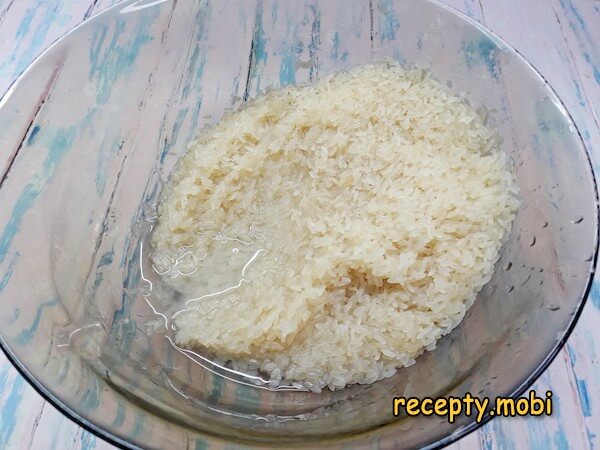
Water calculated by VOLUME (not weight): 1 part rice : 1.3 parts water. Measure required amount; bring to boil.

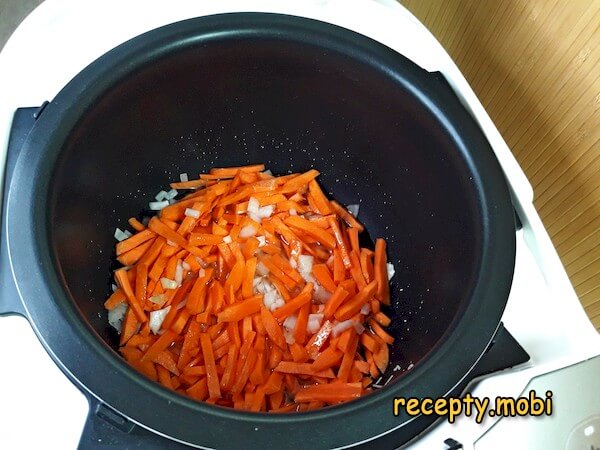
After 5 min: program ends. Set new task — load vegetables into hot oil first.
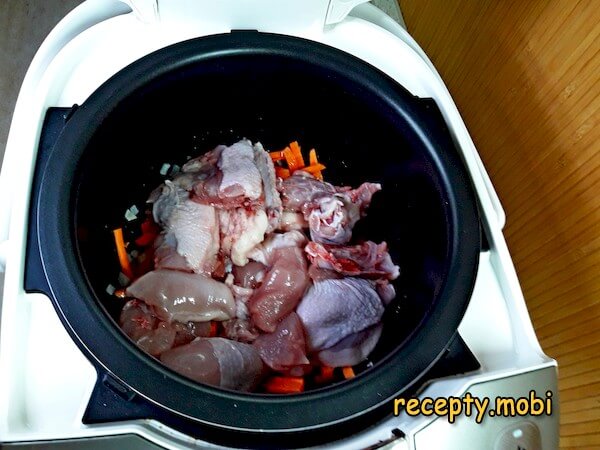
Add chicken pieces.
Stir contents with SILICONE spatula (avoid damaging bowl coating). Secure lid.
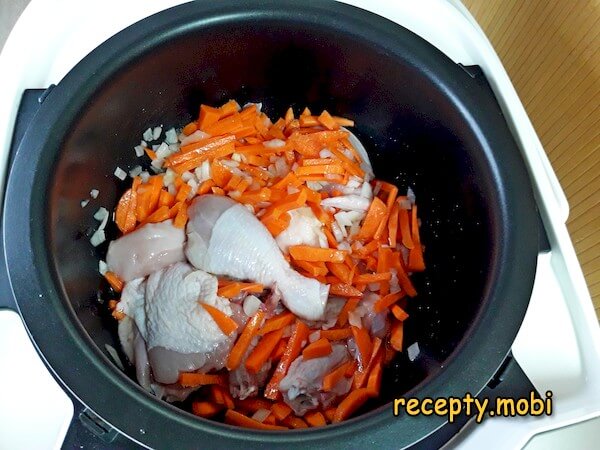
Set program: PRODUCT = "Poultry"; TIME = 15 minutes; MODE = "Fry".
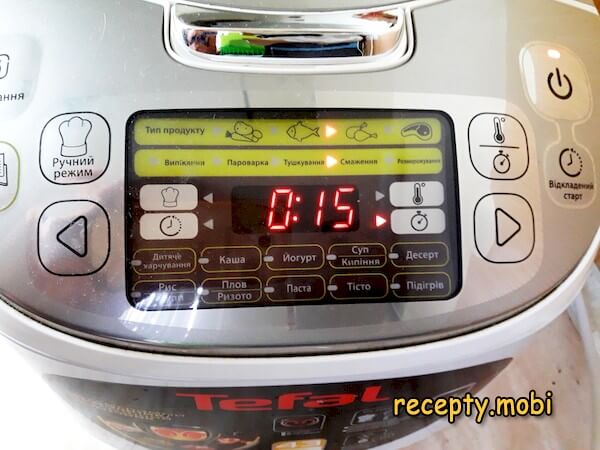
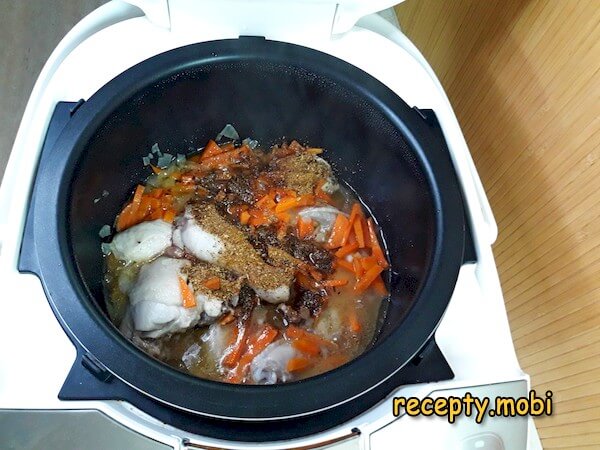
After signal: add pilaf spice.
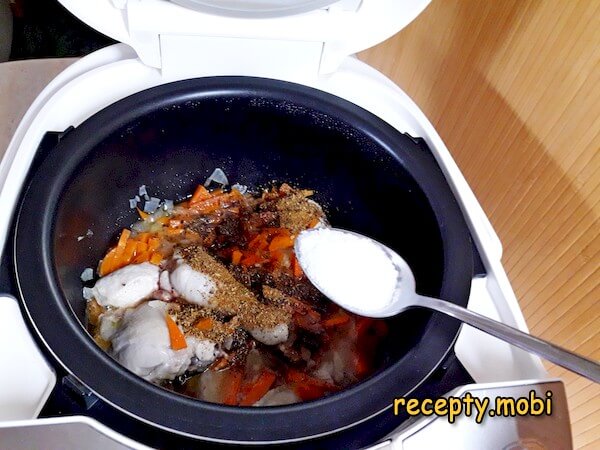
Follow with salt.
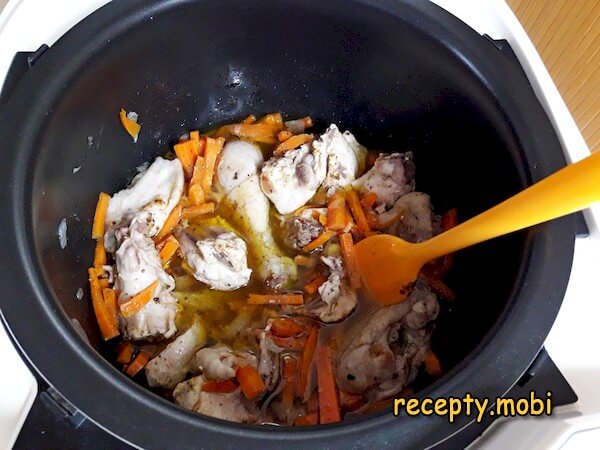
Stir everything NOW (impossible to disturb after rice is added).
Pour rice; level it to completely cover zirvak.
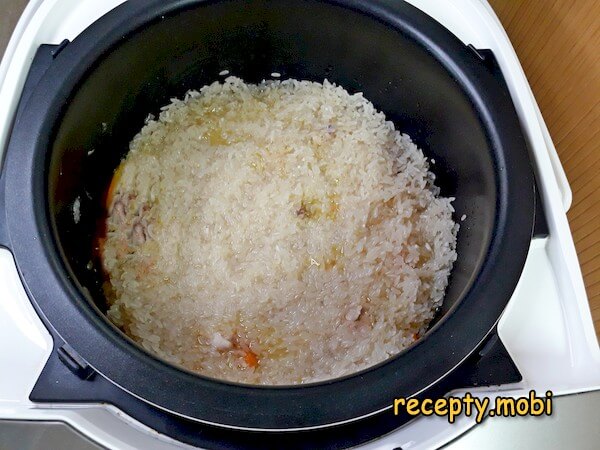
Carefully (don't disturb top layer): pour HOT WATER (2 cm above rice surface).
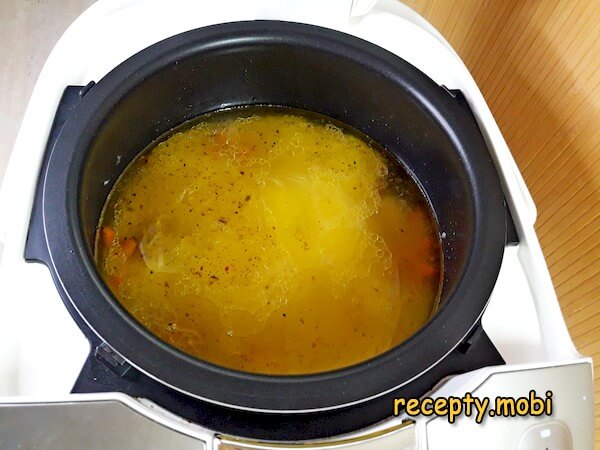
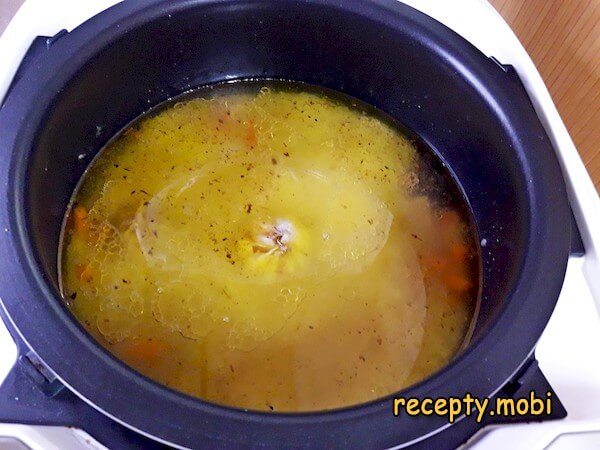
Peel outer layers of garlic; wash; STICK IT IN CENTER of rice circle (signature pilaf decoration).
Lower lid; set "PILAF" mode (auto-time). Without "Pilaf" mode: set "Grains"/"Rice" 50-60 min manually.
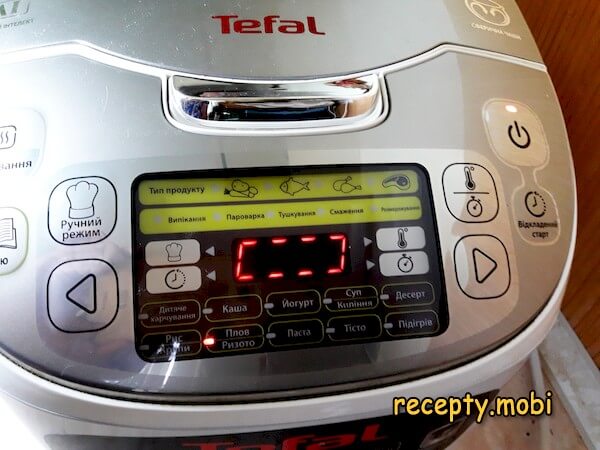
When complete signal: DON'T open immediately. Leave in WARM mode 10 minutes (auto-engages if lid stays closed). After this: pilaf fully ready.
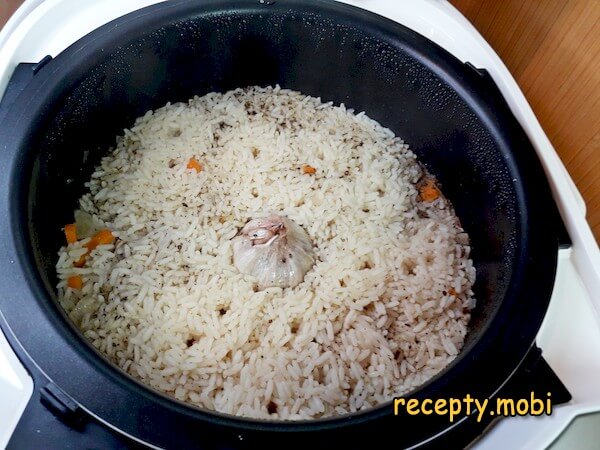
Now: mix rice with other components.
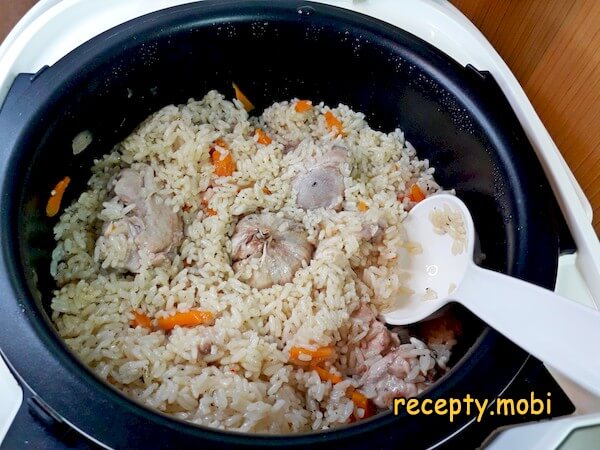
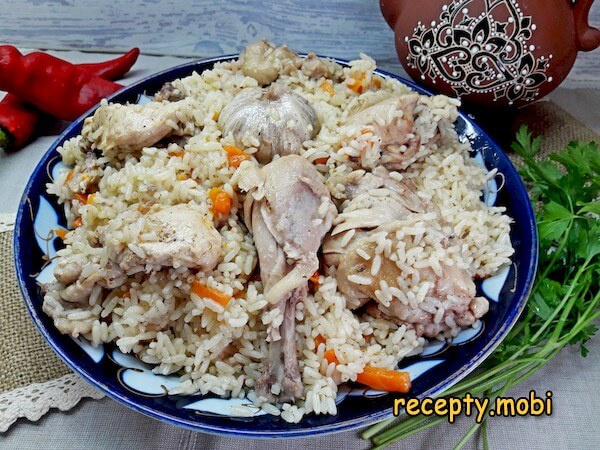
Most delicious + quickest chicken pilaf in multicooker — always FLUFFY, meat tender + soft. Serve hot with fresh herbs + spicy sauce alongside. Try also pork pilaf in multicooker. Bon appétit!


Tips
- 1
THE PARBOILED LONG-GRAIN REQUIREMENT. Step 1's "parboiled long-grain" specification is non-negotiable. ROUND rice: high-starch, becomes sticky-porridge, wrong dish entirely. STANDARD long-grain (basmati, jasmine): works but tends to clump slightly. PARBOILED long-grain (steamed before processing): each grain cooks SEPARATE + FLUFFY, recipe-ideal. The parboiled processing pre-cooks rice slightly while maintaining grain integrity. Brand recommendations: Uncle Ben's, Carolina (parboiled varieties). Same parboiled-rice principle for: jambalaya, biryani, paella.
- 2
THE 1:1.3 WATER-TO-RICE RATIO. Step 7's "1 part rice : 1.3 parts water by volume" is calibration for parboiled rice in multicooker. Higher water (1:2): produces wet/sticky pilaf. Lower water (1:1): produces undercooked rice with crunchy centers. The 1:1.3 sweet spot: produces individually-fluffy grains with proper hydration. Each rice variety has different optimal ratio — the recipe's value works specifically for parboiled long-grain. For another rice-based Caucasian preparation worth comparing, see Uzbek Pilaf with Lamb.
- 3
THE NO-DISTURB-RICE RULE. Step 14's "stir NOW; impossible after rice" is critical multicooker-pilaf technique. Once rice + water added: any stirring breaks rice grains, releases starch (becomes sticky), disturbs even-cooking layer. The Central Asian "zirvak under, rice on top, water above" principle is preserved through Cooking — no mixing during cook. Open lid only after WARM-mode + auto-rest period. Final mix happens in step 20 (gentle, after fully cooked).
- 4
THE WHOLE-GARLIC-HEAD CENTERPIECE. Step 17's "stick whole garlic head in center" is traditional Central Asian technique. The garlic head INFUSES gentle aroma during cooking + becomes signature center decoration when serving. Don't peel cloves — keep papery skin on (prevents over-strong garlic). To eat: squeeze cloves out at table. Same whole-garlic technique used in: traditional Uzbek pilaf, Persian polo, North African tagines. For another classic multicooker preparation worth trying, try Meatballs in Tomato Sauce Multicooker.
FAQ
Can I use other meats? +
Yes — pilaf is meat-flexible. LAMB (most traditional Central Asian): authentic + most flavorful. PORK: traditional Russian-Slavic variation, equally hearty. BEEF: less common but works. The recipe-default chicken is light + family-friendly. Adjust cook time slightly for tougher meats (lamb may need 20 min in step 11 instead of 15). Fat-content matters: lean meats produce drier pilaf — lamb's natural fat is recipe-ideal. Don't use very lean meats (chicken breast only) without adding fat.
Can I cook on stovetop without multicooker? +
Yes — traditional cauldron + stovetop method. Use heavy cast-iron pot (Dutch oven). Heat oil; sauté onion + carrot + meat as in steps; add spices + salt + rice + water; reduce heat to LOW; cover; cook 25-30 minutes. DON'T LIFT lid during cook. After cook: rest 10 min covered. Same principle as multicooker — closed-pot moist-heat cooking. Result: equivalent to multicooker, more traditional, requires monitoring. For TRUE traditional: outdoor cauldron over fire (Central Asian shepherd-method).
What spices are in pilaf-spice mix? +
Traditional Uzbek/Central Asian pilaf spice typically contains: ZIRA (cumin seeds — most prominent), BARBERRY (dried, sour-sweet), TURMERIC (yellow color), CORIANDER (ground), BLACK PEPPER, sometimes saffron. Pre-mixed pilaf spice available at international groceries (Uzbek/Russian sections). HOMEMADE blend: 2 tsp cumin + 1 tsp turmeric + 1 tsp coriander + 1 tsp paprika + 1/2 tsp pepper + dried barberries (1 tbsp if available). Each Central Asian region has slight variations. The 30 g specification is generous; reduce to 20 g if first time.
How long does it keep? +
Refrigerated covered: 3-4 days at peak quality. Day 2: rice absorbs more juice, becomes more flavorful. Reheating: gentle stovetop with splash of water (rice may need re-hydration), microwave 2-3 min. FREEZER: works adequately (2-3 months freezer life), thaw + reheat. The dish is genuinely meal-prep-friendly. Pro-tip: freeze in single-serving containers for instant lunches. Pilaf is one of the BEST freezer-friendly grain-based dishes.
- Comment
or post as a guest
Be the first to comment.