avg —
Pitted Plum Jam for Winter

Instructions
I prepare the ingredients. For very sweet plum varieties, sugar can be reduced by 100-150 g — the jam will then need slightly longer cooking (5-10 minutes more) to compensate for less sugar concentration.
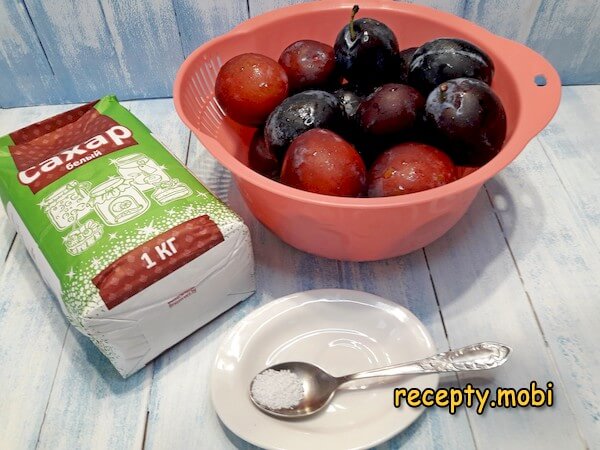
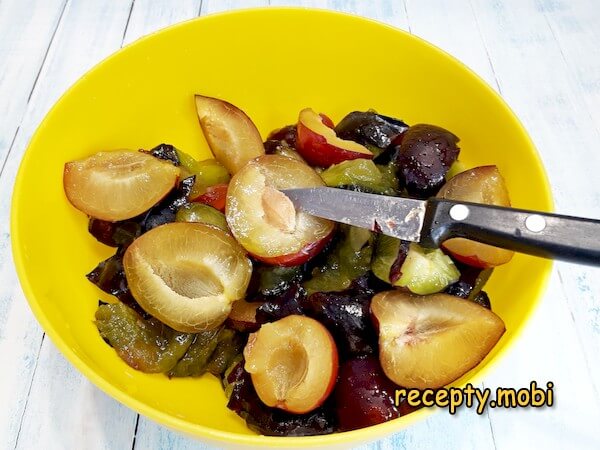
Plums wash well, wiping off the velvety bloom on the skin. Large plums quarter, smaller ones halve. Pits remove cleanly.
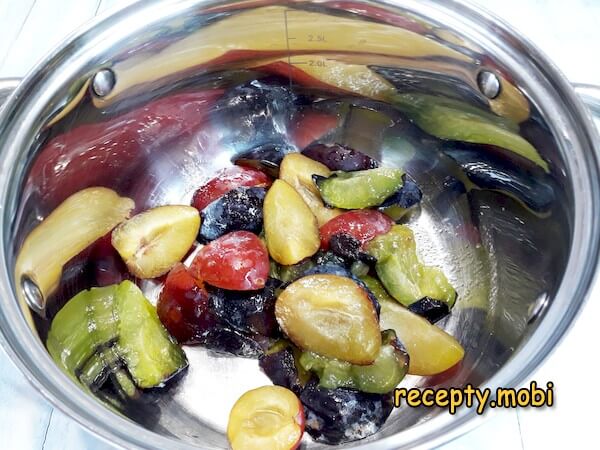
Sugar divides into 4 portions of 250 g each — added in 4 stages. The cooking pot must have a thick bottom or non-stick coating (sugar burns quickly in thin pots). I place some plums in the pot.
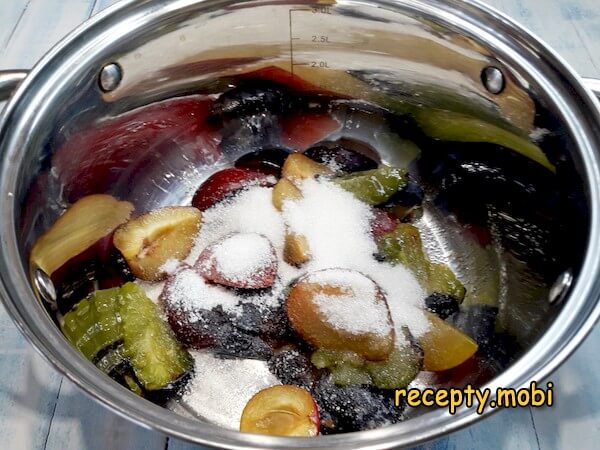
The first 250 g of sugar sprinkles lightly over the plums.
I continue layering plums and sugar (from the first batch) until everything is in.
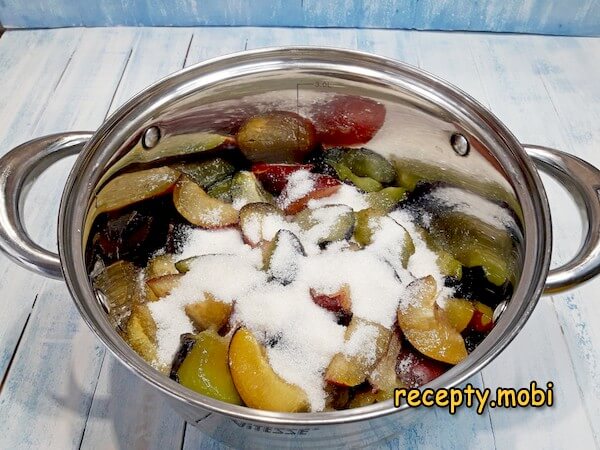
Pot onto stove, slightly-above-medium heat. After boiling starts, cook 5 minutes.
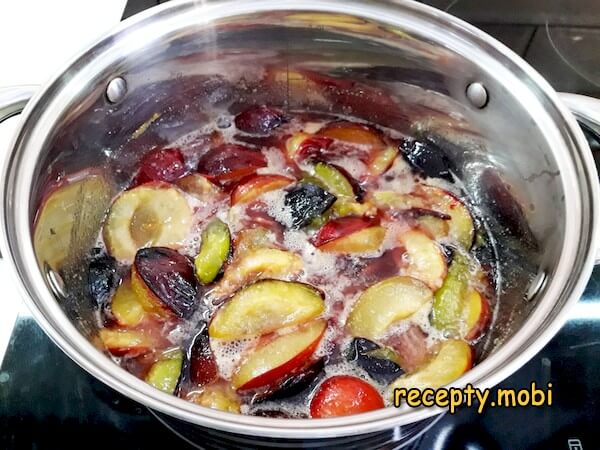
The second 250 g of sugar adds in. Cooking continues.
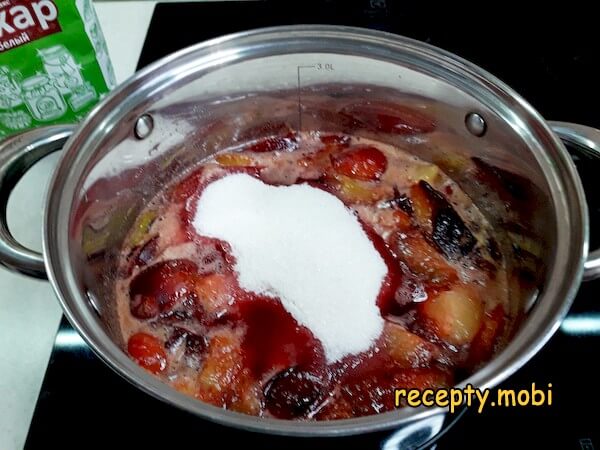
White foam forms during cooking — skim off with a spoon or skimmer.
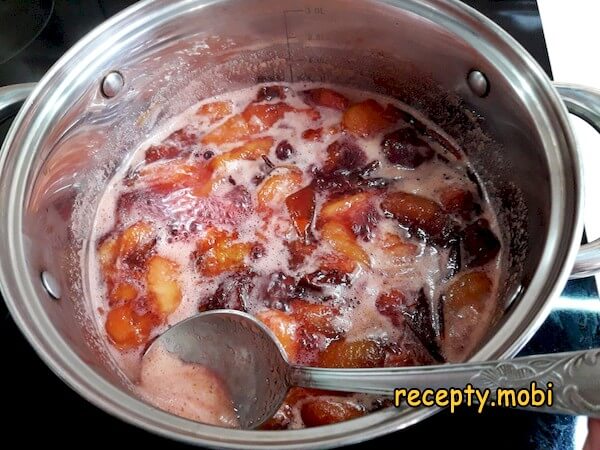
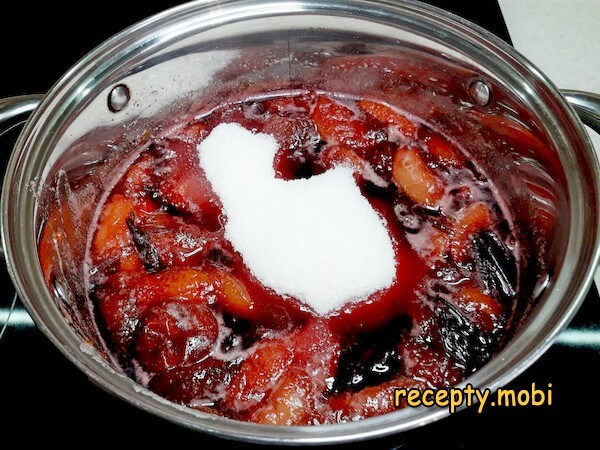
After 5 more minutes of boiling, the third 250 g of sugar plus the citric acid (1/3 tsp) join. Citric acid prevents the jam crystallising during storage. Stir, skim foam if it reforms, boil another 5 minutes.
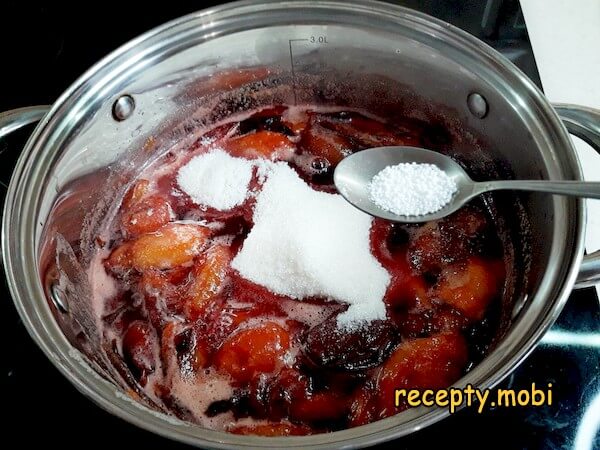
Final 250 g of sugar adds in. Boil another 5 minutes.
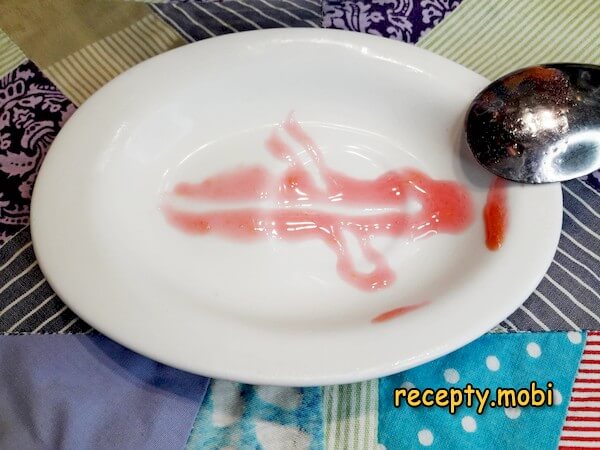
The plate-test confirms doneness. Drop a small amount on a chilled plate, draw a line with spoon back through the drop. If the line stays distinct (doesn't immediately re-merge), the gelling is correct. If line merges, cook 5 more minutes.
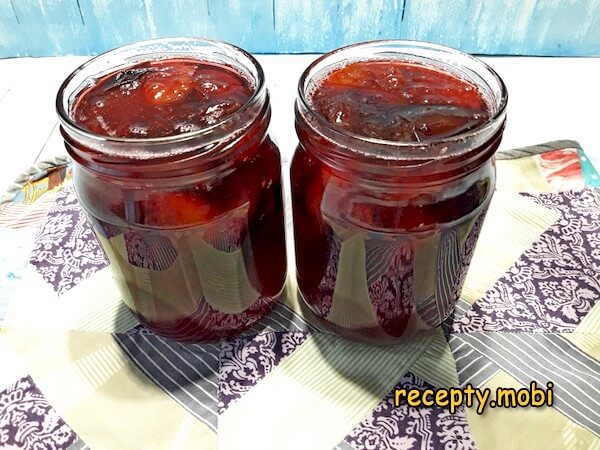
Glass jars sterilise by any convenient method (steam-sterilisation works well). Metal lids boil 5 minutes. I fill jars with hot jam to the very top.
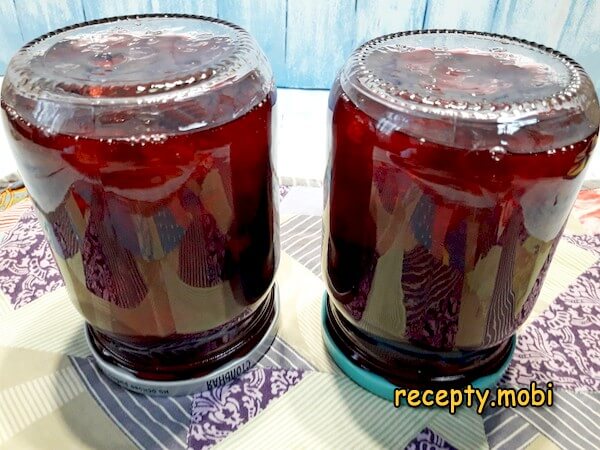
Lids screw on, jars invert briefly to test seal, return upright, leave to cool naturally. Pitted plum jam for winter is ready.The jam stores at room temperature for a full year with metal lids. Plastic lids restrict storage to fridge only. The natural plum pectin produces beautiful jelly consistency without gelatin or agar-agar — pure fruit-based gel, perfect for winter tea-time.


Tips
- 1
THE 4-STAGE SUGAR ADDITION IS THE TECHNIQUE SECRET. Adding all sugar at once would dissolve and reduce the plum-flesh structure too quickly, producing a thinner less-textured jam. The 4×250 g staged addition allows each portion to integrate fully before the next, preserving more plum-piece visibility while still producing the gelled syrup. The 5-minute intervals between additions are calibrated. Don't rush this; don't skip stages.
- 2
THE PLATE TEST IS THE FOOLPROOF DONENESS CHECK. Step 11's chilled-plate-and-line test is the universal jam-making doneness check. Hot jam continues to thicken on cooling — plate-tested-correctly hot jam will gel beautifully when cool. Test too early, and you'll have runny jam after cooling. Test too late, and you'll have over-firm jam that's hard to spread. Practise the technique on small batches first if uncertain. For another plum-based jam variation worth comparing, see Plum Jam with Pits for Winter.
- 3
CITRIC ACID PREVENTS CRYSTALLIZATION. The 1/3 tsp citric acid isn't optional — it's what keeps the jam smoothly gelled rather than developing sugar crystals during long storage. Crystallised jam is safe but unpleasant texturally. The citric acid also enhances the natural plum flavour brightness. Substitute: 1 tbsp lemon juice (gives same effect plus slight citrus note). Don't omit; the difference shows up at month 6+ of storage.
- 4
PLUM VARIETY SHAPES THE FLAVOUR PROFILE. Different plum varieties give noticeably different jam character. Damson plums: tart, intense, deeply purple-red — the connoisseur's choice. Italian/Mirabelle plums: very sweet, almond-like notes — easier-eating jam. Yellow/green plums: lighter colour, milder flavour — modern variety. Wild plums: most aromatic but variable size and quality. Mixed-variety jams (50/50) often produce the most complex flavour. Choose based on what's available at peak ripeness. For another pitted-stone-fruit jam worth trying, try Pitted Cherry Jam for Winter.
FAQ
Why does plum jam gel without added pectin? +
Plums are naturally rich in pectin — the cell-wall polysaccharide that creates jam-gel structure when combined with sugar and acid. Plum pectin content (especially in slightly under-ripe plums) is among the highest of common fruits, alongside apples and quinces. The natural pectin + 1:1 sugar + citric acid creates the proper gelling chemistry without any commercial pectin added. This is why plum jam (and apple jam, quince jam) are home-cook favourites — they reliably gel where strawberry or peach jams need pectin help.
How long does the jam keep? +
Properly sealed sterilised jars at room temperature in a dark cupboard keep 12+ months — until next plum harvest. Cool basement extends to 24 months. Once opened, transfer to fridge and use within 4-6 weeks. The colour darkens slightly over months (oxidation through the lid is normal); flavour deepens correspondingly. Plastic-lid jars need fridge storage and don't have the long shelf life of metal-lid jars. If you spot mould or fizzing, discard the jar.
Can I leave the pits in? +
Yes — there's a separate "plum jam with pits" tradition that gives slightly different character (the pits release subtle almond-like notes during long boil). However, pit-removal is more practical for daily use — pitted jam can be spread on toast, baked into pastries, mixed into yogurt without dental danger. The choice is personal: pits-in for traditional Russian-Soviet style, pits-out for modern convenience. Both make excellent jam.
What pairs well with this jam? +
Russian-Eastern European tradition serves with: black tea (the classic), buttered toast, blini, syrniki (cottage cheese pancakes), baked apples, vanilla ice cream, plain yogurt. Modern uses: filling for layered cakes, swirled into cheesecake batter before baking, glaze for roasted duck or pork (savoury-sweet pairing — surprisingly excellent), or cocktail mixer (in vodka-based drinks). The jam's deep wine colour is as much an asset as its flavour — visually dramatic on cheese boards or breakfast plates.
- Comment
or post as a guest
Be the first to comment.