avg —
Puff Pastry Pockets with Mushrooms and Cheese

Instructions
Prepare the ingredients for making the puff pastry pockets. Leave the non-yeast puff pastry on the table in advance to thaw. The optimal temperature for thawing is room temperature. Rinse the tomatoes and mushrooms. Peel the onion from the skin.
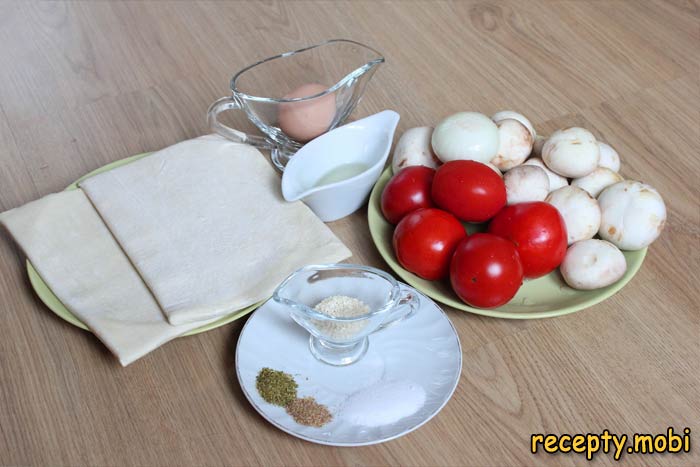
Cut the champignons into medium slices. Simply chop the onion finely. The medium-slice mushrooms keep some texture in the finished pocket rather than disappearing into the filling.
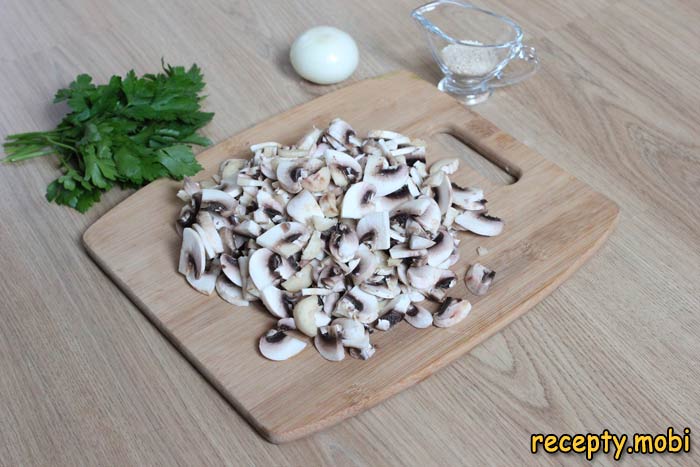
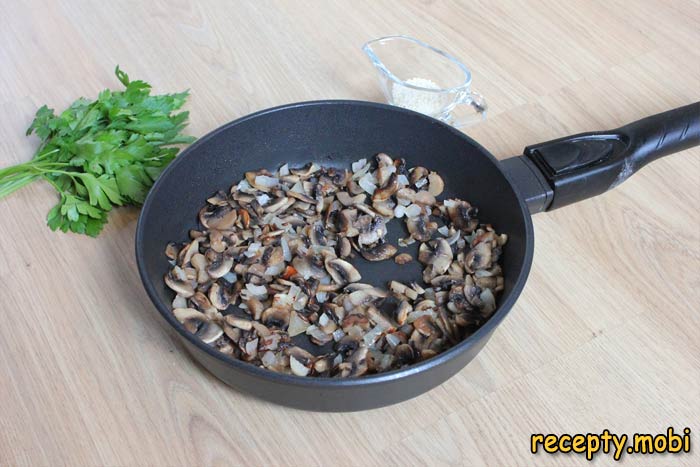
Sauté the champignons and onion in a preheated pan with the addition of vegetable oil. Fry for about 4-5 minutes until a golden crust forms on the mushrooms. The browning develops deep umami flavor that defines the filling character.
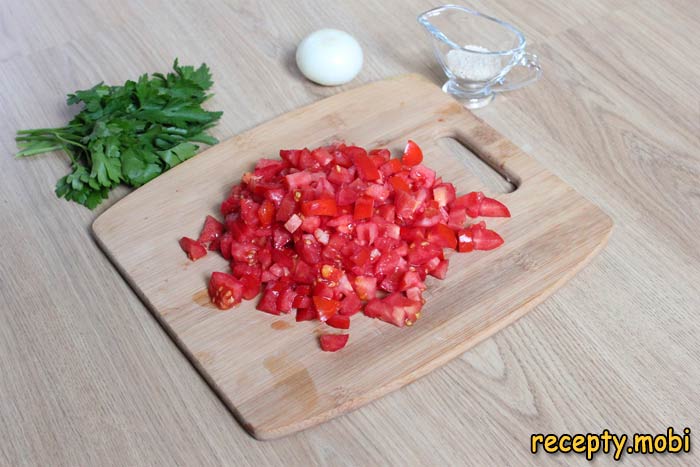
Cut the fresh tomatoes into small cubes. Slightly squeeze them by hand to remove excess moisture. We do not need excessive moisture in the filling — wet filling produces soggy pockets that fail structurally.
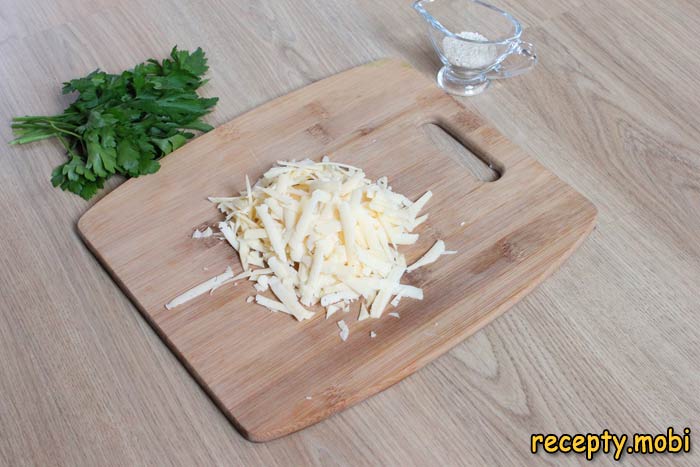
Grate the cheese on a grater. Use the side with large teeth of the grater — the medium shred melts beautifully through the pocket.
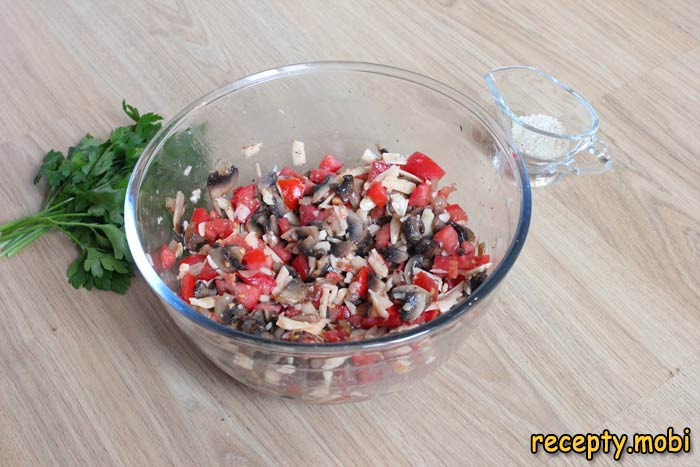
In a large bowl, mix the cooled mushrooms with onions, grated cheese, and chopped tomatoes. Add spices, mix, taste. The filling is ready when the seasoning satisfies your palate.
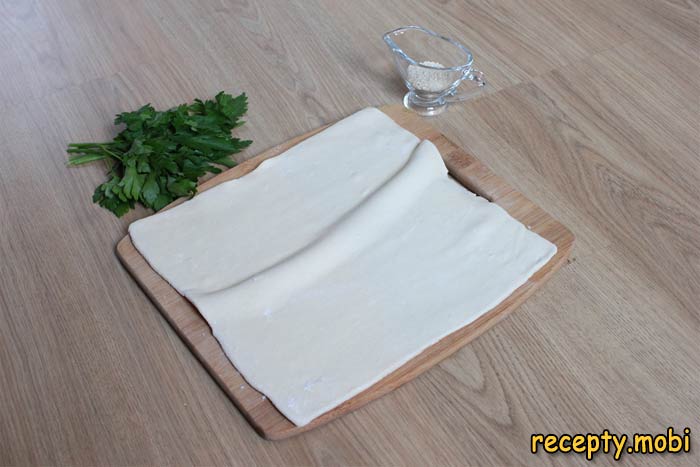
The thawed puff pastry should be in the form of two rectangles. Sprinkle each with flour to make it easier to work with. Roll the dough with a rolling pin into a square to a thickness of 3-4 mm. The thin dough produces crisp pockets; thick dough stays doughy in the center.
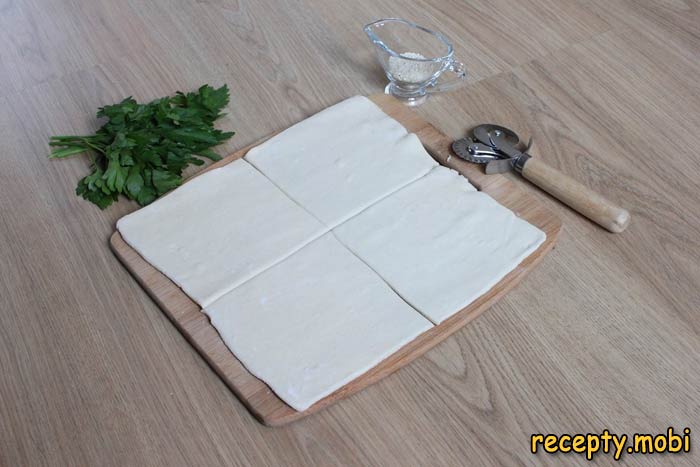
Cut the rolled rectangle of dough with a pizza knife into four squares.
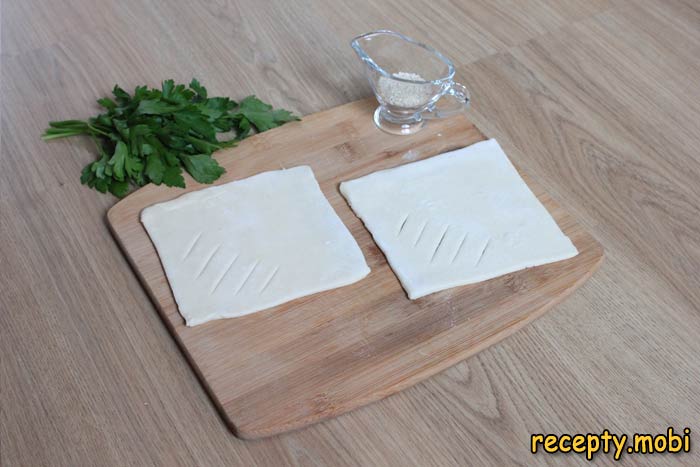
Mentally divide each small square diagonally into two triangles. On one triangular part, make five cuts with a pizza knife. This will be the top part when forming the pockets. Through these cuts the filling will appetizingly peek through.
Place 2 tbsp of filling in the center of the square. Lift one edge of the square (the one with the cuts) and stretch it diagonally over the other edge. It forms a pocket in the shape of a triangle. Use a fork to secure the two edges of the pocket. Press down with the tines of the fork along the edge to seal the dough. It creates a cute “fence” pattern.
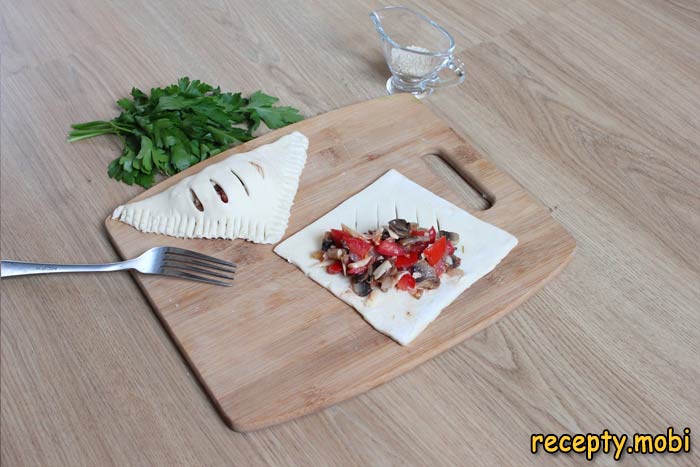
Arrange the formed pockets on a baking sheet in a random order. Pre-line the baking sheet with parchment paper. This keeps the baking sheet clean and prevents sticking.
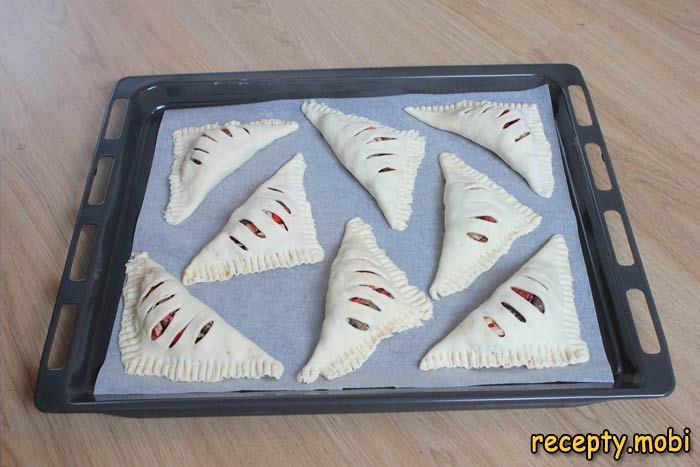
Brush the tops with beaten egg yolk and sprinkle with sesame seeds. The egg wash develops the signature deep golden color; sesame adds nutty character to the crust.
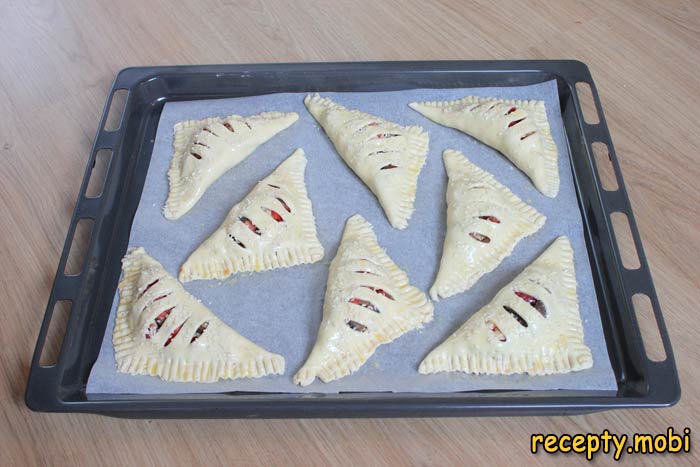
Preheat the oven to 180 degrees. Place the baking sheet with pockets in the oven. Bake the pockets for 30 minutes until golden brown.
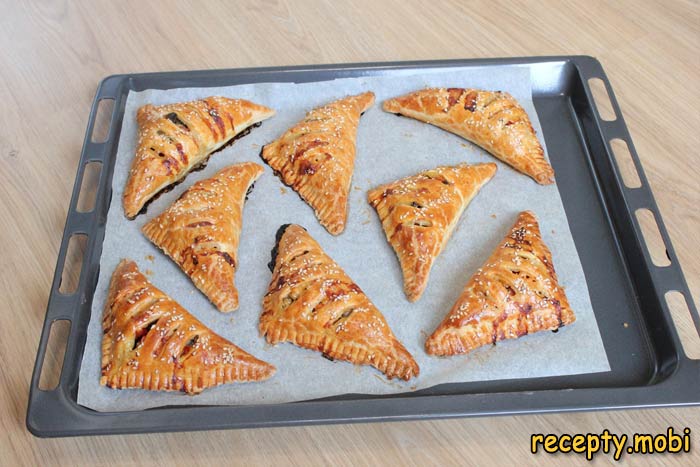
The finished pockets with mushrooms and cheese easily come off the baking sheet (nothing sticks to the parchment). Let them cool slightly and serve. Enjoy your meal!
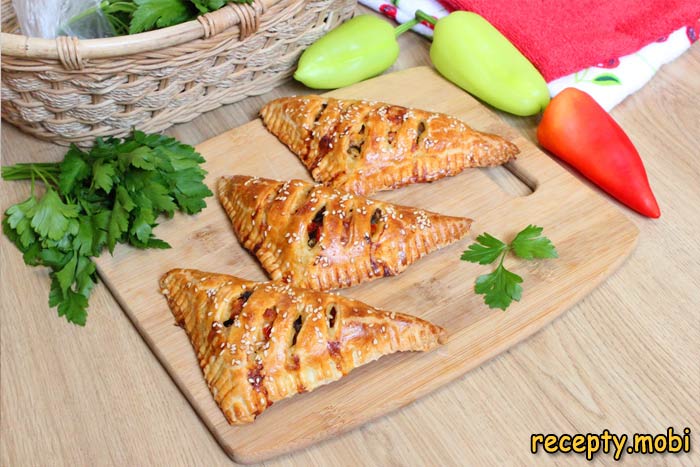


Tips
- 1
Thaw puff pastry slowly in the refrigerator overnight for best texture. Quick thawing at room temperature can produce soft dough that tears when rolled, while microwave thawing actually starts cooking the butter layers and ruins the puff capability. The slow cold thaw preserves the laminated structure that produces dramatic puff during baking.
- 2
Squeeze excess moisture from the tomatoes thoroughly. Wet filling produces soggy pocket bottoms and dough that fails to puff properly. Halve the tomatoes, sprinkle with salt, let drain for 10 minutes, then squeeze and chop. The dry-tomato preparation is the secret to crisp-bottomed pockets. The same moisture-control principle elevates similar baked filled doughs including lenten dumplings with potatoes and other filled-pastry preparations.
- 3
Seal the pocket edges firmly with fork tines or fingers. Loose seals open during baking and dump the filling onto the baking sheet, creating burnt mess. The fork-tine seal is both decorative and functional. Brush the seal edges with a touch of beaten egg before pressing for extra adhesion in tricky spots.
- 4
Serve warm rather than hot for proper enjoyment. Immediately out of the oven, the filling is volcanic-hot and the cheese can burn mouths. Let the pockets rest 10 minutes before serving for safe eating temperature. The brief rest also lets the filling firm up slightly for cleaner bites. Pair with crusty homemade bread and a fresh green salad for a complete light meal that satisfies on busy weeknights.
FAQ
Can I use yeast puff pastry instead? +
Yes — yeast puff pastry produces slightly different texture but works fine in this recipe. The yeast version is fluffier and breadier; the non-yeast version is crispier and flakier. Choose based on personal preference. Some recipes specifically call for one or the other, but for this filling either works beautifully. Adjust baking time slightly upward for yeast versions (about 5 extra minutes).
What other fillings work besides mushroom-cheese-tomato? +
Ham and cheese, spinach and feta, ground beef with onion, chicken with pesto, or sweet apple-cinnamon all work beautifully in this triangle shape. The basic technique — thin pastry, dry filling, fork-sealed triangle, egg wash — adapts to virtually any combination. Match flavors to the meal: savory fillings for dinner, sweet fillings for dessert or breakfast.
How long do baked pockets keep? +
Stored covered at room temperature for the first day, then in the refrigerator, baked pockets keep for 3-4 days. Reheat in a 175°C oven for 8-10 minutes to restore crispness; microwaving makes the pastry rubbery. The pockets freeze well for up to 2 months — reheat directly from frozen in a 180°C oven for 15-18 minutes. Perfect make-ahead snacks for busy weeks.
Can I make these vegetarian? +
The basic recipe is already vegetarian. For vegan versions, substitute the cheese with vegan cheese and skip the egg wash (use plant milk for browning instead). Many puff pastries are made with margarine and are naturally vegan; check the package ingredients. The vegan version produces nearly identical results to the original.
- Comment
or post as a guest
Be the first to comment.