avg —
Raspberry Compote for Winter

Instructions
I prepare the ingredients. Jar and lid must be sterilised properly. Raspberries wash gently (high-pressure water damages the delicate berries) and air-dry on towel.
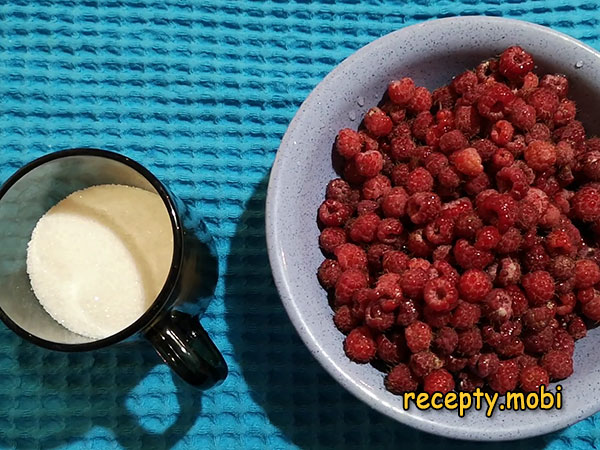
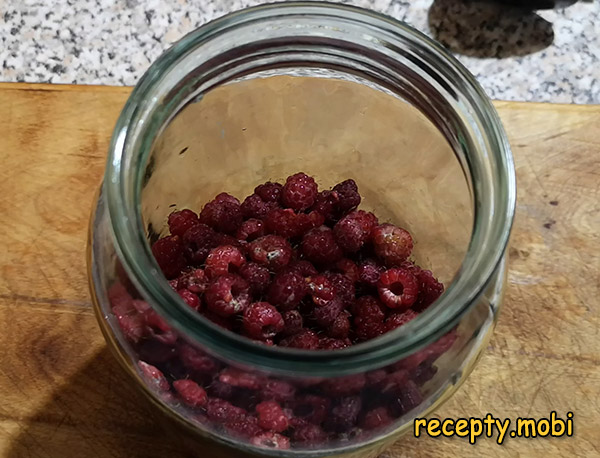
The clean dry raspberries fill the liter jar — about 200 g of berries fits comfortably with room for the syrup.
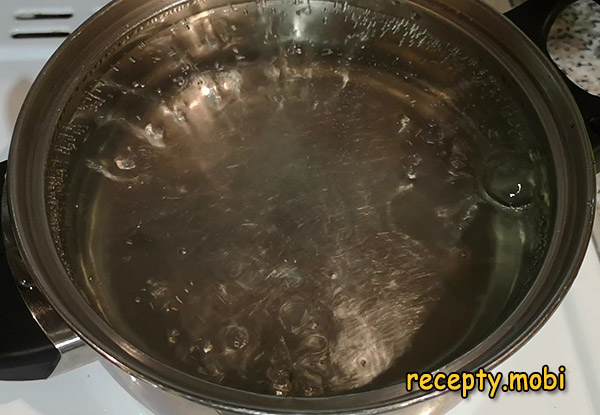
In a saucepan, water plus sugar heats. I stir until sugar fully dissolves, then bring to a boil.
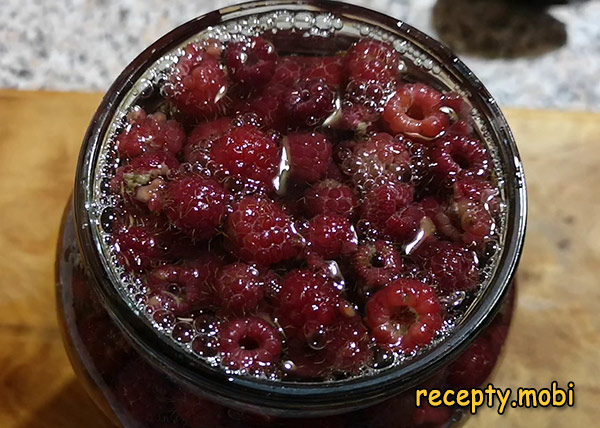
Boiling sugar syrup pours over the raspberries — fill to the very top of the jar.
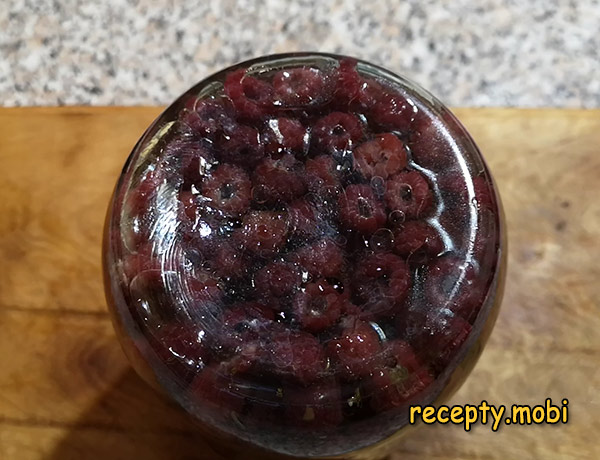
Sterilised lid screws on tight. Jar inverts, wraps in a warm blanket, slow-cools fully (8+ hours).
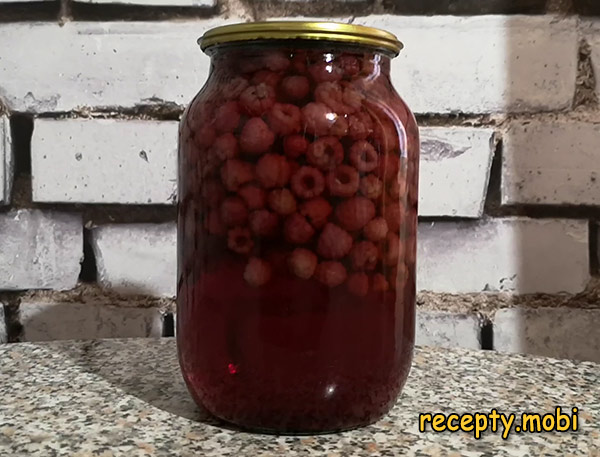
Raspberry compote for winter is ready. The ruby-red colour stays vibrant; the syrup absorbs raspberry aromatics through the slow cool.Store in a cool dark place — cellar is ideal, but a pantry away from sunlight and heat works fine. Both the compote drink and the raspberries inside are useful: drink chilled in summer-feeling glasses, use the rehydrated berries in baking or as cake toppings.


Tips
- 1
GENTLE WASHING IS CRITICAL. Raspberries are among the most fragile berries — high-pressure water destroys them, leaving mushy fragments and damaged jar contents. The proper method: place berries in a colander, immerse the colander in a bowl of cold water, swish gently, lift out. Repeat 2-3 times. Air-dry on paper towels before jarring. Fragile-handled raspberries stay intact through the boiling-syrup pour and look beautiful in the finished jar.
- 2
THE 200:100:850 RATIO IS SCALABLE. The recipe ratio (200 g berries : 100 g sugar : 850 ml water) per liter jar scales linearly. For 3-liter jars: 600 g berries, 300 g sugar, 2.55 L water. For 0.5 L jars: halve everything. The proportions are calibrated for proper preservation safety AND palatable sweetness. Don't shift these ratios significantly. For another berry compote variation worth comparing, see Pear and Plum Compote for Winter.
- 3
THE BLANKET-WRAP MATTERS HERE. Step 5's slow blanket-cool is essential for raspberry compotes — the prolonged warmth allows the berries to fully release their pigments and aromatics into the syrup, producing the deeply-coloured beautifully-fragrant result. Without the blanket, the compote stays paler and less aromatic. The 8-hour minimum slow-cool is the technique that distinguishes excellent home-made raspberry compote from mediocre attempts.
- 4
THE TWO USES OF EACH JAR. Each jar provides: the syrup (drinking compote) and the rehydrated berries (baking ingredient or topping). Don't pour the berries down the drain after using the syrup. Uses for the jar berries: in muffin batter, as cake topping with whipped cream, blended into smoothies, baked into pies (delicious Russian-style), spooned over yogurt, or simply eaten with a spoon. The berries gain new flavour dimensions during the long preservation. For another plum-based compote worth trying, try Plum Compote for Winter.
FAQ
Why so simple — just water, sugar, raspberries? +
Raspberry compote tradition values minimalism — the goal is to preserve raspberries' natural flavour and aroma without competing notes. Adding spices (mint, lemon balm, vanilla) is permissible but optional; the pure version emphasises the berry character. The raspberry-water-sugar trio is the canonical Russian compote ratio that's been used for centuries. Modern fancy variations exist, but the simple version remains the household favourite.
How long does the compote keep? +
Properly sealed sterilised jars at room temperature in a dark cupboard keep 12+ months — until next raspberry season. Cool basement extends to 18 months. Once opened, transfer to fridge and use within 2 weeks. The colour deepens slightly over months (oxidation through the lid is normal); flavour stays excellent throughout. If you spot mould, fizzing, or bulging lids, discard the jar.
Can I use frozen raspberries? +
Yes, with adjustments. Frozen raspberries (200 g, fully thawed and drained) work as substitute when fresh aren't in season. The thawed berries are softer than fresh — they may break apart during the syrup pour. The colour and flavour of the finished compote are nearly indistinguishable from fresh-berry versions. Don't refreeze leftover thawed berries — texture goes mushy. Frozen-from-fresh berries (good quality) are actually better than mediocre supposedly-fresh supermarket berries.
What other berries work in this recipe? +
The technique is universal — it works for: blackberries (similar handling, slightly more sugar 120 g), strawberries (250 g, hulled, slightly less sugar 80 g due to natural sweetness), blueberries (250 g, robust enough to handle pressing), redcurrants (200 g, increase sugar to 130 g for tartness), gooseberries (200 g, increase sugar to 130 g), or cherries with pits (300 g — pits add aromatic almond notes, though pitted is safer). Most summer berries adapt to this recipe with minor sugar adjustments.
- Comment
or post as a guest
Be the first to comment.